

Watering Plants with Ice Cubes: Is It Safe for Plants?
Three ice cubes once a week tell you little about how to water most houseplants. The controlled trial behind that routine covered flowering Phalaenopsis orchids grown in bark; researchers at The Ohio State University and the University of Georgia studied 96 orchids in total.
The broader question is whether enough water reaches the roots while excess can drain freely. In the orchid trial, three cubes supplied a fixed volume on a fixed schedule, and that amount suited the bark-grown plants. The study measured growing-media temperature, but its findings do not establish that the same dose or method works for other plants and potting mixes.
For any pot, volume and drainage shape the outcome. Check whether water can reach the root ball and whether excess can escape through the container.
Table of Contents
- Are Ice Cubes Safe for Houseplants?
- What Cold Water Does to Roots and Soil
- Why Three Ice Cubes Often Leave a Pot Dry
- Ice Cubes, Globes or Room-Temperature Water Compared
- How Often Each Pot Size Needs Water
- How to Set Up a Watering Globe for a Trip
- How to Stop a Watering Globe Clogging and Clean It
- Which Plants Suit a Globe and Which Should Skip It
- Frequently Asked Questions
Are Ice Cubes Safe for Houseplants?
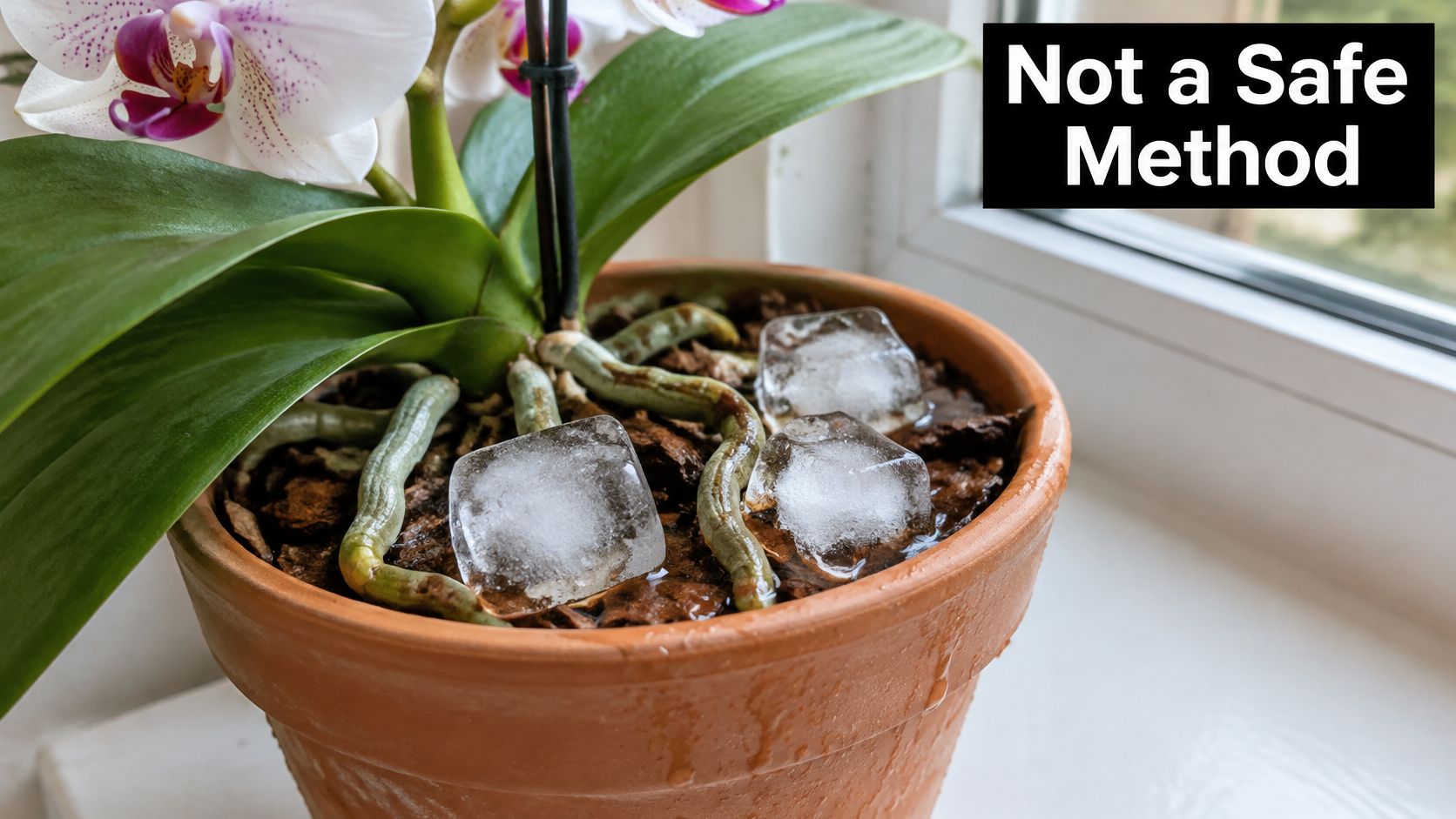
No for general houseplant care, yes for one narrow, tested setup. Ice cubes earned their reputation from a single controlled trial, and that trial is about flowering moth orchids in bark, not about houseplants as a category.
If you're weighing a watering globe instead, one Little Green Leaf fill lasts up to about two weeks, less for thirsty plants, large pots, warm rooms and small globes, and more for the 350 ml size. No fixed number of days applies to every setup.
The trial itself was run properly. Researchers at The Ohio State University and the University of Georgia evaluated 48 orchids at each location, 96 plants in total, over four to six months. Half received three ice cubes once per week. The control group received an equivalent volume of room-temperature water. The team measured flower longevity, whole-plant display life, root and leaf health, chlorophyll content, photosynthesis, shoot biomass and growing-media temperature.
The ice-watered orchids matched the controls on every one of those measures. Individual flowers lasted as long, the plants stayed in display as long, and chlorophyll, photosynthesis, shoot biomass, roots and leaves showed no negative effect for the duration of the experiment.
Then comes the scope, which is where most retellings go wrong. The result covers flowering Phalaenopsis in bark-based potting media over a single four-to-six-month observation period. It says nothing about succulents, tropical foliage plants, seedlings, outdoor plants, moss-based orchids or a second year of reblooming. Read correctly, it's evidence about a measured dose of water delivered on a schedule, not proof that cold water benefits plants.
What the study settles: three cubes a week is a workable volume for a bark-grown moth orchid. That's a dosage finding, and dosage doesn't transfer to a different medium.
What Cold Water Does to Roots and Soil
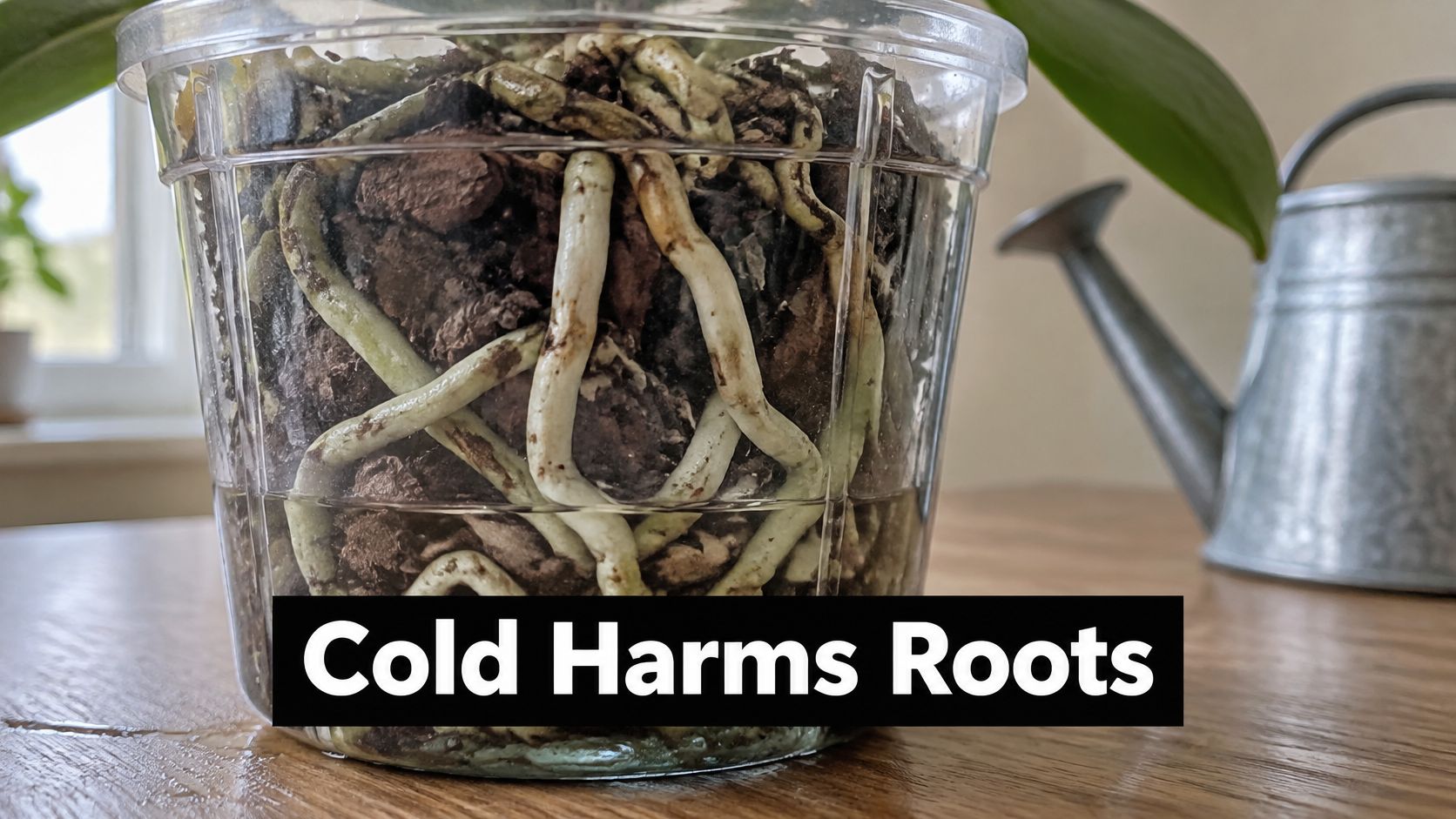
Cold root zones can slow water movement through plants. The American Orchid Society recommends tepid water for Phalaenopsis and notes that repeated small doses may allow salts to build up when the potting medium is not flushed.
A study of 16 plant species found that, after 10 days, root temperatures of 7°C reduced water transport from roots to leaves by an average of 35% compared with 15°C, while 2°C reduced transport by 71%. The researchers also observed lower water uptake, reduced plant water potential and lower stomatal conductance at colder root temperatures. These results describe sustained root exposure under study conditions; they do not establish the effect of a brief, occasional dose of ice water in every pot.
The practical variable is exposure: how cold the root zone becomes and for how long. Pot volume, medium and the path meltwater takes affect that exposure. Volume and drainage matter alongside temperature, because the plant needs enough water to reach its roots while excess water can drain away.
Practical baseline: Use room-temperature water, and flush the medium periodically to carry accumulated salts out through the drainage hole.
Root health and potting medium affect how readily a plant takes up water. This overview of how plants absorb water explains the process.
Drainage also affects how long the mix stays damp. Persistently damp potting soil can favor fungus gnats; FullScope Pest Control houseplant pest tips discuss the connection between gnats, overwatering and poor drainage. Let the medium dry to suit the plant before watering again.
Why Three Ice Cubes Often Leave a Pot Dry
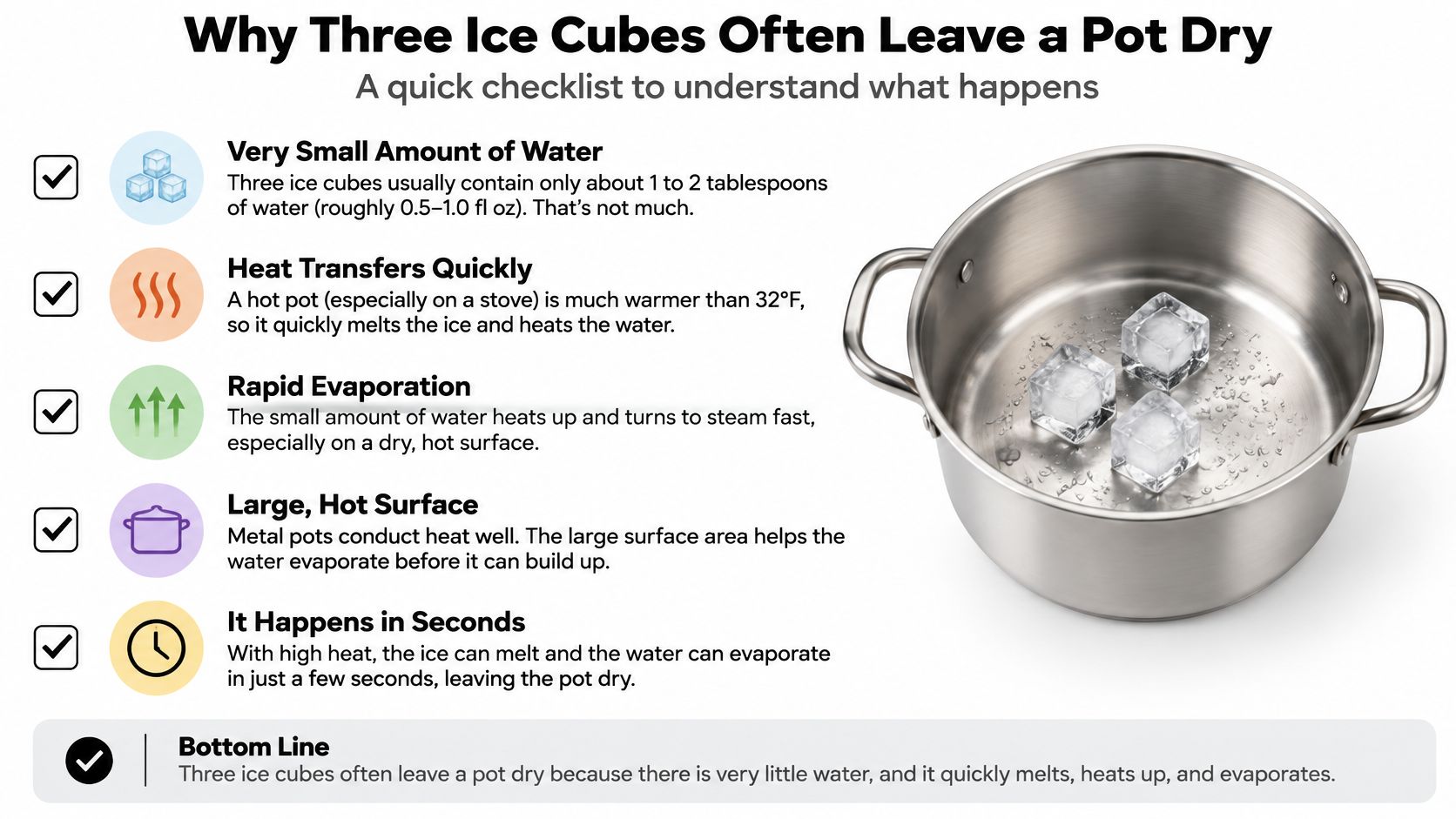
Three cubes can leave a large pot's root zone short of water because the dose is small and may not spread evenly. Meltwater can run through channels in compacted or water-repellent mix, wetting one area while leaving other roots dry. The surface alone cannot show how much of the root ball received water.
For a useful check, assess moisture below the surface. Oklahoma State University Extension recommends checking about 2.5 cm down in a small pot, and deeper in a larger one, then watering with room-temperature water until it drains from the pot. Oklahoma State University Extension's houseplant care sheet gives this benchmark.
Drainage and follow-up matter as much as the amount poured. A pot without a drainage hole can trap runoff; if it sits inside a decorative outer pot, empty the collected water after watering. Check below the surface with a finger or wooden chopstick, or lift a light pot to judge whether it needs water.
For an orchid watered with ice, account for the meltwater: measure it, distribute it across the bark, and empty the saucer. Regularly water through the mix and let it drain to help address uneven wetting and soluble-salt buildup, which can damage root tips.
Ice Cubes, Globes or Room-Temperature Water Compared
Three methods, weighed on the criteria a buyer cares about: how long one dose lasts, what setup costs in effort, what goes wrong, and whether it survives a windy balcony.
| Method | How long one fill lasts | Setup | Refill effort | Clogging | Works outdoors |
|---|---|---|---|---|---|
| Three ice cubes weekly | About one week per dose in the orchid study | Place cubes on the medium | Weekly, measured by hand | No stem to clog; salt build-up risk | Not tested in the study |
| Room-temperature watering | Depends on pot size and plant; check moisture | Pour until water drains from the pot | Whenever the moisture check shows dry | None | Yes, check often in heat |
| Watering globe | Up to about two weeks per fill, less for thirsty plants or large pots | Pilot hole in dense soil, then insert the stem at an angle | Refill the bulb at each fill | Possible in dense soil; optional anti-clog sleeve | Yes, in containers and baskets; check after a hot day |
The ice column is the most misunderstood. In the orchid work, the bark substrate cooled to roughly 11°C while roots directly contacting ice reached about 4–5°C and then warmed gradually, and separate cold-exposure tests found root damage only below approximately −7°C, as reported in the HortScience paper on the trial. Brief, localized cooling stayed above the injury threshold. What the method can't do is spread water evenly through a big pot or flush salts out.
Room-temperature watering is the default because it achieves two things at once: full root-zone coverage and a salt flush. Its weakness is entirely on the human side, since it depends on someone being there and on a pot that drains.
A globe trades control for consistency. Water leaves the bulb as the soil dries, so the mix doesn't swing from soaked to bone dry between visits. The trade-offs are honest ones: dense soil can block the stem, and glass breaks if dropped. Owners who want a season-long picture of how the globes behave can read these plant watering globe reviews before committing.
Plain water for most plants. Ice, in a measured dose, for a bark-grown orchid only. A globe for moisture-loving plants in the hands of someone who travels or forgets.
How Often Each Pot Size Needs Water
Pot size affects how quickly soil dries, but it does not determine a fixed schedule. Room temperature, plant type, soil and drainage also matter. Use the intervals below as starting points, then check the soil.
| Pot size | Typical watering interval | Globe size note |
|---|---|---|
| Small houseplant pot | Every 2 to 3 days | 100 ml globe; expect a shorter fill life |
| Medium pot | Between the small and large pot ranges; check soil to set the interval | 200 ml globe; check soil after two days |
| Large pot | Every 7 to 14 days | 350 ml globe; one small globe may not supply enough |
Oklahoma State University Extension guidance gives these intervals as typical examples: small houseplant pots may need water every two to three days, while large pots may need it every seven to fourteen days. Check the soil rather than treating either interval as a rule for every plant.
A globe's water can last up to two weeks, depending on plant type, climate, pot size and insertion angle. The listed globe sizes are 100 ml, 200 ml and 350 ml, with a mixed size option. Match the size to the plant and pot, then monitor the soil: the number of millilitres alone cannot predict how long a fill will last.
Record the fill date and check the soil after two days. If it is drying too quickly, reassess the globe size and the plant's watering needs. A guide to how to tell when plants need water can help you interpret those signs.
For a small pot that needs frequent attention, adding a reminder to shared household task scheduling can help prevent missed checks.
How to Set Up a Watering Globe for a Trip
For absences longer than one week, the Royal Horticultural Society's holiday care guidance recommends a water reservoir and wick so plants can draw moisture while the owner is away, and notes that for short summer absences a thorough watering before departure may be enough. The same guidance warns that supplying more water than a plant requires causes waterlogging. A globe works as that controlled reservoir, with one condition: you test it before you leave, not after.
- Water the plant thoroughly first and let it drain. The globe is a top-up, not the only source, so the root ball starts evenly moist rather than bone dry with a slow drip aimed at it.
- Make a pilot hole in dense soil. Press a pencil to full stem depth so the glass stem slides in without forcing soil into the tip or snapping under pressure.
- Fill the bulb and seat it fully. A partly seated globe leaks air and drains unpredictably, which is the opposite of what a trip plan needs.
- Insert at roughly 45 degrees. A stem pushed in at a steeper angle makes it harder for air to escape and slows the drip, while the angled insertion keeps water moving.
- Run a two-to-three-day test before you go. Check that the soil stays evenly damp rather than saturated, and confirm the drainage saucer isn't holding a puddle.
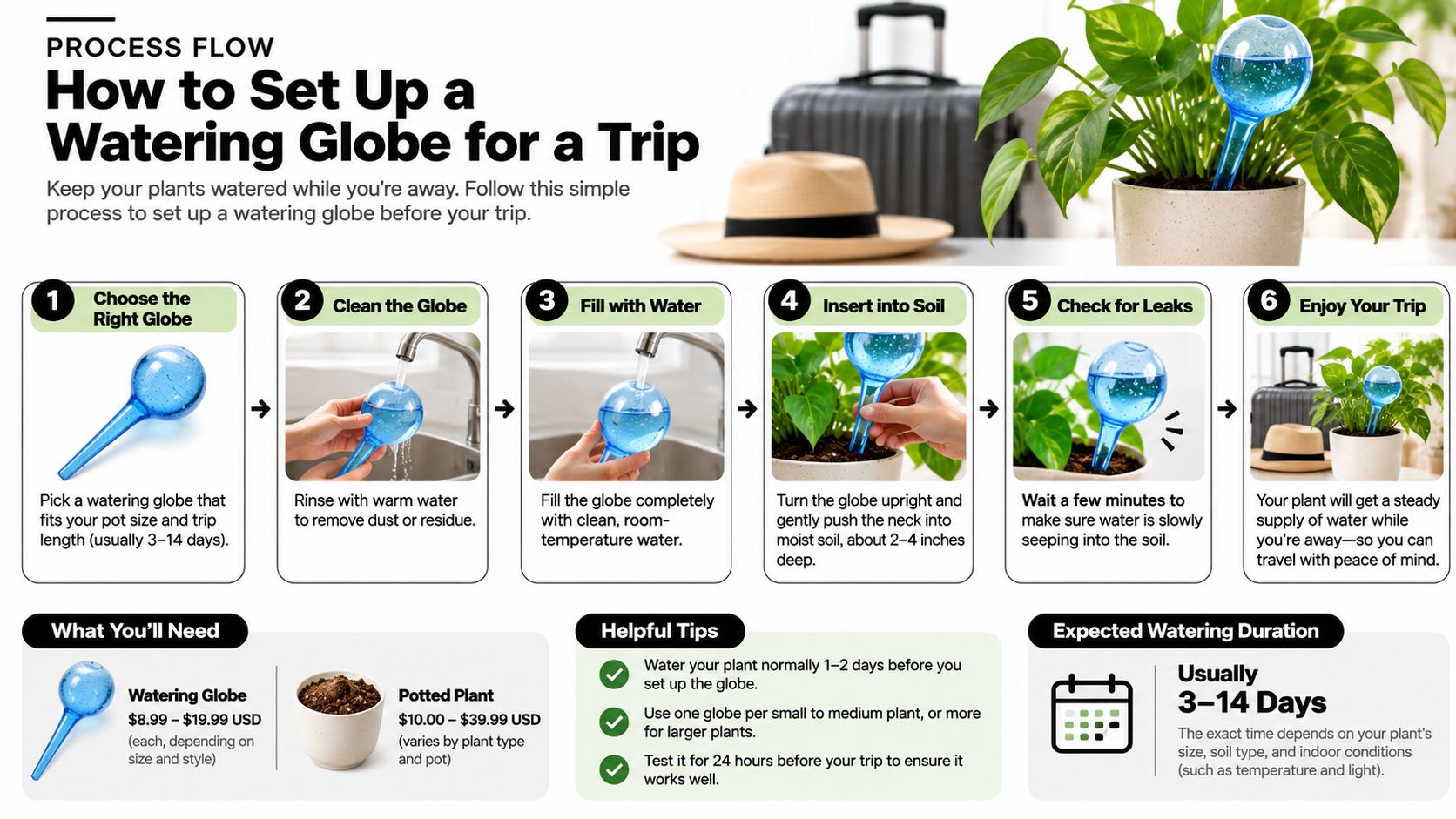
The test run is what turns a guess into a plan. It tells you whether your soil releases water quickly or slowly, and whether your pot is one of the ones that needs a bigger bulb. Once that's clear, choose a Little Green Leaf globe in a size that matches the container instead of buying by guesswork.
How to Stop a Watering Globe Clogging and Clean It
Clogging is the hands-on problem with any globe. Prevention starts at insertion, in the pilot hole: in dense or compacted soil, press a pencil-width channel first so the stem slides in without soil packing into the tip.
- Fit the optional plastic anti-clog sleeve when the soil is dense or mineral-heavy, since it keeps grit away from the opening.
- Read the bulb at each refill. If the water level drops slowly or stops entirely, the stem is probably blocked rather than the plant refusing water.
- Rinse the bulb and stem with clean water, then let the stem drain before refilling so you don't dilute the flow with debris.
- Lift the stem out gently rather than pulling at an angle, which is how thin glass stems snap.
Glass breaks if dropped, so clean over a sink or a folded towel, and keep globes off hard floors where pets knock them. Retire any globe with a crack. A damaged bulb can't hold water at a predictable rate.
Which Plants Suit a Globe and Which Should Skip It
Start with who should skip it. Succulents and cacti are poor candidates for any continuous-release watering, because they need a dry interval between irrigations. Iowa State University Extension recommends thoroughly wetting a succulent's root ball, allowing excess water to drain, and then letting the soil dry completely, with a starting frequency of once every two or three weeks depending on conditions, and notes that succulents won't tolerate staying wet. University of Minnesota Extension likewise states that the soil should dry completely between waterings (cacti and succulents).
So the split is simple. Moisture-preferring houseplants suit a globe. Plants that must dry out get nothing that keeps the mix damp, and a very large pot needs more than one small bulb.
Outdoors, containers and hanging baskets dry fast in summer. A globe helps there, but check the soil often and never assume one fill covers a hot day, because heat and wind shorten the interval far more than a windowsill does indoors.
Decision rule: if the plant sulks when the mix stays damp for three days, it doesn't get a globe. If it sulks when the mix goes crunchy, it does.
Here's how that plays out situation by situation. Most houseplants that like steady moisture get room-temperature water until drainage, with a moisture check about 2.5 cm down. A bark-grown Phalaenopsis can take ice cubes as a measured dose, with a periodic full flush. Succulents and cacti get no ice and no globe. Forgetful owners and frequent travelers with moisture-loving plants get Little Green Leaf Plant Watering Globes, hand-blown glass bulbs that sit in the soil and release water as it dries, available in 100 ml, 200 ml and 350 ml sizes plus a mixed size option.
A globe is a hands-off reservoir, not a replacement for looking at the plant. For more on matching a globe to a specific pot, read the Little Green Leaf guides on how to know when to water plants and on plant water absorption, then pick a globe size that fits the container you're leaving behind.
Frequently Asked Questions
Is watering plants with ice cubes safe?
For most houseplants, room-temperature water is the safer default. See the earlier ice-cube safety section for what the orchid study does, and does not, establish.
How long does one watering globe fill last?
Little Green Leaf globes can release water for up to two weeks, depending on plant type, climate, pot size, and insertion angle. Check the soil and refill as needed.
How many ice cubes should I give a houseplant?
There is no reliable cube count for every pot. The useful test is whether water reaches the root ball and excess drains freely; check below the surface before watering.
Can succulents and cacti use a watering globe?
Generally, no. As explained in the plant-suitability section, these plants need their growing mix to dry between waterings.
How do I stop a watering globe from clogging?
Make a pilot hole before inserting the stem into dense soil, and keep the tip clear. Little Green Leaf globes come with plastic tip covers that help prevent clogs. Rinse the globe and stem if water release slows.
Little Green Leaf Plant Watering Globes are hand-blown glass and have a sale price of $12.45 USD. Fill the globe, insert it into the soil, and let it release water gradually as the soil dries. The right watering method still depends on the pot: enough water must reach the roots, and excess must drain freely.