

How to Know When to Water Plants: A Simple Guide to Happy Plants
Let's set aside that rigid watering schedule. If you’ve been watering your plants every Sunday like clockwork, you might be giving them too much love. The real secret to happy, thriving plants isn’t a calendar—it’s learning to listen to them and understand what they need in the moment.
This guide is all about swapping guesswork for confidence. We'll walk through a few simple, gentle methods to figure out exactly when your plants are actually thirsty.
The Secret to Confident Plant Care
Feeling a little unsure about when to grab the watering can? You're not alone. So many of us start out thinking a strict routine is the key, but a plant's thirst changes all the time. It depends on the season, how much light it's getting, the humidity in your home, and even the pot it lives in.
That's why learning to observe your plant is such a wonderful skill to build.
The good news is, you don’t need a special "green thumb." It's really just about paying a bit of attention. Plant lovers have been using these simple techniques for generations, and they don’t require any fancy gadgets. Think of it as building a friendship with your green companions, turning a chore into a quiet moment of connection.
This little decision tree breaks down the main ways to check if it's time to water.
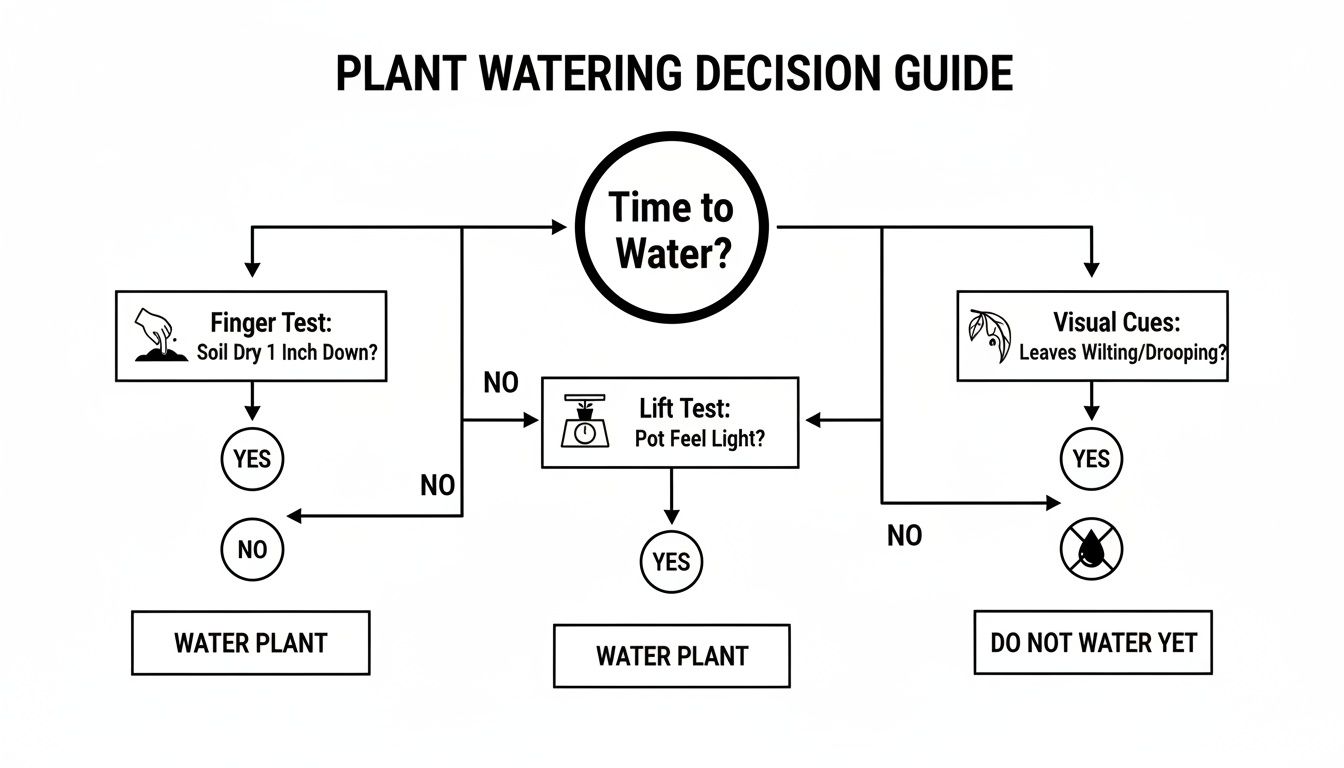
As you can see, your best tools are the ones you already have: your senses of touch, weight, and sight.
To make it even simpler, here's a quick rundown of these gentle methods.
Quick Guide to Checking Plant Thirst
This table summarizes the three main, tool-free ways to see if your plant needs a drink.
| Method | How It Works | Best For |
|---|---|---|
| The Finger Test | Stick your finger into the soil up to the second knuckle. If it feels dry, it's time to water. If it's damp, wait a few more days. | Almost all houseplants, especially for beginners. It's the most direct way to check moisture. |
| The Lift Test | Get a feel for how heavy the pot is right after watering. Then, lift it every few days. A noticeably lighter pot means the soil has dried out. | Small to medium-sized plants that you can easily lift without straining yourself. |
| Visual Cues | Look for subtle changes. Leaves might start to look a little soft, droopy, or curled at the edges. Don't wait for them to turn yellow or crispy! | Plants you're familiar with. This method works best once you know your plant's specific "I'm thirsty" look. |
Learning these simple checks will help you tune into what your plants really need, rather than just guessing.
Why Less Is Often More
It’s completely natural to want to dote on your plants, but giving them too much water is one of the most common pitfalls for new plant parents. Many of the most popular houseplants actually prefer their soil to dry out a bit between waterings.
This dry spell isn't neglect; it's a good thing! It encourages the roots to grow deeper and stronger as they search for moisture, which is exactly what builds a tough, resilient plant.
Letting the soil dry can even encourage a stronger root system, creating a much healthier foundation for beautiful new growth. If you want to dive deeper, you can discover more insights about these plant studies and see how proper watering builds resilience.
By shifting your focus from a rigid schedule to your plant's actual needs, you’re not just keeping it alive—you’re helping it thrive.
Using Your Hands as Your Best Tool
Before you think about fancy gadgets, remember the best tool for checking your plants is already with you: your hands.
Getting a feel for your plants and their soil is the most reliable way to figure out what they need. It turns watering from a chore on your calendar into a quick, mindful check-in. This is how you really start to build that "green thumb" intuition.
Two of the easiest and most effective methods are the good old-fashioned "finger test" and the "lift test." They're free, simple, and give you instant feedback right from the source.
The Classic Finger Test
There's a reason every experienced plant person shares this tip. The finger test tells you what’s happening below the surface, right where the roots are. It’s the most direct way to know if it's time to bring out the watering can.
Here’s how to do it:
- Find a spot a few inches away from the plant’s stem to avoid poking the roots.
- Gently push your index finger down into the soil about two inches, or up to your second knuckle. The top layer of soil dries out quickly, so you need to check a little deeper.
- Pay attention to how it feels. If the soil is cool and damp, and a bit sticks to your finger, your plant is happy for now. Wait another day or two before checking again.
- If your finger comes out clean and dry, and the soil feels loose, it's time to water. Your plant is thirsty.
This simple check takes all the guesswork out of the equation. For a snake plant, you might find the soil is perfectly dry two inches down even after a couple of weeks. A thirsty Boston fern in a sunny window, on the other hand, might feel that way in just a few days. The plant will always tell you what it needs far better than a schedule can.
Mastering the Lift Test
Here's another wonderfully simple trick: just pick up the pot. The "lift test" is all about developing a feel for your plant's hydration level by sensing its weight. It's especially handy for your small- to medium-sized plants in lighter plastic or nursery pots.
The idea is to give yourself a mental baseline. The next time you water a plant, give it a good, thorough soak until water runs out the bottom. Then, right after, lift the pot and notice how heavy it is. That's your "fully watered" benchmark.
A pot filled with well-watered soil is surprisingly heavy. As the plant uses water and some evaporates, the pot gets significantly lighter.
Now, every few days, just lift the pot again. When it feels noticeably lighter than you remember, you know the soil has dried out and it's time for a drink. You’ll be amazed at how quickly you get a feel for the difference. It's a subtle but powerful way to connect with your plants and become a more confident plant parent.
Learning to Read Your Plant's Cues
Beyond touching the soil or lifting the pot, your plants are always sending out signals. Learning to read their leaves and stems is like learning their language. It helps you move from a rigid schedule to a more intuitive, responsive rhythm of care.
Plants have their own unique ways of saying, "I could use a drink!" Some are a bit more dramatic about it, while others are subtle. The trick is to catch these early signals before the plant gets too stressed.
Common Signs of Thirst
One of the classic signs is drooping or wilting leaves. The Peace Lily is famous for this—its leaves will theatrically slump when it needs a drink, only to perk right back up a few hours after you water it. It’s a fantastic plant for beginners for this very reason.
For other plants, like a Pothos or Fiddle Leaf Fig, the message is a little less obvious. You might notice their leaves start to curl inward at the edges, or they might just feel a little softer and less firm than usual.
A plant’s leaves are full of water, which is what gives them their structure and firmness. When they start running low on hydration, they lose that internal pressure, leading to a softer, droopier look.
Also, keep an eye out for any changes in color. A thirsty plant's leaves can start to look dull or less vibrant. Think of it as an early whisper that it’s time for a good soak.
Thirst vs. Overwatering: How to Tell the Difference
This is where things can get a little tricky, especially when you're just starting out. While drooping leaves can mean a plant is thirsty, they can also be a sign of overwatering. So, how do you tell the difference? It's all about looking for other clues.
An underwatered plant will have:
- Droopy leaves, but the soil will be completely dry.
- Crispy, brown edges starting to form on the leaves.
- A pot that feels very light when you pick it up.
An overwatered plant, on the other hand, tells a completely different story. This is usually the more serious issue of the two, as it can lead to root rot.
Here’s what to look for if you suspect you’ve been a little too generous with the watering can:
- Yellowing leaves, especially the lower ones closest to the soil.
- Soft, mushy stems right at the base of the plant.
- Soil that feels soggy or swampy for days after you last watered.
- A faint musty or moldy smell coming from the pot.
By pairing what you see with what you feel in the soil, you can confidently figure out what your plant needs. If the leaves are droopy and the soil is dry, it's thirsty. Simple. If the leaves are yellow and the soil is still wet, it’s time to step back and let things dry out. This skill of observation is your single best tool for growing a thriving indoor jungle.
How Your Home's Environment Affects Watering
Have you ever moved a plant from one spot to another, only to find its needs completely changed? One minute it's thriving, the next it needs a little extra attention. That's because your plant's thirst is directly tied to its surroundings. This is exactly why a rigid "water every Saturday" schedule often doesn't work.
Think of your plant as a tiny ecosystem reacting to its environment. The amount of sun hitting its leaves, the humidity in the air, even the pot it lives in—all these things determine how quickly it uses water. A plant soaking up rays in a bright, sunny window is working hard, using lots of water to fuel its growth. The very same plant tucked into a shady corner is in a more relaxed state, needing a drink far less often.
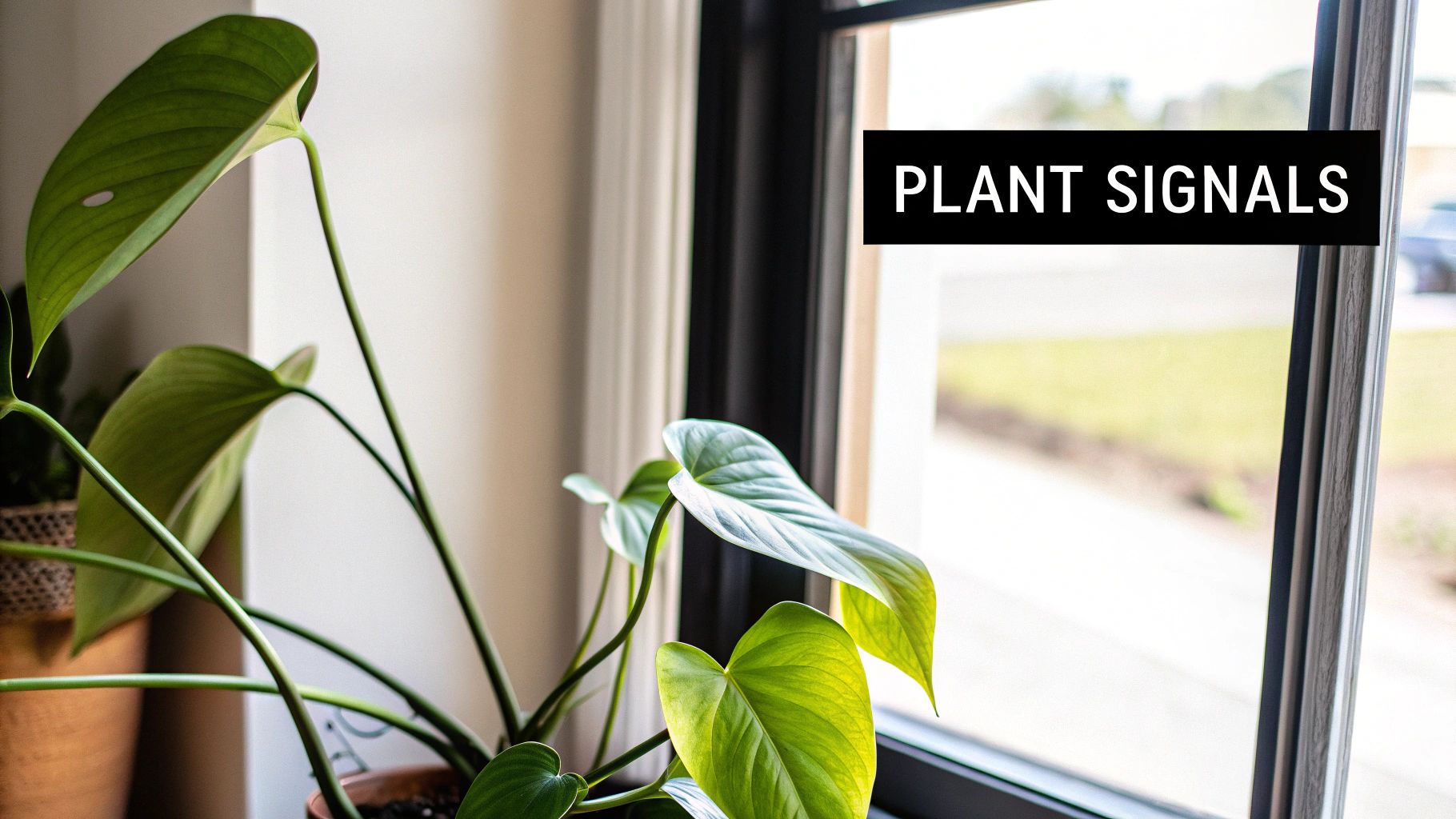
This gentle dance between your plant and its environment is why learning how to know when to water plants is more about being a good observer than a strict scheduler. As your home's conditions change, so do your plant's needs.
Light and Temperature Are Key
Sunlight is fuel for your plant. The more sun it gets, the harder it works and the more water it uses to power that growth. You'll really notice this in the summer when the days are long and warm; that's when a plant might need a drink twice as often as it does in the quiet of winter.
The temperature in your home plays a huge part, too. Warm air pulls moisture out of both the soil and the plant's leaves. If you have the heat on in winter or the AC running in summer, the air gets drier, which just speeds up the process.
Your Plant's Pot Matters, Too
This is one of those simple things that people often overlook, but the type of pot you choose has a big impact on your watering routine.
- Terracotta Pots: These are porous, which means they breathe. This is great for letting air reach the roots, but it also means the soil dries out much faster.
- Plastic or Glazed Ceramic Pots: These materials don't breathe in the same way. They hold moisture in, so you’ll find yourself watering plants in these containers less frequently.
It's helpful to know how these subtle differences can affect your plants. By being mindful of the pot, you can better anticipate how often your plant might need a check-in.
Adjusting to the Seasons
Just like you change your wardrobe with the seasons, your watering routine needs to adapt, too. Plants have their own internal clocks that sync up with the changing light.
Winter is a time for rest. With shorter days and weaker sunlight, most houseplants dramatically slow their growth. They aren't pushing out new leaves, so they need significantly less water.
Come spring and summer, it's a different story. Your plants are waking up, unfurling new growth, and are suddenly much thirstier. By tuning into these environmental shifts, you can give your plant exactly what it needs, right when it needs it. And if you're heading out of town, our guide can help you figure out how long plants can go without water.
Simple Solutions for Consistent Watering
Getting the hang of your plant's unique needs is one of the most rewarding parts of plant care, but life gets busy. Between work, travel, and everyday tasks, keeping up with watering can sometimes feel like one more thing on your to-do list.
This is where a simple, thoughtful tool can bring back the joy. For those times you just can't be there, self-watering solutions are a wonderful support system. They step in to provide a steady supply of moisture, giving you peace of mind, whether you're off on vacation or just navigating a hectic week.
How Do Self-Watering Globes Work?
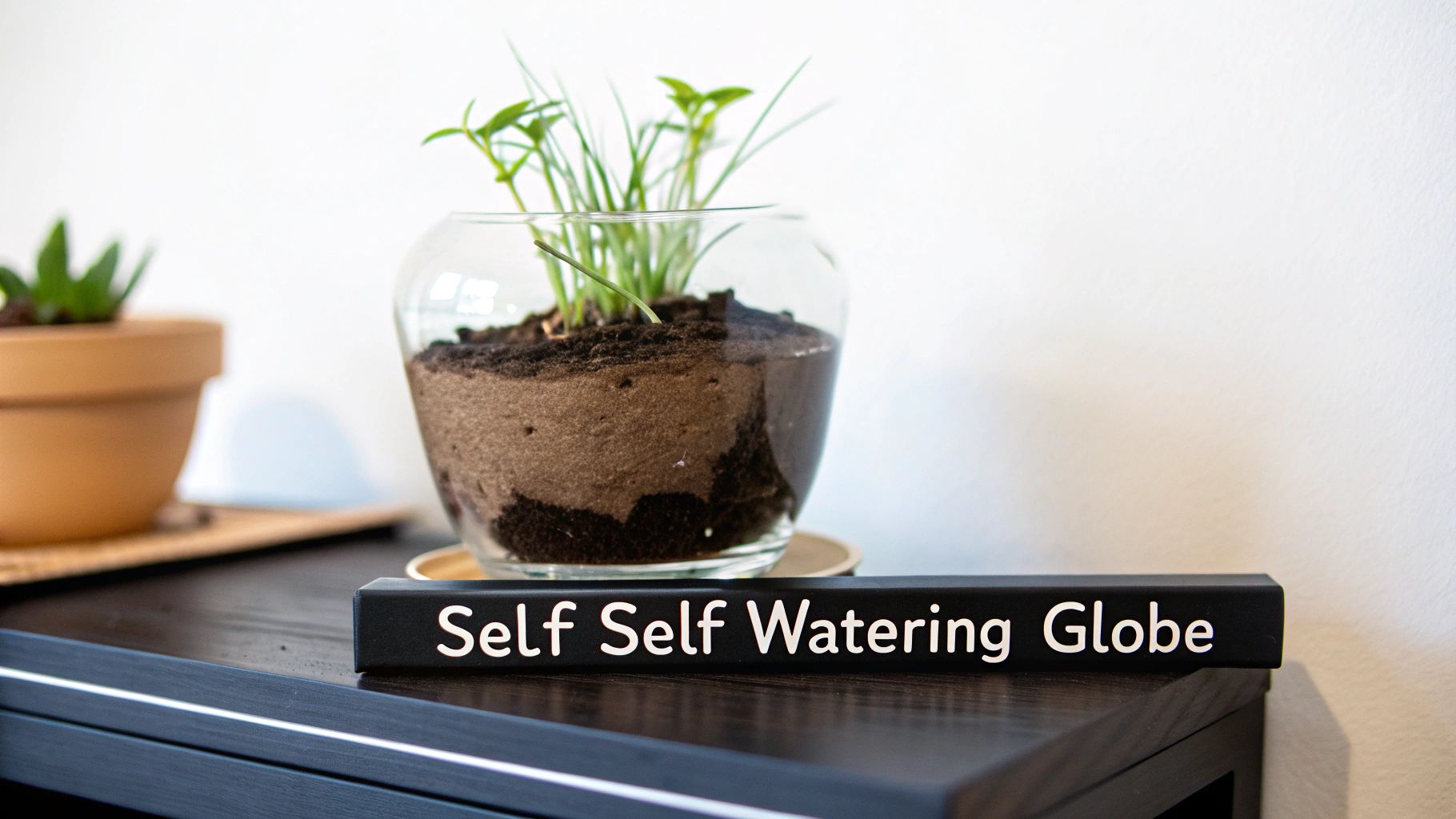
The concept behind a self-watering globe is beautifully simple. You fill the globe with water, gently press the stem into the soil, and it takes care of the rest. It's a silent partner for your plant.
Here’s how it works: as the soil starts to dry out, tiny air pockets form. That air travels up the globe's stem, releasing a small amount of water back into the soil. Once the soil is moist enough, the process pauses all on its own.
This gentle, on-demand system is what makes it so effective. It mimics a more natural watering cycle by releasing moisture only when the plant actually needs it. This simple process is a fantastic way to avoid the two biggest watering mistakes: giving too much water at once or waiting too long between drinks.
It means your plant's roots get a steady, reliable source of hydration without ever sitting in soggy soil. This is key for encouraging strong, healthy growth.
More Than Just a Practical Tool
While they're incredibly useful, the right tools can also be a beautiful addition to your home. Hand-blown glass globes, like the ones from Little Green Leaf, do more than just water your plants—they can become part of the decor. The elegant shapes and rich colors complement your pots and can elevate the look of your indoor garden.
A single fill can keep your plant hydrated for up to two weeks, though this can vary depending on your plant's size, its environment, and the type of soil it's in. This makes them perfect for:
- Apartment Dwellers: Keep that desk plant looking vibrant without another daily task to remember.
- Travelers: Go on your next adventure with confidence, knowing your green friends are being cared for.
- New Plant Parents: It’s a great safety net that helps you avoid common watering mistakes while you're still learning.
Using a tool like a watering globe isn't about disconnecting from your plants; it's about supporting that connection. It ensures they get consistent care even when life pulls you in different directions. If you want to see how easy they are to use, check out how to use watering globes in our step-by-step guide. It’s a simple way to build your confidence and enjoy a thriving home oasis with a little less stress.
Your Journey to Confident Plant Care
The real secret to great plant care isn't a strict schedule—it's learning to be observant. Knowing how to know when to water plants is a skill you build by simply paying attention, and it gets easier and more natural over time.
Think about the simple, powerful tools you already have: your own hands. The finger test tells you exactly what’s happening beneath the surface, while lifting the pot gives you an intuitive feel for your plant’s needs. These gentle methods are far more reliable than a calendar.
Your journey as a plant parent is all about connection. Trust your intuition—it's your best guide. Every time you notice a droopy leaf or feel the soil, you're getting better at understanding what your plants are trying to tell you.
Your plants will always show you what they need. By learning to listen, you're not just keeping them alive; you’re building a relationship. With these simple practices, you have everything you need to grow a thriving indoor jungle with confidence. This approach turns plant care from a chore into a genuinely rewarding part of your day.
A Few Common Watering Questions
Even with the best intentions, a few questions always come up. Let's clear up some of the most common worries for new plant parents.
How Can I Tell If I’m Giving My Plant Too Much Water?
You're not alone in wondering this—it's very common to over-love our plants with too much water. The good news is, your plant will give you some gentle signals.
Keep an eye out for yellowing leaves, especially the older ones near the base of the plant. If the soil feels damp or heavy long after you've watered, that's another clear sign. Sometimes you might even notice a stem that feels soft near the soil line. If you spot these things, it's okay! Just pause on watering and let the soil dry out completely before you check on it again.
Should I Water My Plants on a Fixed Schedule?
It's tempting to get into a routine, like "Watering Wednesdays," but it's best to let your plant lead the way. A plant's thirst changes all the time depending on the season, how much light it's getting, and the humidity in your home.
The fern that needed water every week in July might only need a drink every two or three weeks in winter. The only truly reliable way to know for sure is to check the soil first.
Your plant will always tell you when it's thirsty. That quick finger test is so much more accurate than a fixed schedule.
Do Self Watering Globes Work for Succulents?
Self-watering globes are a wonderful tool for plants that love consistently moist soil, like ferns and monsteras. For succulents and cacti, which need their soil to dry out completely between drinks, they're best used for short-term care.
They can be a lifesaver for keeping your desert plants happy if you're heading out of town. In fact, they're a fantastic tool if you need to figure out how to keep plants watered while on vacation. Just don't leave them in the pot all the time, as that would keep the soil too moist for their liking.
Ready to make watering effortless? Explore the beautiful, hand-blown glass self-watering globes from Little Green Leaf and give your plants the consistent care they deserve. Shop the collection now.