

How to Keep Plants Watered While on Vacation: A Simple Guide
Leaving your plants behind shouldn't cast a shadow over your travel plans. We believe that with a little simple prep, you can head out on vacation feeling confident that your green friends will be happy and hydrated while you're gone.
So, how do you make it happen? The key is to match your method to your trip's length and your plants' needs. Sometimes, a good, deep watering right before you leave is all they need. For longer trips, you can explore simple tools like a DIY wicking system or self-watering globes that deliver consistent moisture without any fuss.
Enjoy Your Trip—Your Plants Will Be Fine
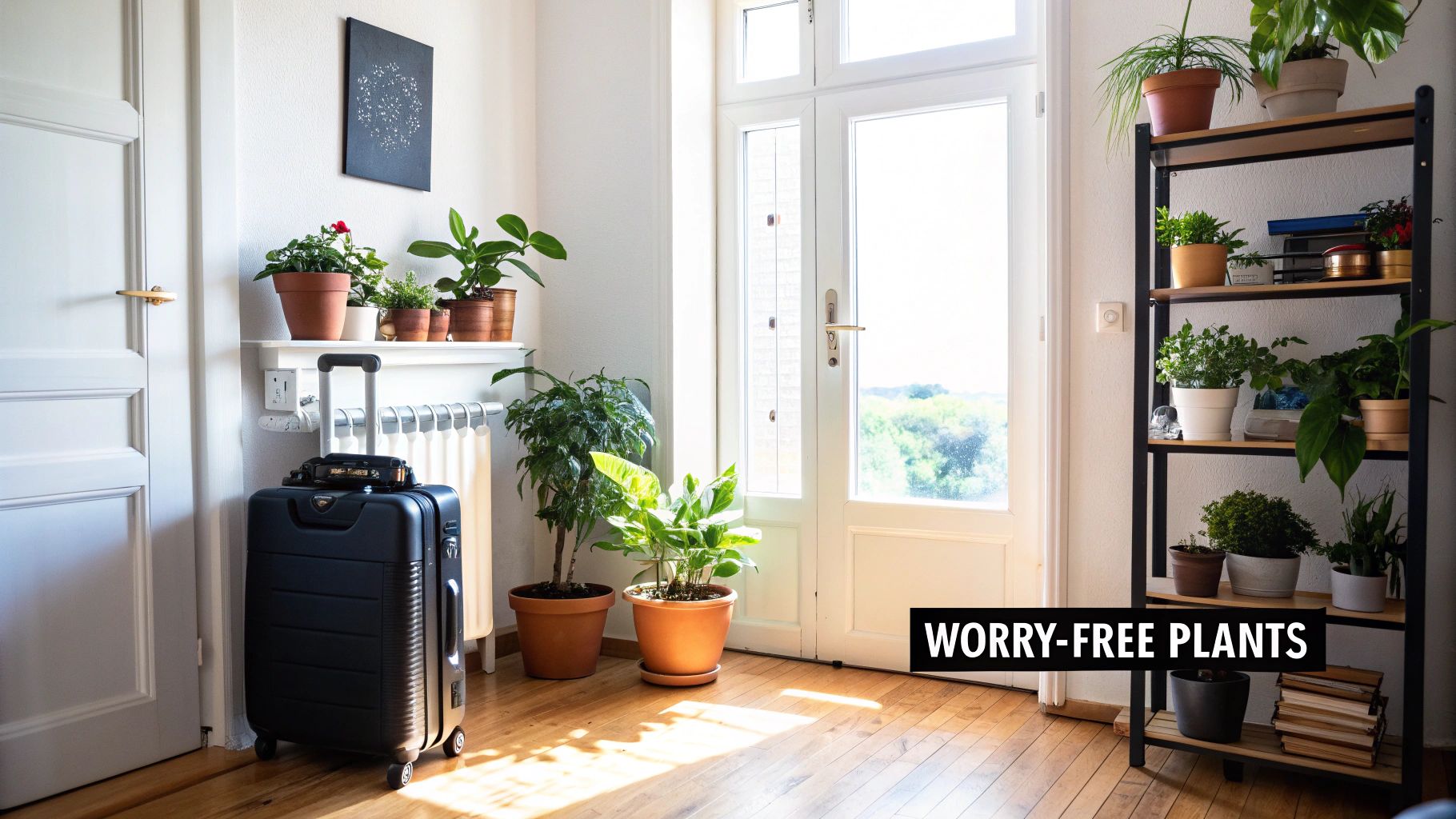
This guide is all about keeping things simple and giving you peace of mind. Let's leave behind the worry of returning to wilted leaves. Instead, we’ll focus on practical, straightforward solutions that work for everyone, whether you're a first-time plant parent or have been caring for plants for years.
Setting the Scene for a Peaceful Departure
Coming home to a thriving indoor garden is completely achievable. It just takes a few thoughtful adjustments before you lock the door. We'll walk through everything, from the quick tasks you can do right before you go to the helpful tools that can handle the watering for you.
A little planning now helps ensure your homecoming is just as relaxing as your vacation was.
The goal is simple: create a stable environment where your plants can comfortably rest until you're back. This really just comes down to a few key things:
- Adjust their environment to help them conserve water.
- Give them one last deep drink right before you head out.
- Choose a watering method that makes sense for your trip and your plants.
With the right setup, you can walk away knowing your plants aren't just surviving—they're thriving. That consistency is the real secret to happy plants and a worry-free vacation for you.
We'll go through each step together, explaining why these simple methods work. By the end, you'll have a clear plan to keep your plants watered, letting you focus on what really matters: enjoying your trip.
Your Pre-Vacation Plant Care Checklist
A little prep work the week before you leave can make all the difference for your plants. This isn't about a complicated routine. It's just a few simple steps to set your green friends up for success while you’re gone.
Think of it as tucking them in and making sure they're cozy. Getting these simple things right helps any watering solution you use work even better.
Give Them One Last Good Drink
About a day or two before you head out, it's time for a deep, thorough watering. This means more than just a quick splash—you want to completely moisten the soil.
Water slowly, letting it run all the way through until it starts to drip from the drainage holes. Wait a few minutes, then tip out any excess water from the saucer. This ensures the entire root ball has access to moisture, creating a reserve that will last much longer than a light surface watering. This one step is probably the most important thing you can do.
Move Plants Away from Direct Sunlight
Just like us, plants use water much faster when they're sitting in the hot sun all day. A simple but effective trick is to move your sun-loving plants to a spot with bright, indirect light.
Moving a plant just a few feet away from a sun-drenched window can greatly reduce how much water evaporates from the soil and is lost through the leaves. It's a small adjustment that helps them conserve every last drop.
This doesn't mean putting them in a dark closet. Just find a spot where they won't get direct, intense afternoon sun. Your plants will be perfectly fine with a little less light for a week or two, and they'll thank you by staying hydrated.
Group Your Plants Together
Have you ever noticed how plants seem happier in a group? There's a reason for that. When you cluster your houseplants together, maybe in the bathroom or kitchen, you're creating a little humid microclimate.
As plants release moisture through their leaves—a natural process called transpiration—they boost the humidity in the air for their neighbors. It’s like they’re all helping each other out. This shared humidity helps everyone stay a bit more hydrated while you're away.
For those with a larger collection of outdoor potted plants, you might want to learn about setting up an outdoor automatic watering system. But for your indoor family, this simple grouping strategy is a wonderful part of vacation plant care, creating a supportive little community that helps them do well until you get back.
Choosing The Right Vacation Watering Method
Alright, your plants are prepped and ready for your time away. Now for the most important part: choosing a watering method that fits your trip and your plant collection. There's no single "best" way; it's all about what works for you, your plants, and your peace of mind.
Let's walk through a few simple, reliable options. The goal here is to find a solution that feels straightforward and gives you the confidence to lock the door and not worry.
Simple DIY Watering Solutions
If you're just heading out for a long weekend or you simply enjoy a clever, hands-on fix, a DIY system can be a perfect fit. One of the most classic methods is the water-wicking system, often just called the string method.
It’s surprisingly effective and works on a basic scientific principle called capillary action—the same way a paper towel soaks up a spill.
- First, find a large jar or vase and fill it with water.
- Place it on a book or small stool so it’s sitting a bit higher than your plant's soil.
- Cut a piece of absorbent string—cotton or nylon rope works well—long enough to reach from the bottom of the water jar into your plant’s soil.
- Push one end of the string a few inches down into the soil near the plant's base, then place the other end in your water jar, making sure it reaches the bottom.
The string will slowly draw water from the jar into the soil as it begins to dry out, delivering a steady, gentle supply of moisture. It’s a wonderfully simple and effective way to keep your plants happy for about a week.
Easy Set-It-And-Forget-It Options
If you’re planning a longer trip or just prefer a more hands-off approach, some simple tools can be a great choice. Self-watering globes, like our Little Green Leaf globes, are a favorite for their simplicity and effectiveness. They can offer peace of mind without any complicated setup.
These globes are designed to release water only when the soil needs it. As the soil dries, it allows air to enter the globe's stem, which in turn releases a small amount of water. This clever exchange helps prevent overwatering—a common plant-sitting mistake—and ensures your plants get consistent hydration.
This visual guide can help you map out which approach might be best for your upcoming trip.
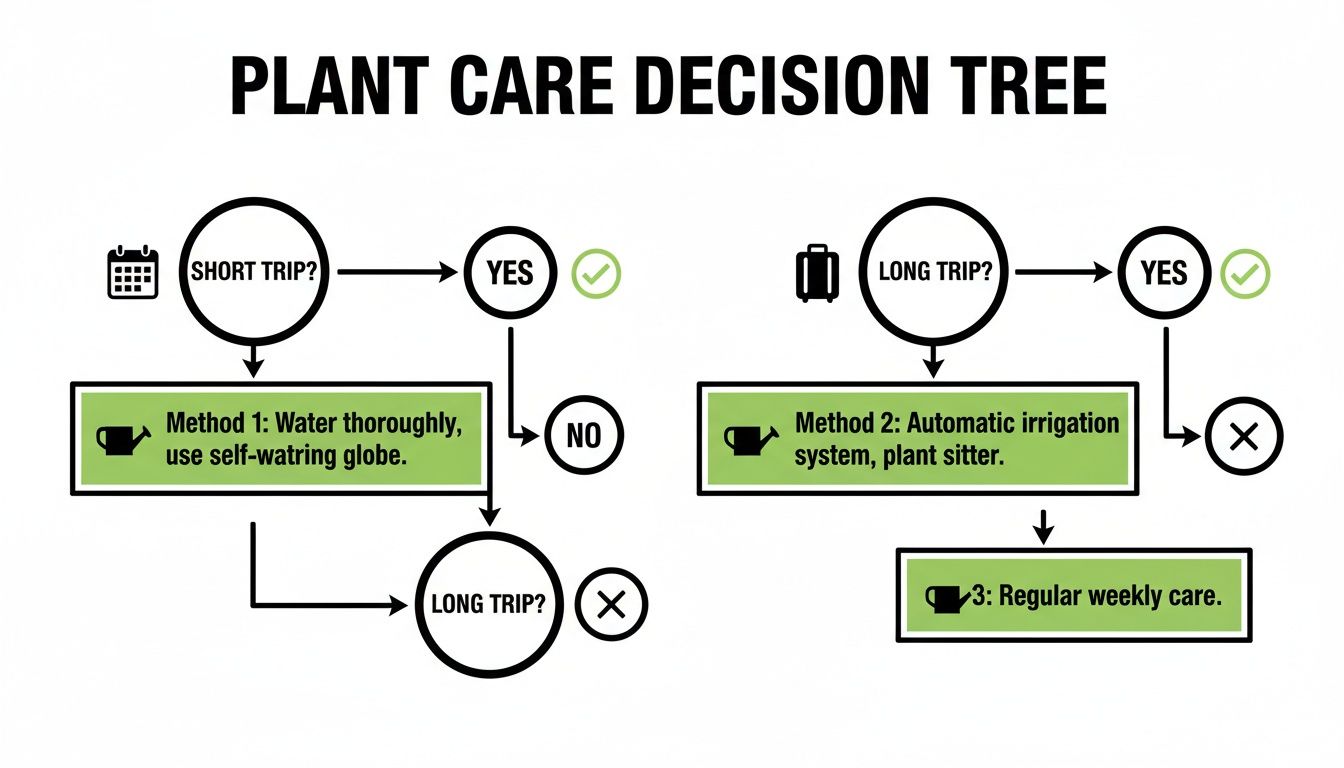
As the decision tree shows, the length of your trip is the biggest factor in choosing your watering method, guiding you from simple prep for short trips to more robust solutions for longer ones.
The recent growth in home gardening has shown that consistent watering can be a challenge. In fact, many plant troubles stem from inconsistent watering, which often happens when owners are away. Tools like watering globes directly address this by providing a steady supply of water for up to two weeks, keeping your plants stable and happy.
Vacation Watering Methods At A Glance
Feeling a little unsure about the options? This table breaks it down to help you see which method might be the best fit for your situation.
| Method | Best For (Trip Length) | Effort Level | Pros | Cons |
|---|---|---|---|---|
| Water Wicking (String) | 3-7 days | Low-Medium | Very low cost; uses household items; good for a few plants. | Water jar can run dry on longer trips; requires some initial setup. |
| Watering Globes | Up to 14 days | Very Low | Very easy to use; helps prevent overwatering; looks nice; reliable. | Initial investment required; glass can be delicate. |
| DIY Bottle Dripper | 3-5 days | Low | Inexpensive; recycles plastic bottles; simple idea. | Can be tricky to get the drip rate just right; may empty too quickly. |
| Self-Watering Planters | 1-2+ weeks | Very Low | Highly effective; set-it-and-forget-it; great for thirsty plants. | Requires repotting the plant; higher initial cost. |
Choosing a method really comes down to matching the tool to the task. For a quick trip, a simple DIY solution is often enough. For anything longer, a purpose-built tool is usually a reliable choice.
Matching The Method To Your Needs
So, which one is right for you? It really comes down to three things: how long you'll be gone, how many plants need care, and your own personal preference.
Your best strategy is the one that simplifies your life and keeps your plants healthy. Don't overcomplicate it—consistency is what matters most.
For a long weekend, the DIY string method is a great, practically free option. For a two-week vacation, a set of quality watering globes provides extra reliability and frees you from worrying about a water jar running dry.
Feel free to mix and match! You could use globes for your thirstiest plants and set up a string system for the more drought-tolerant ones. For more ideas on finding the right tools for your specific plants, check out our guide on choosing self-watering containers.
How To Use Self-Watering Globes Correctly
Using a self-watering globe for the first time should be simple and satisfying. These little tools are a fantastic, reliable way to keep your plants happy, especially when you're heading out of town. Let's walk through how to set them up so you can leave feeling completely confident.
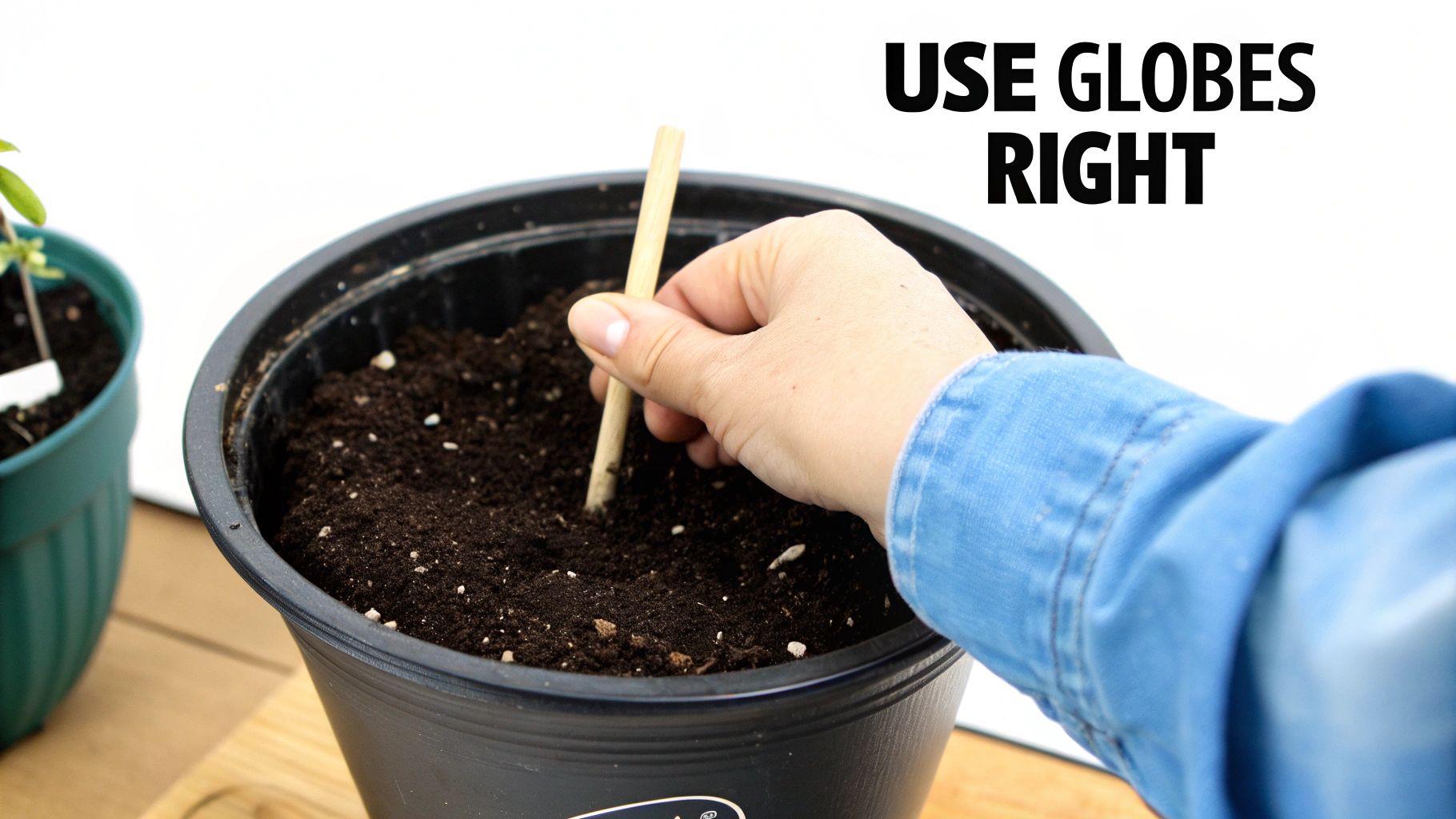
The very first step is a small one, but it makes all the difference. Before inserting the globe, grab a pencil or a chopstick and gently poke a hole into the soil where you want it to go. This simple move prevents the globe's stem from getting packed with dense soil, making sure water can flow freely right from the start.
Filling And Inserting Your Globe
With your pathway cleared, fill the globe with tap water. You don’t need to get it absolutely full to the brim—about 90% full is just right.
Now, gently but firmly push the stem into the hole you made. Try to insert it at a slight angle instead of straight up and down. This angle helps regulate how quickly the water is released, preventing it from draining too fast. The whole idea is to create a slow, steady release that gives your plant a drink only when it needs one.
A common mistake is pushing the globe into dry, compacted soil without making a hole first. This often leads to a clogged stem and a thirsty plant. That one extra step is the secret to success.
It's easy to see why these globes have become such a popular solution for plant parents. Their popularity speaks to a real need for simple, effective tools that fit our busy lives. The market for plant care tools is growing as more people look for dependable ways to care for their greenery during travel, making tools like Little Green Leaf's globes an essential part of modern plant care. You can read more about what's driving these trends in this detailed report.
Give It a Trial Run
Here’s a great tip for total peace of mind: test your watering globes for a few days before you actually leave. A trial run lets you see how your specific plant and your home's environment affect how quickly the water is used.
- Watch the water level: Check the globe after 24 hours. The water should have gone down a bit, but not by a huge amount.
- Feel the soil: The soil near the globe should be lightly and evenly moist, not soggy.
- Make adjustments: If it's emptying too fast, try a shallower angle. If it's not releasing any water, the stem might be clogged—just pull it out, clear the opening, and place it back in.
This quick test run will make you feel much more confident and helps you find the perfect placement for each plant. For a deeper dive into troubleshooting and getting the best results, check out our complete guide on how to use watering globes. By taking just a few moments to set them up right, you're making sure your plants get perfect, consistent moisture while you’re gone.
Easing Back In: Your Post-Vacation Plant Checkup
Coming home after a trip should be a happy reunion with your plants. Before you even finish unpacking, take a few minutes for a calm walk-around to see how your green friends are doing. This isn't about rushing to fix things, but about slowly getting back into your familiar care rhythm.
The very first thing to do is just look. Take a tour of your plant collection. How is everyone doing? Resist the urge to immediately drench them with a watering can, even if they look a little thirsty. A sudden flood of water can sometimes shock a very dry plant, so a gentle approach is best.
A Gentle Re-Entry Inspection
Start by checking the soil. Gently press a finger about an inch into the soil of each pot. Is it dry, a little damp, or still moist? This simple test tells you exactly what your plant needs right now.
Once you have a feel for the soil, give the leaves and stems a closer look.
- Pest Check: While you were away, some uninvited guests might have appeared. Check the undersides of leaves and around new growth for any signs of common pests.
- Leaf Check: It’s completely normal to find a few yellow or brown leaves. This is just your plant’s way of conserving energy while you were gone. No need to worry.
- Overall Vibe: Do your plants look a bit droopy, or are they standing tall? A little wilting is often just a sign of thirst and is usually an easy fix.
Getting Back to Normal
After you’ve done your assessment, you can start tending to them. If the soil is dry, give them a good, thorough drink, making sure any excess water drains completely out of the bottom. Don't let them sit in a puddle.
For any of those yellow or crispy leaves you found, just snip them off with clean scissors at the base of the stem. This little bit of pruning isn't just for looks; it encourages your plant to focus its energy on new, healthy growth.
The most important thing? Avoid overcompensating. Don't let a few sad-looking leaves cause you to overwater or over-fertilize. Just calmly resume your regular care schedule. Consistency is what helps your plants bounce back and thrive.
Knowing how to keep your plants happy while you're away can make travel much more relaxing. With the growing interest in indoor gardening, many people are looking for simple ways to manage plant care and travel. With a little planning, you can ensure you always return to a peaceful, green home. You can dig deeper into these gardening trends and insights to see what's new.
Still Have Questions About Vacation Plant Care?
Even the most experienced plant parent can get a little nervous leaving their green family behind. It’s completely normal! Thinking through a few common questions before you go can give you that final boost of confidence. Let’s tackle some of the big ones.
How Long Can Most Houseplants Go Without Water?
This is a great question, and the honest answer is: it really depends on the plant.
A tough succulent or snake plant can easily go two or even three weeks without water, especially if you've moved them to a spot with less light. They are naturally built to handle dry spells.
A thirsty fern or calathea, on the other hand, might start to look wilted after just a week. The pre-vacation prep we talked about—giving a deep drink and moving them out of direct sun—is your best bet for helping all your plants last longer between waterings.
Bottom line: for any trip longer than a week, a reliable watering solution is the kindest thing you can do for your thirstier plants.
Are Self-Watering Globes a Good Fit For All My Plants?
Self-watering globes are a wonderful tool for the majority of common houseplants—the ones that like their soil to stay consistently moist but not soggy. Think of your pothos, monsteras, philodendrons, and peace lilies. They do very well with the steady, gentle hydration a globe provides.
However, they aren't a one-size-fits-all solution. They’re not the best choice for plants that need their soil to dry out completely between waterings.
- Great for: Tropicals, leafy foliage plants, and any plant that tends to droop when it gets thirsty.
- Not ideal for: Cacti, succulents, and snake plants. For these desert-loving plants, a thorough soak right before you leave is typically more than enough for a two-week trip.
Help! My Watering Globe Emptied Too Fast. What Happened?
It can be surprising to see a full globe drain in just a day or two during your trial run, but don't worry. There's usually a simple reason, and a few small adjustments can make all the difference.
First, consider the soil. If it was very dry when you inserted the globe, it will naturally absorb water much faster at first. The flow rate should slow down once the soil becomes evenly moist.
If it keeps draining quickly, try this little trick: re-insert the globe at a shallower, more horizontal angle. Pushing it straight down can sometimes cause water to flow out too quickly. A slight change in angle is often all it takes to find that perfect, slow-drip sweet spot.
Also, make sure you created a good hole first. Pushing the globe into compacted soil can create large air pockets around the stem, causing a sudden rush of water. Just pull it out, gently poke a new hole, and re-insert it. That usually does the trick.
Ready to head out on your trip without a single worry about your plants? The right tools make all the difference. At Little Green Leaf, our beautiful, hand-blown glass watering globes provide that consistent, reliable hydration you need. You can finally relax, knowing you'll come home to a happy, thriving indoor garden. Explore our collection and find the perfect globes for your plants at https://www.littlegreenleaf.co.