

A Calm Guide to Self Watering Containers
Let's be honest, keeping plants perfectly watered can feel like a bit of a guessing game. If you've ever felt a pang of guilt leaving for a long weekend, or just stared at the soil wondering, "Is it time yet?", you're not alone. Plant care should be a joy, not a source of stress.
This is where self-watering containers come in. They're a simple tool designed to make your life easier and your plants happier.
Your Guide to Effortless Plant Care
Think of a self-watering system less as a complicated gadget and more as a helpful friend for your plants. It provides a consistent source of moisture, letting them drink exactly what they need, right when they need it. This steady supply helps you avoid the common cycle of bone-dry soil followed by a sudden flood, which can be stressful for your plants.
Instead, they get to sip water at their own pace. This encourages healthier roots and, in turn, more vibrant, happy plants.
A Simple Solution for a Busy Life
Life gets busy. For those of us juggling packed schedules, living in apartments, or who love to travel, a demanding plant care routine isn't always realistic. Self-watering systems are a straightforward way to keep your indoor garden thriving without constant check-ins. They’re a perfect fit for:
- Busy Professionals: Enjoy a lush indoor garden without adding another to-do to your list.
- Frequent Travelers: Go on vacation with peace of mind, knowing your plants are hydrated.
- New Plant Parents: Build your confidence by taking the guesswork out of watering—one of the first hurdles for beginners.
- Apartment Dwellers: Create a green oasis that looks after itself, even when you're out and about.
And it's clear this need for easier plant care is growing. The global market for self-watering planters was valued at $509.9 million in 2023 and is projected to grow to $1,567.5 million by 2033. It's proof that people everywhere are looking for smarter, simpler ways to care for their plants.
At its heart, a self-watering system is about creating consistency. It provides your plant with a steady source of moisture, allowing it to take exactly what it needs, when it needs it, which is the foundation of healthy growth.
This guide will walk you through everything, from how these containers work to picking the right one for your home. We want to help you grow a beautiful indoor garden that brings you peace, not pressure. You can also explore our guide on how a self watering system for indoor plants can completely transform your space.
How Self Watering Containers Actually Work
The idea behind a self-watering container might sound complex, but it's built on a simple, natural process. Imagine your plant having its own tiny straw, sipping water exactly when it gets thirsty—that’s the basic concept. These pots give your plants a steady supply of moisture, letting them take charge of their own watering.
This gentle, on-demand system keeps the soil environment stable and happy. Instead of the feast-or-famine cycle of very dry soil followed by a flood, the moisture level stays just right. That consistency is the secret to growing healthier, more resilient plants without all the guesswork.
The Science of a Sip: Capillary Action
The "magic" that makes this all happen is a scientific principle called capillary action. It may sound fancy, but you’ve definitely seen it before. Think about what happens when you dip the corner of a paper towel into a spill—the water seems to climb right up the fibers, almost defying gravity.
That’s precisely how a self-watering container works.
- A Water Reservoir: There's a chamber at the bottom of the pot that holds a supply of water, keeping it separate from the plant's roots.
- A Wicking System: Something absorbent, like a piece of cord or a column of porous soil, connects the water in the reservoir to the soil above it.
- The Plant Takes Control: As the soil around the roots starts to dry out, the wicking system automatically draws water up from the reservoir to rehydrate it. The plant gets a drink right when it needs one, no sooner and no later.
This simple diagram helps visualize how these systems solve some of the most common plant care worries.
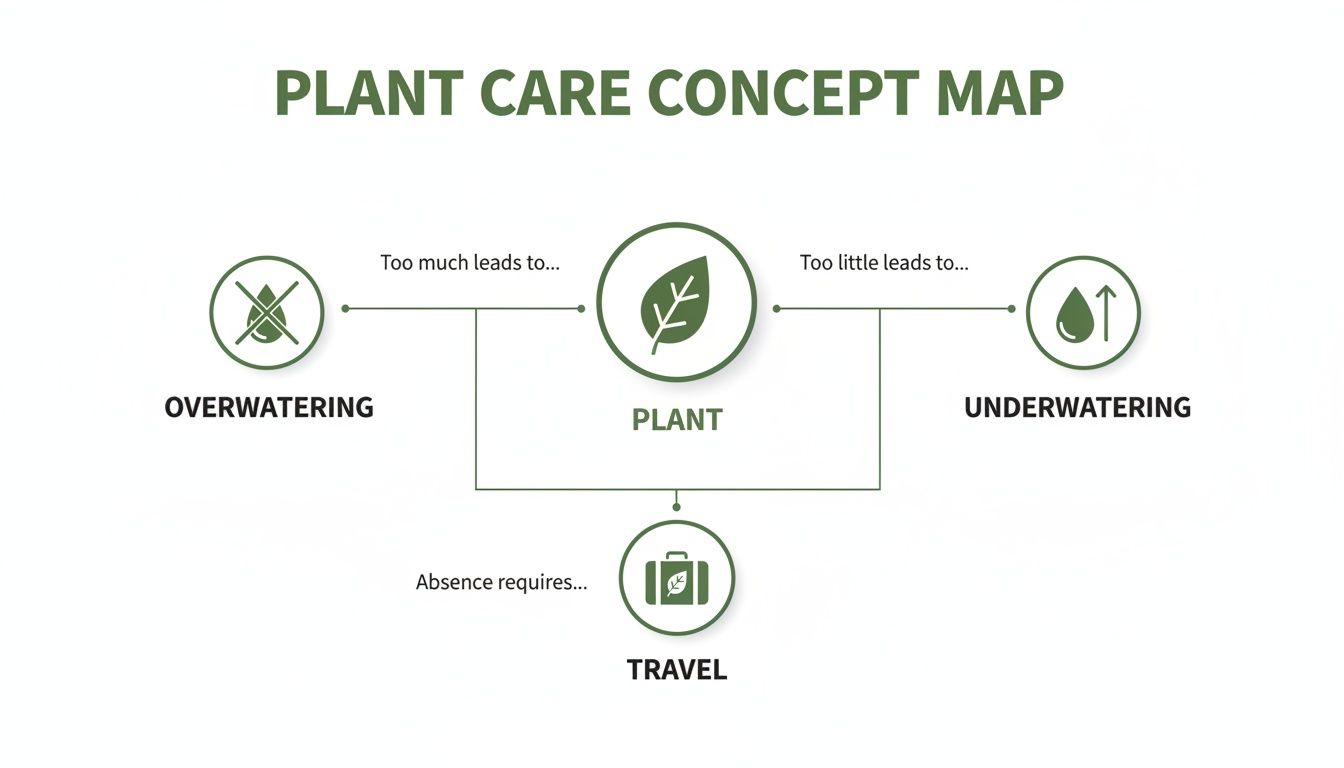
As you can see, this approach provides a simple solution for overwatering, underwatering, and keeping your plants happy even when you're away.
Creating the Ideal Root Environment
By letting the soil pull water up as needed, you avoid one of the biggest challenges in plant care: waterlogged soil. When roots sit in soggy soil, they can't get the oxygen they need, which can lead to root rot. Self-watering planters keep the soil perfectly moist but never saturated.
This bottom-up hydration is more than just convenient—it directly addresses one of the most common reasons houseplants struggle. It creates a balanced little ecosystem where roots can breathe, grow strong, and absorb the nutrients they need.
This method is a game-changer for home gardeners because it helps solve the overwatering problem, which is behind 30-50% of houseplant issues. According to TechSci Research, systems that release water slowly—like the beautifully designed Little Green Leaf globes—can also reduce water waste by 50-70% while providing consistent moisture for days or even weeks.
This process ensures your plant's roots are never left sitting in a puddle, a common issue with traditional pots and drainage saucers. That separation between the reservoir and the soil is key to creating a healthy, oxygen-rich environment where your plants can truly thrive. If you're curious about the details, you can learn more about how self watering globes work in our guide.
Choosing the Right Self Watering Solution for You
Picking the perfect self-watering system is a lot like choosing a new pot for your plant. It’s personal. What works for a friend’s fiddle leaf fig might not be the right fit for your collection of succulents. There’s no single “best” option, only the one that makes sense for your plants, your space, and your lifestyle.
The goal is to find something that makes plant care feel less like a chore and more like a joy. Let's walk through the most common types of self-watering containers to help you find the perfect match, whether you're looking after a single desk plant or a whole indoor jungle.
All-in-One Reservoir Planters
Think of these as the classic, purpose-built solution. An all-in-one reservoir planter is a pot with a water storage tank built right into the bottom. Your plant sits in an inner pot, and a wicking system—usually a simple absorbent cord—connects the soil to the water below. It’s a complete, self-contained setup.
These are fantastic if you want a true set-it-and-forget-it system. They’re especially great for plants that love consistently moist soil, like ferns, monsteras, and calatheas. Just fill the reservoir, and the plant sips water as needed for weeks at a time.
- Best For: Plant lovers who want an integrated, no-fuss system for medium-to-large plants that prefer steady moisture.
- Good to Know: They can be a bit bulky, and you will need to repot your plant directly into the system.
Flexible Wicking Cord Systems
What if you already love your decorative pots and don't want to switch? This is where wicking systems shine. This simple method uses an absorbent wicking cord to connect your plant’s soil to a separate, external water source. One end of the cord goes into the soil through the drainage hole, and the other end is placed into a nearby jar, vase, or bottle of water.
This approach is wonderfully flexible. You can use almost any container you want for the reservoir, turning a beautiful glass jar or a vintage bottle into a functional part of your plant display. It’s an ideal solution for a shelf of smaller plants, letting you water several at once from a single, central source.
A wicking cord system lets you turn just about any pot you already own into a self-watering planter. It’s a flexible, often DIY approach that adapts to your existing style and plant collection.
For anyone in an apartment with limited space or who enjoys a creative setup, wicking cords are a wonderful option. You get total control over the look and feel of your plants while making sure they all stay perfectly hydrated.
Decorative Watering Globes and Spikes
For those who believe beautiful things should also be useful, decorative watering globes are a perfect match. These elegant tools, often made from hand-blown glass, are both a watering device and a piece of art. You just fill the globe with water and push its long stem into the soil.
The way it works is simple: as the soil dries out, it lets a little air into the globe, which releases a small amount of water in return. This slow, steady release keeps your plant happy without you having to lift a finger. Products like the Little Green Leaf globes come in whimsical designs, like mushrooms or birds, adding a touch of personality right into the pot.
This is a lovely way to give your plants some extra water, especially when you’re heading out for a long weekend or a week-long vacation. It’s also a great choice for smaller houseplants or for anyone who wants a functional accent piece.
Comparing Self Watering Systems
To help you decide, here’s a quick comparison of these systems. Think about your lifestyle and what you want to achieve with your plant care routine—that’s what matters most.
| System Type | Best For | Watering Duration | Aesthetic |
|---|---|---|---|
| Reservoir Planter | Long-term, consistent moisture for thirsty plants like ferns or tropicals. | Weeks at a time, depending on reservoir size. | Clean and modern, but the planter itself is the main look. |
| Wicking Cord System | Retrofitting existing pots you love; watering multiple small plants at once. | Highly flexible; depends on the size of your external water source. | DIY and adaptable; the look is up to you and your choice of reservoir. |
| Watering Globes | Short-term watering for travel, or as a beautiful, supplemental system. | Several days up to two weeks, depending on globe size and plant needs. | Decorative and elegant; adds a visual accent to your plant. |
Ultimately, choosing the right self watering container is about finding what brings you peace of mind. Whether it’s an all-in-one planter for your big monstera, a wicking system for your shelf of pothos, or a beautiful glass globe for when you travel, the right solution is the one that makes caring for your plants feel effortless.
Setting Up Your Container for Success
Getting your self-watering system up and running is much easier than it sounds. With just a few simple steps, you can give your plants a stable, happy home and take the daily “did I water enough?” question off your plate. We’ll walk through the setup for each type, so you can feel confident you're getting it right the first time.
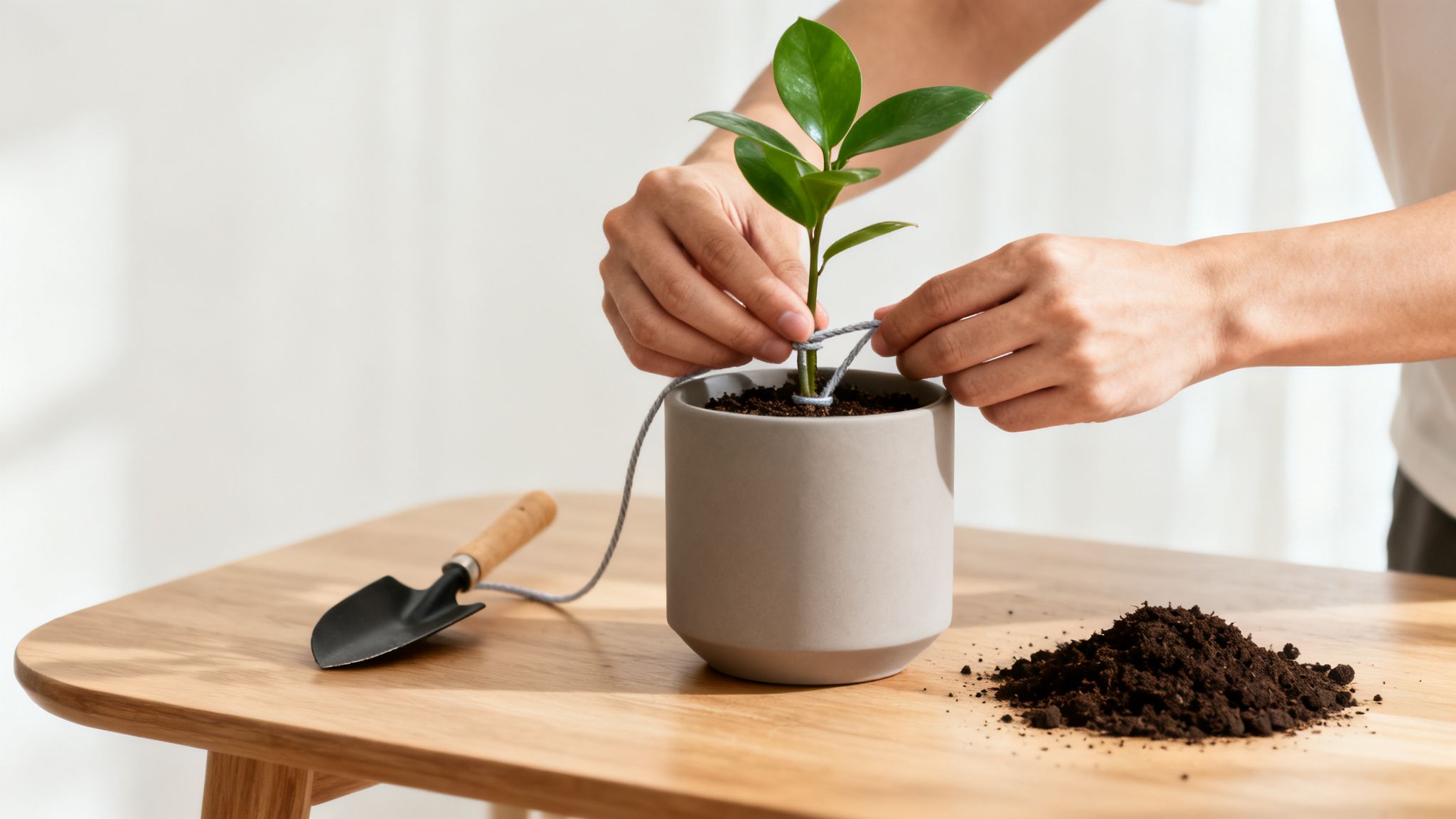
This simple setup is the first step toward weeks of hands-off plant care. Let's make it a good one.
Potting Your Plant in a Reservoir Planter
When you're using an all-in-one reservoir planter, the key is to get the wicking action started correctly. This is what creates that smooth, steady flow of moisture from the reservoir up into the soil.
- Prep the Wick: Before you add soil, make sure the wicking part—usually a cord or piece of porous material—is installed correctly. Most planters have a channel or hole for it. A helpful tip: dip the wick in water first to give that capillary action a head start.
- Add a Soil Base: Put a small layer of potting mix directly over the wicking system. This layer acts as a bridge that helps moisture travel up into the rest of the soil.
- Place Your Plant: Gently remove your plant from its nursery pot and set it on top of the soil base. Fill in the gaps with more potting mix, patting it down just enough to remove large air pockets. No need to pack it in too tightly.
- Give It One Good Top-Watering: The very first time, water your plant from the top, just as you normally would. Let the water soak the soil completely and drain down into the reservoir. This is a crucial step that helps the soil settle and gets the whole wicking system going. From here on out, you'll just fill the reservoir.
Activating a Wicking Cord System
If you're creating a DIY self-watering system for your favorite pot with a wicking cord, the process is just as straightforward. You’re essentially creating a lifeline between your plant's soil and its water source.
First, cut a piece of absorbent wicking cord. A good rule of thumb is to make it long enough to reach from the bottom of your plant pot to the bottom of your separate water container, with a little extra slack.
Next, poke one end of the cord up through the pot’s drainage hole, leaving a few inches inside. You can simply coil this end at the bottom before adding your plant and soil. The other end of the cord goes straight into your water reservoir—a pretty glass jar or vase works perfectly for this.
By simply adding a wicking cord, you give your plant a direct line to a water source it can tap into whenever it gets thirsty. This simple bridge is all it takes to build a reliable, hands-off hydration system.
Placing Decorative Watering Globes
Using a watering globe is probably the easiest method of all. The only real trick is to place it gently, without disturbing your plant's roots.
- Make a Pilot Hole: Instead of pushing the globe's stem into dry, packed soil, it's best to create a path first. Use a pencil or a chopstick to gently poke a small hole at a slight angle. This helps prevent the stem from getting clogged with dirt.
- Fill and Insert: Fill the globe with water and cover the opening with your thumb. Flip it over and carefully guide the stem into the hole you just made. Pushing it in about two to three inches deep ensures it’s stable and sitting right in the root zone.
For a little more guidance, you can learn about the best techniques for how to use watering globes to keep them working beautifully. A little bit of care makes them a seamless part of your routine.
Long Term Care and Maintenance for Healthy Plants
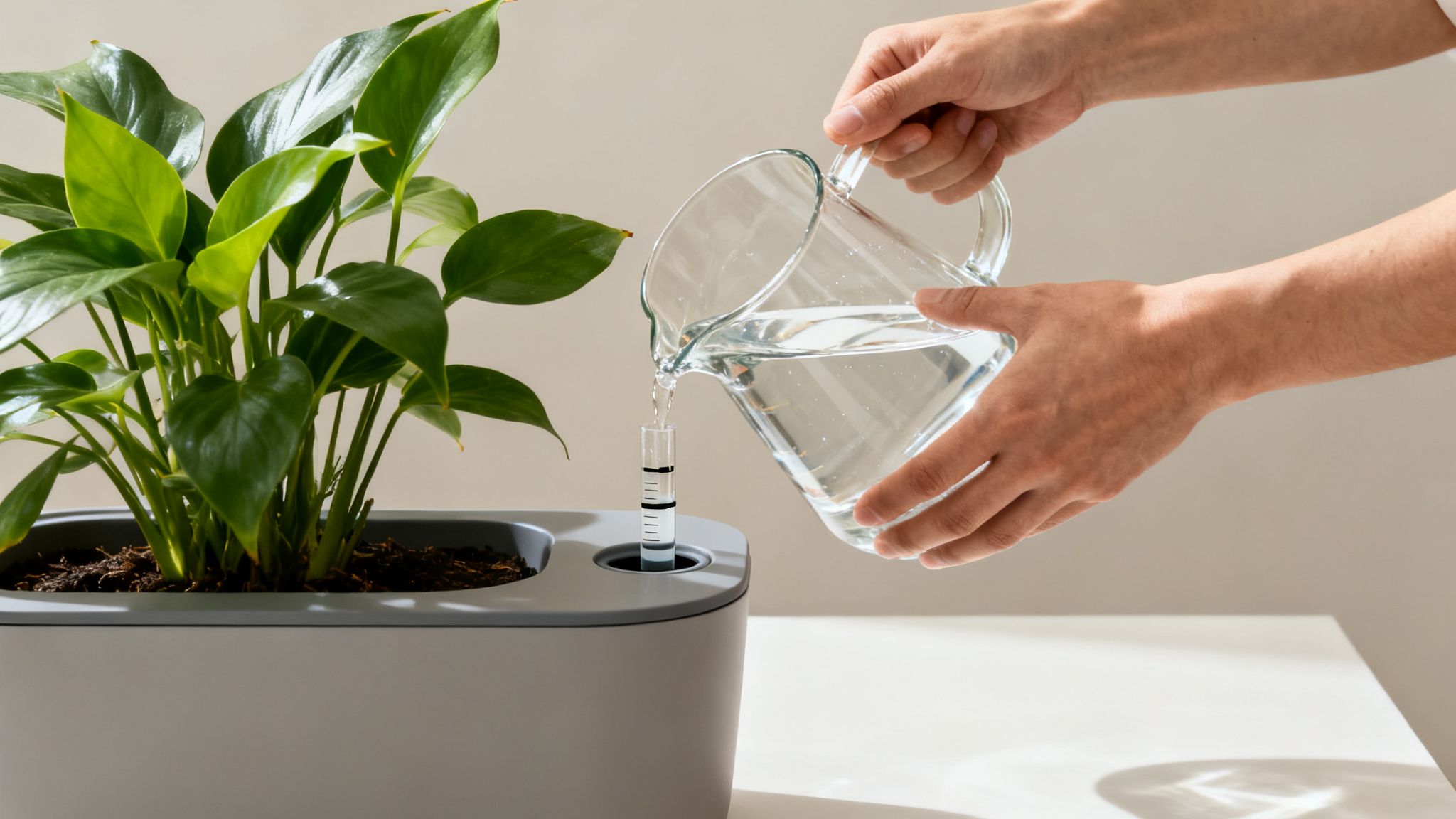
One of the best things about self-watering containers is how little they ask of you. They handle the day-to-day hydration, freeing you up to just enjoy your plants. But, a little bit of care here and there will keep your system working perfectly and your plants happy for years to come.
These aren't demanding chores; think of them more as gentle check-ins. A few simple habits are all it takes to make sure your planters keep providing the consistent, gentle care your green friends love.
Keeping an Eye on Water Levels
Your main role is simply keeping the reservoir topped up. Most self-watering planters make this easy with a water level indicator or a see-through window. No guesswork needed.
A good habit is to check the water level once a week, perhaps when you're already tending to your other plants. This helps you fall into a natural rhythm. Over time, you'll get a feel for how thirsty your plant is and can adjust your refill schedule.
For watering globes, like the ones from Little Green Leaf, a quick glance is all it takes. You’ll see the water level drop over a period of several days to two weeks, which is your gentle cue that it's time for a refill.
The Occasional Soil Flush
Tap water contains minerals like calcium and salt. Over many months, these can start to build up in the soil of your self-watering containers. This is completely normal and nothing to worry about, but it's a good idea to flush the soil every few months to wash them away.
All you have to do is water your plant from the top, like a traditional pot. Let the water run through the soil and out of the drainage or overflow holes for a minute or two. This simple rinse keeps mineral buildup from accumulating and keeps the soil fresh and healthy for the roots.
Think of it as a reset for your plant's soil. This quick, seasonal flush helps ensure the wicking system works efficiently and your plant's roots can easily absorb the nutrients they need.
Doing this simple step just two or three times a year is enough to keep everything in perfect balance.
Seasonal Adjustments and Cleaning
Just like us, plants have different needs throughout the year. As the seasons shift, so will their thirst for water.
- Winter Rest: Most houseplants slow down in the fall and winter when the days get shorter. During this time, they grow less and need much less water. It's a good idea to let the reservoir run dry for a few days before refilling to keep the soil from getting too damp.
- Summer Growth: In the bright, warm months of spring and summer, your plants are in their active growth phase and will be much thirstier. You'll probably find yourself refilling the reservoir more often to keep up.
Finally, whenever you repot your plants, it's a great opportunity to give the planter a quick clean. A wash with mild soap and water will get rid of any old soil or mineral deposits in the reservoir and inner pot. A clean container is the foundation for a happy plant, making sure your self-watering system can work its magic season after season.
Still Have Questions? Let's Dig In.
Even the most straightforward gardening tools can leave you with a few questions. And when it comes to keeping your plants happy and healthy, it's good to feel sure you're doing it right. Let's tackle some of the most common questions people have about self-watering systems.
My goal here is to give you clear, calm answers so you can feel great about this gentle approach to plant care.
What’s the Best Soil to Use?
For most self-watering setups, a good-quality, well-draining potting mix is your best bet. Look for mixes with ingredients like perlite or coco coir. These materials are great because they create tiny air pockets in the soil, helping the wicking action work effectively and preventing the soil from becoming too dense or soggy.
You don't need to hunt down a special or expensive soil. A standard, fluffy indoor potting mix will create the perfect environment for moisture to be delivered right where it's needed.
Can I Use Self-Watering Containers for Succulents?
This is a great question, since succulents and cacti have different needs than leafy tropical plants. The short answer is yes, you can—but with a slight change in approach. Instead of keeping the reservoir full, you’ll only fill it when the soil is completely dry.
Think of the reservoir as a tool for one deep, thorough drink from the bottom up. For succulents, let the system dry out completely for a week or two before you even think about refilling. This mimics the dry, arid conditions they're used to in nature.
Will My Plants Get Enough Water When I Travel?
Absolutely! This is one of the biggest benefits. For many of us, the growing popularity of self watering containers has been a game-changer for travel. The entire pots and planters market, which was valued at $18.3 billion in 2025, shows how much we all need solutions that fit our busy lives. Systems like watering globes are especially popular with travelers and apartment dwellers, helping to prevent the sad, dry soil that can affect an estimated 40% of houseplants each year. You can find more details about the growth of the planters market on gminsights.com.
Ready to give your plants the gift of consistent care? The beautiful, hand-blown glass globes from Little Green Leaf make watering both effortless and elegant. Explore the collection and find the perfect match for your home at https://www.littlegreenleaf.co.