

A Beginner's Guide to Self-Watering Systems for Indoor Plants
Going away for a few days shouldn't mean worrying about your houseplants. And that little pang of guilt when you see a thirsty plant after a busy week? We've all been there. A self watering system for indoor plants is a simple tool that can bring a sense of calm and consistency to your plant care routine.
It’s all about giving your plants what they need, right when they need it. This creates a gentle, steady environment where they can truly feel at home and thrive.
Welcome to Stress-Free Plant Care
Imagine your plants looking lush and happy, without the constant worry of giving them too much or too little water. A self watering system isn't a complex gadget; it’s more like a quiet partner in your plant care journey, offering gentle, consistent hydration. It helps you work with your plant’s natural rhythm, not against it.
These simple tools allow you to step back and let your plants do their thing. They create a stable home where your green friends can flourish, whether you're there to admire them every day or miles away on vacation.
A Gentle Approach to Watering
Instead of a rigid "water every Tuesday" schedule, a self-watering system lets your plant take the lead. It draws up moisture only as the soil begins to dry, a simple change that fosters healthier roots and more vibrant leaves. This is where effortless plant care truly begins.
And it seems a lot of people are embracing this gentle approach. The global market for plant watering globes, a popular type of self-watering tool, was valued at $512 million in 2024 and is expected to grow to $1.09 billion by 2033. This growth points to a real desire for simpler plant care, especially for busy people in apartments and those new to houseplants. You can learn more about the data on marketintelo.com.
By providing a consistent source of moisture, you create an environment that mimics a plant's natural habitat. This stability reduces plant stress, helping it focus its energy on growing stronger and healthier.
So, what does this mean for you and your plants? A few wonderful things:
- No More Guesswork: No more poking the soil and wondering, "Is it time?" The system responds to your plant's actual needs.
- Healthier Roots: Consistent moisture avoids the stressful cycle of being too dry and then too wet, which can be tough on delicate roots.
- More Time for You: Perfect for a full schedule, it simplifies your plant care routine.
- Peace of Mind for Travelers: Go on that trip! You can relax knowing your plants are perfectly cared for while you’re away.
How Do Self-Watering Systems Work?
Have you ever wondered about the magic behind a self-watering planter? It’s far simpler—and honestly, more clever—than you might think. We're not talking about batteries or apps. It’s just a smart use of basic science to keep your plants perfectly happy.
The secret is capillary action. Think of it as your plant sipping water through a tiny, invisible straw whenever it gets thirsty. The soil itself acts like the straw, drawing moisture up from a water source—whether that’s a reservoir in a special pot or the water held inside a beautiful watering globe.
The best part? The process is completely self-regulating. Your plant and its soil are in control.
The Science of a Sip
When the soil around your plant's roots starts to dry out, it naturally begins to pull moisture up from the water source to rehydrate itself. Once the soil has absorbed enough to be comfortably moist, this action slows down and stops. It’s that simple.
This creates a gentle, consistent watering cycle that helps you avoid those "too dry, then way too wet" swings that can be stressful for sensitive roots.
You're not just automating a task; you're creating a balanced, miniature ecosystem. The plant determines its own water intake, which leads to healthier roots and more resilient, vibrant growth.
This steady supply of moisture is a big deal for plant health. It helps prevent one of the most common worries for new plant owners: root rot. Because the soil only draws the water it needs, it never becomes a soggy, waterlogged mess. This means plenty of essential oxygen can still get to the roots. You can get a closer look at this process in our deep dive on how self-watering globes work.
Why Everyone Is Loving This Method
Let's be honest, people want simpler, more effective ways to care for their plants, especially as more of us bring greenery into our homes. That’s why self-watering tools are becoming so popular. One forecast predicts the market for tools like plant watering globes will grow by a massive 31% CAGR in the next five years.
This trend is all about convenience and confidence. With plants now in about 80% of modern homes, people need solutions that fit their busy lives. Industry insights show these systems can reduce plant loss from watering mistakes by 40-60%—a huge number when you realize about 70% of beginners say watering is their biggest challenge. You can find more details on these plant care market trends.
By letting the plant manage its own hydration, you give it the stability it loves. Here’s what that looks like for your indoor garden:
- Steady Hydration: No more parched soil or soggy bottoms. The system keeps moisture at a consistent "just right" level that tropical plants, especially, appreciate.
- Healthier Roots: When roots aren't stressed by cycles of drought and flood, they grow stronger and can absorb nutrients more efficiently.
- Less Plant Stress: A stable environment means your plant can focus its energy on what you want to see—lush leaves and beautiful new growth—instead of just trying to survive.
Ultimately, a self-watering system helps you build confidence. It takes the biggest source of anxiety out of plant care and replaces it with a reliable, gentle method that works with nature, not against it.
Exploring Different Types of Self-Watering Systems
Once you understand the simple magic behind self-watering systems, the next step is finding one that fits your life and your plants. Not all systems are the same—some are designed to be beautiful, others are built for pure function, and many offer a great mix of both. Think of it like choosing a pot; the right one supports your plant’s health while also matching your home’s style.
We can group these handy tools into three main categories. Each takes a slightly different approach to keeping your plants happy and hydrated, so it’s easy to find a perfect match for what you need.
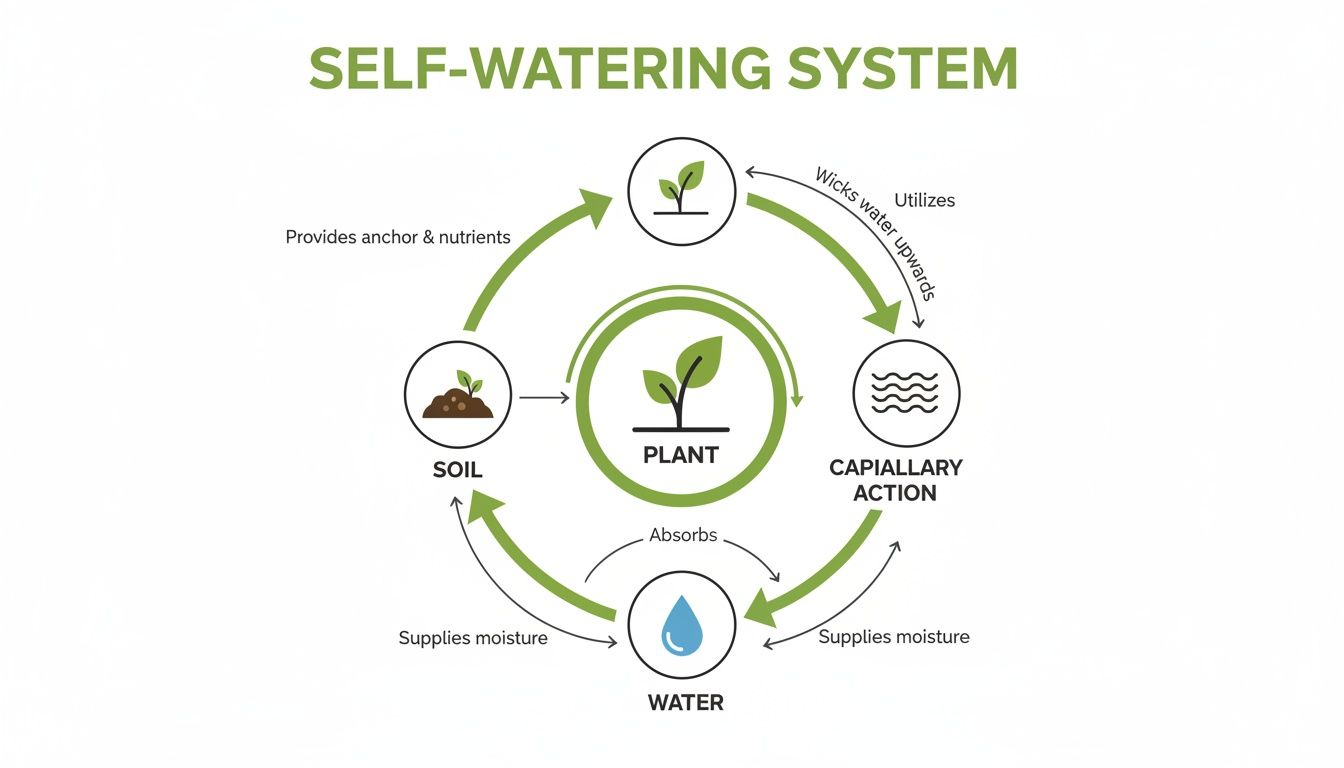
This simple visual shows the gentle, continuous cycle at the heart of every system, where the plant, soil, and water work together through capillary action. The key takeaway is that this is a responsive process—water only moves when the soil needs it, creating a balanced and healthy environment for roots.
Decorative Watering Globes
Watering globes are probably the most stylish way to keep your plants watered. Often crafted from hand-blown glass, these globes add a touch of artistry to your pots while doing their job quietly in the background. You just fill the globe with water and push its long stem into the soil.
As the soil dries out, it pulls water from the globe to rehydrate itself. It’s a slow, steady release that gives your plant a consistent source of moisture right where it matters—at the root zone. Brands like Little Green Leaf have turned these functional tools into beautiful decorative pieces, available in all sorts of colors and shapes that blend right in with your decor.
A watering globe is perfect for the plant parent who values both aesthetics and function. It’s an elegant solution that takes the guesswork out of watering, especially for small to medium-sized houseplants.
These are fantastic for when you need to be away for a week or just want to create a more stable watering routine for a favorite plant without having to repot it.
Practical Wicking Systems
A wicking system is the very definition of simple and effective. It’s usually just an absorbent cord—the wick—with one end placed in a separate water reservoir (like a jar or vase) and the other end buried in your plant's soil. The wick acts like a straw, using capillary action to draw water from the reservoir directly into the soil as it starts to dry.
This method is incredibly versatile. You can use it with any pot you already own, and you can easily control the water supply by changing the size of your reservoir. It’s a great DIY-friendly option for anyone who wants a reliable self-watering setup without buying a whole new planter.
All-in-One Self-Watering Planters
For a truly integrated solution, self-watering planters are a wonderful choice. These pots are designed with a built-in water reservoir at the bottom, separated from the soil by a perforated barrier. A wicking mechanism, often a cord or a layer of porous material, connects the water in the reservoir to the soil above.
This all-in-one design is clean, contained, and incredibly efficient. You fill the reservoir through a dedicated spout, and a water level indicator usually tells you when it’s time for a top-up. These planters are especially great for moisture-loving plants like ferns or Calatheas that prefer never to dry out completely. The market for pots and planters hit $18.3 billion in 2025 and is projected to reach $30.6 billion by 2034, and a lot of that growth is driven by self-watering options as plant owners look for simpler routines. You can learn more about these market trends for planters on datainsightsmarket.com.
Comparing Common Self-Watering Systems
So, how do you pick? Making the right choice really comes down to your plants, your lifestyle, and your personal style. Each system brings something unique to the table.
To help you decide, here’s a simple comparison of the three main types of self-watering systems to help you choose the right one for your plants and lifestyle.
| System Type | How It Works | Best For | Pros | Cons |
|---|---|---|---|---|
| Watering Globes | A filled globe slowly releases water into the soil as it dries. | Adding a stylish, temporary watering solution to existing pots. Great for vacations. | Beautiful, easy to use, works with any pot. | Small water capacity, can clog, may not be enough for very thirsty plants. |
| Wicking Systems | An absorbent cord draws water from an external reservoir into the soil. | A flexible, DIY-friendly approach for any plant or pot size. Good for longer absences. | Highly customizable, inexpensive, can use a large reservoir. | Can look messy, wick can degrade over time, finding the right wick thickness can take trial and error. |
| Self-Watering Planters | A pot with a built-in reservoir wicks moisture up into the soil. | An all-in-one solution for consistent, long-term hydration, especially for thirsty plants. | Clean look, efficient, large water capacity, often includes a water level indicator. | Less decorative variety, can lead to overwatering if not set up correctly, requires repotting. |
Ultimately, any of these options can help you become a more confident and relaxed plant parent. They provide the consistency that plants love, freeing you from the stress of a rigid watering schedule and making sure your green friends are always happy and hydrated.
Matching a System to Your Plants and Pots
Choosing a self-watering system is a bit like being a matchmaker. You're not just looking for a good system; you're looking for the right one for that specific plant in that specific pot. Every plant has its own personality, especially when it comes to how much water it likes.
By paying a little attention to what your plant wants and the container it lives in, you can pick a system that becomes its perfect partner. This one step will give your plant the support it needs to truly thrive, which means more joy and less guesswork for you.
Consider Your Plant’s Thirst Level
The first and most important thing to figure out is how much water your plant actually enjoys. Not all plants want their soil to be consistently moist, and respecting their natural preferences is the secret to keeping them happy long-term.
-
For Moisture-Loving Plants: Think about lush, tropical beauties like Ferns, Calatheas, and Peace Lilies. They come from environments where the ground is almost always damp. For these plants, a wicking system or an all-in-one self-watering planter is a dream come true. These setups provide the steady, uninterrupted flow of hydration they crave, helping you avoid those dreaded crispy, brown leaf tips.
-
For Plants That Prefer to Dry Out: On the other hand, you have plants like Snake Plants, ZZ Plants, and most succulents. Their roots are built for drier conditions and are sensitive to sitting in soggy soil. For these low-maintenance friends, a constant watering system can be too much of a good thing.
But that doesn't mean they're out of luck. A watering globe can be the perfect temporary solution. You can pop one in before a vacation to make sure they don't go completely bone-dry. It gives them a gentle drink only when the soil gets very dry, avoiding the risk of oversaturation that a more constant system might cause.
Match the Reservoir to the Pot Size
Once you have a feel for your plant's personality, the next step is purely practical: size. The water reservoir needs to make sense for the size of the pot. A tiny watering globe in a giant monstera pot won't last long, and a huge reservoir for a tiny succulent could create a swampy mess.
A good rule of thumb is to match the system’s water capacity to the pot's volume and the plant's needs.
Think of the reservoir as a water bottle for your plant. A larger plant needs a bigger water bottle. Your goal is to provide enough water for a reasonable amount of time—whether that’s a few days or a couple of weeks—without needing to refill it constantly.
For instance, a small 4-inch pot with a prayer plant might do beautifully for over a week with a 100 ml watering globe. A much larger 10-inch fiddle-leaf fig, on the other hand, would be better served by a larger globe or a self-watering planter with a big reservoir. You can even find beautiful hand-blown glass globes in various sizes to perfectly match your decor and your plant's practical needs.
Think About Your Soil and Environment
Finally, take a quick look at your plant's immediate surroundings. The soil you use and the conditions inside your home play a huge role in how quickly a plant drinks up water.
- Soil Type: A light, airy soil mix (think lots of perlite or orchid bark) will dry out much faster than a dense, heavy potting mix. A plant in airy soil will likely draw from a self-watering system more often.
- Light and Humidity: A plant sitting in a bright, sunny window will use water much faster than one in a shady corner. Similarly, plants in a dry, heated home will be thirstier than those in a humid bathroom.
By observing these simple factors, you get a complete picture of what your plant needs. This empowers you to choose a self-watering system that doesn't just work, but works in perfect harmony with your green companion, creating a stable, nurturing environment for it to grow.
Setting Up Your System for Success
So, you've chosen a new self-watering system. Getting it up and running is more intuitive than you might think. We're not talking about complicated parts or technical manuals—just a few simple steps to give your plant the consistent, gentle hydration it loves.
We’ll use a watering globe as our main example because the setup is wonderfully straightforward, and the principles apply to many other systems. The goal is to make this process feel simple and successful, even if this is your very first houseplant.
Preparing for a Smooth Start
Before you fill your globe, a little prep work goes a long way. This ensures the system and the soil start on the same page, creating a balanced environment for your plant’s roots right from the get-go.
-
Water Your Plant First: Go ahead and give your plant a light, normal watering. Sticking a globe into bone-dry soil can cause all the water to rush out at once. Moist soil is the key to creating the vacuum needed for a slow, controlled release.
-
Create a Clear Path: Grab a pencil or a small stick and gently poke a hole in the soil where you plan to insert the globe’s stem. This clears the way, preventing compacted soil from blocking the opening and making insertion easy.
This little trick is especially helpful for plants with dense root balls or soil that has become a bit compacted over time.
The Three Simple Steps to Setup
With your soil prepped and ready, you're just moments away from giving your plant its own personal water reservoir.
- Step One - Fill the Globe: Hold the globe under a faucet with a gentle stream of cool water. Fill it all the way to the top. A completely full globe is essential for the vacuum effect to work properly.
- Step Two - Insert with Confidence: Place a finger over the opening to prevent spills, flip the globe over, and gently but firmly push the stem into the hole you made. You'll want it deep enough to feel stable and reach the root zone.
- Step Three - Find the Right Angle: Aim for a gentle angle. This position helps regulate water flow, keeping it from draining too quickly while still releasing moisture as the soil dries out.
And that’s it! Your self-watering system is now on duty.
Simple Care and Common Questions
Once your globe is in place, your job is pretty much done. But a few quick checks now and then will keep everything running smoothly and help you tune into your plant's unique rhythm.
Think of maintenance less as a chore and more as a quiet conversation with your plant. A quick glance at the water level tells you everything you need to know about how thirsty it's been.
Checking and Refilling: Keep an eye on the water level for the first few days. This will give you a good baseline for how quickly your plant drinks in its specific environment. When it’s empty, just pull it out, give it a quick rinse, refill, and place it back in the soil. You can dive deeper into the finer points in our complete guide on how to use watering globes.
Common Questions: Even the simplest tools can have a small learning curve. If something seems off, the fix is usually incredibly simple.
- Water Drains Too Fast? This usually means the soil was too dry to start with, or the globe is sitting too vertically. Try giving the plant a thorough watering first, then re-insert the globe at more of an angle.
- Water Isn't Draining? A clogged stem is almost always the culprit here. Carefully remove the globe and use a pipe cleaner or small brush to clear out any soil before popping it back in.
By following these simple steps, you're not just setting up a device; you're creating a stable, nurturing environment that takes the guesswork out of plant care. This consistency lets both you and your plant relax, paving the way for healthier growth and a more confident plant parent experience.
The biggest benefit of a self-watering system is convenience, but the real magic happens underground, at the roots. When you give a plant consistent moisture, you're creating a stable, stress-free world for it to live in. That lets it switch gears from just surviving to truly thriving.
Think about it: typical watering can be a roller coaster for your plant's roots—swinging from a parched desert one day to a flood the next. This is stressful and can lead to common problems like yellowing leaves from too much water or brown, crispy tips from not enough. A self-watering system simply smooths out those dramatic highs and lows.
Building Stronger, Healthier Roots
When a plant knows it has a reliable source of water, its roots can grow steadily and confidently. Instead of desperately searching for a drink one minute and fighting for air the next, they get to focus on their main job: soaking up nutrients and anchoring a healthy, happy plant.
This steady supply is a game-changer for avoiding common plant care mistakes. It's interesting to know that even as the indoor plant market is set to hit $32.78 billion by 2034, studies show that overwatering is behind 30-50% of all houseplant deaths. By giving water only when the soil is ready, self-watering tools like globes can reduce water waste by up to 70% and nearly eliminate the risk of drowning your plant's roots. You can learn more about the growth of the indoor plant market at globenewswire.com.
When you create this kind of balance, you're not just saving yourself time. You're building a healthier habitat that helps your plants flourish with less fuss and more resilience.
The Visible Results of a Stable System
All that newfound stability below the soil translates directly into visible beauty above it. A consistently hydrated plant is a happy plant, and it shows. Here are a few things you'll probably start to notice:
- More Vibrant Foliage: Leaves will look lusher, fuller, and have that rich, even color you love.
- Reduced Leaf Drop: Plants are less likely to shed leaves when they aren't stressed from drying out.
- A Boost in New Growth: With its basic needs always met, your plant can pour its energy into putting out fresh new leaves and stems.
At the end of the day, using a self-watering system is about more than just a clever tool. It’s about giving your plants the quiet, consistent care they need to thrive, so you can sit back and enjoy watching them live their best lives.
Your Questions, Answered
Even the simplest tools can spark a few questions. We get it. Let’s walk through some of the most common things people ask about self-watering systems for indoor plants, so you can start with total confidence.
Can I Use a Self-Watering System for All My Plants?
Most of your houseplants will absolutely love a self-watering system, especially tropicals that appreciate consistent moisture. They’re a perfect match for that steady, even hydration.
However, plants like succulents and cacti are a different story. They’re desert-dwellers that need their soil to dry out completely between waterings. For them, a watering globe is a fantastic solution when you’re on vacation, but it’s not something you’d want to use all the time.
How Long Does the Water Last?
This is the big one, and the honest answer is: it depends! How long the water lasts is a mix of a few things: the size of the globe's reservoir, the size of your pot, the type of soil you're using, and even the light and humidity in your home.
Generally, you can expect a watering globe to last anywhere from a few days up to two weeks. The best way to know for sure? Just watch it for the first few days. You'll quickly get a feel for your plant's unique drinking habits.
The real magic isn't just about automation; it's about creating a system that responds to your plant. A good self-watering tool prevents root rot by releasing water only as the soil dries out, hitting that sweet spot between moisture and the oxygen your roots need to breathe.
Do Self-Watering Systems Cause Root Rot?
That’s a totally fair concern, but here's the good news: when used correctly, these systems are actually one of the best ways to prevent root rot. Root rot happens when soil stays completely saturated for too long, which can suffocate the roots.
A self-watering system for indoor plants avoids this problem entirely. The soil only pulls up moisture as it starts to dry, keeping things consistently moist but never soggy. This creates the perfect conditions for strong, healthy roots to grow.
Ready to give your plants the steady care they've been craving? Find the perfect, hand-blown glass watering globe from Little Green Leaf and enjoy healthier, happier plants with a lot less guesswork. Check out the collection at https://www.littlegreenleaf.co.
Generated with Outrank