

How Long Can Plants Go Without Water? A Guide for Plant Parents
Welcome, fellow plant parent. Let's start with the big question, especially right before a trip: how long can your green friends really last without water? It's something we all wonder about.
While every plant is a little different, a good rule of thumb for most common houseplants is about 1 to 2 weeks. Think of this as your starting point—a reassuring baseline to help you relax and plan.
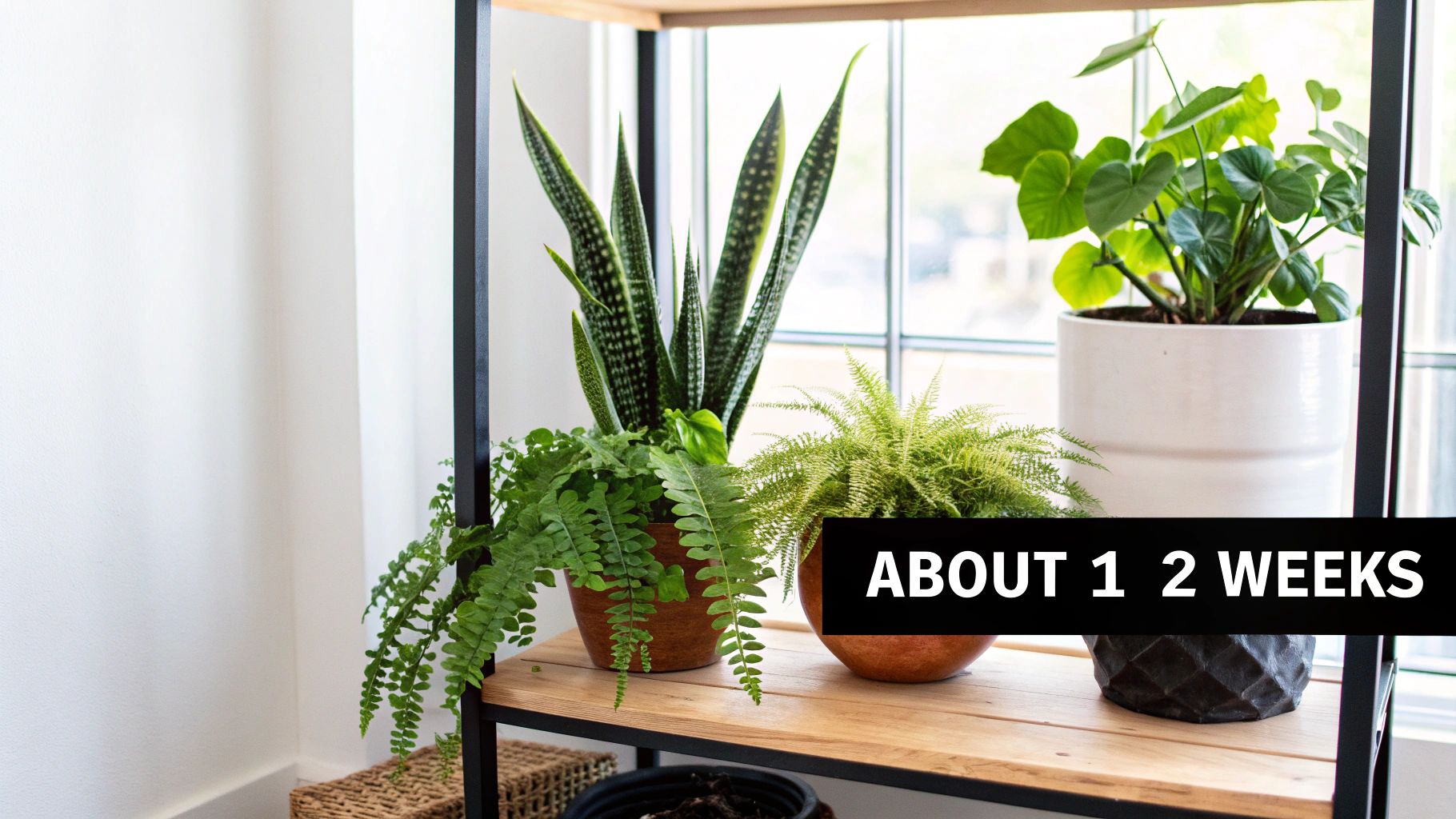
Not All Plants Are Created Equal
Of course, that one-to-two-week window is just a guideline. Some of your plants are naturally more thirsty, while others are perfectly happy being left to their own devices for a while. Your home’s environment also plays a big part. A plant in a sunny spot will get thirsty much faster than one in a cool, shady corner.
This guide is all about taking the guesswork out of watering. We'll walk through the simple factors that influence your plant's needs, helping you build the confidence to create a routine that works for both of you.
Typical Survival Times by Plant Type
Knowing where your plant falls on the thirst spectrum is a game-changer. Hardy succulents, for example, are built for dry spells, while delicate ferns will start to droop if their soil gets even a little bit dry.
Most common apartment and office plants, like a trusty pothos or snake plant, can comfortably go 7 to 14 days without a drink under normal indoor conditions. In one study, a tough jade plant lasted a full 18 days before showing major signs of wilting, whereas a fern started looking sad after just 5 days. You can explore more about how different plants handle hydration by checking out these botany project findings.
This is your first step toward becoming a more intuitive plant owner. To make it even easier, here’s a quick cheat sheet for some of the most popular houseplants.
Typical Survival Times for Common Houseplants Without Water
Here's a quick reference guide for how long popular houseplants can typically last without watering in an average indoor environment.
| Plant Type | Average Survival Time | Best For |
|---|---|---|
| Snake Plant | 2–3 weeks | The forgetful plant owner or frequent traveler |
| Pothos | 1–2 weeks | Beginners seeking a resilient and forgiving plant |
| Ferns | 4–7 days | Attentive owners in humid environments |
| Succulents/Cacti | 3–4 weeks | Bright, sunny spots and minimal-effort care |
Getting a feel for these general timelines will help you anticipate what your plants need before they even ask. And if you're looking for a way to build a more consistent, hands-off routine, tools can be a wonderful help. You might want to check out our guide on how to use watering globes to simplify your schedule.
Understanding What Makes Your Plant Thirsty
Figuring out when to water your plants can feel like a mystery, but it helps to think of each one as an individual. Just like some of us need a big breakfast to start the day while others are fine with just coffee, plants have different appetites for water.
Learning to read the signs isn't about following a rigid schedule; it's about getting to know your plant's world. Once you get a feel for a few key factors, you'll start to understand its rhythm naturally, and plant care becomes much less stressful.
Plant Type: The Most Important Clue
The single biggest hint to a plant's watering needs is its origin story. Where in the world did its ancestors evolve? A plant from a sun-baked desert is going to have a very different relationship with water than one from a humid, rainy jungle.
Think of a cactus or succulent. These plants are built for drought, with special, thick leaves that store water for ages. They're perfectly happy in dry conditions. On the flip side, a lush fern or a vibrant calathea comes from a place where rain is a daily event, so they prefer their soil to stay consistently moist.
-
Desert Natives (Cacti, Succulents, Snake Plants): These are the camels of the plant world. They store water efficiently and need their soil to dry out completely between waterings. For these, too much water is a far bigger risk than too little.
-
Tropical Dwellers (Ferns, Calatheas, Alocasias): These plants are used to humid, damp environments. They dislike drying out and will show you they're unhappy with droopy or crispy leaves if the soil gets too dry.
Understanding this basic difference is your first big step. A snake plant might happily go three weeks without a drink, while a Boston fern might start looking sad after just four or five days.
Pot Size and Material Matter More Than You Think
The home your plant lives in—its pot—plays a huge role in how quickly its soil dries out. Imagine trying to keep a tiny puddle from evaporating on a hot sidewalk versus a large bucket of water. The smaller puddle is gone in a flash, and the same principle applies to your plant's pot.
A small pot holds less soil, which means it holds less moisture and dries out much faster. A big pot has a larger reservoir of soil, giving the roots a steady supply of water over a longer period.
The pot's material is just as important.
Terracotta and other unglazed clay pots are porous, meaning they breathe. Tiny holes let air and water pass through the walls. This is fantastic for preventing soggy roots, but it also means the soil will dry out much more quickly—sometimes twice as fast as it would in a plastic pot.
Plastic, glazed ceramic, or metal pots are non-porous. They hold moisture in, so you won't need to water as often. This makes them a great choice for plants that like to stay moist or for those of us who might be a little forgetful.
Light and Temperature: The Environmental Factors
Just like us, plants use more energy—and more water—when they're active in warm, bright conditions. A plant sitting in a sunny, south-facing window is basically working hard all day, using sunlight to grow. All that activity means it needs more water.
If you move that same plant to a cool, shady corner, its needs change completely. It’s in a low-energy state and won't be nearly as thirsty. This is why you'll find yourself watering more in the summer than you do in the winter, when the days are shorter and cooler.
Think of it this way:
- High Light + High Heat = A thirsty plant.
- Low Light + Cool Temps = A plant that sips water slowly.
Soil Type: The Foundation of Hydration
Finally, the soil itself has a major say in how long your plant can last between drinks. Different soil mixes are designed to either hold onto water or let it drain away quickly, depending on the type of plant they're made for.
A chunky, airy mix designed for succulents is full of ingredients like sand and perlite that let water rush through. This prevents the roots from sitting in soggy soil, just like in their natural, dry habitat. On the other hand, soil for a tropical plant will often have peat moss or coco coir, which act like little sponges to retain moisture for longer.
You can often tell by feel. Well-draining soil feels lighter and grittier. Moisture-retentive soil feels denser and spongier. Choosing the right soil is like giving your plant the perfect foundation to manage its own hydration.
Learning to Read Your Plant's Signals
Your plant is always communicating with you—you just have to learn its language. Figuring out what it’s trying to say is one of the most rewarding parts of having plants. It’s how you build that intuitive connection with your green friends.
A common stumbling block for new plant parents is that the signals for too little water can look surprisingly similar to the signs of too much. This can feel confusing, but don't worry. Think of these visual cues not as signs of failure, but simply as feedback. They're your plant’s gentle way of telling you what it needs to thrive.
The goal is to become a calm plant detective, able to spot the clues and respond with confidence. Let's break down what your plant is trying to tell you.
Signs of a Thirsty, Underwatered Plant
When a plant is thirsty, its signs are usually related to a physical loss of moisture. It's trying to conserve every last drop of water it has.
- Droopy or Wilting Leaves: This is often the first and most obvious sign. Without enough water pressure in their cells to hold them up (think of a half-empty water balloon), leaves will start to sag and look tired.
- Crispy Brown Edges: When a plant can't get enough water to all its parts, it often sacrifices the areas furthest from the roots, like the tips and edges of its leaves. These spots will turn dry, brittle, and brown.
- Soil Pulling Away: Take a peek at the soil. If it's very dry, it will often shrink and pull away from the sides of the pot, creating a noticeable gap.
Signs of a Stressed, Overwatered Plant
Overwatering is less about the volume of water and more about frequency. When soil stays soggy for too long, roots can't breathe. This leads to a different set of problems that can sometimes be mistaken for thirst.
- Yellowing Lower Leaves: If the oldest leaves at the bottom of the plant are turning yellow and falling off, but the soil still feels damp, it's a classic sign of overwatering. The plant is essentially drowning from the roots up.
- Mushy or Black Stems: A soft, squishy base near the soil line is a clear sign of root rot, which is caused by excess, stagnant moisture. The stem may even turn black or brown.
- Musty or Moldy Soil: Give the soil a gentle sniff. Healthy soil smells earthy and fresh. Waterlogged soil, on the other hand, can develop a musty odor. You might even see a bit of green or white mold on the surface.
To help you quickly puzzle out what might be making your plant thirsty, this decision tree shows how factors like pot type, light, and soil all play a part.
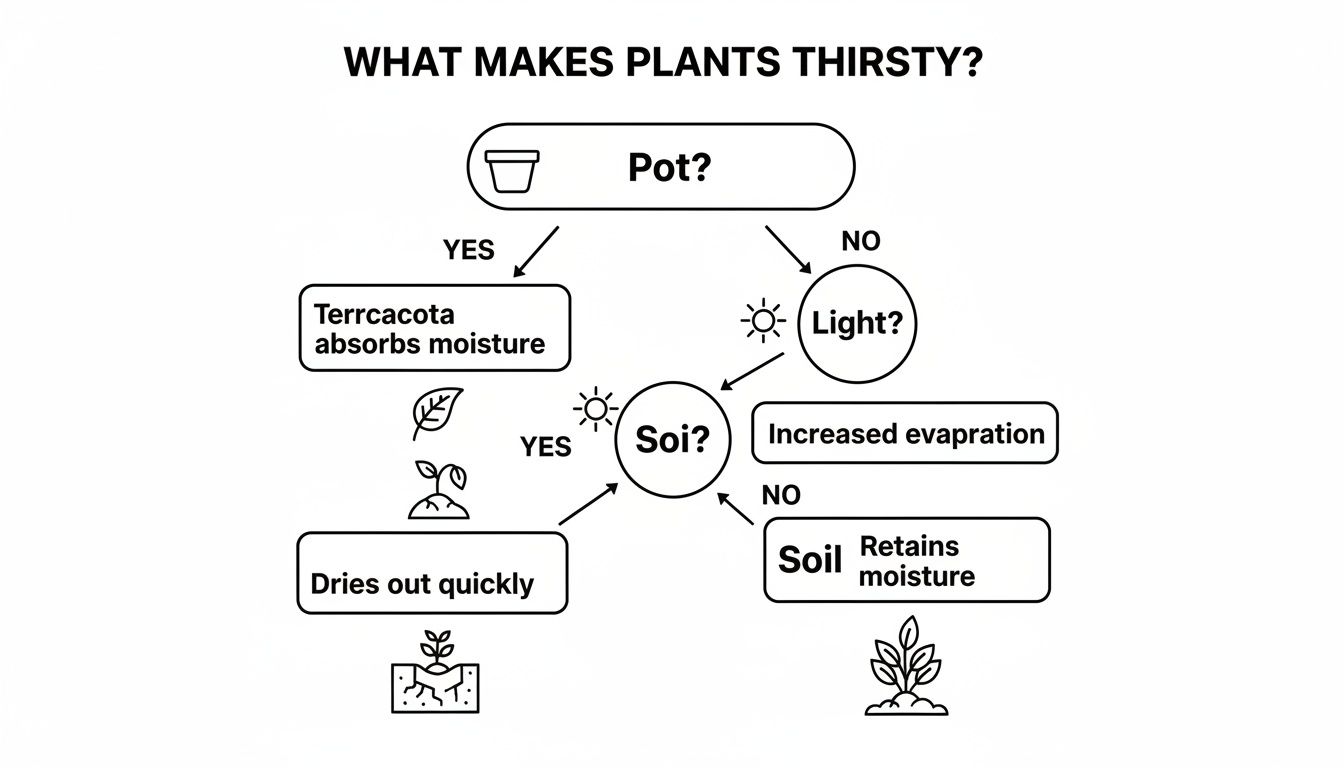
This visual guide highlights that a plant's environment is just as important as the plant itself when figuring out how often it needs a drink.
Learning to spot these signals will empower you to respond correctly. Instead of reaching for the watering can out of habit, you’ll start checking the soil, looking at the leaves, and truly understanding what your plant is asking for. It’s this gentle, observant approach that turns nervous beginners into confident, happy plant parents.
How to Prepare Your Plants Before a Vacation
Heading out on vacation should be a relaxing experience. And with a little prep work, you can make sure your plants are just as calm and cared for while you’re away. There's no need to stress about coming home to sad, droopy leaves. A few simple moves can make all the difference, turning your home into a perfect little plant retreat.
Thinking about how long can plants go without water becomes much less of an issue when you set them up for success. By creating a more forgiving environment, you can easily stretch that window, giving you peace of mind to enjoy your trip.
Your Pre-Vacation Plant Care Checklist
Before you grab your suitcase, take a few moments to give your green friends a great send-off. This isn’t about complicated hacks; it's about simple, thoughtful adjustments that help your plants hang onto moisture and stay happy.
Here's a quick rundown of the essential steps to take before you head out the door. These simple actions can make a huge difference in keeping your plants healthy and hydrated.
| Care Step | Why It Helps | Best for Trips Lasting |
|---|---|---|
| Give a Deep Drink | Saturates the soil completely, providing a good moisture reserve to start with. | Up to 1 week |
| Move Away From Sun | Reduces water loss from evaporation and lowers the plant's thirst. | Up to 1 week |
| Group Plants Together | Creates a mini humid microclimate, slowing down moisture loss for the whole group. | 1-2 weeks |
| Add Self-Watering Globes | Provides a slow, consistent supply of water only when the soil gets dry. | 2+ weeks |
These steps are a fantastic starting point for short trips. For longer getaways, you might want a more hands-off solution to ensure your plants get the consistent care they need without you having to worry.
For Longer Trips Consider a Plant Sitter
When a vacation stretches beyond a week, even the most well-prepped plants can start to get thirsty. This is where a little help comes in handy. While asking a friend to pop in is always an option, a self-watering tool can be an even more reliable plant sitter.
These tools are designed to provide a slow, steady supply of moisture, mimicking the gentle, consistent hydration plants love. They take the guesswork out of vacation care, making sure your plants get exactly what they need, right when they need it.
One of the kindest things you can do for your plants is provide consistency. Wild swings between bone-dry soil and a sudden drenching can be stressful. A self-watering system smooths out this cycle, promoting stronger roots and more resilient, healthier plants over time.
This approach is a wonderful solution for apartment dwellers or anyone with a busy schedule. If you’re looking for more ideas, our guide on how to keep plants watered while on vacation offers even more simple strategies.
The Simple Science of Self-Watering Globes
Self-watering globes, like those from Little Green Leaf, are a beautiful and effective way to automate watering. They aren't just decorative; they work based on a simple, clever bit of science that protects your plants from both underwatering and overwatering.
Here’s how it works:
- First, you fill the globe with water and press its stem firmly into the soil.
- As the soil starts to dry out, tiny air pockets form.
- This air travels up the stem and into the globe, releasing a small amount of water.
- That water then trickles down to rehydrate the soil.
This creates a perfect feedback loop. The plant only gets a drink when the soil is dry enough to need it, and the flow stops automatically once the soil is moist again. It completely prevents the soggy conditions that can lead to root rot, giving you true set-it-and-forget-it peace of mind. It’s a dependable system that keeps your plants perfectly happy, so you can focus on enjoying your time away, confident you'll return to a thriving indoor garden.
Inspired by Nature's Most Resilient Plants
Sometimes, to get a better handle on our own houseplants, it helps to look at the wild extremes found in nature. We tend to worry if our plants can make it through a week-long vacation, but there are plants out there that have mastered survival on a completely different level.
Meet the “resurrection plant.” These incredible survivors can go through months, or even years, of total dehydration, looking completely dormant. But with just one good rain, they unfurl and spring back to life within hours. It’s an amazing ability that puts our own plant care worries into a much gentler perspective.
Lessons from a True Survivor
The resilience of these plants is truly stunning. Species like Selaginella lepidophylla, for example, can survive for more than a year without a single drop of water. One study found that specimens made it through 13 months of extreme dryness and still had a 100% revival rate once they were rehydrated. That kind of timeframe makes the one-to-two-week window for our common houseplants feel pretty brief. If you're fascinated by these botanical wonders, you can dive deeper into the science behind their survival strategies.
While our potted friends aren't quite so dramatic, this story brings home a simple truth: consistent hydration is what builds a strong, resilient plant. It’s not just about surviving; it's about having the strength to truly thrive.
Mimicking Nature in Our Homes
We can actually take a cue from nature’s gentle, consistent cycles. A sudden, massive downpour after a long drought can be a real shock to a plant’s system. What really builds strong, healthy roots is a steady supply of moisture that feels more like a slow, gentle rain.
This is exactly where thoughtful tools can help us become better plant parents. Instead of the all-or-nothing watering cycle that many of us fall into, tools that offer slow, consistent moisture create a far more stable and nurturing environment.
Self-watering globes, for instance, are built around this very idea. They release water gradually, only as the soil starts to dry out, making sure the roots get a steady drink without ever sitting in a puddle. This simple approach helps your plants become more resilient over time, better prepared for those moments when life gets busy and you forget to water. It’s a quiet, steady way to build a healthier plant from the roots up.
Frequently Asked Plant Watering Questions
We hear a few common questions from plant parents all the time, whether they're just starting out or have been growing for years. Answering them is a great way to build your confidence and make plant care feel simple and intuitive. Here are a few things we're often asked.
Can All My Plants Use a Self-Watering Globe?
Almost any houseplant you can think of will appreciate the steady, reliable moisture a self-watering globe provides. They're especially fantastic for plants that get fussy when they dry out completely, like lush ferns and vibrant calatheas. The globes deliver consistent hydration right where it's needed—at the roots.
What about desert-dwellers like cacti and succulents? Absolutely. You can still use a globe for them. The trick is to simply let the soil dry out completely before you pop a refilled globe back in. This perfectly mimics the natural dry spells these resilient plants are built for.
How Do I Know if the Globe Is Working Correctly?
It’s pretty easy to tell if your globe is doing its job. You should see the water level in the glass gradually drop over several days or even a couple of weeks, depending on your plant and its environment.
A quick touch-test is also a great way to check. The soil about an inch deep should feel lightly moist—never soggy or bone dry. If the water empties too fast, the stem might be a bit loose in the soil. If it’s not emptying at all, the stem could be clogged with dirt; just give it a quick clean and re-insert it.
One of the biggest worries for new plant owners is root rot. Here's the good news: when used correctly, self-watering globes are designed to prevent root rot, not cause it. They only release water as the soil dries, which stops the soil from ever becoming a waterlogged swamp—the main culprit behind unhealthy roots.
Will Using a Globe Cause Root Rot?
This is a fantastic question and gets to the heart of what good watering is all about. A self-watering globe works with your plant, not against it. It only releases water when the soil has dried enough to let a little air bubble up into the globe’s stem.
This simple, responsive system is what prevents the soil from getting saturated, which is what causes roots to suffocate and rot. It's a much gentler and safer approach than the stressful cycle of extreme dryness followed by a heavy drenching that many plants go through. For more on creating an automated and worry-free routine, you can explore ideas for a great self-watering system for indoor plants in our other guides.
At Little Green Leaf, we believe plant care should be a source of joy, not stress. Our beautiful, hand-blown glass watering globes are designed to give your plants the consistent care they love, so you can have total peace of mind—whether you're home or away.