

Snake Plant Watering Needs: A Simple, Confident Guide
You're standing in a sunlit kitchen with a watering can in hand, looking at your snake plant and wondering whether the soil is dry enough. The surface may look dusty, but a deeper layer could still be damp. Hesitating is reasonable, because snake plant watering needs change with the room, the pot, the season, and the plant's own condition.
The good news is that snake plants are unusually drought-tolerant. Their thick, sword-like leaves store water, so they generally handle a missed watering better than they handle soil that stays wet. The safest approach isn't to follow a rigid calendar. It's to notice how quickly your plant's soil dries and respond accordingly.
Welcome to Snake Plant Watering
A snake plant on a bright apartment windowsill may dry out sooner than one in a dim hallway. A plant in a small clay pot may need attention before one in a large plastic container. The same variety can therefore have different watering needs in two homes, even when both owners are caring for it thoughtfully.
This is why watering works best as a quiet conversation between the plant, the soil, the pot, the light, the temperature, and your routine. Mainstream care guidance commonly places indoor watering around every 2–4 weeks in spring and summer, then every 6–8 weeks in winter, although cold, low-light rooms may stretch the interval toward once every 1–2 months (snake plant care guidance). Those ranges are useful starting points, not appointments you must keep.
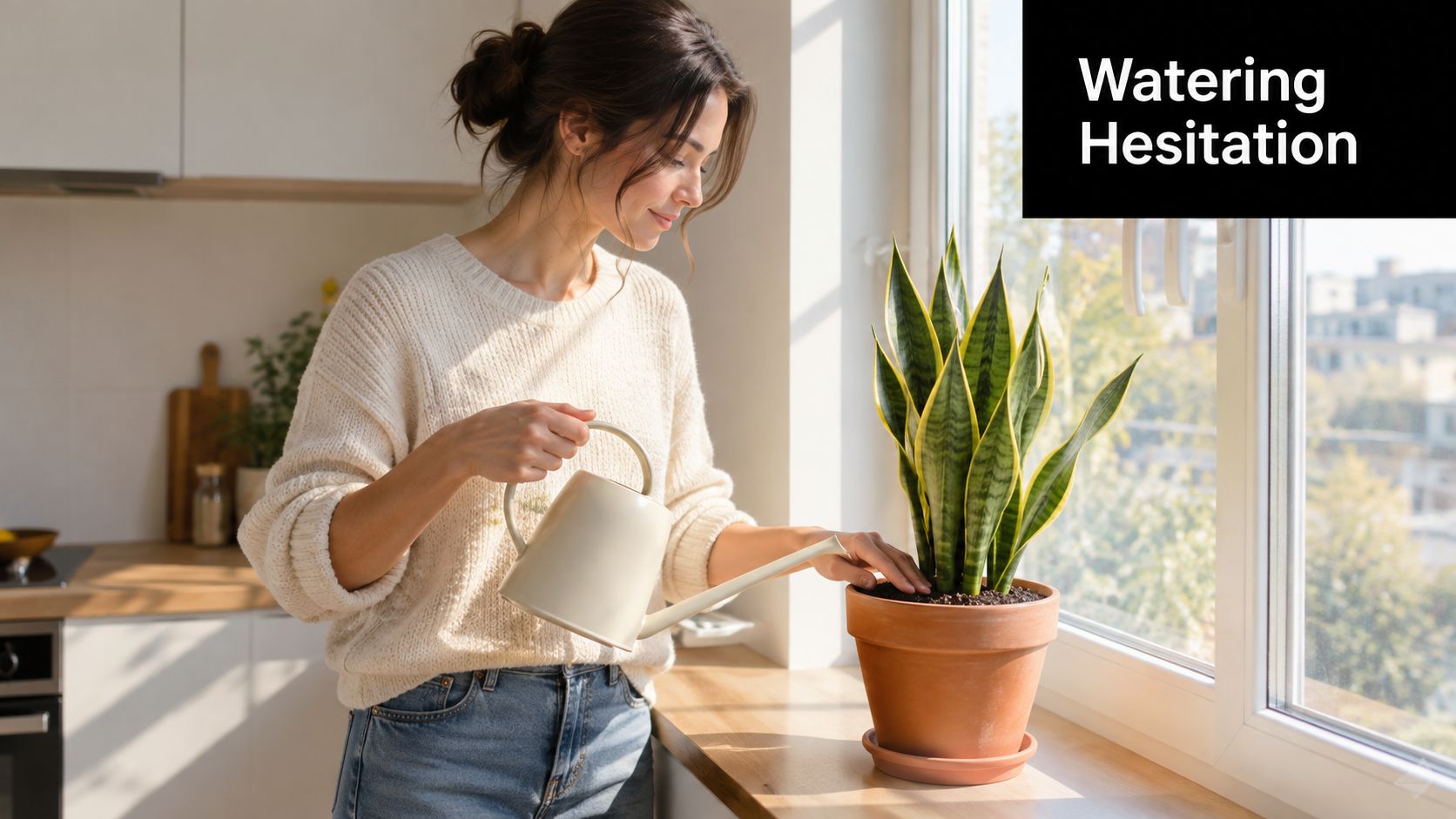
A plant that prefers patience
Snake plants store water in their leaves, which lets them tolerate dry spells. Their roots, however, are vulnerable when the potting mix remains wet for too long. That imbalance explains the central habit of successful care: wait for the soil to dry thoroughly, then water and let excess moisture escape.
You don't need to become an expert botanist to get this right. You only need a repeatable check before picking up the watering can.
A helpful mindset: You're not watering because a certain day has arrived. You're watering because the plant and its soil show that it's ready.
The rest of the routine can stay simple. Check the soil, learn how heavy the pot feels when dry, pour slowly, empty the saucer, and observe the leaves over time. If you're busy, traveling, or living in an apartment with changing light, that habit will serve you better than a fixed weekly reminder.
Treat watering as a small observation practice rather than a stressful decision. Once you've checked the pot a few times, the difference between “still holding moisture” and “ready for a drink” becomes much easier to recognize.
The Core Rule for When to Water
The most useful rule is straightforward: water only when the soil is completely dry from top to bottom. Surface dryness alone doesn't tell you enough, because the top layer can dry while moisture remains lower in the container.
Snake plant roots need air as well as moisture. If the mix stays saturated, roots can experience oxygen stress and begin to decay. Guidance for indoor plants recommends watering thoroughly until excess water drains from the bottom, then emptying the saucer so the roots aren't left in standing water (Clemson Cooperative Extension watering guidance).
Two checks that work
- Use a finger or wooden stick. Push your finger, a chopstick, or a wooden skewer about 2–3 inches into the soil. If it comes out with moisture clinging to it, wait and check again later. Care references commonly use the top 2–3 inches as a practical dryness threshold (snake plant watering reference).
- Lift the pot. Right after watering, carefully notice how heavy the container feels. Lift it again after several days and compare. A dry pot usually feels noticeably lighter, and this contrast becomes intuitive with practice.
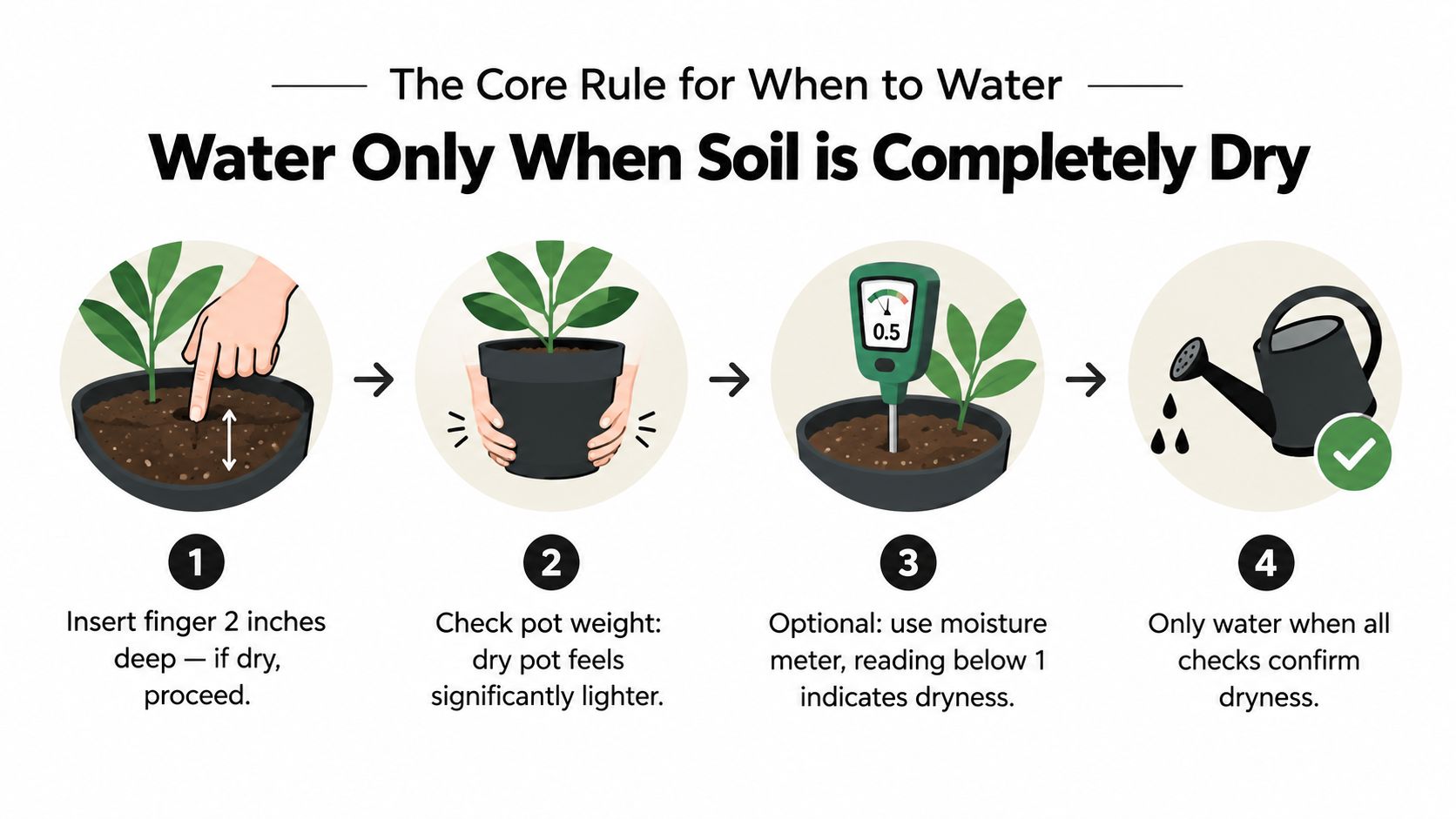
A moisture meter can offer another reference, but you don't need a device to care for a snake plant. For deeper containers, combine a probe with the pot-weight test rather than relying on the surface.
During spring and summer, complete dryness often leads to a watering interval of about 2–4 weeks. In winter, it commonly extends to 6–8 weeks, with the exact timing changing according to light, temperature, pot size, and humidity (indoor plant watering guidance). Some indoor conditions fall outside those ranges, so patience matters more than precision.
For a broader explanation of soil checks and plant signals, see this practical guide to knowing when to water plants. The goal isn't to make the plant wait unnecessarily. It's to avoid adding water before the existing moisture has been used.
How Light, Temperature, and Pot Size Change the Rhythm
Your snake plant's room controls how quickly its potting mix dries. Bright light, warmth, a smaller container, and a fast-draining mix generally move moisture out of the pot sooner. Lower light, cooler conditions, a larger container, and denser soil slow the process.
Four environmental clues
Light changes demand. A plant near a bright window may use water sooner than one in a dim hallway. More light supports active growth and can increase evaporation from the soil, while low light usually slows the plant's activity. A snake plant can tolerate low light, but its watering interval may lengthen considerably.
Temperature affects drying. Warm indoor air tends to dry soil faster. A cool room slows water use, especially when the plant is growing slowly. Keep the pot away from cold drafts and avoid assuming that winter heating automatically means the soil needs frequent watering.
Pot size matters. A small container holds less mix and may dry quickly. A large pot holds more moisture around the roots, and placing a small plant in an oversized container can leave wet soil beneath a dry surface. That combination raises the risk of root problems.
Material and humidity play supporting roles. Porous terracotta can release moisture through its sides, while plastic tends to retain it longer. Dry heated air and a humid room can also produce different drying patterns, so the soil check remains more reliable than the calendar.
| Condition | Drying Speed | Typical Watering Interval |
|---|---|---|
| Bright, warm room | Faster | Often closer to the shorter end of the normal range |
| Dim hallway or low-light corner | Slower | Often closer to the longer end of the normal range |
| Small terracotta pot | Faster | Check sooner, always confirm dryness first |
| Large plastic pot | Slower | Check less often, and inspect deeper soil |
| Cool winter room | Much slower | May extend to 6–8 weeks or longer (seasonal watering guidance) |
| Warm, bright growing space | Faster | May approach 1–2 weeks in some homes (seasonal snake plant advice) |
Consider two apartment owners. One keeps a snake plant near a bright window in a warm living room, while the other has the same type in a cooler interior corner. The first plant may dry sooner, but neither owner should water without checking the mix. The difference in location changes the rhythm, not the rule.
A Simple Step-by-Step Watering Technique
A thorough watering session doesn't need to be complicated. It works best as a short routine you can repeat without second-guessing yourself.
Start with the soil
Check the mix several inches down with your finger or a wooden stick. Lift the pot if you're familiar with its dry and wet weights. If the soil still feels damp or the container remains heavy, put the watering can away and check again later.
When the mix is dry, use room-temperature water. Pour slowly around the soil near the edges of the pot rather than concentrating water in one spot. Slow pouring gives the mix time to absorb moisture instead of letting water rush down one channel.
Continue until water flows freely from the drainage holes. This is what “water thoroughly” means. You're moistening the full root ball, not merely wetting the top layer.
Use enough water for the container to drain, but don't leave the pot standing in what has collected below. A small pot may need only a modest pour, while a large pot may take more passes around the surface. The drainage response matters more than a rigid volume.
Finish with drainage care
Let the container drain fully, then empty the saucer after 15 minutes. If the pot sits inside a decorative cachepot, remove it while watering or check the outer vessel afterward so pooled water doesn't remain hidden.
Return the plant to its usual location and look at the leaves. They won't transform instantly, but the quick check helps you notice changes in firmness, color, or posture over time. Write the date in a notes app or on a small label if you often forget when you last watered.
The routine is assess, water, drain, and observe. Once it becomes familiar, watering stops feeling like a test you can fail.
Reading the Signs of Over- and Under-Watering
A leaf symptom rarely tells the whole story by itself. Yellowing can have more than one cause, and curling may relate to pests, light, or root stress. Check the leaves together with the soil before changing your routine.
Compare what you see and feel
| Signal to Check | Over-Watering | Under-Watering |
|---|---|---|
| Soil | Remains wet or soggy | Feels dry several inches down |
| Leaves | Yellowing, soft, or drooping | Wrinkled, curling inward, or less firm |
| Leaf tips | May darken as stress progresses | Brown and crispy |
| Leaf base | Soft or mushy | Usually dry rather than mushy |
| Smell | Musty, sour, or unpleasant | Dry and neutral |
| Root-zone pattern | Moisture lingers after watering | Soil may compact or pull away from the pot |
Overwatering is the more serious routine mistake because consistently waterlogged soil can cause root rot. If the roots are already affected, remove the plant from the saturated mix, cut away damaged portions with a clean tool, and repot it in fresh, dry, well-draining soil (guidance for overwatered snake plants).
Underwatering usually looks drier and firmer. Wrinkled leaves, inward curling, brittle brown tips, and bone-dry soil suggest the plant may be using its stored water. Give it a thorough drink only after checking that the pot has proper drainage, then allow excess water to escape.
Use two signals before acting
A soft leaf doesn't automatically mean “add water.” If the soil is wet and the leaf is soft, overwatering is more likely. If the soil is completely dry and the leaves are wrinkled, thirst is the stronger possibility.
If the soil is wet and the leaves are soft, investigate excess moisture. If the soil is bone dry and the leaves are wrinkled, watering may be due.
Look closely at the plant's position, too. A dim room can slow drying, while a sudden move into strong sunlight can stress leaves independently of watering. Pests can also cause curling or surface damage, so inspect the foliage before treating every symptom as a moisture problem.
If you suspect the plant has been overwatered, follow this guide to saving an overwatered plant. The calm response is to check the roots and soil first, not to add more water in the hope of correcting a problem you haven't identified.
Travel Days and Busy Weeks Made Easier
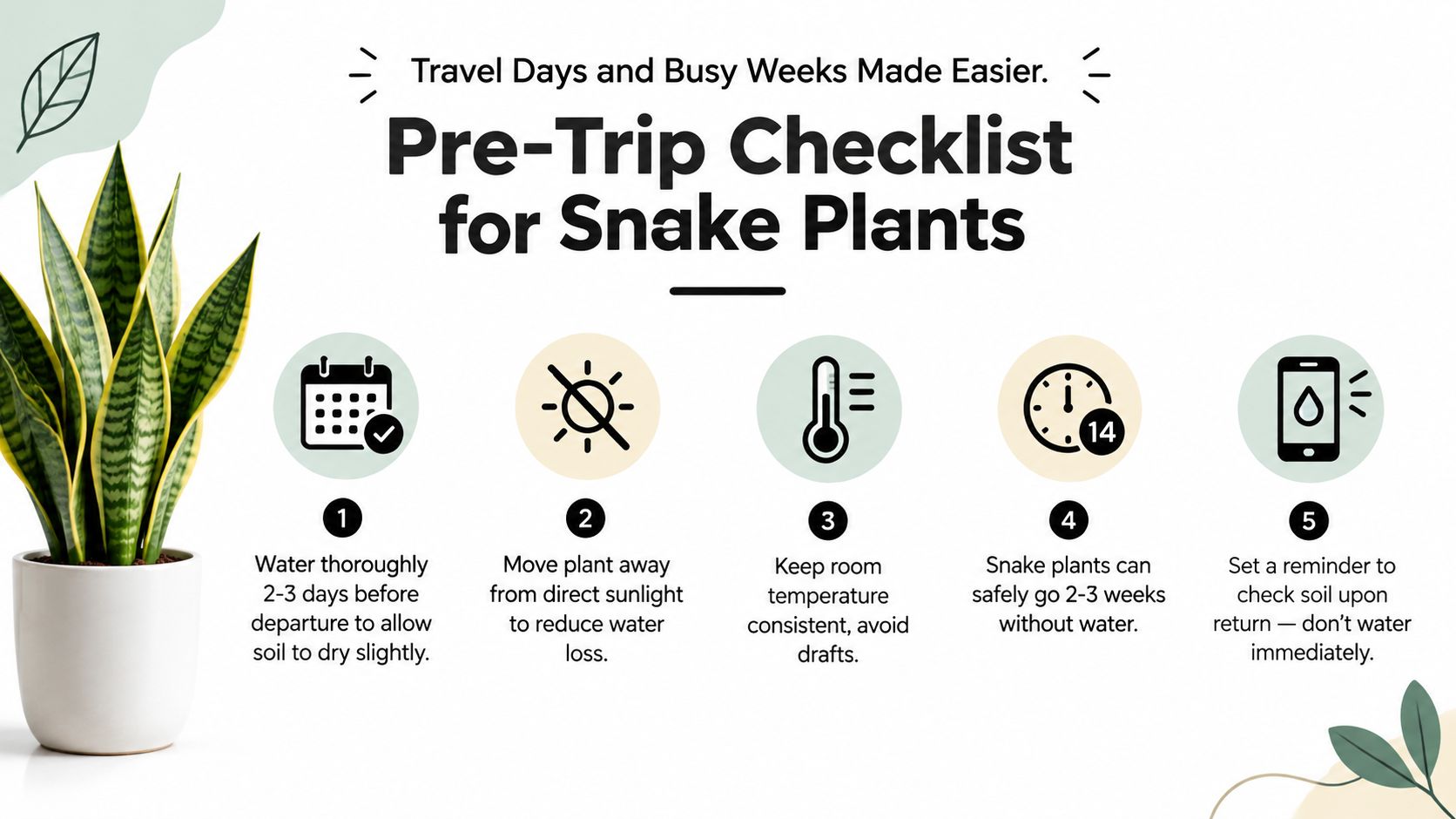
A weekend away usually isn't a crisis for a snake plant. These plants handle a dry spell better than repeated “just in case” watering, so the safest preparation is often a careful check rather than a complicated setup.
A couple of days before leaving, test the soil. If it's fully dry, water thoroughly and let the pot drain. If it's still damp, wait. Moving the plant away from direct sun can slow drying while you're gone, and emptying the saucer keeps the roots from sitting in collected water.
When a globe can help
A self-watering globe is an optional support tool for a longer absence or a particularly busy stretch. It releases water gradually through a small opening, which can help maintain moisture while you're away. It shouldn't replace a drainage hole, a dry-soil check, or sensible placement.
For a trip lasting 1–2 weeks, test the globe before departure. Fill it, insert it carefully into the soil, and watch whether water releases too quickly or too slowly. Soil type, insertion angle, and the container can all affect flow, so a trial run is safer than placing an untested globe in the pot just before leaving.
Other simple choices may suit your home better:
- Group nearby plants: Keeping plants together can make care easier and reduce the number of separate locations to check.
- Use a damp towel carefully: A damp towel beneath the pot can provide mild support, but the container still needs to drain freely.
- Ask for one check-in: A neighbor may only need to inspect the soil once rather than follow a detailed schedule.
More vacation preparation ideas are available in this guide to keeping plants watered while on vacation. If the trip is short and the soil isn't dry, doing nothing may be the kindest choice.
A Calm Recap Before You Pick Up the Watering Can
Pause before watering and check the plant rather than the calendar. If the mix feels dry several inches down and the pot feels noticeably light, watering is probably due. Bright light, warm air, a small pot, and fast-draining soil usually shorten the interval, while low light, cool conditions, a large container, and dense soil lengthen it.
Water slowly across the soil surface until the full root ball is moistened and excess water escapes through the drainage hole. Empty the saucer afterward. The roots should never sit in standing water.
Use the leaves as a second source of information. Wrinkling, inward curling, and brittle tips can indicate thirst, while yellowing, soft bases, and persistently wet soil point toward excess moisture. In winter, let the mix dry more completely before watering again. A self-watering globe can provide backup during travel, but test its flow and never use it as a substitute for drainage and observation.
The simplest habit is:
- Assess: Check deep soil and pot weight.
- Water: Pour thoroughly only when the mix is dry.
- Drain: Empty collected water.
- Reassess: Watch the leaves and adjust to the room.
You don't need perfect timing. You need a calm, responsive routine that follows your plant's actual conditions.
Little Green Leaf offers decorative self-watering globes designed to make plant care easier for busy homes, travelers, and apartment dwellers. Visit Little Green Leaf to find a supportive watering tool that helps you care for your snake plant with less effort and more confidence.