

Plant Pot Size Guide for Healthy Happy Houseplants
You've brought home a beautiful new plant, or your longtime pothos has suddenly started wilting, and the pot seems like the obvious place to look. Perhaps it feels cramped, or perhaps you've chosen a much larger decorative container to give the roots room. Both decisions can affect how quickly the soil dries, how much air reaches the roots, and how forgiving your watering routine feels.
The right pot doesn't need to be complicated. A well-matched container supports balanced moisture, steady root growth, and simpler care, whether you live in an apartment, travel often, or sometimes forget a watering day. This plant pot size guide will help you measure what you have, choose the next size with confidence, and match diameter with depth, material, drainage, and everyday watering habits.
Introduction Why Pot Size Matters More Than You Think
A thriving plant can struggle after repotting even when the fresh soil looks perfect. A small root ball placed into a much larger container may sit in damp soil for a long time, while a crowded plant can dry out before you're ready to water it again. The pot's diameter changes the rhythm of care.
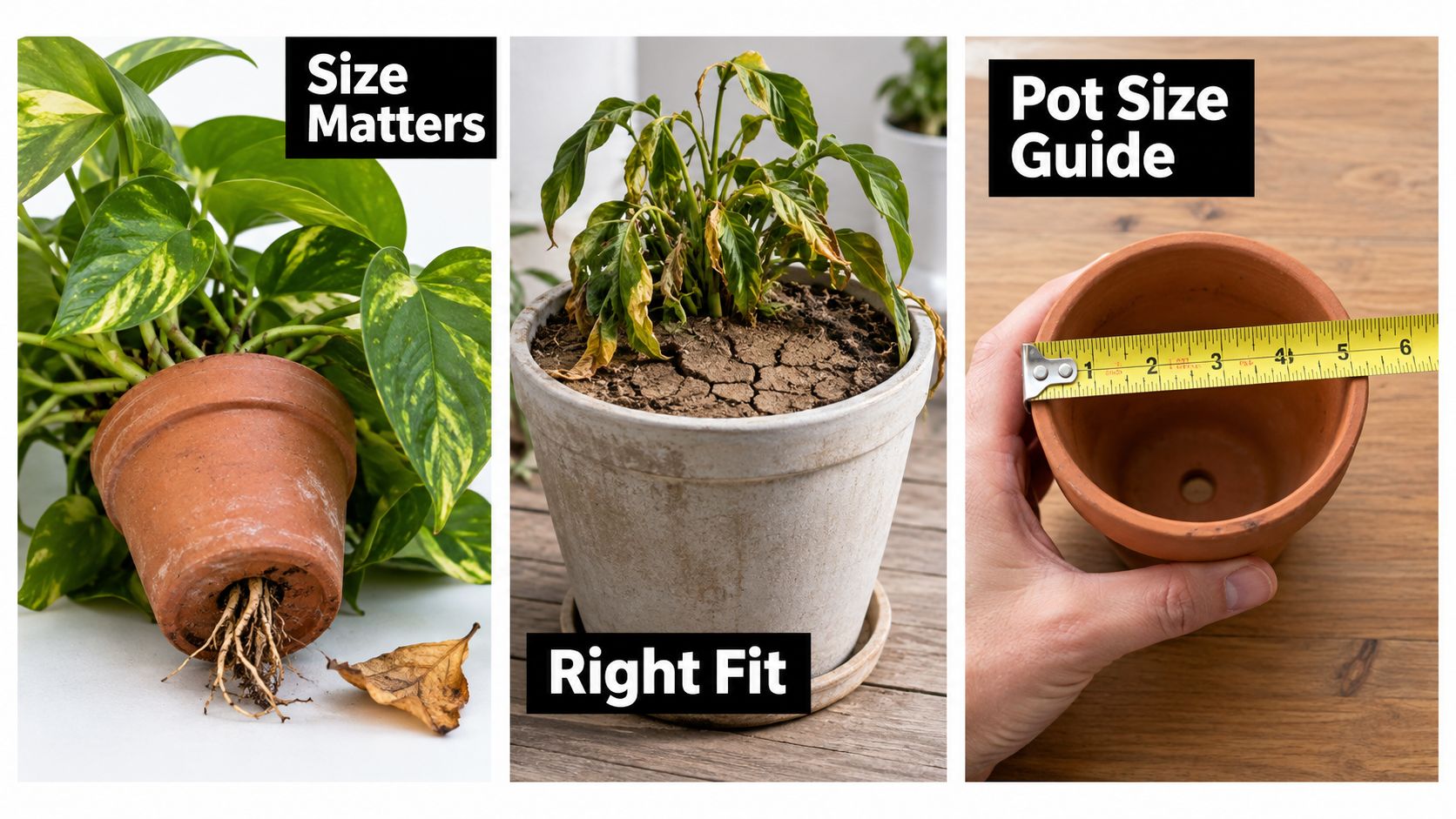
Think of the container as part of the plant's small indoor climate. Its size determines how much potting mix surrounds the roots, while its material and drainage design influence how quickly that mix loses moisture. A plant in a bright window may use water differently from the same plant in a dim apartment corner, even when both sit in containers with the same diameter.
The quiet role of a well-sized pot
A container that's only modestly larger than the existing root mass gives new roots room to expand without surrounding them with a large unused reservoir of wet soil. That balance is why major gardening guidance commonly recommends moving houseplants up by only 1 to 2 inches in pot diameter at a time. Larger containers over about 10 inches may sometimes tolerate an increase of 2 to 4 inches, according to independent pot-sizing guidance.
For a simple example, a plant in a 4-inch pot commonly moves into a 5- or 6-inch pot, while a plant in a 6-inch pot often moves into a 7- or 8-inch pot. Those small steps make watering easier to read because the new soil volume remains reasonably close to the existing root system.
You don't need to become a container expert overnight. Once you know how to measure the rim, inspect the roots, and notice how your home affects drying time, choosing a pot becomes a calm practical decision rather than a guess.
Understanding Pot Size Basics Without the Jargon
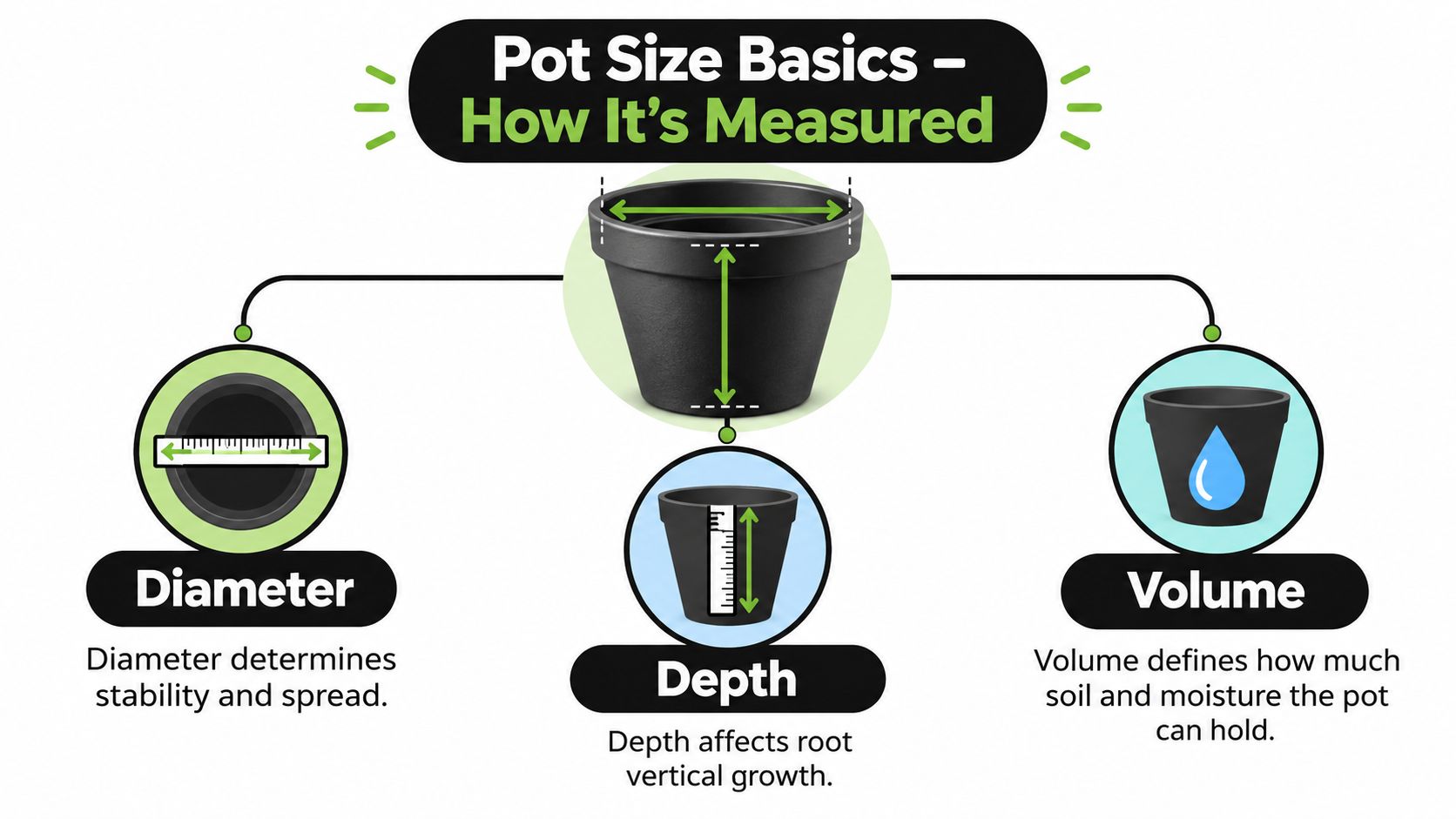
Choosing a container becomes easier once you separate three measurements: diameter, depth, and volume. Together, they show how much room the roots have and how much potting mix can hold moisture.
Diameter is measured across the top rim from one edge to the other, not around the outside circumference. This is the standard used on sizing charts and product labels, as shown in pot-size guidance for common houseplant containers. A rim measuring 6 inches across is a 6-inch pot, even if the container narrows toward its base.
Depth runs from the inside of the rim to the interior bottom. It affects both root space and watering because a deep container can hold more mix than a wide, shallow one with the same diameter. Plants with shallow roots may use that space differently from plants that grow downward, so height matters when the container will sit in your daily watering routine.
A practical way to choose the fit
Leave about 1 to 2 inches of fresh potting mix around the root ball when moving up. This gives new roots room to grow without creating a large unused area that may stay wet after watering. The same range works as a starting point for many houseplants, though a shallow-rooted plant, a very deep container, or a home with slow drying may call for a closer fit.
Common indoor pot ranges make unfamiliar labels easier to understand:
- Small pots around 12 to 17 centimeters: Often used for seedlings, herbs, and young houseplants.
- Medium pots around 19 to 27 centimeters: A practical range for many established indoor plants.
- Large pots around 30 to 40 centimeters or more: Often used for larger floor plants.
A 4-inch pot commonly holds about 0.5 to 0.6 liters, or roughly 1 pint, and suits young houseplants, seedlings, or herbs that will later move into a larger container, according to independent container size charts. Many guides place medium houseplants in 6- to 8-inch pots and larger floor plants in 10- to 12-inch pots. Use these ranges as a starting point, then check the root ball, plant type, container shape, and how quickly the mix dries in your home.
How Pot Size Affects Water Soil and Roots
A plant can sit beside a window and still struggle because its pot changes how long the soil stays wet. A smaller container holds less mix, so it often dries sooner and gives roots less room to spread. A larger container offers more space, yet unused soil around a small root ball can remain damp longer than the plant can use.
The central idea: More soil around a small root system usually means a longer drying period, not automatically healthier growth.
When the pot is too small
A crowded pot often reveals itself during watering. Water may run quickly through the container, the soil may pull away from the sides, or the plant may wilt again soon after watering. Roots can circle the inner wall while competing for limited moisture and space.
A compact pot can still suit a slow-growing or moisture-sensitive plant, especially in a low-light home where soil dries slowly. The problem starts when the root ball has clearly outgrown the container and care becomes a cycle of frequent drying, watering, and renewed stress. In that situation, a modest increase in pot size can give the roots room without leaving a large volume of unused mix.
When the pot is too large
An oversized pot may look generous, but it can hold a soggy pocket around the roots. Extra media stays wet longer, leaving less air in the root zone and raising the risk of root rot. Step up gradually so the new soil volume stays proportionate to the root system.
Daily conditions change the result. Bright light, warm air, and active growth can help a pot dry sooner. Low light, cool conditions, dense soil, or frequent watering can keep the same container damp longer. Pot diameter and depth therefore work with material and drainage as one system. A wide, shallow pot may dry more evenly for a shallow-rooted plant, while a deep pot can hold moisture below roots that occupy only the upper layer.
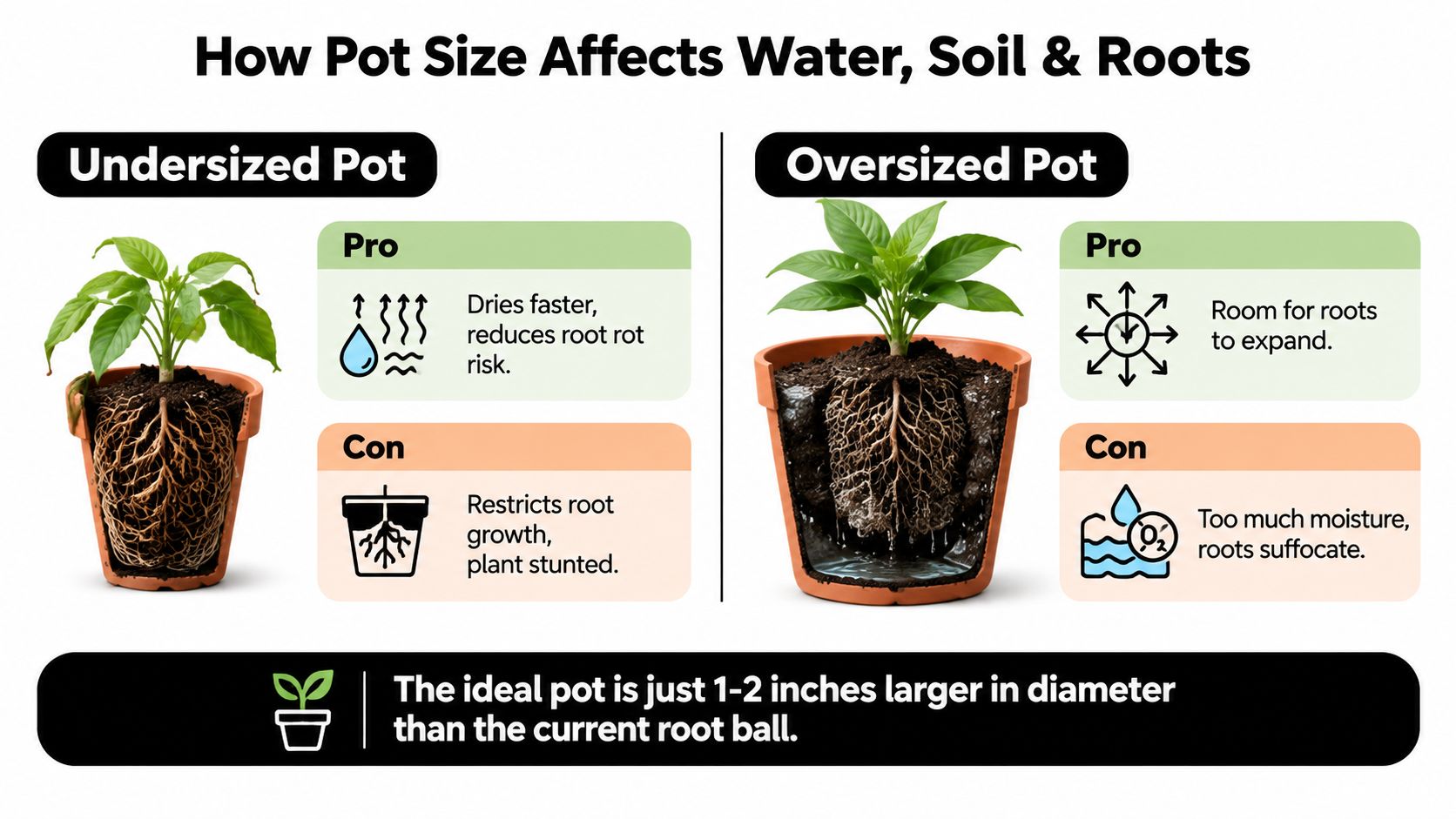
The familiar 1 to 2 inches of extra diameter is a useful starting point, not a fixed rule. Choose a closer fit for slow-drying rooms, shallow roots, or deep containers. A larger increase may make sense when roots fill the pot quickly and the new container drains freely, but check the soil before watering again rather than following a calendar.
A gradual increase lets roots develop while keeping your watering routine familiar. For more context on how roots change as plants grow, read this guide to root development in plants.
How to Measure and Choose the Right Pot Size
A plant that dries out by lunchtime or stays wet for days often needs a closer look at its container. Start with the pot already holding the plant. Measure the top rim from edge to edge with a ruler or measuring tape. If it sits inside a decorative cachepot, measure the inner nursery pot. That is the container shaping the root-zone conditions.
If the plant is ready for inspection, support the stems and soil, then slide it out gently. Check whether roots circle densely around the outside, emerge through drainage openings, or hold the entire pot shape with little loose mix. Leaves provide useful context, but root-ball size is the more useful measurement when choosing the next pot.
The dependable next step
For most small containers, increase the diameter by only 1 to 2 inches. With containers 10 inches or larger, a 2- to 3-inch increase is a common starting point. Some larger plants may suit 2 to 4 inches, depending on the root ball and growing conditions, as described in extension container-care guidance.
| Current Pot Diameter | Recommended Next Size | Measurement Check |
|---|---|---|
| 4 inches | 5 or 6 inches | Choose the closer fit for a small root ball |
| 6 inches | 7 or 8 inches | Match the increase to visible root crowding |
| 8 inches | 9 or 10 inches | Use the larger option only when roots fill the pot |
| 10 inches or more | 12 to 13 inches | Adjust to the root ball, not foliage height |
Use the table as a measuring aid, not a fixed command. A slow grower, shallow root system, or moisture-sensitive plant usually benefits from the smaller available increase. In low light, or if you tend to water generously, extra empty soil can stay damp longer. A vigorous grower or tightly packed root ball may need more room, provided the new pot does not greatly exceed the roots.
Look at the whole care routine
Before choosing, connect the measurement to daily care:
- How quickly does the plant grow? Active growth can support a larger next step when roots are crowded.
- How much light does it receive? Lower light generally slows water use, so a conservative size may dry more predictably.
- How often do you water? If you water before the mix dries, choose the smaller increase and check moisture at the root zone first.
Diameter and depth should also suit the root ball. A tall pot gives unused soil below short roots, while a shallow pot may not provide enough room for a plant with roots that grow downward. Choose a shape that places the roots through the available mix rather than leaving a large, persistently wet section.
A decorative container can still work well when the plant remains in a properly sized inner pot. For a metal outer container, this guide on how to clean vintage brass pots offers care context for keeping it presentable without treating it as the root container.
Drainage Material and Depth That Change the Ideal Size
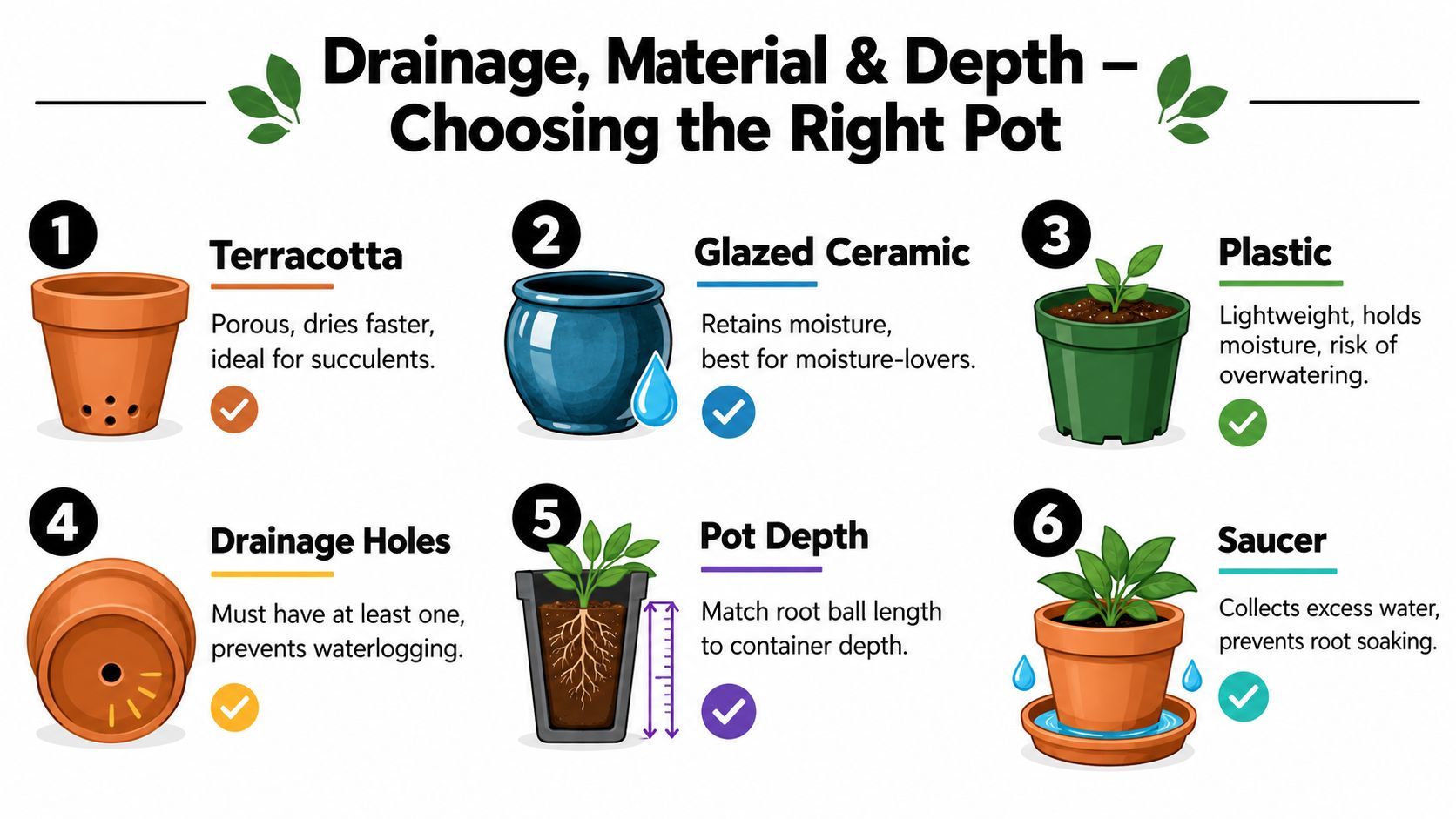
Diameter is only one part of the decision. Two pots with the same rim measurement can behave very differently if one is porous terracotta and the other is plastic or glazed ceramic. Terracotta dries faster, while plastic and glazed ceramic retain moisture longer, so a moisture-sensitive plant or a low-light plant may need a smaller size increase in a moisture-retentive container, according to guidance on choosing pot size as a complete system.
Material should match the way you care for plants. Terracotta can suit plants that prefer quicker drying, while plastic may be more forgiving for someone who travels or wants a lighter container. Glazed ceramic can hold moisture well, but its decorative weight and drainage design deserve attention before you move a plant into it.
Drainage holes are part of pot sizing
A pot needs a way for excess water to leave. North Carolina State Extension states that drainage holes are necessary in all containers to prevent roots from standing in water. For small containers, extension guidance suggests three or four 1/4-inch holes, while holes larger than 1/4 inch can allow too much soil to escape, as explained by Oklahoma State University Extension.
Hole area can scale with container diameter. One published recommendation gives 3 to 4 holes of 1/4 inch for pots under 6 inches, 3 to 4 holes of 3/8 to 1/2 inch for 6- to 10-inch pots, and 4 to 6 holes of 1/2 inch for 10- to 16-inch pots. These specifications come from container drainage guidance.
If a decorative cachepot has no opening, use it as an outer cover with a draining nursery pot inside. Empty standing water from the saucer or cover after watering so the roots aren't left in a pool.
Depth deserves a separate look
Match depth to the length and shape of the root ball rather than choosing the deepest container available. A tall, narrow pot can hold a large column of wet mix beneath a shallow root system. That extra depth may delay drying even when the diameter seems appropriate.
Before buying, compare the plant's root-ball height with the container's interior depth. Aim for stable support and enough fresh mix around the roots, not a deep empty layer below them.
Matching Pot Size to Watering Needs and Little Green Leaf Globes
A pot should fit both the plant and the life you lead. An apartment plant near a bright window may dry on a different schedule from an office plant under gentler light. A traveler may want a little more consistency between waterings, while someone who enjoys checking plants daily may prefer a setup that dries more predictably.
Self-watering planters use a lower reservoir and a wicking interface. As the upper soil dries, capillary action draws water upward into the root zone, creating steadier moisture without constant top watering. Many designs also include an overflow port near the top of the reservoir so excess water can escape before it floods the roots, as described in this explanation of self-watering planter mechanics.
A practical globe pairing
Little Green Leaf globes can complement a correctly sized pot when you want gradual hydration between regular checks. The 100 ml globe suits small pots and seedlings, the 200 ml globe fits medium houseplants, and the 350 ml globe is intended for larger planters. These sizes should be matched to the plant, soil, angle of insertion, and environment rather than used to compensate for a container that's much too large.
A small apartment plant in a snug container may use the smaller globe while you're away. An office plant in a medium pot may benefit from the middle size when weekend care is inconsistent. A larger floor planter can use the larger option, provided the pot drains well and the soil isn't already saturated.
The globe releases water as the soil dries, so it works with the root-zone conditions rather than replacing them. For a deeper look at maintaining balanced moisture, read this guide to soil moisture control.
Use a globe as support, not as permission to overwater. Check that the pot has drainage, insert the globe carefully, and consider the material of the container. A smaller, well-draining pot with gradual hydration is usually easier to manage than a giant pot filled with wet soil.
When and How to Repot With Confidence
Repot when the plant gives you a reason, not just because a larger pot looks attractive. Roots circling densely, water running straight through the container, or noticeably slowed growth can indicate that the root system has outgrown its space. These signs are useful prompts to inspect the root ball and choose the next measured step, as outlined in this guide to when to repot houseplants.
A gentle repotting sequence
- Prepare the new pot. Choose a container with drainage and a diameter that gives the root ball modest extra room.
- Loosen the plant carefully. Support the soil and stems rather than pulling on leaves or delicate growth.
- Inspect the roots. Gently separate tightly circling roots and remove only damaged or unhealthy material.
- Set the depth. Keep the plant at the same soil level it had before. Avoid burying the stem deeper than it was.
- Add fresh potting mix. Fill around the root ball, pressing lightly so the plant stands securely without compacting the mix heavily.
- Water thoughtfully. Moisten the new mix and let excess water drain fully before returning the plant to its usual place.
After repotting, give the plant steady light and observe the soil before watering again. You don't need to rush the next upgrade. A correctly sized pot, suitable material, open drainage, and a consistent routine will give the roots time to settle.
Little Green Leaf offers decorative self-watering globes in 100 ml, 200 ml, and 350 ml sizes to support more consistent moisture in appropriately sized pots. Visit Little Green Leaf to explore a simple watering companion for busy days, office plants, travel, or thoughtful plant gifts.