

Root Development in Plants: A Practical Care Guide
You water your houseplant, admire its new leaf, and assume everything below the soil is working as it should. Then the plant wilts, growth slows, or a repotting reveals a dense knot of roots circling the pot. That surprise is common because root development in plants usually happens out of sight, long before the leaves show a problem.
Roots respond to moisture, oxygen, soil texture, temperature, nutrients, and time. They also change as a plant moves from a fragile seedling to an actively growing plant and, eventually, a mature plant with older roots. Once you understand that hidden lifecycle, plant care becomes less about dramatic fixes and more about steady conditions.
Why Roots Are the Part Most of Us Never See
A plant can look perfectly healthy on a shelf while its roots struggle underneath. You might notice the issue only when you slide the plant from its pot and find a firm, tightly packed root ball, or roots that are dark, soft, and surrounded by sour-smelling soil.
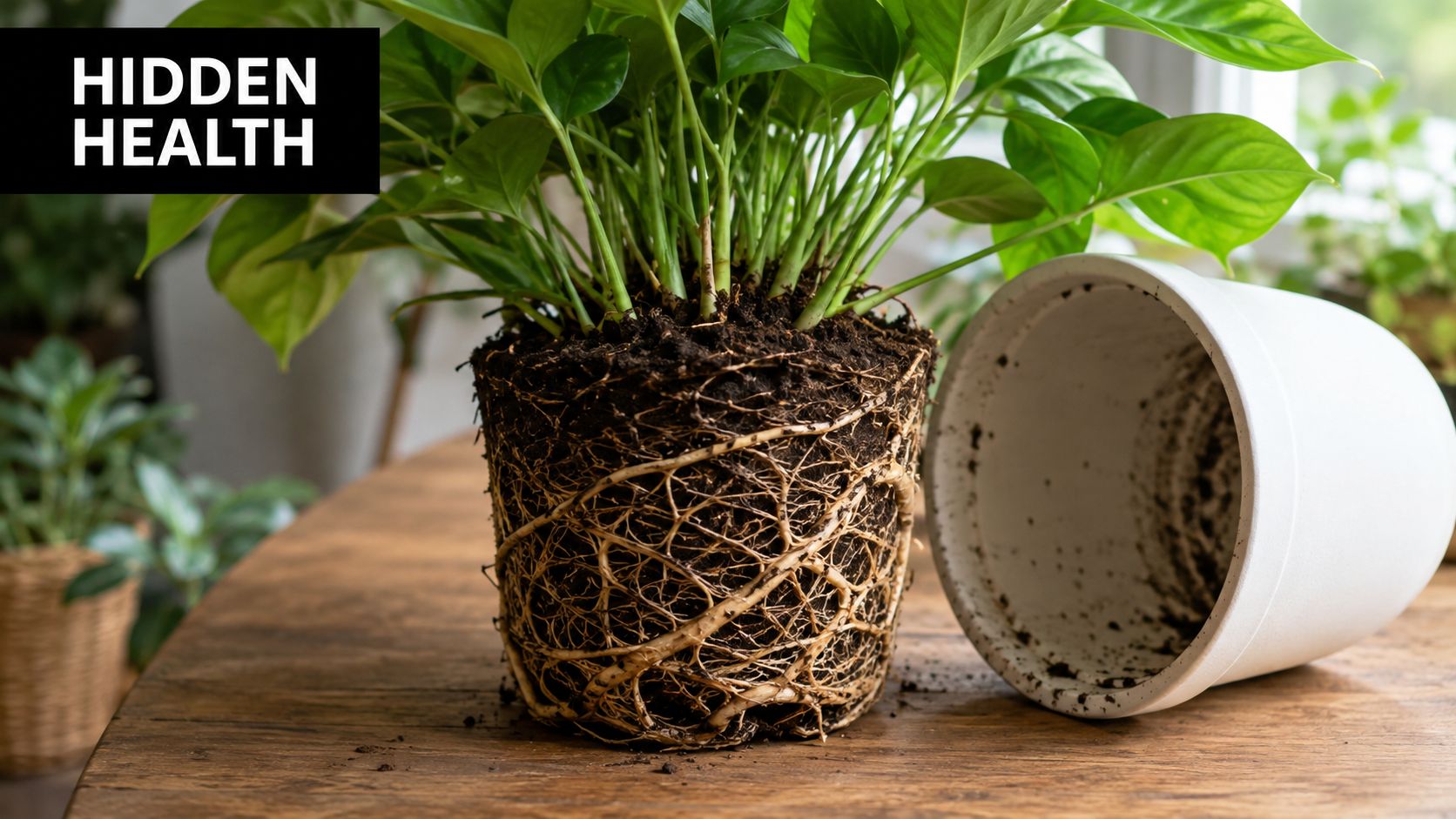
That hidden network does far more than hold a plant upright. Roots anchor stems, absorb water and minerals, exchange gases with the spaces in soil, and store energy that supports new growth. Fine roots and their surrounding soil community also influence how efficiently a plant accesses resources. A leaf may be the part you notice, but the root system helps determine whether that leaf can remain firm, green, and productive.
The quiet work below the surface
Think of the roots as a plant's underground service system. The thicker roots provide structure and transport, while smaller roots explore nearby spaces. Fine root surfaces do much of the practical work of taking in water and nutrients, provided the soil contains both moisture and air.
This is why a watering decision affects more than hydration. Pouring water into compacted soil changes the air available around the roots. Letting a pot become very dry changes where roots can find moisture. Placing a plant near a cold window can slow underground activity even when the leaves still look acceptable.
Practical rule: Judge a plant's care by the conditions around its roots, not only by the appearance of its leaves.
The timing of early development makes the underground half especially important. Root development is the first major plant organ system to form after germination, and in grasses, roots can begin before the shoot emerges. Under suitable conditions, Oregon State University notes that 2 to 3 inches of root may develop before aboveground growth appears, with roots potentially reaching about 6 inches in depth within 2 weeks. These details are summarized in Oregon State University's overview of root development.
For everyday plant owners, the lesson is simple. A plant doesn't need a complicated routine to build a useful root system. It needs a root zone that stays appropriately moist, remains oxygenated, and matches the plant's stage of growth. Small choices above the soil shape that environment.
How Plant Roots Grow and Change Over Time
Root growth begins with a small structure called the radicle, the first root that emerges from a seed. You can picture it as the plant's initial anchor, similar to a tiny tree trunk growing downward before the rest of the structure develops.
A protective root cap covers the growing tip. It works like a hard hat, helping the tip push through soil particles while sensing the surrounding environment. Behind the cap, cells divide, stretch, and mature. That narrow area is where a root extends, rather than growing evenly along its entire length.
From one anchor to a feeder network
The primary root grows from the embryo and establishes early direction. Lateral roots then emerge from it, much like branches extending from a trunk. These side roots increase the area the plant can explore, helping it reach separate pockets of water and nutrients.
The smallest structures, including root hairs, resemble a dense head of hair along the root surface. They're delicate, short-lived, and valuable because they create close contact with soil particles and the thin films of water around them. A root system with many active fine roots can often take up resources more effectively than a system made mostly of thick, aging roots.
Research has measured this branching process closely. In Arabidopsis seedlings 6 to 9 days old, normal lateral root branching density is about 0.4 mm⁻¹, while seedlings 11 to 14 days old can reach roughly 0.5 to 0.8 mm⁻¹, according to an overview of root development in plant physiology.
What you notice during each stage
During early expansion, a seedling may use water quickly because new roots and shoots are both developing. Later, active roots support visible surges in leaves, stems, flowers, or fruit. When growth slows because of dormancy, low light, or other seasonal conditions, the plant may use water more slowly and need longer intervals between waterings.
Grasses show another useful pattern. Their primary roots come from the embryo, while adventitious roots begin forming soon after the first leaf emerges. This helps explain why a grassy plant can develop a broader underground system even when its visible canopy still looks small.
Roots don't stop changing after a plant fills its pot. Branching, angle, surface area, and growth rate continue to respond to local conditions. A plant may direct roots deeper when moisture is lower down, or spread them through the upper soil when resources are concentrated near the surface.
You can watch a short visual explanation here:
The Five Factors That Shape Root Development
Root systems respond to their surroundings rather than following one fixed blueprint. Researchers describe root architecture through four major shape traits, growth, branching, surface area, and angle, and plants adjust these traits when water and nutrients vary through the soil. Research on root system architecture explains why steeper angles can support deeper rooting, while shallower systems can make better use of surface resources.
Water availability
Roots need moisture, but they also respond to its pattern. If one part of the pot repeatedly dries while another stays damp, new growth may shift toward the wetter area. Young lateral roots can make growth decisions within a few hours, and maize roots can change where they allocate growth within 48 hours when water pulses shift between soil layers, as described by the University of Freiburg's report on early root direction.
For a houseplant, aim for a repeatable rhythm suited to the species and pot. Avoid tiny surface sprinkles that wet only the top layer.
Soil structure and texture
Soil particles create both pathways and obstacles. A mix that drains too quickly may leave roots short of moisture, while dense soil can limit movement and reduce the air spaces roots need. In a container, structure often matters more than adding extra fertilizer.
Water also moves through soil by capillary action. This guide to capillary action in soil can help you understand why moisture doesn't always spread evenly through a pot.
Nutrients
Balanced nutrition supports both visible growth and the underground system. Phosphorus has a recognized role in early root initiation and branching, while excessive nitrogen can encourage lush leaves without creating a proportionate root network. Feed according to the plant's needs rather than assuming more fertilizer will compensate for poor soil or weak light.
For a species with unusual structure, such as a yucca, this guide to the yucca root system for Perth gardens offers useful context on how root form relates to practical garden conditions.
Aeration
Roots need oxygen as well as water. Prolonged waterlogging fills soil pores with water and pushes out air, which can weaken deep roots first and make the plant more vulnerable to root rots and anaerobic pathogens, according to the University of Missouri Extension information summarized here.
A pot with drainage holes, a suitable mix, and no standing water protects this breathing space.
Temperature
Temperature stability matters because roots are living tissues with active growth programs. Cold, wet soil can slow development, while repeated temperature swings may create stress even when watering seems reasonable. Keep pots away from cold drafts, hot radiators, and windows that become sharply colder at night.
Healthy Roots Versus Unhappy Roots
The fastest way to understand a root problem is to compare several signals at once. One symptom alone can mislead you, but color, texture, smell, and leaf behavior together often reveal what the plant is experiencing.
| Signal | Healthy Roots | Unhappy Roots |
|---|---|---|
| Color | White, cream, or tan | Brown, gray, or black |
| Texture | Firm and flexible | Mushy, collapsing, or papery |
| Smell | Mild and earthy | Sour, stale, or rotten |
| Growth | Steady new roots and shoots | Little progress or repeated decline |
| Leaves | Firm, appropriately colored, and supported | Wilting, yellowing, or dropping |
Roots that are brown aren't always beyond help. Older roots can naturally become darker, so texture matters. A firm tan root may be mature, while a dark root that feels soft and pulls apart points to a more serious moisture and oxygen problem.
You may also see roots circling the outside of the root ball. That pattern usually means the plant has used the available space and is searching for more room. Container plants can't spread outward indefinitely, so their care differs from in-ground plants. This explanation of container root behavior and drainage reinforces the importance of drainage holes, full root-zone watering, and keeping pots out of standing water.
Before blaming the leaves, ask: Can the roots access both moisture and air in the space they have?
If you're unsure whether a problem is rot, this guide to signs of root rot in plants provides a useful visual and practical reference. Handle roots gently during inspection because fine feeder roots can break easily.
Building a Root-Friendly Care Routine
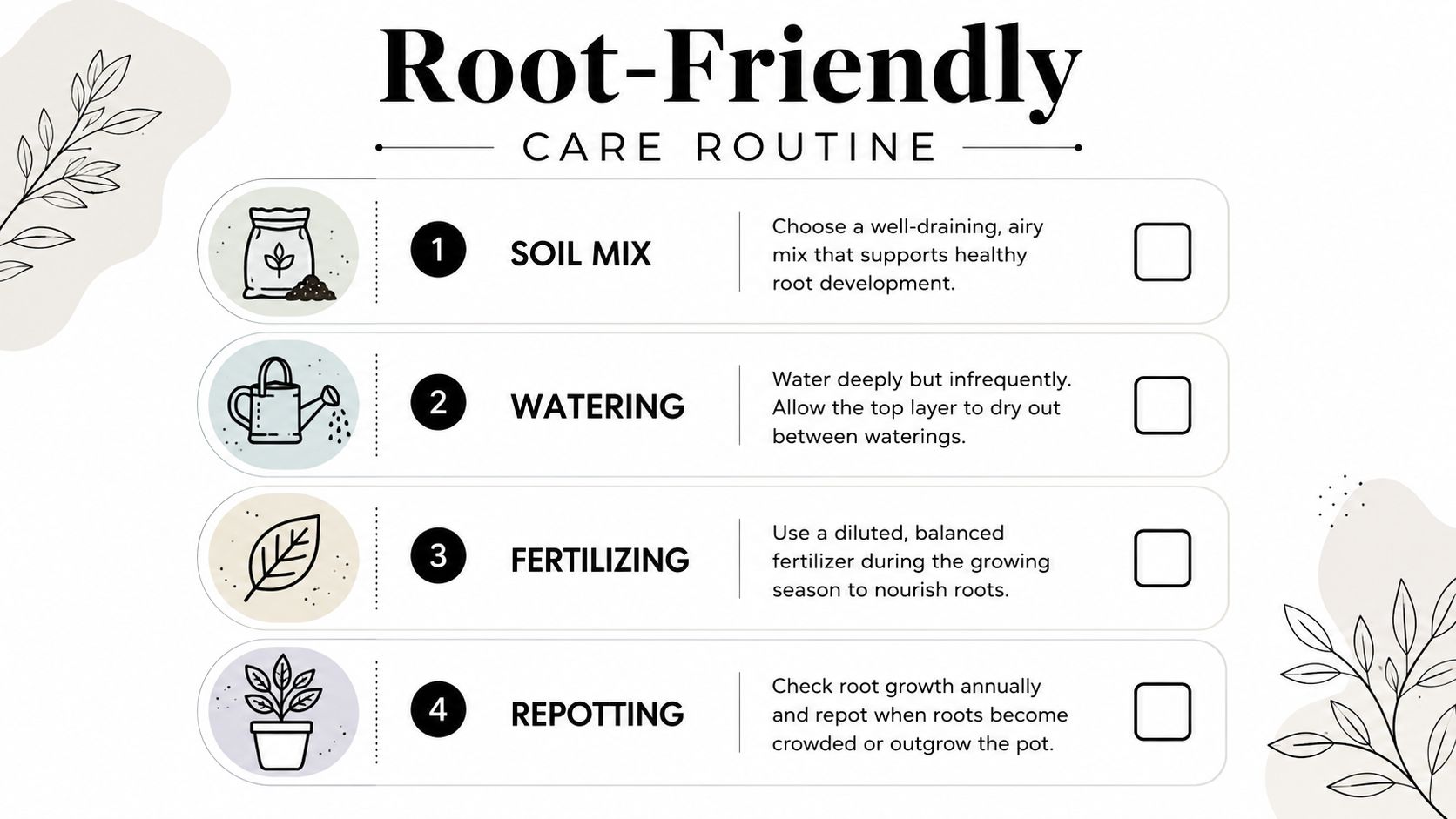
Strong roots develop through repeated conditions, not a single perfect watering. A simple routine should make the root zone predictable while leaving room for the plant's species, pot, light, and season.
Start with the container
Choose a soil mix that drains well for the plant you're growing. Use a pot with drainage holes, and match the container to the existing root mass rather than moving a small root system into a very large pot. Extra unused soil can stay wet for too long, especially in a dim apartment.
When repotting, slide the plant out carefully and inspect before disturbing anything. If roots are circling tightly, loosen the outer layer with your fingers. Remove only roots that are clearly dead or rotten, then settle the plant into fresh mix at the same depth.
Create a repeatable watering rhythm
Water thoroughly enough to moisten the root zone, then wait until the mix has dried to the level appropriate for that plant. A cactus and a fern won't share the same schedule, and a small pot near a bright window won't behave like a large planter in a shaded room.
Daily surface sprinkling can create a misleading pattern, with wet soil near the top and dry roots farther down. Check the mix with a finger, a wooden stick, or the weight of the pot, and adjust as the season changes.
For travelers or forgetful waterers, a self-watering globe or wicking system can provide a slower moisture supply. A pebble tray may add local humidity, but it isn't a substitute for root-zone watering. Little Green Leaf's decorative self-watering globes release water gradually as soil dries, offering one hands-off option for maintaining steadier moisture around roots.
Match feeding and light
Roots can't support growth the leaves don't have enough light to produce. Place the plant where its species can photosynthesize well, and avoid heavy feeding when light is weak or the plant is resting. A diluted, balanced fertilizer during active growth is usually gentler than repeated strong applications.
Repot and propagate with patience
Repot when roots have filled the available space, water runs rapidly through a tightly packed root ball, or growth remains stalled despite suitable care. Step up gradually, and give the plant time to settle after the change.
For propagation, place cuttings in clean water or a suitable rooting medium, keep conditions stable, and wait for new roots before expecting rapid top growth. This practical guide to preventing root rot is a helpful companion when you're managing moisture during establishment.
Rethinking the More Water Myth
More water doesn't automatically produce stronger roots. Roots need water and oxygen at the same time, and saturated soil can remove the air spaces that fine roots use for gas exchange. Prolonged waterlogging can weaken roots and create conditions associated with rot, so a pot that stays wet isn't necessarily a well-hydrated pot.
Think of soil as a room where roots breathe. Water is useful, but if every air space is filled, the room has poor ventilation. A plant that's briefly thirsty may recover after a suitable watering, while a plant kept chronically wet may decline even though its leaves never appear dry.
The better target is consistent, moderate moisture with oxygen exchange. That means using a well-draining mix, choosing a pot that lets excess water leave, and allowing the root zone to reach an appropriate level of dryness before watering again.
Steady delivery can be gentler
A slow-release tool can help when your home routine is irregular. Self-watering globes and wicking systems release moisture gradually rather than delivering a large amount at once. They still need to match the plant, pot size, soil, and environment, and they shouldn't turn a poorly draining pot into a permanently wet one.
Temperature stability belongs in the same conversation. Roots respond to changing conditions, so moving a plant between a cold window and a warm heater can create stress that watering alone won't solve.
Strong root development comes from a stable root-zone environment, not from the largest possible volume of water.
A Simple Roadmap for Stronger Roots
Use this six-step reset whenever growth stalls or your watering routine feels uncertain.
- Assess before repotting. Check root color, firmness, smell, and whether roots circle tightly through the pot.
- Choose airy soil. Select a mix suited to the species, with enough structure for drainage and oxygen movement.
- Water consistently. Match the rhythm to the pot, plant, light, and season instead of following a fixed calendar.
- Watch temperature and light together. Keep roots away from sharp drafts and give the canopy enough light to support new growth.
- Refresh the container when needed. Loosen circling roots gently and move up gradually when the root mass has outgrown its space.
- Observe weekly. Look for changes in leaf firmness, color, growth speed, soil moisture, and pot weight, then make one small adjustment.
The aim isn't to control every root. It's to create conditions where roots can respond naturally and keep exploring. Strong root systems develop gradually, and steady improvements are usually more helpful than dramatic interventions.
Save this roadmap on your phone or keep it near your watering supplies. When a plant slows down, return to the root zone first.
Little Green Leaf offers decorative self-watering globes that release water gradually as soil dries, giving busy plant owners and travelers another way to maintain consistent root-zone moisture. Visit Little Green Leaf to explore practical plant-care tools for a calmer, more confident routine.