

When to Repot Houseplants: Signs, Timing, and Tips
You've watered your pothos on schedule, the leaves still look a little tired, and the pot never seems to dry out the way it used to. That's the moment many plant owners pause and wonder if the problem is the plant, the soil, or the pot itself.
Repotting can feel like a big decision because it changes several things at once, the root space, the soil, and the way water moves through the container. The good news is that when to repot houseplants usually shows up in the plant's behavior long before it becomes urgent, so you can learn to read the cues instead of guessing.
Why Repotting Timing Matters More Than You Think
A houseplant usually gives small clues before it needs a new pot. One leaf droops, growth slows, or the soil starts behaving differently after watering. Those changes are easy to miss if you only watch the calendar.
Read the plant, not the calendar
Extension guidance says many houseplants need repotting about once every 1 to 3 years, but the plant's own signals matter more than a date on the wall. Illinois Extension notes that the best time is during active growth, usually in spring or early summer. Iowa State Extension adds that repotting can happen any time of year, though it often goes best in late winter or early spring as daylight increases and growth resumes, because the plant settles into new media more easily (Illinois Extension repotting guidance).
That timing matters because potting mix changes over time. As it breaks down, it becomes denser and drains less well, so roots get less air and water may linger longer than before. The plant can start to struggle even before the pot looks crowded.
A steady plant gives you room to wait. A plant whose roots, growth, and watering pattern all start changing together is telling you to look closer.
The simplest habit is to watch for patterns. If the pot, the soil, and the plant all begin acting differently at the same time, the container is likely no longer fitting the plant's needs.
Clear Signs Your Houseplant Needs a New Pot
The easiest way to think about a rootbound plant is like shoes that fit too tightly. The plant can keep going for a while, but the roots have less room to spread, and the whole system starts to feel restricted.
Start with the roots and the pot
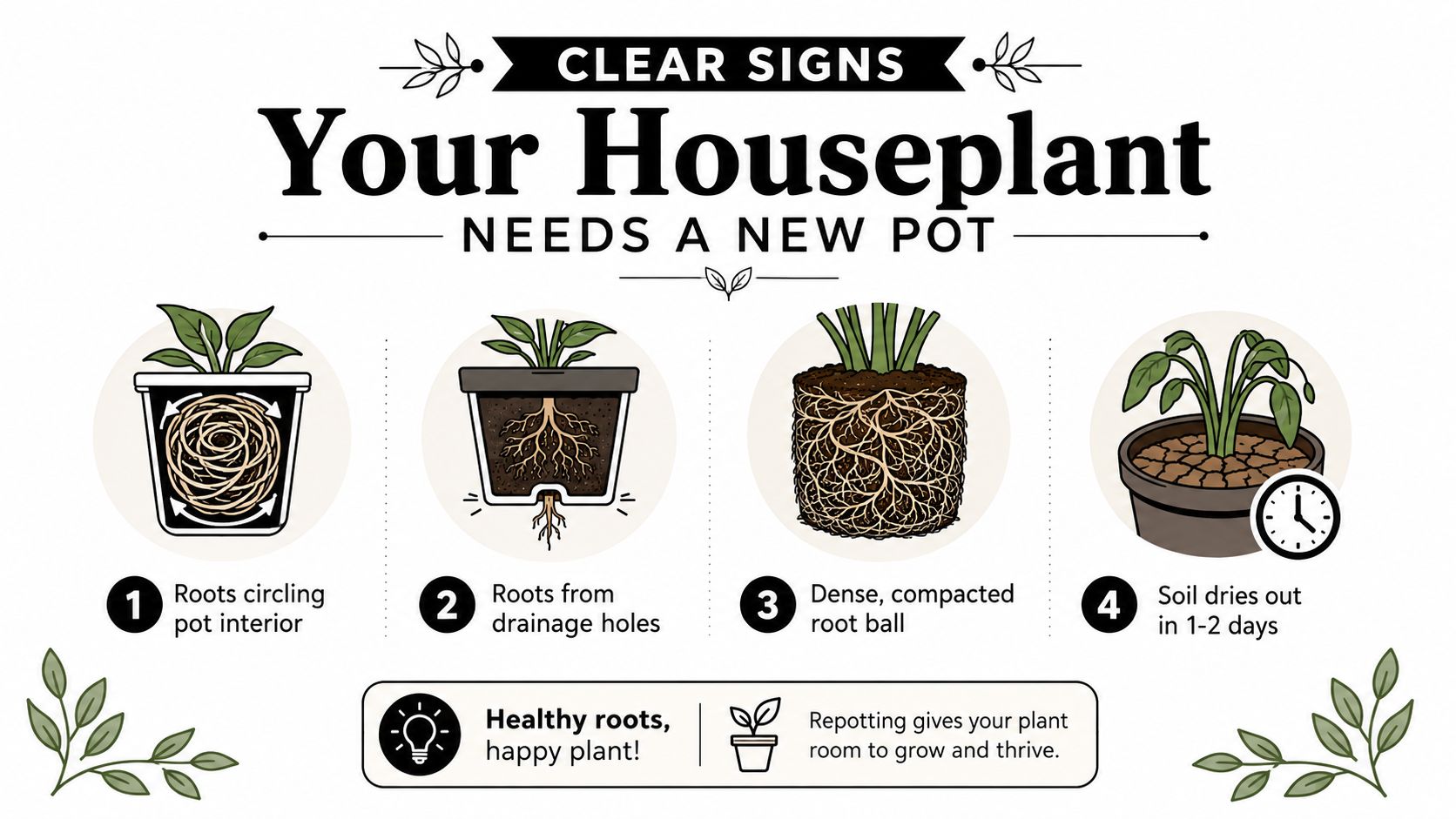
One of the clearest signals is roots coming out of the drainage holes or forming a dense, white, circling mass at the edge of the container. Washington State University Extension describes that pattern as a sign the root system has occupied most of the pot volume, which reduces available soil, water-holding capacity, and growth space (WSU Extension root-bound guide).
A gentle lift can tell you a lot. If the root ball comes up and you see a tight mat around the outside, that's stronger evidence than a single root poking out at the bottom.
Watch the water and the leaves
Soil that dries out unusually fast, or plants that wilt between normal waterings, often need more room. Other common signs include soil pulling away from the pot edges, water running through the container too quickly, smaller new leaves, or a plant that becomes top-heavy and starts tipping.
- Roots visible at the bottom: Check drainage holes for roots reaching out.
- Circling roots inside the pot: Lift the plant slightly and look for a wrapped root ball.
- Fast drying soil: Notice whether the mix goes dry far sooner than it used to.
- Weak new growth: Compare new leaves to older ones and watch for shrinkage or slowdown.
One sign alone doesn't always mean repotting is due. Several signs together usually do.
How Seasons and Plant Types Change the Repotting Window
The best timing depends on how your plant grows. A fast-growing pothos and a slow-growing snake plant do not live on the same schedule, even if they sit on the same windowsill.
Match repotting to active growth
Most houseplants settle best when repotted during active growth, usually in spring to early summer, because brighter light and warmer temperatures help them rebuild roots faster. Healthy Houseplants notes that repotting works best when new leaves or stem extension are already underway, since dormancy slows recovery and can increase transplant shock (Healthy Houseplants on drainage holes and repotting timing).
A simple way to think about it is this, repot when the plant is already trying to grow. It has more momentum.
Use plant type as a guide
| Plant Type | Best Repotting Season | Notes |
|---|---|---|
| Fast-growing tropical houseplants | Spring to early summer | Usually recover well during active growth |
| Slow-growing houseplants | Spring or early summer, when needed | Often stay in the same pot longer |
| Flowering plants | After blooming ends | Avoid interrupting flowers |
| Cacti and succulents | When the plant is stable and actively resting less | They generally prefer drier conditions |
If you miss the ideal window, don't assume you've ruined the plant. Urgent root issues can outweigh seasonality, but if the plant looks healthy, waiting for a better growth window is often the gentler choice.
How Consistent Watering Affects Repotting Cues
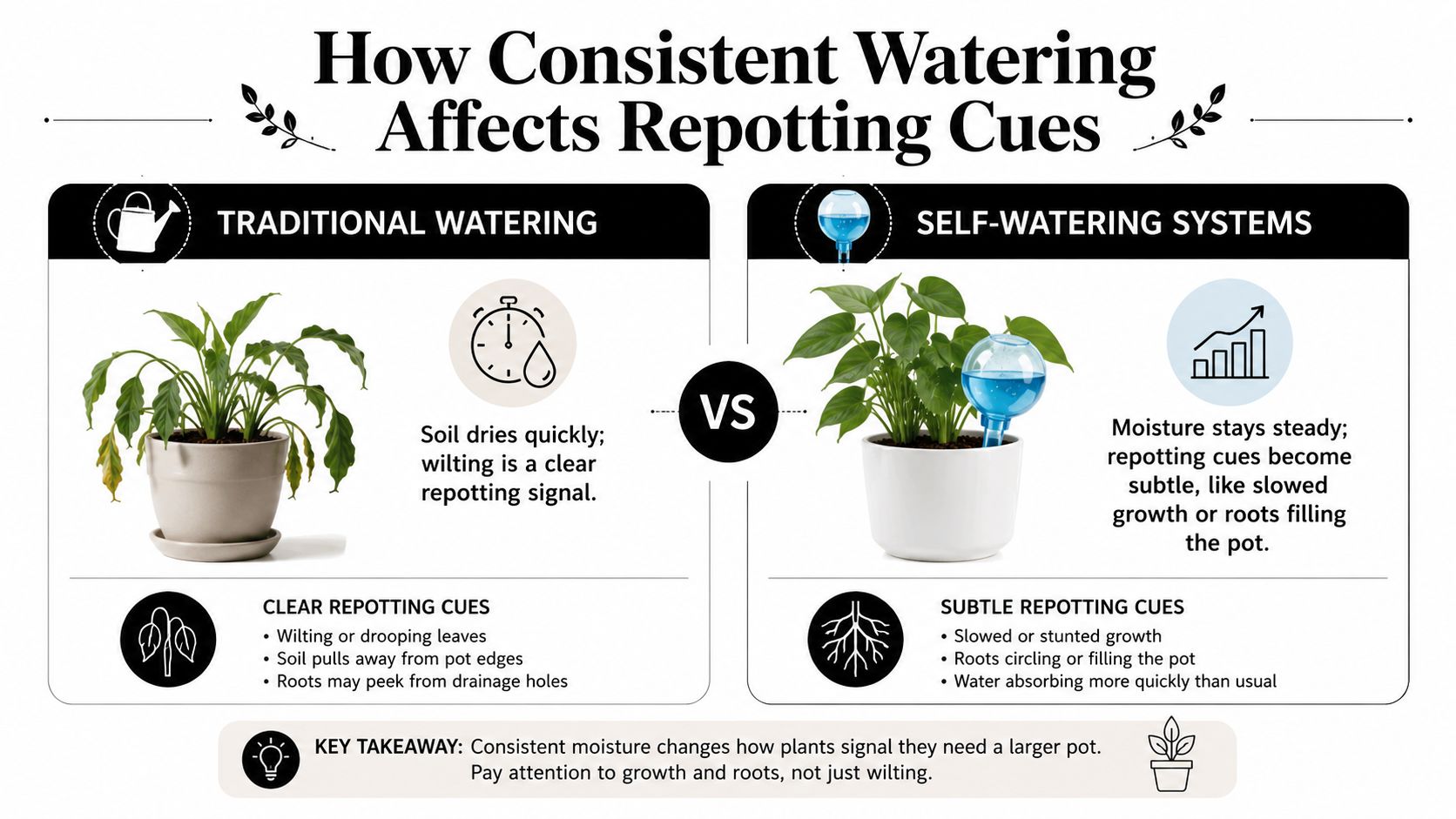
Self-watering globes and reservoir systems make plant care easier, but they also change the clues you rely on. When moisture stays steady, the usual signals, like rapid drying or dramatic wilting, can become less useful.
Watch structure more than surface dryness
With traditional watering, a plant often tells you quickly when the pot is getting too small. With steadier hydration, the plant may keep looking fine at the surface even while the roots fill the container. That's why roots emerging from drainage holes, slowed growth, and soil that stays damp for too long become more important clues.
For a closer look at moisture signals, the moisture meter reading guide can help you compare what the top layer of soil is saying with what the root zone is doing.
Check the root zone on a schedule you can keep
If you use a self-watering globe, don't rely only on the watering routine. Every so often, lift the plant and look at the root ball, especially if the plant has been in the same container for a while and growth seems slower than usual.
When water stays consistent, the plant often stops warning you through drought stress and starts warning you through crowding.
That shift is easy to miss. Consistent watering doesn't remove the need to repot, it just changes which clues matter most.
Preparing and Repotting Your Plant With Confidence
A smooth repotting session starts before the plant leaves its old container. A little preparation makes the work cleaner, faster, and less stressful for the roots.
Set up before you start
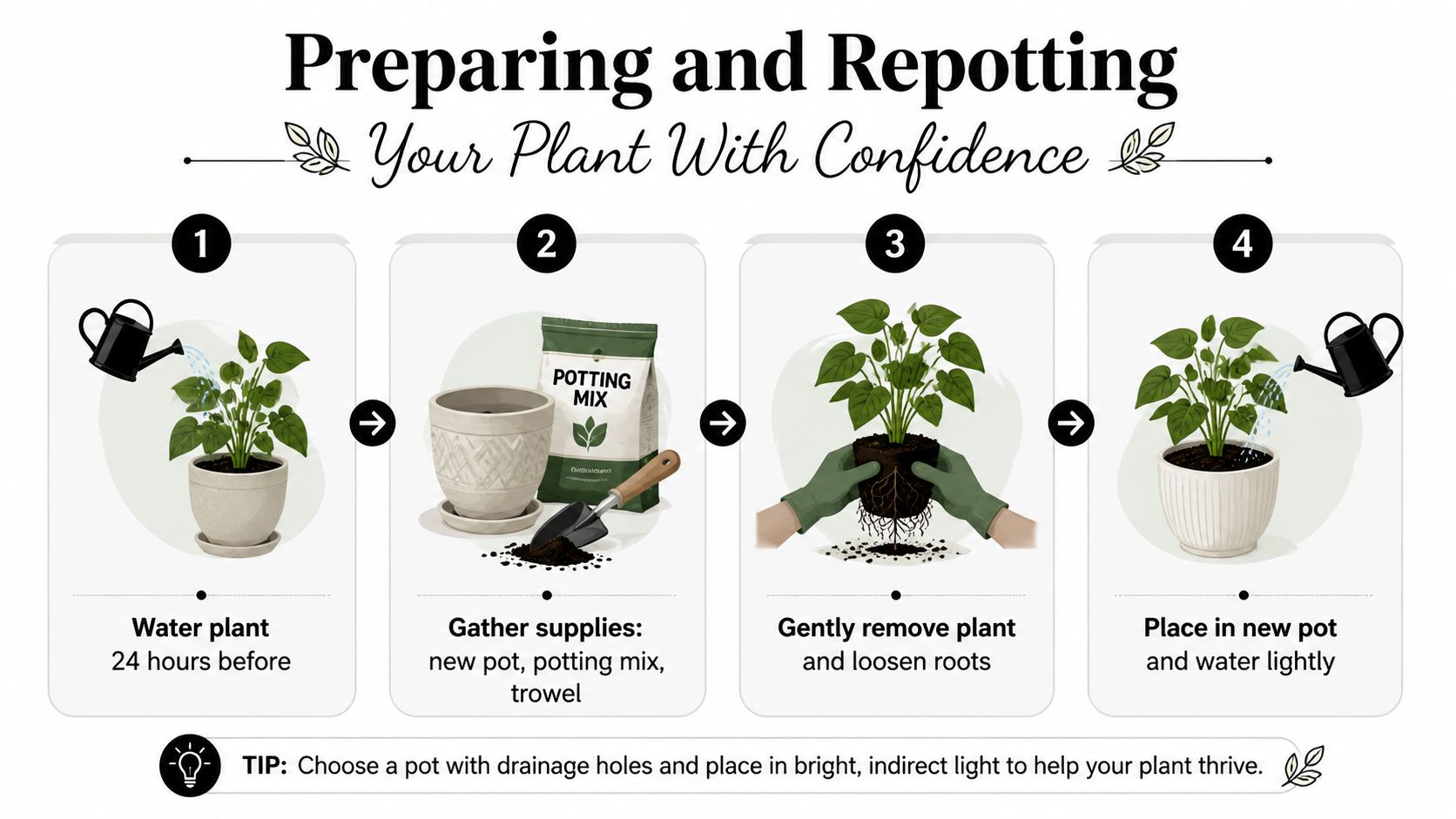
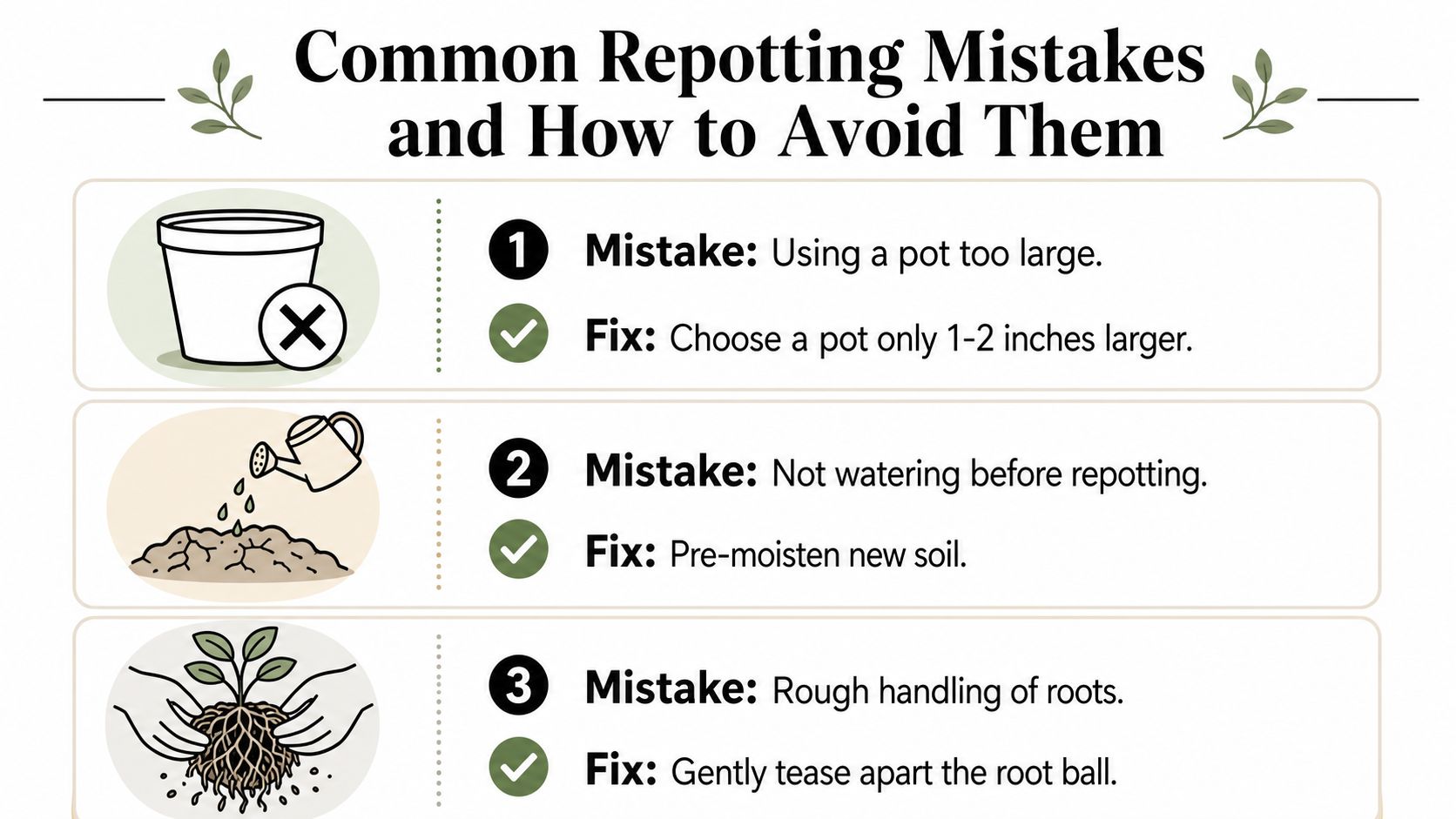
Water the plant about 24 hours before repotting so the root ball holds together more cleanly. Then gather a new pot, fresh potting mix, clean scissors, and a towel or tray to catch the mess. For most houseplants, choose a pot only 1 to 2 inches wider than the current one, because a much larger container leaves too much wet soil around the roots and can create drainage problems (BHG repotting guidance).
Use a well-draining potting mix for most plants, and choose a specialized blend for succulents or orchids if that's what you grow. The point is to match the soil to the plant's needs, not to fill the pot with the heaviest mix you can find.
Move the plant gently
Slide the plant out, loosen circling roots with your fingers, and trim only clearly dead or damaged bits if needed. Set it at the same depth in the new pot, fill around the edges with fresh soil, and water thoroughly so the mix settles around the roots. A healthy plant may look a little quiet for a day or two after the move, and that's normal.
If you want a broader home-care refresher after the repot, the potted plant care guide is a useful companion. For pest concerns that can complicate a repotting decision, the BugMD pest control guide is a helpful reference to keep nearby.
Common Repotting Mistakes and How to Avoid Them
The biggest repotting mistake is treating size like the goal. Bigger pots do not automatically mean healthier plants, because extra soil holds extra moisture, and roots can sit in wet mix longer than they should.
Avoid disruption when the plant already needs stability
A newly purchased plant, a pest-affected plant, or one already stressed by low light or temperature swings often needs steadiness more than a new container. Winter repotting can also slow recovery because many plants are not growing as actively, and the same goes for repotting during other low-growth periods.
Garden soil is another common mistake. It often stays too dense for houseplants, so fresh potting mix is the safer choice. And if a pot has no drainage hole, repotting into it can create a new problem instead of solving the old one.
Don't read every overdue plant as an emergency
Some plants tolerate a snug pot better than others. A plant that looks a little crowded is not always in trouble, and many houseplants can stay comfortable for a while if the leaves still look healthy and the watering pattern hasn't changed.
For rot-specific concerns, the how to prevent root rot guide is worth keeping in your bookmarks. It's especially useful if the plant sits in a heavy mix or if you've been tempted to size up too quickly.
Good instinct: if the plant looks slightly cramped but otherwise steady, pause first. If the roots, soil, and growth all point the same way, then repot.
Your Quick Repotting Readiness Checklist
Before you reach for a new pot, check the plant, not just the calendar. Look for roots at the drainage holes, circling roots inside the container, soil that dries much too fast, or growth that has clearly slowed.
- Root signs: Confirm visible roots or a tight root ball.
- Soil behavior: Check for compaction, poor drainage, or fast drying.
- Growth rhythm: Make sure the plant is actively growing or at least not dormant.
- Plant health: Wait if pests, disease, or a recent move are already stressing it.
- Self-watering setup: If you use a globe or reservoir, inspect the root ball directly, since moisture cues can be harder to read.
Repotting is a normal part of plant care, not a crisis. Once you learn to trust the signals your plant gives you, the decision gets much simpler.
Little Green Leaf helps plant owners keep care calm and consistent, especially when life gets busy or travel interrupts a routine. If you want a low-effort way to support steady hydration between repots, visit Little Green Leaf and explore tools that make everyday plant care feel easier and more confident.