

Soil Moisture Control for Happy, Healthy Plants
You water your pothos on Monday because the calendar says it's time. By Friday, the leaves are drooping, the pot feels light, and the soil looks cracked. Or perhaps the opposite has happened, and your plant is sitting in damp soil while its leaves turn yellow. Both problems can come from the same habit, watering without checking what's happening below the surface.
Soil moisture control is the practice of managing how much water soil holds and releases over time. It isn't about keeping a pot wet, and it isn't about following a rigid schedule. It's about helping the root zone stay comfortably supplied with water and air, then adjusting as your plant, pot, soil, light, and routine change.
What Soil Moisture Control Really Means
A pothos can look thirsty even when its soil is still wet in the middle. A plant in a small terracotta pot may dry quickly, while the same plant in a larger plastic container can stay moist much longer. That's why soil moisture control begins with observation, not a universal watering rule.
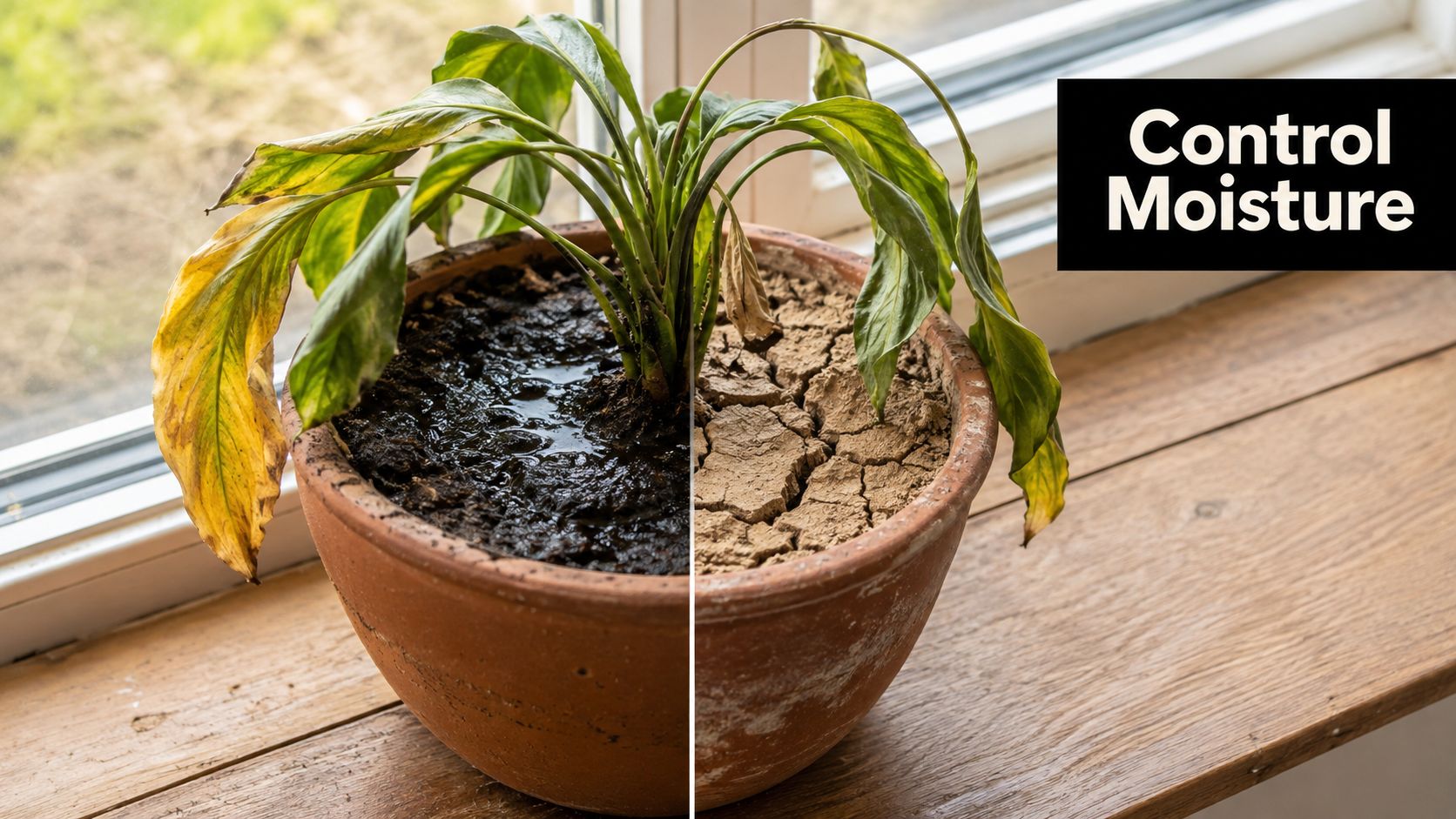
Think in terms of a root-zone reservoir
Soil acts like a small, uneven reservoir. It catches water, stores some of it in pore spaces, and releases it gradually as roots absorb it or excess drains away. The amount available depends on the soil's texture, structure, organic matter, container, and depth.
This idea matters far beyond houseplants. Soil moisture became a formal, data-driven monitoring field as agencies adopted standardized datasets for drought and flood forecasting, agricultural monitoring, forest fire prediction, and water-supply management. NOAA's soil moisture monitoring overview describes tracking soil moisture in millimeters, anomalies, percentiles, and monthly or seasonal changes. NASA and USDA also distribute global products that include surface and subsurface moisture, profile moisture, and anomaly layers.
You don't need satellite data to care for a pothos. You need a simple way to notice whether the root zone is drying too quickly, staying wet too long, or holding a useful middle level.
Control means responding, not guessing
Good control is a partnership with the plant. You check the soil, notice how the leaves look, and make a small adjustment. You might water more thoroughly, move the pot away from intense afternoon sun, use a more breathable mix, or add a passive watering aid before a trip.
The aim isn't perfect moisture every hour. It's a steadier pattern that avoids dramatic swings between saturation and drought. The following guidance will help you understand why moisture affects plant health, choose a checking method that feels comfortable, shape the way soil dries, prepare plants for busy weeks, and troubleshoot without blaming yourself.
Why Moisture Matters for Plant Health
Picture the soil around roots as a sponge with tiny spaces inside. Some spaces hold water, while others hold air. Roots need access to both. Water carries dissolved nutrients toward the roots, but oxygen in the air spaces helps roots function properly.
When soil stays saturated, water fills spaces that would normally contain air. Roots can then struggle in an oxygen-poor environment, and prolonged wetness can contribute to root rot. Iowa State University Extension identifies overwatering as a major cause of houseplant root rot and recommends well-drained potting mix, avoiding standing water, and watering when the plant needs it rather than following a calendar. Its root rot guidance is a useful reference when a plant looks unhappy despite frequent watering.
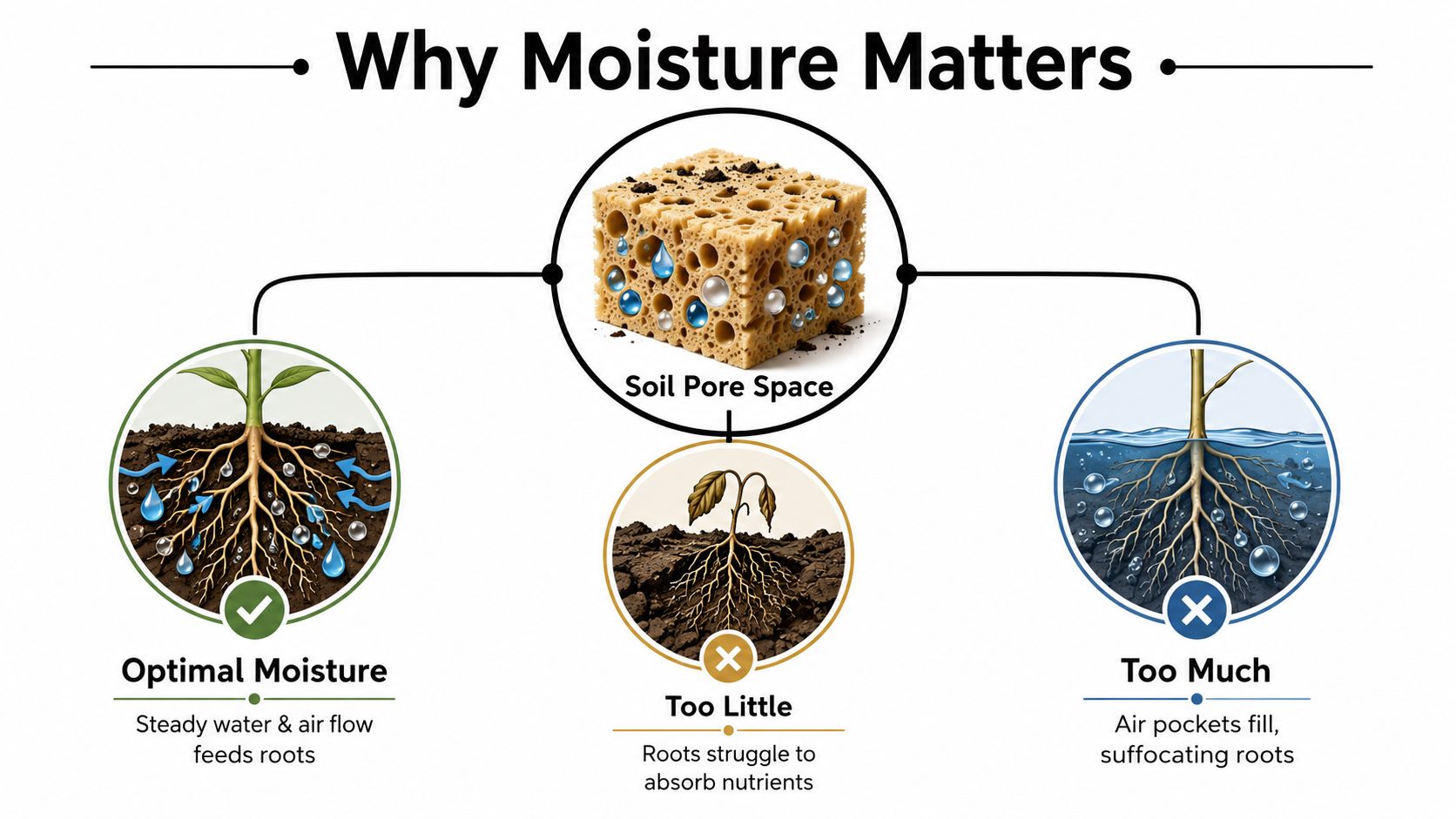
The healthy middle is a moving target
Too little water creates a different kind of stress. Roots can't absorb what isn't available, leaves may droop, and edges can become crisp. The correct moisture level also varies by plant and soil, so a cactus won't follow the same pattern as a peace lily.
For larger growing systems, moisture management is often based on field capacity and management allowable depletion. Field capacity describes the water remaining after gravitational drainage, while plant-available water is the difference between field capacity and the permanent wilting point. Many crops begin showing stress when depletion reaches about 30% to 50% of available water capacity, as explained in this technical lesson on field capacity and allowable depletion.
At home, you can translate that principle into a simpler question: does the root zone still contain useful moisture, or has it become saturated or dry?
Soil structure changes the result
Two pots can receive the same amount of water and behave very differently. USDA research notes that soil amendments can increase porosity by 35% to 46% and improve moisture retention at low suctions by 29% to 70%, according to its soil water-holding capacity report. For a houseplant, the practical lesson is simple: pore structure affects how long water remains available and how much air reaches the roots.
Steadier moisture can support steadier growth and help a plant recover from ordinary stress. It also helps fertilizer work more predictably, because very dry soil may not distribute water evenly, while constantly wet soil can weaken roots. You're not trying to create a saturated reservoir. You're helping the soil offer water and air in a balanced rhythm.
Simple Ways to Measure and Monitor Moisture
You can learn a lot without buying a smart sensor. Start with the method that feels easiest, then add another check when a plant or pot is difficult to read.
Use your finger first
Push a clean finger into the soil rather than judging only the surface. For many houseplants, the practical starting point is to check whether the top one inch feels dry before watering, as advised by University of Maine Cooperative Extension. Drought-tolerant plants such as cacti and succulents generally need the soil to dry completely between waterings.
Feel for dampness, coolness, and texture. A dry crust over moist soil can mislead you, so check farther down when the pot is deep. Missouri Extension recommends judging soil moisture by color and feel and wetting the entire soil mass, not only the top layer, in its houseplant watering guidance.
Lift the pot and look closely
A freshly watered pot feels heavier than a thirsty one. Lift it after watering and remember that weight, then lift it again before the next check. This works especially well for trailing plants in decorative cachepots, where the soil surface may be hidden by leaves.
Visual clues can support your hand check. Darker soil usually indicates more moisture than pale, dusty soil, while cracks or soil pulling away from the pot can signal significant drying. Condensation on a clear container suggests moisture inside, but it doesn't prove that the whole root zone is evenly damp.
Use a meter for confirmation
A basic moisture meter can help with deep pots, dense foliage, or anyone who wants a second opinion. Insert the probe gently into the root-zone area, avoiding force and placing it away from the main stem. Take readings in more than one spot if the pot is broad, because moisture may not spread evenly.
For a deeper explanation of interpreting readings, see this guide to understanding moisture meter readings. If you're growing plants where precise moisture decisions affect harvest quality, this resource on how to optimize harvest quality with a meter offers useful context, though houseplant owners can usually rely on simpler checks.
| Method | How to Use | Best For | Limitations |
|---|---|---|---|
| Finger test | Feel below the surface | Everyday houseplants | Can miss uneven moisture |
| Pot weight | Lift before and after watering | Cachepots and trailing plants | Takes practice |
| Visual check | Observe color, cracks, and condensation | Quick daily scans | Surface clues can mislead |
| Moisture meter | Insert gently into the root zone | Deep or hard-to-read pots | Readings need context |
Comparing Methods That Shape Soil Moisture
Your watering can is only one part of the moisture picture. The pot, mix, light, and delivery method decide how quickly water enters, where it stays, and how soon it leaves.
Soil mix and container choice
A loamy houseplant mix amended with perlite or bark can hold moisture while leaving room for air. Dense, compacted soil tends to drain slowly and may stay wet near the roots. Very coarse soil may do the opposite, sending water through quickly before the root ball becomes evenly moist.
The container changes the pace, too. Plastic generally retains moisture longer, while terracotta absorbs and wicks moisture toward the outside of the pot. A plant that dries too quickly may need a less porous container or a better moisture-retaining mix. A plant that stays wet may benefit from more airflow and a faster-draining setup.
The root zone is the useful control volume because that's where plants take up water. Guidance on water retention and nutrient availability in soil explains that texture, bulk density, and organic matter influence storage and drainage. Saturated soil can store roughly 400 to 600 millimeters of water per meter of soil depth, although the actual amount varies greatly with texture.
Watering style and surface protection
Deep watering wets the full soil mass and encourages roots to use moisture throughout the container. Frequent little sips can leave the center dry while keeping the surface damp, especially if the mix has become hydrophobic. Water slowly until excess drains, then empty the saucer or cachepot.
A thin layer of sphagnum moss, bark, or another suitable top dressing can slow evaporation from the surface. It won't correct poor drainage, and it shouldn't be piled against the stem. Think of it as a light blanket, not a waterproof lid.
Passive aids for uneven routines
Self-watering globes, wicks, and reservoir pots release water gradually instead of delivering one large dose. They can buffer a plant through a busy week, but they still need to match the pot size, soil, plant, and environment. A narrow opening can clog, and a system that releases water too quickly can keep soil wetter than intended.
For a broader look at irrigation options, explore these water and irrigation systems and compare the upkeep involved before choosing a setup.
| Method | How It Shapes Moisture | Best For | Watch Out For |
|---|---|---|---|
| Perlite or bark in mix | Adds air space and changes drainage | Plants that dislike dense soil | Too much can dry the pot quickly |
| Plastic pot | Holds moisture longer | Thirstier plants and busy owners | Can stay wet in low light |
| Terracotta pot | Wicks moisture through the sides | Plants that prefer faster drying | Needs more frequent checks |
| Deep watering | Moistens more of the root ball | Established plants with drainage | Requires saucer emptying |
| Light mulch | Slows surface evaporation | Warm, dry rooms | Don't cover the stem |
| Globe, wick, or reservoir | Provides gradual supply | Travel and irregular routines | Flow must suit the setup |
A Calm Setup Routine for Busy Owners and Travelers
A reliable setup starts before the next missed watering. Choose a pot with a drainage hole that's one to two inches larger than the root ball, so the plant has room to grow without placing a large volume of unused wet soil around its roots.
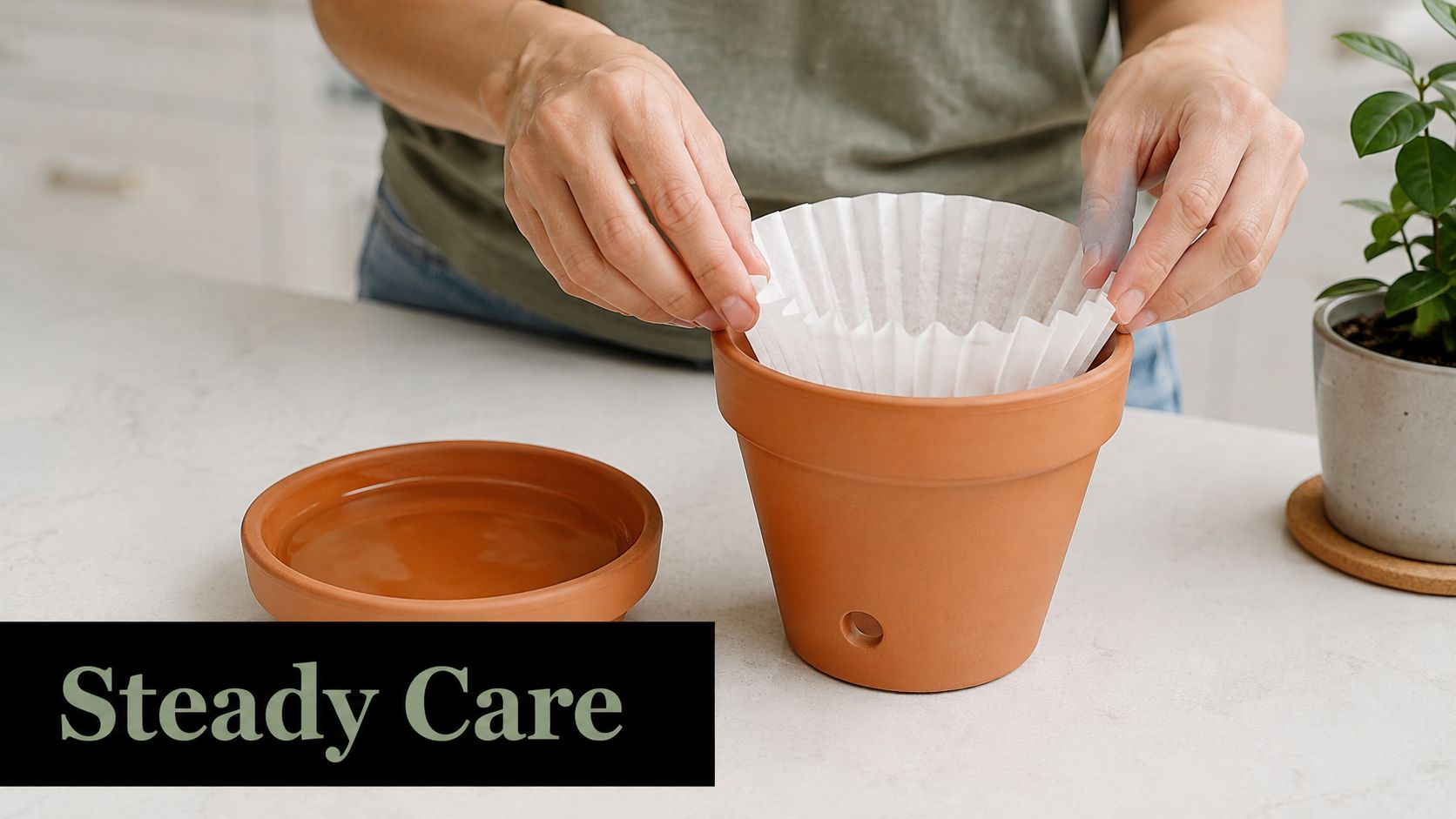
A paper coffee filter over the drainage hole can help keep loose mix from falling out while allowing water and air to move. Use a well-draining mix suited to the plant, then water thoroughly until excess runs through. Don't leave the pot standing in that runoff, because trapped water can keep the lower root zone saturated.
Place the plant where its light matches its needs. Bright light, warmth, and moving air can pull moisture from soil faster, while a dim, cool corner may slow drying. A light layer of sphagnum moss or small bark can reduce surface evaporation, but leave space around the stem and continue checking below the surface.
Travel rule: Prepare the soil for steady moisture, not maximum wetness. A soaked pot isn't automatically a safer pot.
Before leaving, check the root zone, water thoroughly if it's ready, and refresh the light mulch. A self-watering globe or wick system can provide a gradual supply when it's matched to the container and soil. Test the setup before relying on it for a trip, and use a reminder to check the plant after you return rather than watering automatically in advance.
This vacation plant-watering guide can help you adapt the routine for different containers and schedules.
A passive system may be more practical than an app when your main goal is avoiding dry soil during a short absence. Smart monitoring can offer alerts and frequent readings, but more data doesn't always create better decisions. If the problem is overwatering, a simple reservoir, wick, or careful pre-trip check may reduce the number of choices you have to make.
Here's a visual demonstration of a simple moisture-support setup:
Troubleshooting Common Moisture Problems
A struggling plant isn't proof that you've failed. Leaves and soil are giving you clues, and the most useful response is to investigate before changing everything at once.
Yellow leaves can point to overwatering, poor drainage, or another source of stress. Crispy edges more often fit dry soil or low humidity, but don't diagnose from leaves alone. Lift the pot, feel into the root zone, and check whether the mix is compacted, pulling away from the container, or wet below a dry surface.
Read the combination of clues
A sour smell usually suggests that the pot is staying too wet and roots aren't receiving enough oxygen. If the plant is declining in soggy soil, remove it carefully, inspect the roots, trim damaged material with clean tools, and repot into fresh, airy mix. Adding perlite can improve air space, but it won't help if the container lacks drainage.
If the soil is dry and water runs down the sides without soaking in, apply water slowly in stages so the root ball has time to rehydrate. Then allow excess to drain fully. Adjust the frequency only after observing how long the pot takes to dry at the depth that matters.
Retire a few watering myths
Watering a little every day isn't automatically gentle. Small daily amounts can keep the surface wet while the deeper root zone remains uneven, and they can also prevent the soil from getting the air exchange roots need.
A dry-looking surface doesn't always mean the entire pot needs water. Missouri Extension recommends checking soil by color and feel and wetting the full soil mass when watering, while container moisture guidance notes that pot size changes where to check. A 6-inch container may need water when the top 2 inches are dry, while an 8- to 10-inch container may call for checking when the top 0.5 to 1 inch is dry.
Make one correction, wait, and observe. Your plant will tell you more when you change one variable at a time.
A Gentle Daily and Weekly Care Checklist
Keep the routine small enough that you'll use it. A quick glance can prevent a small moisture issue from becoming a confusing rescue project.
- Visual scan: Look at the soil surface and leaves.
- Finger check: Test the thirstiest-looking plant below the surface.
- Tray check: Empty any standing water after drainage.
Once a week, choose a reliable day for a deeper reset. Rotate pots toward the light, water based on soil feel rather than the calendar, refresh a globe or wick if you use one, and inspect mulch or top dressing for compaction.
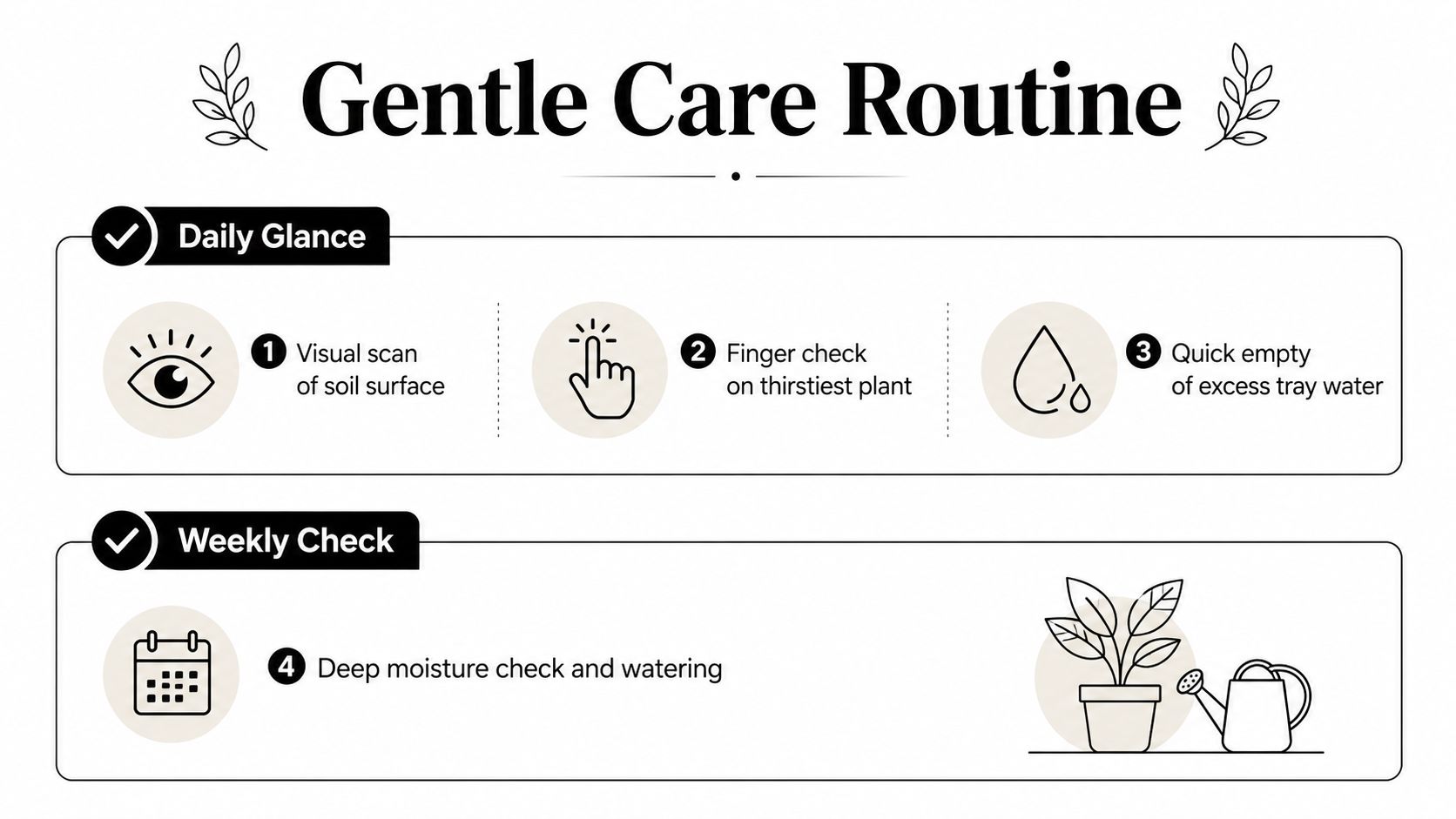
Consistency matters more than perfection. The checklist is a tool, not a rulebook, and skipping a day isn't a disaster. Check the plant and soil with curiosity, then make the smallest useful adjustment.
Little Green Leaf offers decorative self-watering globes that release water gradually as soil dries, without timers, batteries, or apps. Visit Little Green Leaf to explore a low-effort way to support steadier soil moisture during busy weeks, office care, or travel.