

What Causes Root Rot in Plants a Simple Fix Guide
You notice the leaves turning yellow, the stems drooping, and the soil still feels damp from your last watering. Your first thought may be, “I must have overwatered it.” Take a breath. What causes root rot in plants is more nuanced than one enthusiastic watering session, and the problem is often a changeable condition rather than a permanent failure.
Root rot usually begins below the soil, where oxygen, moisture, drainage, and microorganisms interact. Once you understand that relationship, you can inspect your plant calmly, adjust its environment, and build a watering routine that feels manageable.
That Sinking Feeling When Your Plant Looks Unwell
You come home after a busy day and notice your favorite plant looks different. A few leaves have yellowed, the stems seem less upright, and the pot feels heavier than expected. You may replay the last few weeks, wondering whether you watered too often, forgot to water, or placed the plant somewhere it doesn't like.
That worry is understandable, especially because the most important clues are hidden underground. A struggling plant can look thirsty even when its soil is wet, which makes root problems confusing for beginners. The leaves are reacting to what happens at the roots, but they can't tell you the cause on their own.
A calmer starting point: Treat the symptoms as information, not a verdict on your plant care.
Root rot is common in both houseplants and garden plants, particularly when soil stays wet, drains poorly, or contains too little air. The condition can often be corrected by changing the root environment. You don't need a perfect routine or advanced equipment to begin. You need a closer look and a few gentle adjustments.
Start by checking the soil rather than watering automatically. Feel the mix near the surface and, if possible, deeper in the pot. Consider the container, the drainage hole, the type of soil, and how quickly the plant normally uses moisture. Those details tell a clearer story than a yellow leaf alone.
The good news is that learning the cause gives you options. You might need to improve drainage, remove damaged roots, repot, or allow the soil to dry more between waterings. Once you know what your plant's roots need, the next steps become much less intimidating.
The Real Cause of Root Rot Is Not Just Water
Root rot is best understood as a two-part problem. First, saturated soil pushes air out of the spaces around the roots. Without enough oxygen, roots weaken, stop functioning normally, and may begin to die. Then soil-borne organisms can take advantage of the damaged tissue.
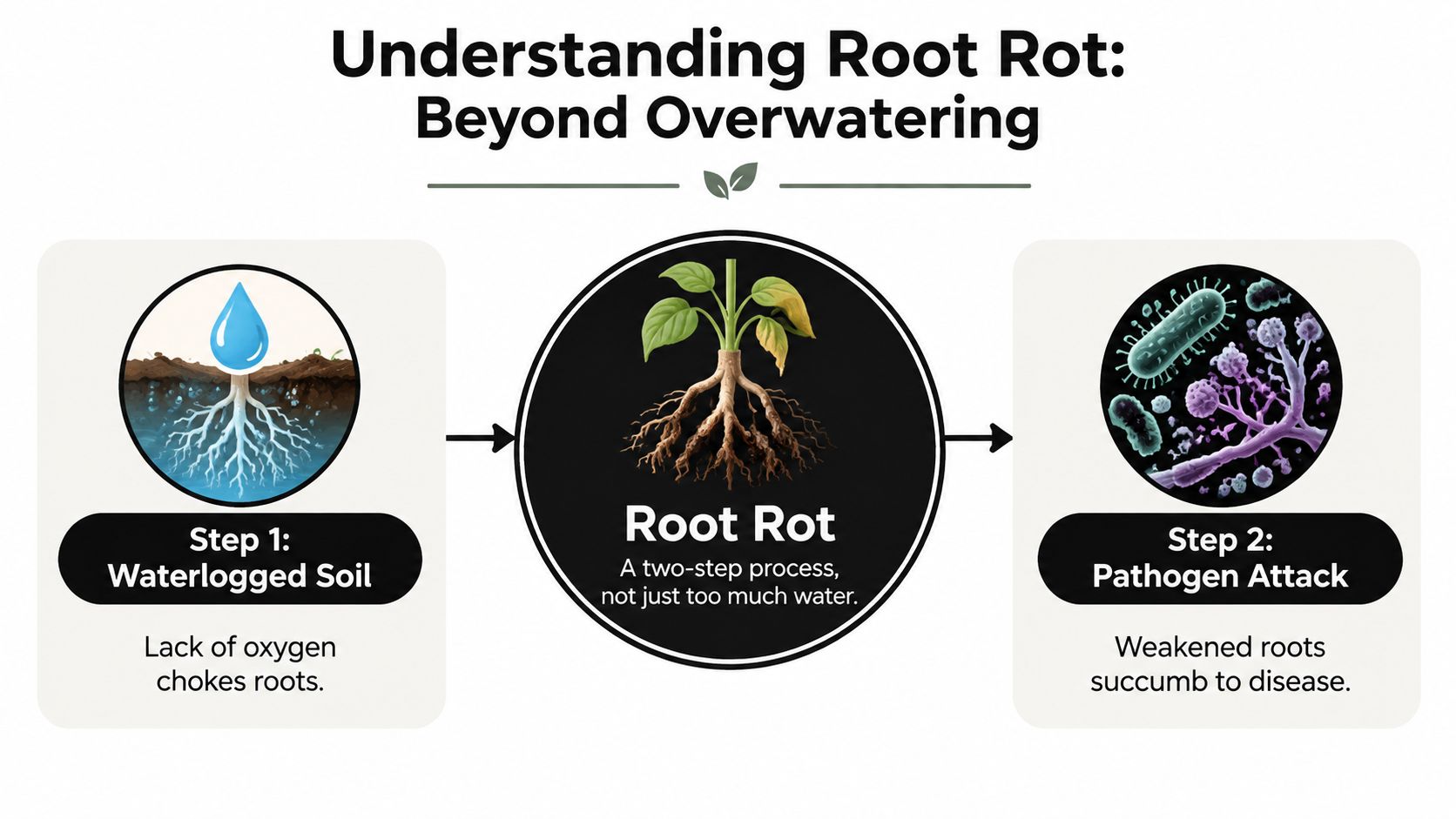
A person whose immune system has been weakened by exhaustion may become more vulnerable to a cold once their defenses are reduced, even if tiredness isn't the direct cause. In the same way, waterlogged soil doesn't always equal a pathogen infection, yet oxygen-starved roots are easier targets.
Step one is oxygen loss
Roots need both water and air. When soil remains saturated, water fills the small air spaces that normally allow oxygen to move through the root zone. The roots then become short of oxygen, which reduces their ability to absorb water and nutrients even though plenty of water surrounds them. The University of Wisconsin Extension explains root rot as a broad category of root deterioration rather than one single disease.
Step two is pathogen activity
Once roots are weakened, organisms already present in soil may become harmful. Common examples include Phytophthora, Pythium, Rhizoctonia solani, and Fusarium species. These fungi and fungus-like water molds are especially likely to attack when soil stays wet, drains poorly, or contains little oxygen.
That distinction matters because the solution depends on the environment. A fungicide won't solve soil that stays saturated, and changing your watering routine won't instantly restore roots that have already decayed. Often, both issues overlap, so recovery involves improving drainage and removing damaged tissue.
For a practical refresher on checking moisture before watering, see Botanist Seeds' watering advice. You can also explore why overwatering kills a plant for a closer look at the connection between excess moisture and root oxygen.
How to Spot the Early Signs of Root Rot
Root rot can announce itself through the leaves, but the most useful evidence often comes from the pot. Look at the plant above the soil first, then compare those clues with the moisture and condition of the root system.
What you may see above the soil
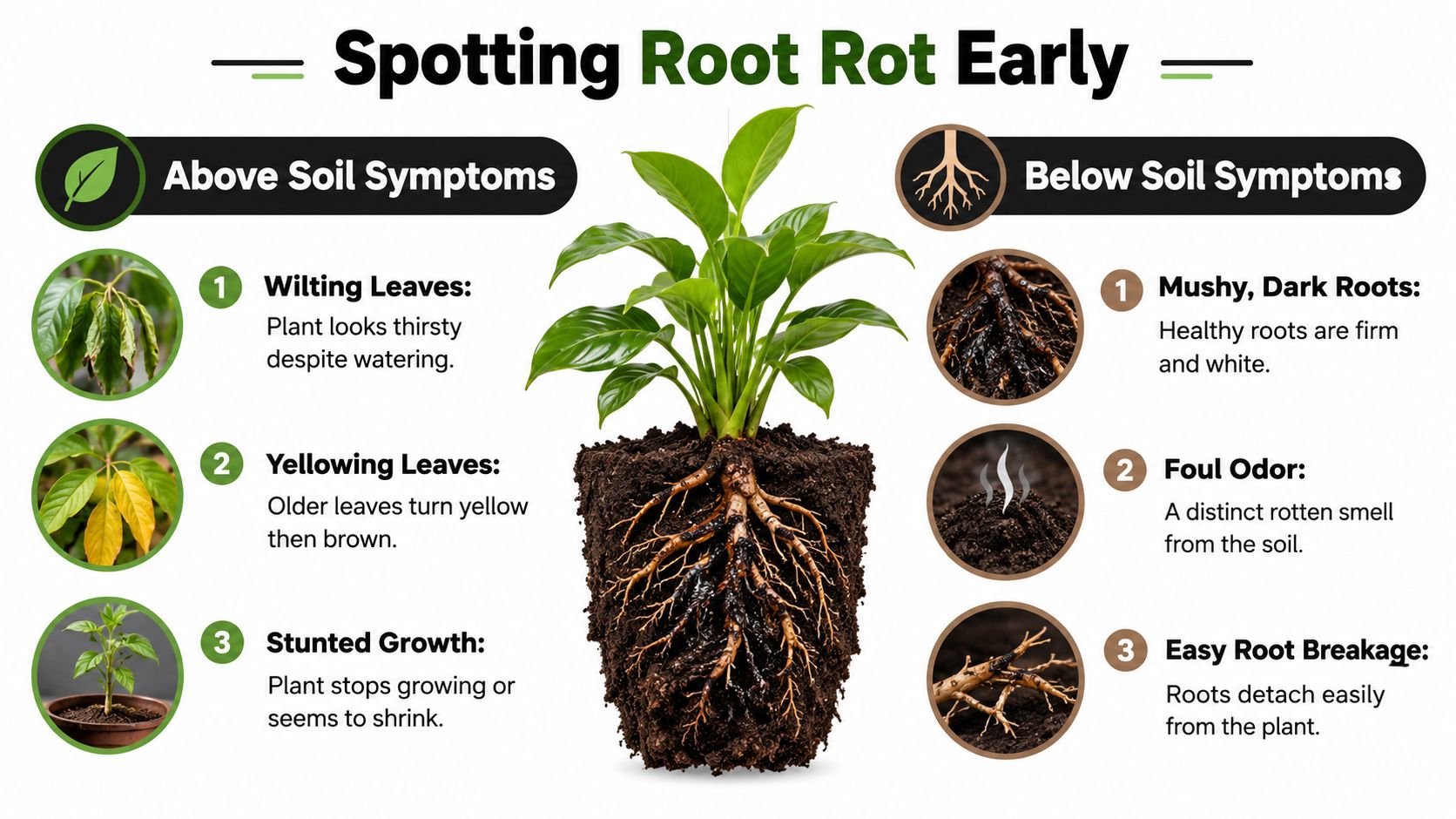
A plant with damaged roots often looks thirsty because its roots can't take up water properly. That can create a particularly confusing pattern: the leaves wilt while the soil remains damp.
- Wilting leaves: Leaves droop or lose firmness even though the potting mix hasn't dried.
- Yellowing foliage: Older leaves may turn yellow and later brown as the plant struggles to support growth.
- Slower growth: New leaves appear less often, or the plant seems to stop developing.
- A soft stem base: The area where the stem meets the soil may feel unusually soft, though this symptom can have other causes too.
Underwatering usually comes with dry soil. Root rot more often combines wilting with persistently moist soil, so always check the pot before adding more water. One symptom alone can't confirm the diagnosis.
What you may find below the soil
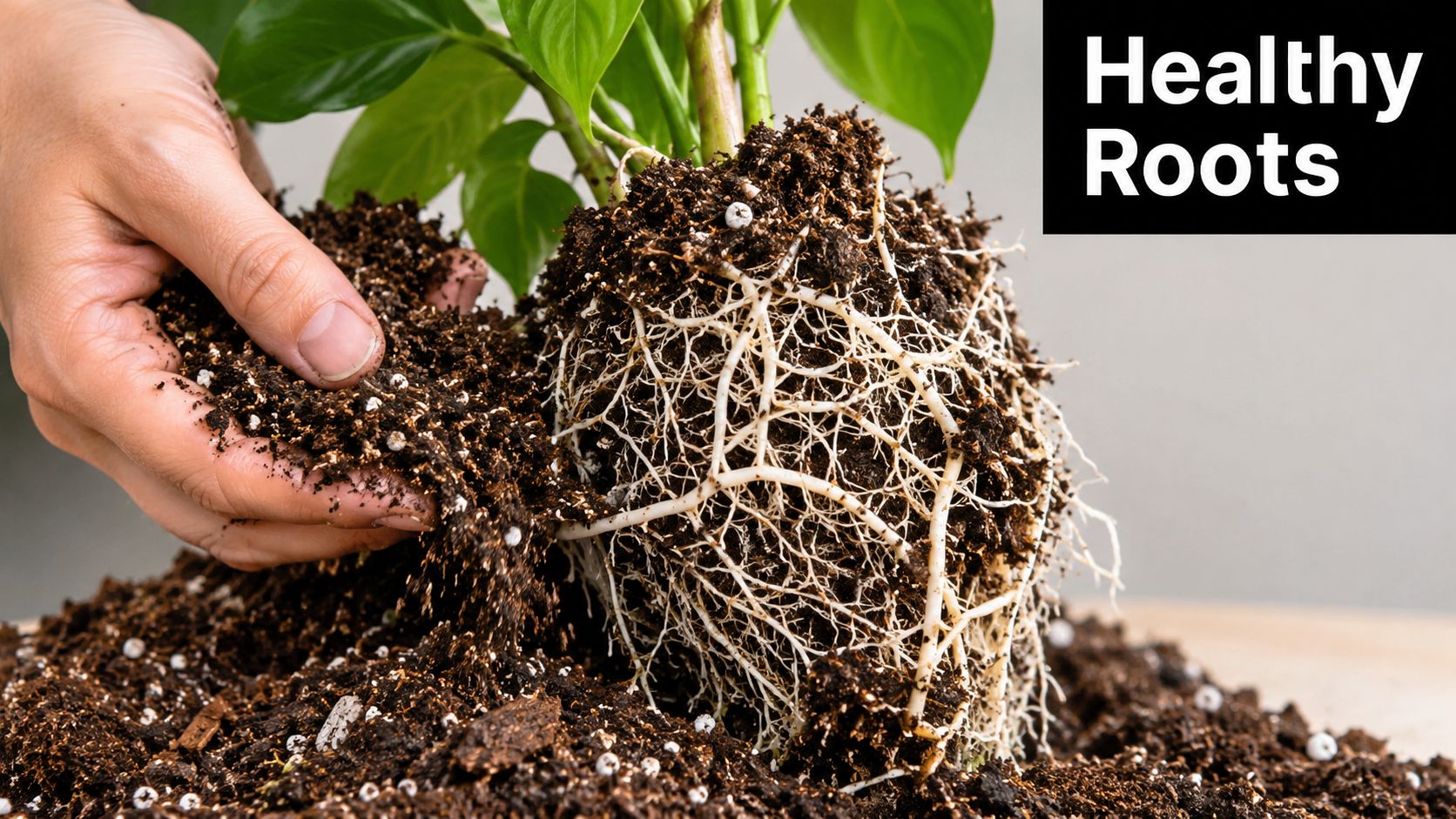
The most reliable check is a careful root inspection. Slide the plant from its container without pulling hard on the stem, then gently remove enough soil to see the roots.
Healthy roots are generally firm and light in color. Rotted roots are often brown or dark, soft, and easy to break, and the soil may have an unpleasant odor. Some discoloration can come from the soil itself, so texture and smell matter alongside color.
The distinction between oxygen injury and infection explains why a plant can wilt and decay at the same time. Pestless Inc. explains the difference between lawn damage from moles or voles, a useful reminder that visible plant or garden damage still needs careful identification before treatment.
If the roots look mostly firm and the soil is drying normally, pause before assuming rot. Light, temperature, pests, nutrient problems, and transplant stress can also affect leaves. A root inspection helps you choose the gentlest appropriate response.
Common Triggers That Create a Risky Environment
Most root-rot triggers are ordinary care conditions that have gradually created a damp, airless root zone. You don't need to blame yourself. Apartment light, changing seasons, travel, and different pot materials can all affect how quickly soil dries.
The key environmental driver is waterlogging. Saturated soil reduces oxygen movement to roots, and excess moisture becomes more dangerous when drainage is poor, soil is compacted, or watering happens too frequently. The Journal of Experimental Botany discusses waterlogging and root oxygen stress.
Check these four conditions
-
Watering too often
A calendar reminder may work for appointments, but plants don't all use water at the same pace. Light levels, temperature, plant size, and soil composition change how quickly a pot dries. Water when the plant and soil need it, not just because a certain day has arrived. The guide on how to know when to water plants can help you develop a more observant routine. -
A container without drainage
If excess water has nowhere to go, the lower part of the pot can remain wet long after the surface feels dry. A decorative cachepot can still work, but the plant should sit in a nursery pot with drainage, and collected water should be emptied rather than left around the roots. -
Heavy or compacted soil
Fine, dense soil can hold water and reduce the air spaces roots need. Compaction may also develop when soil settles over time or when a pot is repeatedly handled while wet. A looser, well-draining mix gives water a path out and air a path in. -
A pot that's too large
A small root system can't use moisture throughout a large volume of soil. The unused mix may stay damp around the roots, especially in a dim apartment or cool room. Choose a container that fits the existing root ball rather than sizing up dramatically.
Outdoor growers face the same principle at a larger scale. If you're dealing with persistent standing water, resources on solutions for soggy Austin yards offer useful drainage context. For indoor plants, begin with the simplest check: drainage, soil texture, and the time between waterings.
A Gentle Plan to Save Your Plant From Root Rot
Once you suspect root rot, work slowly and keep the process clean. The aim isn't to punish the plant or strip away every root. It's to remove tissue that has clearly decayed and give the remaining roots a more breathable home.
A careful rescue sequence
- Prepare a clean workspace. Gather clean scissors or pruning snips, a fresh pot with drainage, and new well-draining soil. Protect the surface with paper or a washable tray.
- Remove the plant gently. Tip the container sideways and ease the root ball out. Don't tug the stem, especially if the plant is already loose or soft at the base.
- Inspect and loosen the soil. Brush away wet soil carefully so you can see which roots remain firm. If the root ball is tightly packed, take your time rather than pulling roots apart forcefully.
- Trim damaged tissue. Use clean scissors to cut away roots that are dark, mushy, or collapsing. Wipe the blades between cuts if decay is extensive. Keep firm, light-colored roots whenever possible.
- Repot with fresh materials. Use a clean container and fresh soil that allows excess water to drain. Set the plant at the same depth it previously grew, and avoid burying the stem deeper than before.
- Reset the routine. After repotting, let the plant settle according to its needs before watering. Then check the soil manually each time rather than repeating the schedule that created prolonged dampness.
Scientific evidence supports taking low oxygen seriously. In one plant pathology study, 94% of roots became necrotic under very low-oxygen conditions, showing how waterlogging can injure roots and increase their vulnerability to infection. See the American Phytopathological Society study on low soil oxygen and root damage.
For busy owners or travelers, a self-watering globe can help reduce abrupt swings between very dry and very wet soil when used with a suitable pot and moisture-aware routine. Little Green Leaf self-watering globes release water gradually as soil dries, without timers, batteries, or apps, so they can be one practical option after the root environment has been corrected.
The following video offers another visual look at gentle watering support:
A watering tool can't repair rotten roots or compensate for a container without drainage. Use it as part of a balanced setup, and continue checking the soil, plant position, and drainage.
Keeping Roots Healthy for Good
Healthy roots depend on an environment that contains both moisture and air. When soil stays saturated, roots become short of oxygen, lose their ability to absorb water and nutrients, and may die. This waterlogging is the immediate condition behind many root-rot problems, as described by Garden Scotland's explanation of waterlogged roots.
A simple prevention philosophy works across many houseplants:
- Choose airy soil: Match the mix to the plant and avoid dense soil that stays wet.
- Use drainage: Every container should give excess water a clear way out.
- Watch the plant: Water according to moisture, light, temperature, and growth rather than a rigid calendar.
- Notice patterns: If soil stays damp for too long, adjust the container, mix, placement, or watering frequency.
A moisture meter can support your observations, especially in deep pots where the surface dries before the lower soil. Learn how to understand moisture meter readings, then combine the reading with the plant's appearance and the pot's drainage.
Root rot isn't proof that you lack a green thumb. It's a signal that the root zone needs more balance. Once you learn to look beneath the leaves and give roots room for air, plant care becomes more predictable, even with a busy schedule or frequent travel.
Little Green Leaf offers decorative self-watering globes designed to release water gradually as soil dries, giving busy plant owners a steadier way to support balanced root moisture. Visit Little Green Leaf to explore watering globes for everyday care, travel, or thoughtful plant gifts.