

Why Does Overwatering a Plant Kill It and How to Save It
You come home after a long day and notice your plant's leaves hanging lower than usual. Worried that it's thirsty, you give it a generous drink. The next day, it still looks sad, so you water it again. You're trying to help, but the soil may already be holding more water than the roots can safely handle.
The answer to why does overwatering a plant kill it begins with a surprising fact: plants need air around their roots as much as they need moisture. Overwatering usually isn't one large watering session. It's repeated saturation without enough time for air to return to the soil. Once the root zone stays flooded, the plant can begin to decline even while the pot feels soaking wet.
The Moment Most Plant Owners Accidentally Overwater
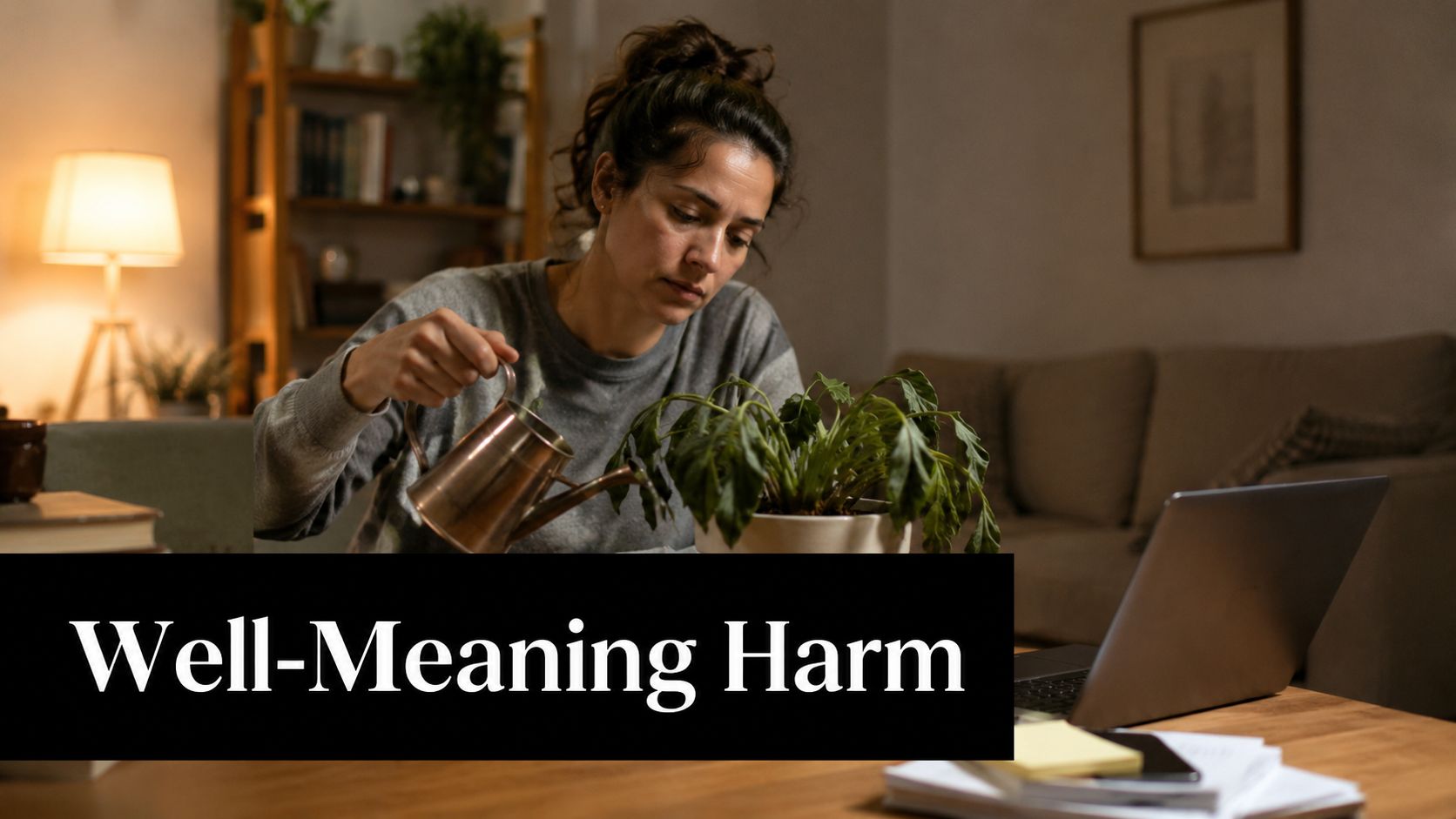
Maya notices her favorite houseplant looking tired while she works on her laptop in a dim living room. The leaves seem limp, and a few lower ones have turned yellow. She assumes the plant is asking for water, so she pours until a little drains from the bottom.
The next evening, the leaves still haven't perked up. Maya feels guilty and waters again. Her instinct is understandable. Water feels like a direct expression of care, especially when a plant looks thirsty. Yet a drooping plant doesn't always need more water. Sometimes it has wet roots that can no longer function properly.
The problem is often timing, not kindness
A healthy potting mix contains both water and air. After watering, excess moisture drains away and air returns to the spaces between soil particles. Roots use that oxygen for respiration, the process that supplies energy for normal water and nutrient uptake.
When someone waters again before the soil has had a chance to drain and breathe, those air spaces fill with water. The plant may then show the same broad symptom as an underwatered plant, drooping leaves. That visual similarity is what leads many caring owners to add even more water.
A useful starting point is to check the soil rather than relying on the calendar. The guide to knowing when to water plants can help beginners build that habit without turning plant care into a daily guessing game.
A gentle rule: A sad-looking plant deserves a check, not an automatic drink.
New plant owners make this mistake because the damage happens below the surface. The leaves are visible, but the roots are doing the quiet work. Once watering rhythms get out of sync, the trouble begins in the dark, crowded space beneath the soil.
What Actually Happens to Roots Underneath the Soil
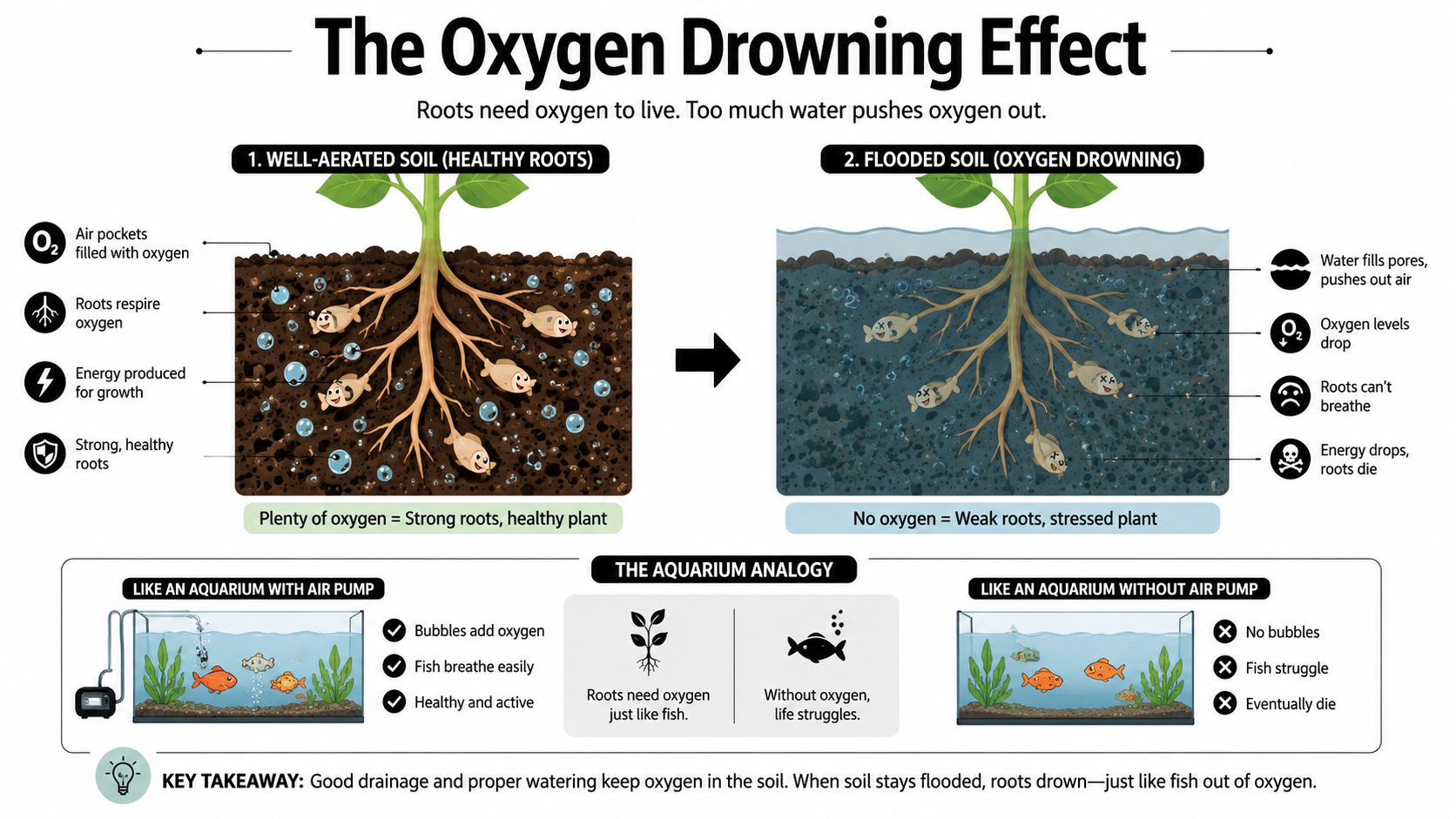
Think of a healthy pot as a tiny aquarium and air system combined. Roots aren't fish, of course, but they need oxygen from the small air spaces around soil particles in much the same way fish need oxygen available in water. Those spaces let oxygen move toward the root surface.
When the pot becomes saturated, water pushes the air out of those spaces. Oxygen then moves through saturated soil about 10,000 times more slowly than through air, according to a review of plant responses to waterlogging in this scientific overview. The roots can become oxygen-starved within hours to days.
The oxygen problem unfolds step by step
- Water fills the pore spaces. The soil still looks like soil, but much of the air has been displaced.
- Root respiration slows. Roots depend on oxygen for aerobic respiration and energy production. With less oxygen, ATP production drops and the cells have less energy available.
- Normal root work becomes difficult. Roots struggle to maintain membrane transport, absorb minerals, and support healthy growth.
- Fine roots begin to fail. Delicate root hairs and growing root tips are especially vulnerable.
- The leaves show the result. The plant may wilt, yellow, or stop producing new growth because the damaged root system can't supply the canopy normally.
This creates the classic contradiction of an overwatered plant that looks thirsty. Water surrounds the roots, but the roots can't use it effectively because their energy supply and tissues are breaking down. The plant is not drowning in a bucket of water. It's losing the oxygen-dependent machinery that lets roots function.
A 2024 review found that waterlogged soils often become anaerobic within a few hours to a few days, while a mechanistic model showed root oxygen falling very rapidly after waterlogging begins, followed by a slower decline over roughly 10 to 50 hours, depending on rooting depth. These findings are summarized in the review record from the Food and Agriculture Organization research database.
The next concern is tissue damage. As oxygen-starved roots lose strength, they become more vulnerable to organisms that take advantage of weakened tissue and stagnant conditions.
How Root Rot Takes Hold After the Water Sits Too Long
Root rot isn't just another term for wet soil. It's a disease process that often follows prolonged saturation. Waterlogged conditions weaken the roots first, then create a setting where pathogens can colonize damaged tissue.
Common culprits include Pythium, Phytophthora, Rhizoctonia, and Fusarium. Some of these organisms are fungi, while others are water molds, but the practical pattern is similar. Low-oxygen soil stresses the plant, and damaged roots have fewer defenses available.
Why weakened roots become vulnerable
Healthy roots maintain firm tissues and protective boundaries. Oxygen-starved roots can become soft and leaky, making it easier for pathogens to enter and spread. A review of waterlogging stress explains how saturated conditions suppress root respiration and alter the plant's internal oxygen supply, while research on root oxygen and wetland adaptations shows why ordinary houseplants are often poorly equipped for prolonged saturation.
The process may look like this:
- Spores or pathogen structures remain in the root-zone environment.
- Damaged root tissue loses its normal resistance.
- The organism colonizes soft or injured areas.
- Rot spreads through connected root tissue and may move toward the crown.
- Water transport declines even though the soil remains wet.
That final step confuses many owners. A plant with rotting roots can wilt because the damaged tissue can't move water upward. The owner sees the wilt and adds more water, keeping the root zone saturated and giving the problem more time to develop.
Brown or black roots, a soft texture, and a foul smell are strong warnings. The Missouri Botanical Garden explains that roots in waterlogged soil can die because they can't absorb the oxygen needed for normal function, leading to root death and loss of vigor in its overwatering guidance.
Root rot is therefore preventable at its earliest stage, before the disease process becomes established. Keeping air in the soil is more useful than trying to repair roots after they have turned mushy.
Telltale Signs Your Plant Is Getting Too Much Water
Overwatering signs often arrive in a sequence, although plants don't always follow a neat order. Start with the simplest observations before disturbing the root ball.
Look at the leaves and stems first
Lower leaves that turn yellow can be an early clue, especially when the potting mix remains wet. Soft, limp stems near the soil line deserve closer attention because they may indicate that the crown or lower stem is losing structural strength.
A drooping leaf isn't automatically evidence of underwatering. Underwatered leaves often feel thin, dry, or crispy. Overwatered leaves may feel soft, heavy, or mushy, because the plant's internal tissues are struggling while the roots remain impaired.
Check the soil and pot
Run through these at-home checks:
- Soil moisture: Soil that remains wet days after watering suggests poor drainage, a large pot, low light, or a watering rhythm that's too frequent.
- Pot weight: A pot that still feels unusually heavy is probably holding substantial moisture.
- Surface growth: Green algae, moss, or mold can appear when the surface stays persistently damp.
- Odor: A sour, stale, or decaying smell points to stagnant conditions.
- Small insects: Fungus gnats hovering around damp soil can signal that the surface is staying wet, although their presence alone doesn't prove root rot.
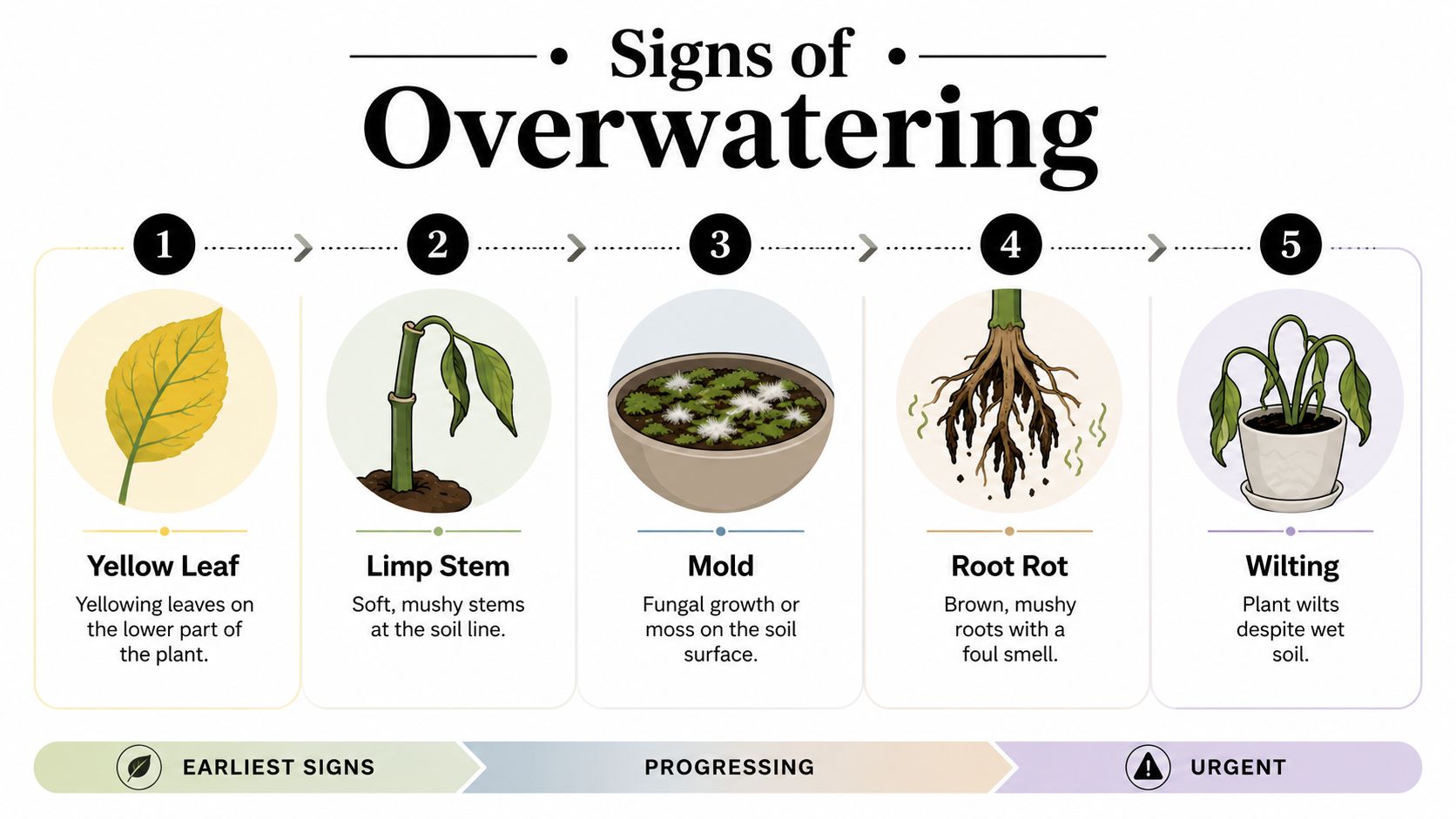
If the plant keeps wilting despite wet soil, inspect the roots when practical. Gently slide the plant from its pot, supporting the stems and soil. Healthy roots are generally firm and white or light tan. Rotting roots may be brown, black, stringy, slimy, or unpleasant-smelling. The signs of root rot in plants offer another useful reference for comparing what you see.
Crown rot and stem collapse are urgent signs. Still, early yellowing or a persistently heavy pot doesn't mean the plant is doomed. Catching the problem before most of the root system is damaged gives you a much better chance of helping it recover.
Simple Fixes to Bring an Overwatered Plant Back
Start with the easiest intervention: stop watering. Move the plant into bright, indirect light with good airflow, not harsh direct sun that could add stress to already weakened leaves. Make sure the drainage hole is open and empty any standing water from the saucer.
If the soil is only slightly too wet, allow it to dry while monitoring the pot. If it's sodden, smells sour, or the plant is collapsing, inspect the root system.
A careful recovery sequence
- Remove the plant gently. Tip the pot while supporting the base of the plant. Don't pull hard on the stems.
- Loosen the saturated mix. Shake away soggy soil and rinse the roots with tepid water so you can see their condition.
- Separate healthy and damaged tissue. Firm white or light-colored roots can stay. Trim brown, black, soft, or slimy roots with clean scissors.
- Clean your tools between cuts. Wipe or disinfect the blades so you don't drag damaged material across healthy tissue.
- Choose fresh, well-draining mix. Use a cactus mix for succulents. For many tropical houseplants, potting soil amended with perlite can create a more open root environment.
- Repot in a container with drainage holes. The new pot shouldn't trap water around the recovering roots.
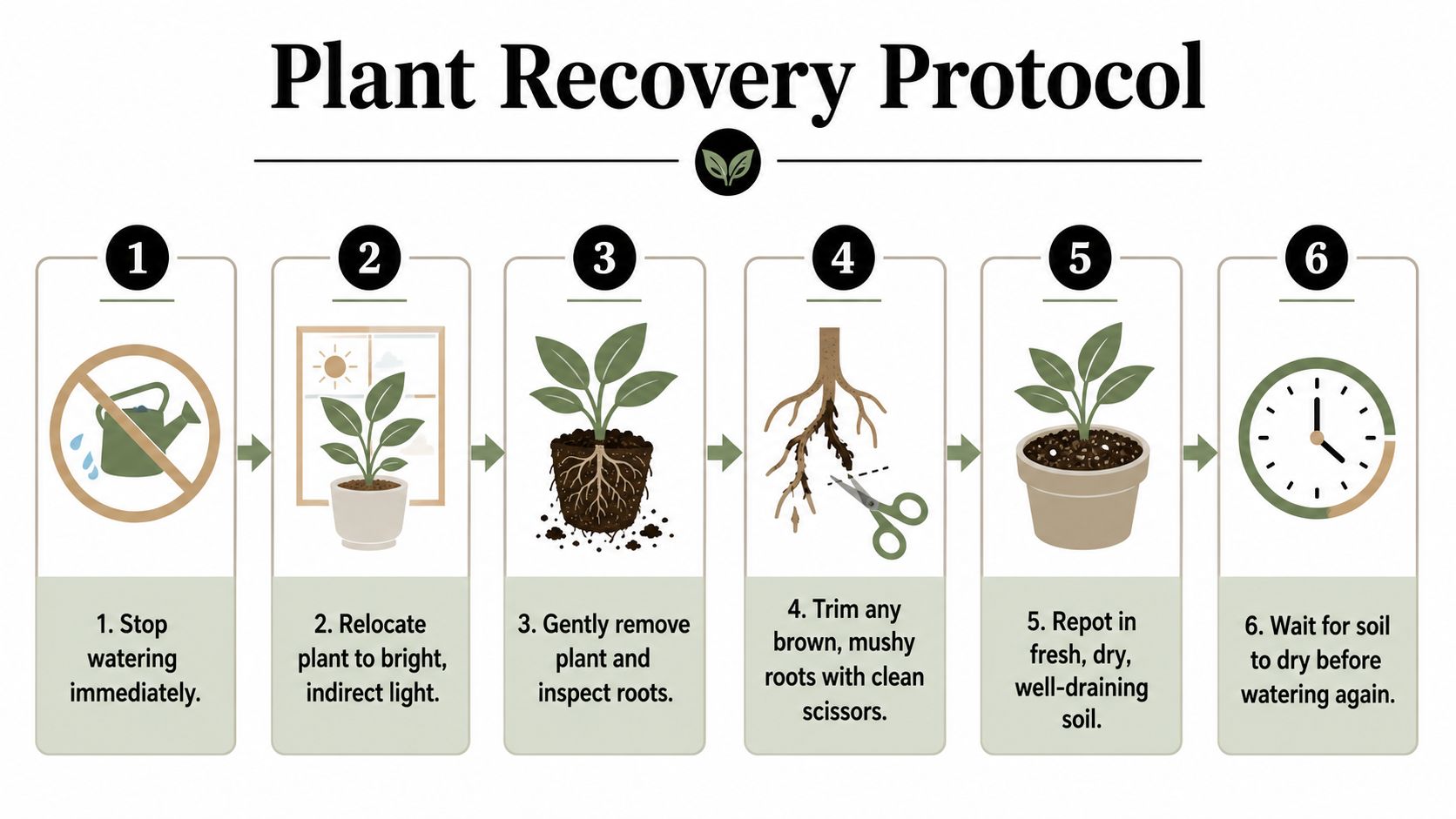
After repotting, wait 24 hours before giving a light initial watering. That pause gives freshly cut roots time to settle and reduces the chance of immediately recreating the saturated conditions. Afterward, water cautiously and check the mix before each drink rather than returning to the old routine.
Recovery is realistic when the plant still has firm roots, a stable crown, or healthy stems. If the base is collapsing but a healthy stem section remains, taking a clean cutting as a backup may be sensible. A plant can lose damaged roots and still rebuild from viable tissue, so don't discard it at the first sign of trouble.
Consistent Hydration Without the Guesswork
The most reliable prevention isn't a perfect watering day. It's a repeatable way to check whether the plant needs water. A fixed weekly routine can fail because light, temperature, humidity, pot size, soil texture, and plant type all affect how quickly moisture leaves the root zone.
Try one of these checks before watering:
- Finger test: Feel the mix below the surface rather than judging only the top crust.
- Wooden chopstick: Push it into the soil and withdraw it. Damp soil clinging to the wood means the roots may still have access to moisture.
- Moisture meter: Use an inexpensive meter if you prefer a reading instead of a tactile check. Treat it as a guide, not an unquestionable command.
A steady routine works especially well for busy owners, travelers, and apartment dwellers who can't monitor a plant throughout the day. Decorative self-watering globes use a small reservoir and a narrow opening to release moisture gradually through capillary action. As the surrounding soil becomes wetter, airflow through the opening slows, which can moderate the release instead of dumping the entire supply into the pot at once.
That doesn't make a globe suitable for every plant or every pot. A succulent in a compact container may prefer long dry periods, while a thirsty tropical plant may benefit from steadier moisture. Wicking systems suit some small containers, reservoir pots can help with larger plants, and manual watering remains simple for owners who enjoy checking their collection.
For broader watering principles, especially with outdoor plants, best watering methods for trees provides helpful context on matching irrigation to the plant and its growing environment. Indoor growers can also use this indoor plant watering schedule as a starting point, then adjust it after observing how their own soil dries.
Little Green Leaf's decorative self-watering globes are one hands-off option. Their hand-blown glass globes release water gradually as soil dries, without timers, batteries, or apps, and come in 100 ml, 200 ml, and 350 ml sizes according to the publisher's product information. They can be useful when workdays or travel make frequent checking difficult, but the plant's soil and species should still guide placement and use.
The goal isn't to water on schedule. It's to create a moisture rhythm that leaves room for air.
Common Questions About Watering and Plant Health
How often should different plants be watered?
There isn't one safe interval for every plant. A succulent may need the mix to dry considerably between drinks, while a tropical plant may prefer more even moisture. Check the soil and consider the plant's light, pot, and season instead of treating the calendar as the authority.
Does misting count as watering?
Misting can raise moisture on leaf surfaces briefly, but it doesn't reliably hydrate the root system. If the roots need water, give the potting mix an appropriate drink and let excess drain away. Avoid keeping leaves and stems constantly damp, especially where airflow is poor.
What should I do if I live in a dark apartment?
Lower light often means slower drying. Move the plant as close as its light needs allow, improve airflow, and check the soil more carefully before watering. A pot that dries slowly may need less frequent attention than the same plant in a bright window.
How can travelers protect their plants?
Water thoroughly when the plant needs it, confirm that the container drains, and avoid soaking already wet soil before leaving. For a plant that benefits from gradual moisture, a self-watering globe or another passive system may reduce the need for daily care. Test the setup while you're home so you can observe how quickly the soil changes.
When should I choose a self-watering solution?
Choose one when your routine makes consistent checking difficult, not just because a plant looks wilted. Passive tools can help maintain steadier moisture, but they won't correct compacted soil, blocked drainage, or a pot that's much too large. The root zone still needs oxygen.
Watering is a learnable skill, not a talent you either have or lack. Check first, water thoughtfully, and give the soil time to breathe. With a little observation, you'll become much better at telling the difference between a plant that needs a drink and one that needs a chance to dry.
If you want a simpler plant-care routine for busy days, travel, or apartment living, visit Little Green Leaf to explore decorative self-watering globes designed for gradual hydration. Choose a size and style that fits your plant, then pair it with regular soil checks so your roots receive moisture without losing the air they need.