

Watering Plants in Hot Weather: How Often and How Much
A 6-inch terracotta pot on a sunny patio can dry out quickly in hot weather, while a larger pot in shade may hold moisture longer. The difference comes down to the plant's root zone, the pot and its exposure.
Morning watering can help, but dry roots should not wait for a convenient time of day. A Little Green Leaf watering globe can release water slowly between checks, though the right size and insertion angle depend on the plant's demand and the pot's drainage.
Table of Contents
- How Often Should I Water Plants in Hot Weather?
- Why Heat Dries Out Plants Faster
- How to Check Soil Before Watering in Heat
- When Is the Best Time to Water Plants in Hot Weather?
- Signs of Overwatering and Underwatering in Heat
- Watering Globes vs Spikes, Drip and Self-Watering Pots
- How to Water Plants While You Are Away in Summer
- How Do I Set Up a Little Green Leaf Globe for My Plants?
- Frequently Asked Questions About Watering Plants in Hot Weather
How Often Should I Water Plants in Hot Weather?
Water when the root zone needs moisture, rather than whenever a scheduled watering day arrives. The Royal Horticultural Society's container-watering guidance recommends checking about one-third of the way into the pot and notes that containers may need watering every day or every other day during summer dry spells.
That's a checking framework, not an instruction to water every container daily. A sheltered indoor pot can remain damp while an exposed hanging basket dries rapidly.
Hot-weather watering frequency by setting
| Setting | Check before watering | Typical hot-weather frequency | Notes |
|---|---|---|---|
| Small pots and hanging baskets outdoors | Dry at one-third depth | Daily in extreme heat, when the soil check confirms dryness | Dry out fastest; check the top and below |
| Medium outdoor containers | Dry at one-third depth | Every day or every other day in dry spells | Check again when conditions change |
| Indoor plants near a sunny window | Dry at one-third depth | Check daily; water when dry | Warm window conditions can accelerate drying |
| Large containers | Dry at one-third depth, checked deeper in the pot | Check each day; water when the root zone needs it | A single small globe may be insufficient |
| Succulents and cacti | Allow the mix to dry more thoroughly | Less often than moisture-loving plants | Globes aren't suited to these plants |
A watering globe can last up to about two weeks per fill, but that's an upper limit, not a summer guarantee. Thirsty plants, large pots, warm rooms and smaller globes shorten the interval; the 350 ml size provides more reserve than a smaller bulb under otherwise comparable conditions.
The useful distinction is between checking frequency and watering frequency. Frequent checking catches a drying pot early without repeatedly soaking a pot that's still damp.
Practical rule: Choose the watering interval from the soil reading, then choose a watering aid that can support that interval.
Globes suit plants that benefit from steady moisture. They aren't a good match for succulents, cacti or other plants that need a pronounced drying period.
Why Heat Dries Out Plants Faster
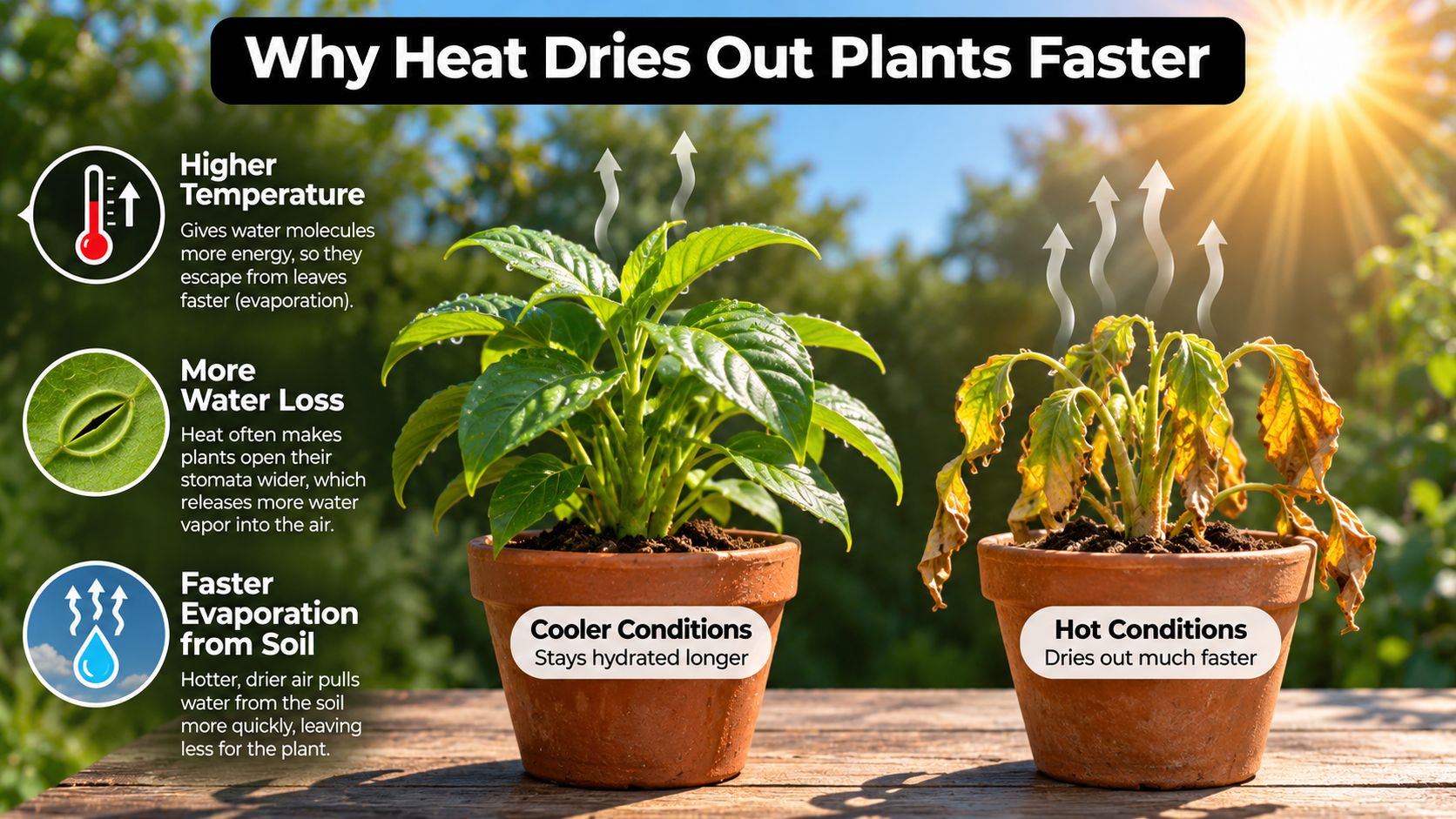
Potting mix in a hot room behaves rather like a damp sponge left on a sunny windowsill. Water escapes from its exposed surface, while the plant above it also loses water through its leaves.
That combined loss is evapotranspiration. University of Minnesota Extension's irrigation-management guidance identifies solar radiation, air temperature, wind speed and low humidity as important drivers, and describes replenishing water before depletion exceeds roughly 30–50% of plant-available water, a stress-management range used for many crops.
What changes around the pot
- Stronger sun: More incoming energy increases moisture loss.
- Hotter air: Plants and exposed soil can lose water faster.
- Moving air: Wind carries moisture away from leaf and soil surfaces.
- Lower humidity: Dry air increases the demand for water from leaves.
The crop-management percentage isn't a household measurement target. For a houseplant owner, it explains why waiting until the whole pot is bone dry can leave a moisture-loving plant stressed.
Small containers have less stored water to draw on, while porous pots can lose moisture through their walls. Larger containers offer more reserve, but a large plant can use that reserve quickly.
Roots also suffer when the soil itself overheats. The USDA Climate Hubs notes that root growth slows and nutrient uptake diminishes in many plants when soil temperatures rise above 86°F (30°C).
A fixed calendar fails in both directions: too little water during a sudden heat wave, then unnecessary watering when conditions cool. A globe can supplement the root zone as demand rises, but an empty bulb or a blocked stem still needs attention. The deciding factor remains usable moisture around the roots.
How to Check Soil Before Watering in Heat
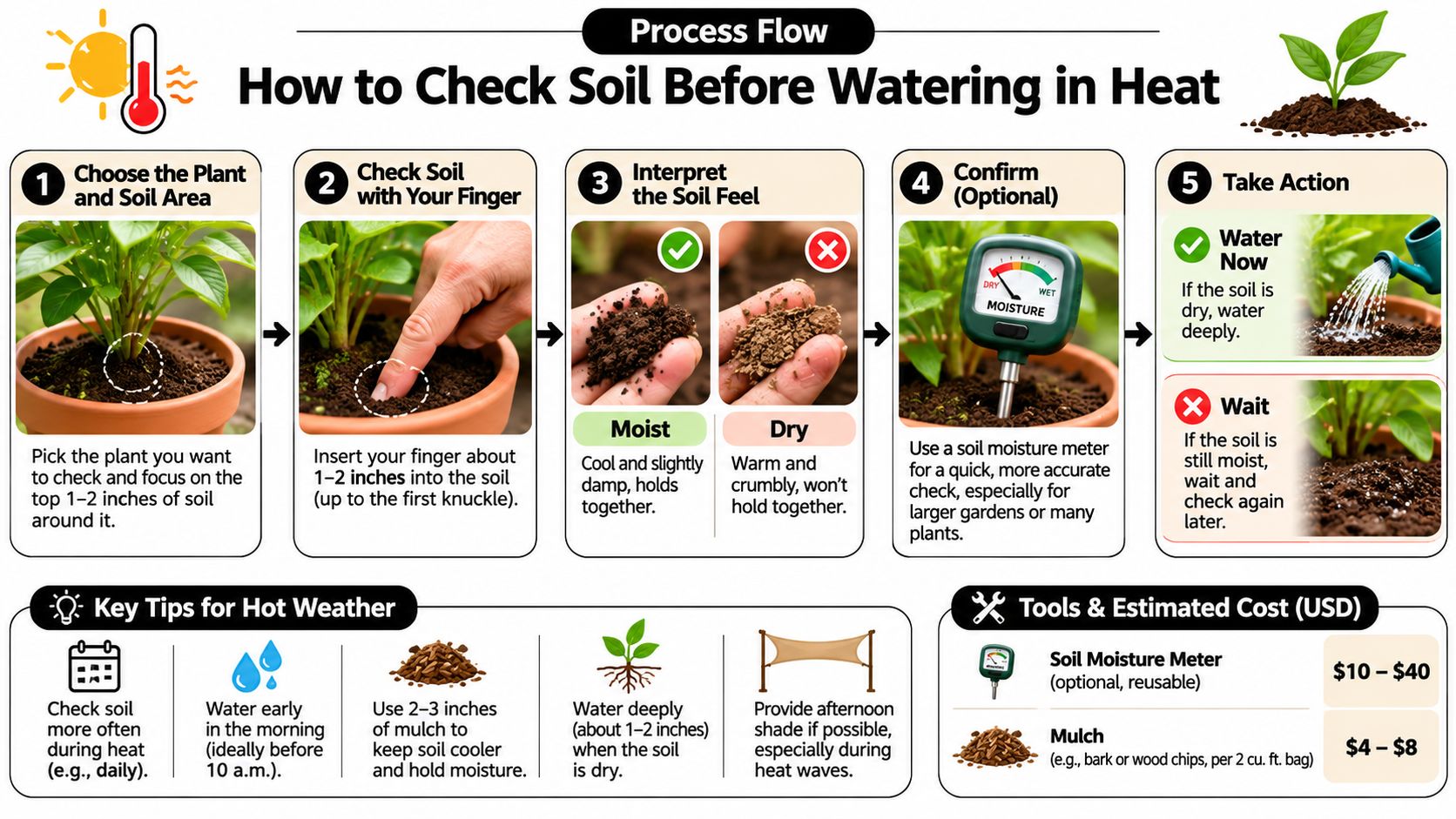
A drooping plant doesn't automatically need another drink. University of Minnesota Extension's watering guidance distinguishes dry-root stress from heat-related wilting and emphasizes checking soil before deciding whether immediate watering is needed.
A root-zone check before every watering
- Choose a useful checking spot. Feel the mix between the stem and pot edge rather than judging a crust at the rim. The exposed surface usually dries before the soil surrounding the roots.
- Reach into the pot far enough to assess the root zone, using the depth described above. In a large container, check deeper where accessible, without forcing a finger or tool through roots.
- Water if that soil feels dry. Apply water slowly enough to wet the mix through, rather than letting it escape down a gap beside the pot wall. A quick splash can leave a dry interior untouched.
- If the mix feels damp, leave it alone and check again later. Damp soil already contains water; adding more because the air feels hot can remove the air spaces roots need.
- Separate drooping leaves from dry roots. If the plant droops while its soil remains damp, don't keep pouring water into it. Recheck as the heat eases and watch whether the foliage recovers.
- If drooping accompanies dry soil, water immediately, even in the afternoon. Waiting for the preferred watering hour can turn manageable dryness into lasting damage.
Containers and recent transplants deserve particularly close attention during hot spells. Plants newly moved into warmer, windier conditions also need a fresh assessment rather than their previous routine.
The Little Green Leaf guide to how to tell if soil is dry offers more help interpreting the feel of the mix.
Wilting is a symptom to investigate, not a command to water.
After appropriate watering, the mix should be moist through its root zone, with excess water escaping. Leaves may firm as the plant rehydrates, but recovery time isn't guaranteed; persistent collapse calls for a drainage and root-health check rather than another automatic soak.
When Is the Best Time to Water Plants in Hot Weather?
Early morning is the default, because water can reach the roots before the day's strongest heat. University of Minnesota Extension's hot-weather guidance recommends watering as early as possible, when evaporation and wind losses are generally lower, and delivering water close to the soil surface.
The method matters as much as the hour. A controlled flow onto the mix wets the pot more reliably than spraying water high above the leaves and hoping enough lands where it's needed.
A thorough application beats a surface splash
Frequent little sprinkles can leave the lower root zone dry. A thorough application should wet the occupied growing medium, rather than only darken the top.
- Start slowly: Give the mix time to absorb water, especially if it has become very dry.
- Cover the root zone: Avoid pouring exclusively against the stem or into a single channel.
- Stop chasing leaf appearance: A hot plant may not immediately look refreshed even after its roots have enough moisture.
A globe delivers water below the surface, which is useful between thorough waterings. It doesn't guarantee that every part of a large container receives enough water, and it shouldn't replace an initial assessment of the whole pot.
The morning preference also has an important exception: dry roots shouldn't wait through the rest of a hot afternoon. Evening can be a practical fallback when that's when a dry container is discovered; Shopifarm's evening watering tips for backyard growers provide additional context for that decision.
A useful morning routine is simple: inspect the root zone, water early when it's dry, and plan another check if heat or wind intensifies. The clock improves efficiency; the soil decides urgency.
Signs of Overwatering and Underwatering in Heat
Heat-related leaf damage can look similar, but drainage problems need a different response from a dry root zone. Yellow leaves, plant collapse and a musty smell alongside persistently wet soil point to waterlogging. The RHS houseplant-growing guide describes yellowing leaves and plant collapse as possible overwatering symptoms.
Heat symptoms, likely causes and fixes
| Symptom | Likely cause | Fix |
|---|---|---|
| Yellow leaves and soggy soil | Overwatering or poor drainage | Pause watering, empty the saucer and let the mix dry appropriately |
| Plant collapses in wet soil | Possible root damage from waterlogging | Check the roots, reduce watering and improve drainage |
| Crispy leaf edges and soil pulling from the pot | Underwatering, sometimes with heat injury | Rewet the mix and let excess water drain |
| Water runs straight through the pot | Dry mix resisting water or water channeling through compacted areas | Apply water slowly in stages |
| Soil stays wet between waterings | Oversized pot, low water use or cool conditions | Allow a longer interval and reassess the pot-to-plant fit |
Stop once water runs freely from the drainage hole. Let the pot drain, then empty the saucer. Check decorative outer pots too, since runoff can collect out of sight and leave the nursery pot standing in water.
A globe releases water gradually, but it cannot clear blocked drainage or repair damaged roots. Avoid adding a full reservoir to a waterlogged pot. Check the root-zone moisture before changing how much water you supply.
Watering Globes vs Spikes, Drip and Self-Watering Pots
The best watering method is the one that can meet the container's demand and gets checked reliably. A compact reservoir suits a few moisture-loving houseplants; a large outdoor container in a heat wave may need a higher-capacity supply.
A glass globe works without a timer. As soil dries, air enters through the stem and displaces water into the root zone; when moisture returns, airflow and water release slow.
Hot-weather watering methods compared
| Method | Duration in heat | Setup and refill | Clogging and upkeep | Works outdoors |
|---|---|---|---|---|
| Watering globe | Up to about two weeks per fill; shorter under high demand | Fill bulb, insert stem into moist soil, refill when needed | Stem can clog; optional sleeves help; rinse bulb and stem | Yes, for containers and hanging baskets |
| Terracotta spike | Reservoir capacity and delivery rate set the interval | Insert into soil and connect or fill reservoir | Inspect outlet and reservoir; clean as needed | Yes, where intended for outdoor use |
| Drip system | Available supply and watering settings control coverage | Install tubing and emitters, then check delivery | Emitters can clog; inspect flow | Yes, with suitable components |
| Self-watering pot | Stored reservoir volume and plant demand set refill timing | Fill reservoir and monitor level | Keep reservoir and water-transfer parts serviceable | Yes, if designed for outdoor use |
| Hand watering | Provides no unattended reserve | Inspect pots and water when needed | No stem or emitter; check drainage | Yes, with regular attention |
Cost per plant can't be ranked without comparable purchase prices, reservoir sizes and installation requirements. Hand watering avoids buying an automatic reservoir, but requires someone to remain available; installed methods exchange setup effort for less frequent hands-on watering.
Which situation suits a globe?
- Busy indoor owners: A visible reservoir helps bridge missed checks for plants that like consistent moisture.
- Travelers with several pots: Individual globes are simple to test separately, although each needs filling and monitoring.
- Outdoor hanging baskets: Supplemental water can help, but exposed baskets may empty a bulb too quickly for an unattended trip.
- Very large containers: A single small globe isn't a dependable answer to heavy demand.
Dense soil needs a pilot hole before a glass stem is inserted. Optional anti-clog sleeves can help keep the opening clear, but they don't remove the need to verify delivery, and glass breaks if dropped.
For owners comparing practical plant-care additions, Little Green Leaf's houseplant accessories guide provides related context. A globe is useful when its capacity fits the job, not merely because it is easier to install.
How to Water Plants While You Are Away in Summer
A short summer absence may require only a thorough watering before departure. For longer trips, arrange access to stored water rather than trying to load the pot with an excessive soak.
The RHS holiday-watering guide notes that most houseplants tolerate only a few days without trouble and that absences longer than a week generally need additional moisture-management measures. It describes passive supplies such as capillary matting and wicks that connect pots to stored water.
Test the arrangement before departure
A globe provides that reservoir principle in a compact form. Its practical value depends on whether the bulb still contains enough water while the root zone remains appropriately moist.
- Run a rehearsal: Install the globe before the trip, not while leaving for the airport.
- Watch both indicators: Check the soil and the reservoir level. A full bulb with dry soil suggests delivery trouble.
- Plan for exhaustion: If the bulb empties while the pot dries quickly, arrange a refill or a person to check.
- Test in relevant conditions: A trial during mild weather can't guarantee performance during a later heat wave.
An unattended watering plan is only as useful as the trial that confirms it can meet that particular pot's demand.
For exposed containers, the guide to how to water outdoor potted plants while away helps adapt the plan to summer conditions.
On return, check the soil before automatically refilling an empty bulb. Record whether the reservoir ran out before the trip ended, and adjust the next arrangement rather than assuming the same setup will cover every absence.
How Do I Set Up a Little Green Leaf Globe for My Plants?
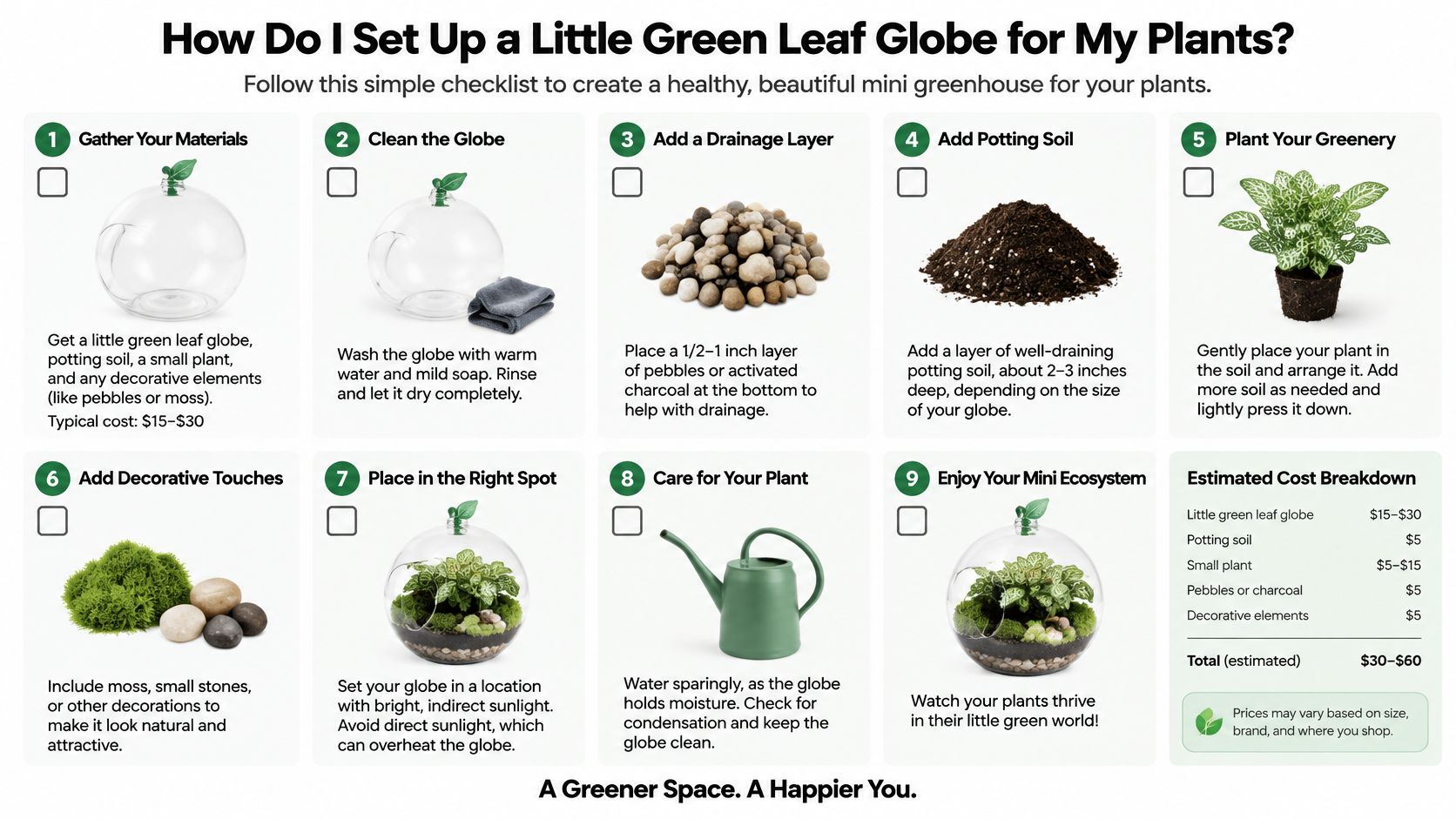
Heat changes how often to check a pot, not how much water to give on a fixed schedule. A globe can provide gradual support between checks, provided the plant suits steady moisture and the pot drains properly.
Little Green Leaf hand-blown glass globes are available in 100 ml, 200 ml and 350 ml sizes, plus a mixed-size option. Choose capacity based on the plant's observed water demand. A larger reservoir holds more water, but the release rate and how long it lasts depend on the plant, climate, pot size and insertion angle.
Setup for hot-weather containers
- Water the root ball first if it is dry. Let excess water drain before fitting the globe. The reservoir supports the roots and cannot rehydrate them alone.
- Make a pilot hole in dense soil with a pencil or similar blunt tool, avoiding major roots. Make the hole deep enough to accept the stem without forcing the glass.
- Fill the globe with water. Insert the stem gently into the prepared hole.
- Set the angle to adjust release. At 90 degrees, air escapes less easily, creating a slower drip. At 45 degrees, water releases more readily. Soil response matters: check moisture around the root zone and adjust the position if needed.
- Check the soil after two days, then set a suitable interval for further checks. Inspect sooner in exceptional heat or if the plant shows signs of stress.
Explore Little Green Leaf watering globes.
Keep delivery reliable
Little Green Leaf globes release water gradually as soil dries. Airflow through the stem helps displace water into the root zone; as moisture returns, airflow slows and water release reduces. This supports steady hydration, but the soil check remains the trigger for deciding whether the setup suits the plant.
Optional tip covers and adapters can help prevent clogs, improve flow control and make insertion easier across soil types. Empty and rinse the globe with clean water if the opening needs clearing.
Handle the glass carefully around hard floors and outdoor paving. Dry-loving plants may need a different watering approach that lets their growing medium dry between waterings.
Frequently Asked Questions About Watering Plants in Hot Weather
Should I water a plant right before repotting?
Check the root ball first. If it is dry, water it and let excess drain before repotting; if it is already moist, avoid adding more. After repotting, use the soil's condition to guide the next watering rather than adding water automatically.
How long does a watering globe last in hot weather?
Little Green Leaf globes can release water for up to two weeks, depending on plant type, climate, pot size and insertion angle. Treat that as a possible maximum, not a guaranteed interval: check the soil and refill when the plant's root zone needs moisture.
Can a watering globe keep my plant alive while I am on vacation?
It can help maintain moisture if the globe's capacity suits the plant's demand. Before leaving, try it while you are home and check whether the soil stays appropriately moist. Arrange a backup check for a long trip or demanding conditions.
Do watering globes work for succulents and cacti?
They may be a poor fit for plants that need the growing medium to dry thoroughly between waterings. Keep their usual drying cycle in mind, and avoid using a globe if it leaves the soil persistently damp.
How do I rinse a clogged globe stem?
Empty the globe and rinse the bulb and stem with clean water. Check that the opening is clear before refilling and inserting it again.
Little Green Leaf's hand-blown glass watering globes release water gradually as soil dries, for indoor and outdoor plants. The water can last up to two weeks depending on conditions, so check that the globe suits your plant before relying on it during a trip.