

How to Water Outdoor Potted Plants While Away Safely
You can leave for a weekend or a longer trip without coming home to a row of crispy pots, but only if the containers are prepared for the heat, wind, and shallow soil they face outdoors. How to water outdoor potted plants while away starts with slowing evaporation first, then giving the pot a steady water source that matches the size of the container and the length of the trip.
Table of Contents
- The Challenge of Outdoor Container Hydration
- Preparing Your Pots and Placement Before Departure
- Setting Up Glass Watering Globes for Outdoor Use
- Comparing Vacation Watering Methods for Containers
- Understanding How Long Your Water Supply Will Last
- Troubleshooting Common Outdoor Globe Issues
The Challenge of Outdoor Container Hydration
A sunny patio can turn a well-watered pot dry before your trip ends. Outdoor containers have limited soil volume, absorb heat through their sides, and lose moisture quickly when wind moves across the foliage and compost. How to water outdoor potted plants while away therefore depends on the pot's microclimate, not just the watering device.
Container plants may need watering daily, or even twice daily, during hot, sunny weather, according to Iowa State Extension. The RHS container watering guidance also explains that pots dry faster than plants in the ground, particularly during dry spells and heatwaves. Portland Nursery heatwave watering note reinforces the need to account for heat and exposure.
Wind can pull water from the mix while direct sun heats both the foliage and the container wall. A small root zone then reaches its limit quickly, so a single watering step may not carry a plant through a longer absence.
Practical rule: the less soil a container holds, the less forgiveness it has.
Once a small pot dries completely, its mix can shrink or repel water, making thorough re-wetting difficult. Reliable vacation care combines a cooler, sheltered position with deep watering and a slow, steady supply such as a glass watering globe.
Preparing Your Pots and Placement Before Departure
Before departure, set each pot up for the weather it will face. Water slowly until excess runs from the drainage holes, then check moisture below the surface. Extension guidance recommends wetting the top 12 inches of soil before leaving, rather than relying on a damp-looking crust. University of Maryland Extension
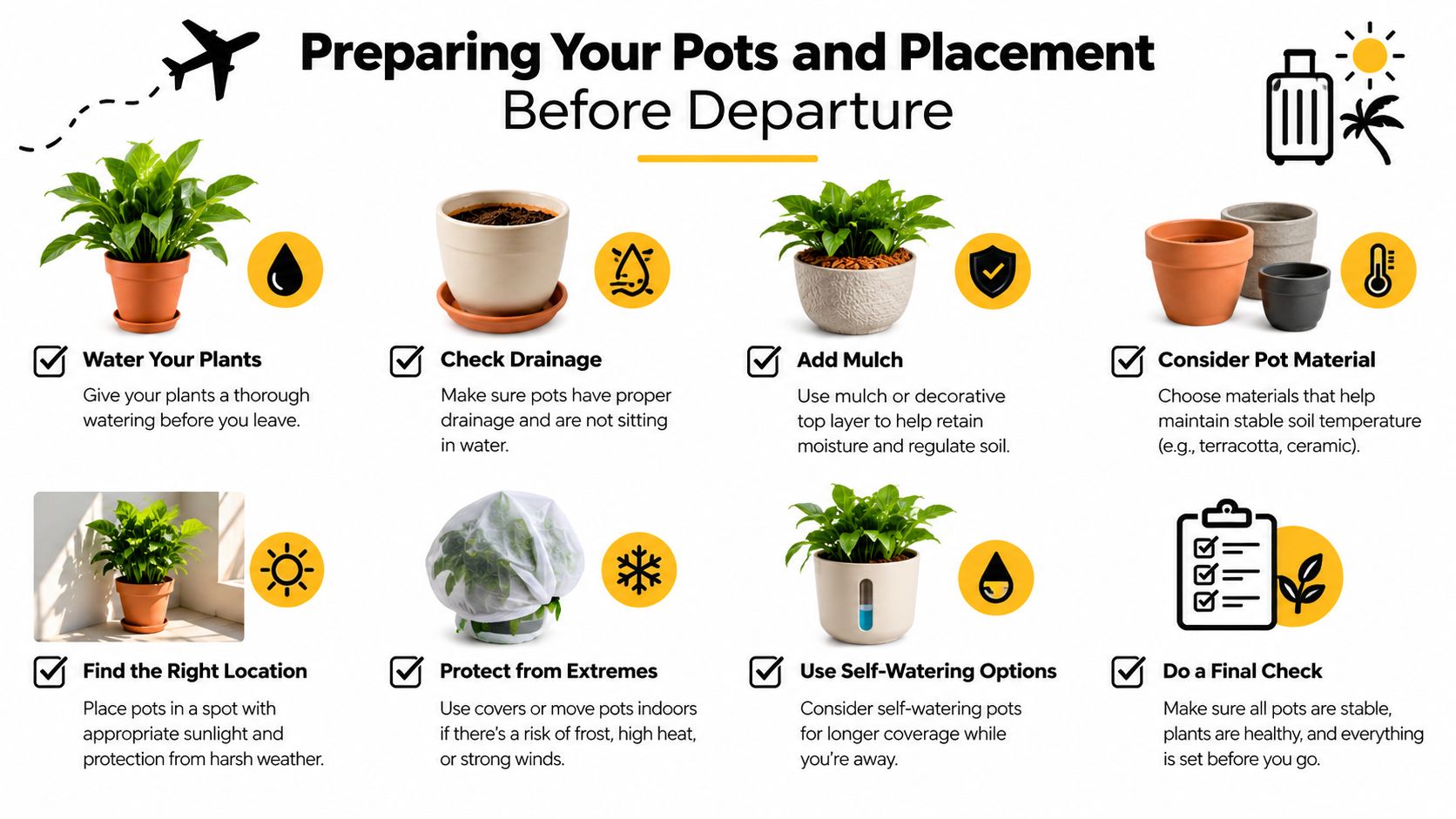
Use this departure-day sequence:
- Water thoroughly first. Moisture should reach the full root zone, not remain at the surface.
- Group pots together. Nearby containers create a cooler, more humid pocket and reduce wind exposure.
- Move them into shade. Choose bright shade when possible, especially for small pots that heat quickly in direct sun.
- Add a thin mulch layer. Mulch slows evaporation and protects the surface from baking dry.
- Clear the drainage holes. Blockages can leave the lower mix waterlogged while the top appears dry.
Placement matters more when a container holds little soil. A dark pot against a hot wall or in steady wind can lose water far faster than one in sheltered shade. Leave enough space between grouped pots for air circulation, and avoid placing them where rainwater can collect.
If the mix has shrunk from the pot wall or fine roots have dried, water may run down the sides instead of re-wetting the root zone. Start the trip with evenly moist soil, then use the globe to maintain that condition.
For more preparation details, see this outdoor potted plant care guide.
Setting Up Glass Watering Globes for Outdoor Use
A glass watering globe becomes useful outdoors only when the pot is already prepared. The soil should be moist first, because the globe is designed to release water gradually as the mix dries, not to rescue a bone-dry pot in one shot.
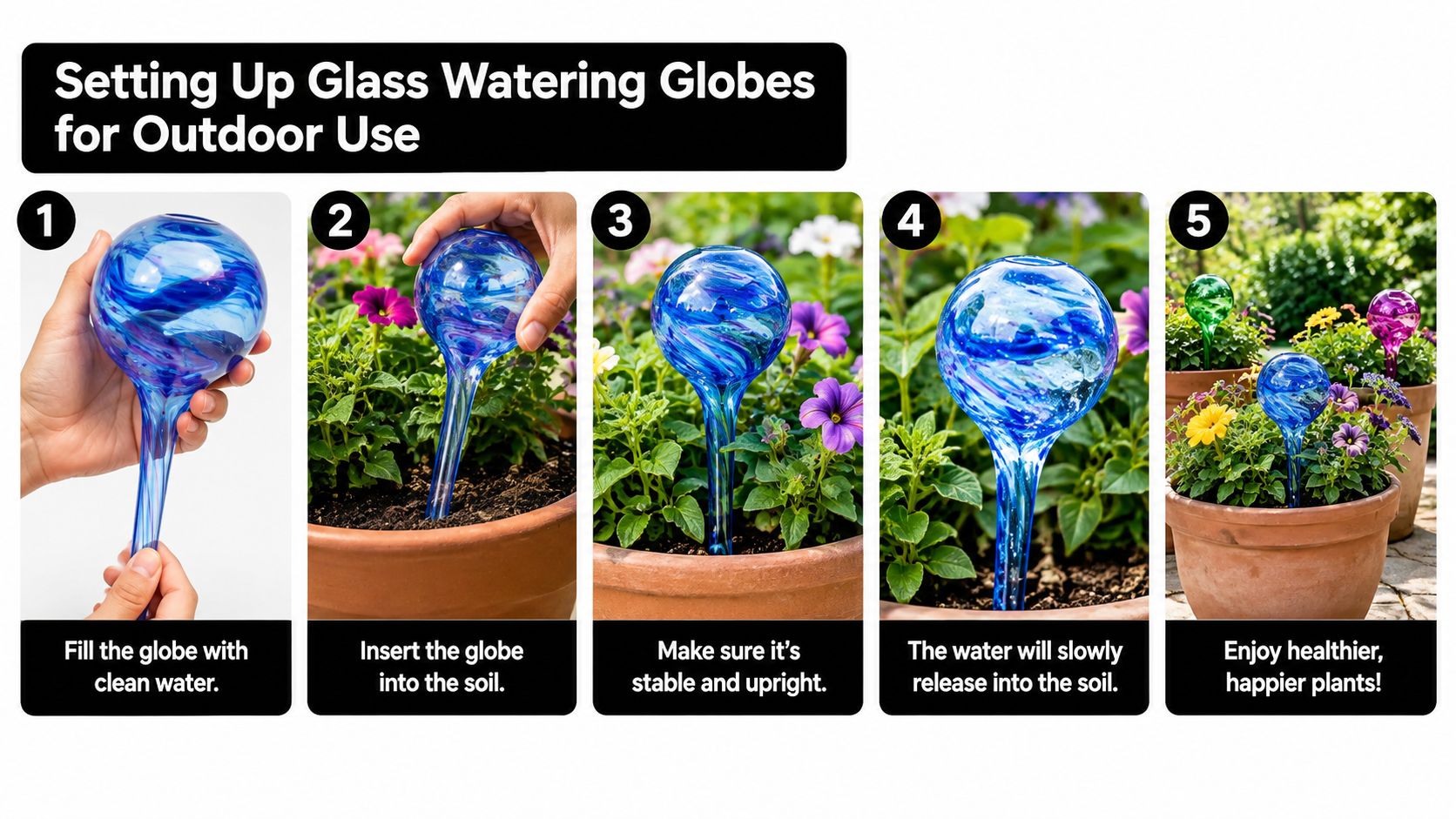
A simple setup that works outdoors
- Water the plant first. The globe should support moisture, not replace the initial deep watering.
- Make a pilot hole. Dense potting mix can clog a stem at insertion, so a small opening helps the glass tube enter cleanly.
- Fill the globe fully. Little Green Leaf globes come in 100 ml, 200 ml, and 350 ml sizes, so the fill volume is built into the tool itself.
- Insert at an angle. A slight angle helps the water move into the root zone more naturally and reduces the chance of air pockets.
- Check the fit after two days. If the soil around the stem looks too dry or too soggy, the angle and placement need adjustment.
For outdoor pots, size matters. A small globe can be enough for a modest container or a shorter trip, while a larger planter or hotter exposure usually calls for the 350 ml option or more than one globe. The stem also needs a pilot hole in denser soil, and optional plastic anti-clog sleeves can help where the mix is gritty or compacted.
A decorative option like a Little Green Leaf glass watering globe fits this use case because it gives water gradually without hoses, timers, or batteries. For the product page, use Little Green Leaf glass watering globes.
Comparing Vacation Watering Methods for Containers
Not every watering method fits the same trip length or container size. The right choice depends on how long the owner will be away, how exposed the pot is, and how much hands-on setup is acceptable before departure.
| Method | Setup Effort | Typical Duration | Outdoor Reliability |
|---|---|---|---|
| Glass watering globe | Low to moderate | Several days, up to about two weeks depending on pot size and conditions | Good for medium pots and shorter trips, weaker for very large containers |
| DIY wicking setup | Low | A few days to about a week | Works in some settings, but less consistent outdoors in wind and heat |
| Timed drip or microirrigation | Moderate | Longer absences with repeat cycles | Strongest for grouped containers and extended travel |
| Self-watering pot | Moderate | Varies with reservoir size and exposure | Reliable when properly configured, but limited by reservoir capacity |
Outdoor guidance consistently points to the same trade-off, the simpler the setup, the shorter the autonomy. Pre-wetted grouped pots can last several days, while timer-based drip or microirrigation is the more scalable option for longer trips. That's why a globe is a good fit when the goal is hands-off watering without building a full irrigation line. Preen vacation watering guidance | UF/IFAS vacation plant care
A self-watering container has a different logic. It stores water in a reservoir and wicks moisture upward, which can work well, but it still depends on reservoir size and plant demand. For more on the broader system approach, see outdoor automatic watering for plants.
Understanding How Long Your Water Supply Will Last
A single fill has no fixed outdoor runtime. A globe can last up to about two weeks, but pot size, sun, wind, temperature, and plant demand can shorten or extend that period.
Why the same globe drains at different speeds
A globe on a bright, windy patio will empty sooner than one beside a sheltered wall. Container plants also dry faster in sun and wind, with hotter weather increasing how often they need water. UF/IFAS vacation plant care
Placement can matter as much as reservoir size. Move pots away from strong afternoon sun and prevailing wind before you leave, while keeping enough light for the plant's needs. Grouping containers can also reduce exposure and slow moisture loss.
The container's soil volume sets another limit. A small pot holds less water and heats quickly. A larger planter may release water more slowly, yet its plant can use more water overall. A 350 ml globe generally suits a larger, exposed planter or a thirstier specimen better than a smaller globe. Use this guide to globe bulb sizes when choosing between 100 ml, 200 ml, and 350 ml.
Good expectation setting: a globe is a moisture buffer, not a promise of identical runtime in every pot.
Potting mix creates a further threshold. Once it dries too far, it can pull away from the container wall and resist re-wetting. Water thoroughly before departure so the root zone is fully moist, then install the globe while the soil is receptive. University of Maryland Extension
For a short trip, a smaller globe may suit a sheltered pot. A longer absence calls for a larger globe or more than one, particularly on a sunny balcony or exposed deck. Test the setup before leaving, because actual runtime in your microclimate matters more than the bulb's nominal capacity.
Troubleshooting Common Outdoor Globe Issues
Most problems come from one of three places, the soil was too dry at setup, the stem was inserted poorly, or the container is simply too demanding for one globe. If a globe empties too fast, the pot is probably hotter, windier, or smaller than expected. If it barely releases water, the stem may be clogged or the soil may be too tight around the tube.
What to adjust first
- If the stem clogs, lift it out carefully, remake the pilot hole, and reinsert it with less force.
- If the plant stays soggy, pull the globe back slightly and check whether the pot was overwatered before departure.
- If the globe runs dry too quickly, move the container to more shade next time or upgrade to a larger bulb.
- If the soil refuses water, the pot may have dried too much, and the mix may need a deeper reset before the next trip.
The biggest mistake is assuming the reservoir alone can override the container's conditions. Outdoor pots still respond to sun, wind, and soil volume, so the globe is only one part of the system. The earlier preparation steps are what make the globe dependable.
For dense or gritty mixes, the optional anti-clog sleeves can help the stem stay clear. That matters because a clean insertion path keeps the water moving gradually instead of stalling at the opening. Once the trip is over, the plant should be brought back to normal watering gradually, with the soil checked before every refill rather than flooding the pot on the first day home.
Little Green Leaf offers glass watering globes in 100 ml, 200 ml, and 350 ml sizes for plant owners who need steadier moisture while they're away. If outdoor containers dry out fast on your balcony, patio, or porch, visit Little Green Leaf to see whether a globe is the right fit for the next trip, and choose the size that matches the pot before you leave.
FAQ
How do you water outdoor potted plants while away for a week?
Start by watering the pot thoroughly, moving it into shade, and grouping it with other containers to slow drying. For a medium pot, a watering globe can help bridge the gap if the plant doesn't need daily attention.
How long does a watering globe last in an outdoor pot?
A globe can last up to about two weeks, but outdoor heat, wind, sun, and pot size change that a lot. Smaller pots and hotter exposures use the water faster.
Are watering globes good for outdoor containers?
Yes, as long as the container isn't so large or so thirsty that one small globe can't keep up. They work best as a gradual moisture source for medium pots and short to medium absences.
Do watering globes work for hanging baskets?
They can, but hanging baskets dry very quickly and often need more frequent attention than ground-level pots. A larger globe or more than one globe may be needed, and the basket should be checked carefully after setup.
Should outdoor pots be watered right before leaving?
Yes. Extension guidance recommends deep watering before departure so moisture reaches the full root zone, not just the top layer. That first soak gives any watering aid a much better chance of working.
What plants should not use watering globes?
Plants that need their soil to dry out between waterings, including succulents and cacti, are poor matches. A globe is meant to keep soil evenly moist, which those plants usually don't want.