

Houseplant Accessories for Watering: How Long Each Lasts
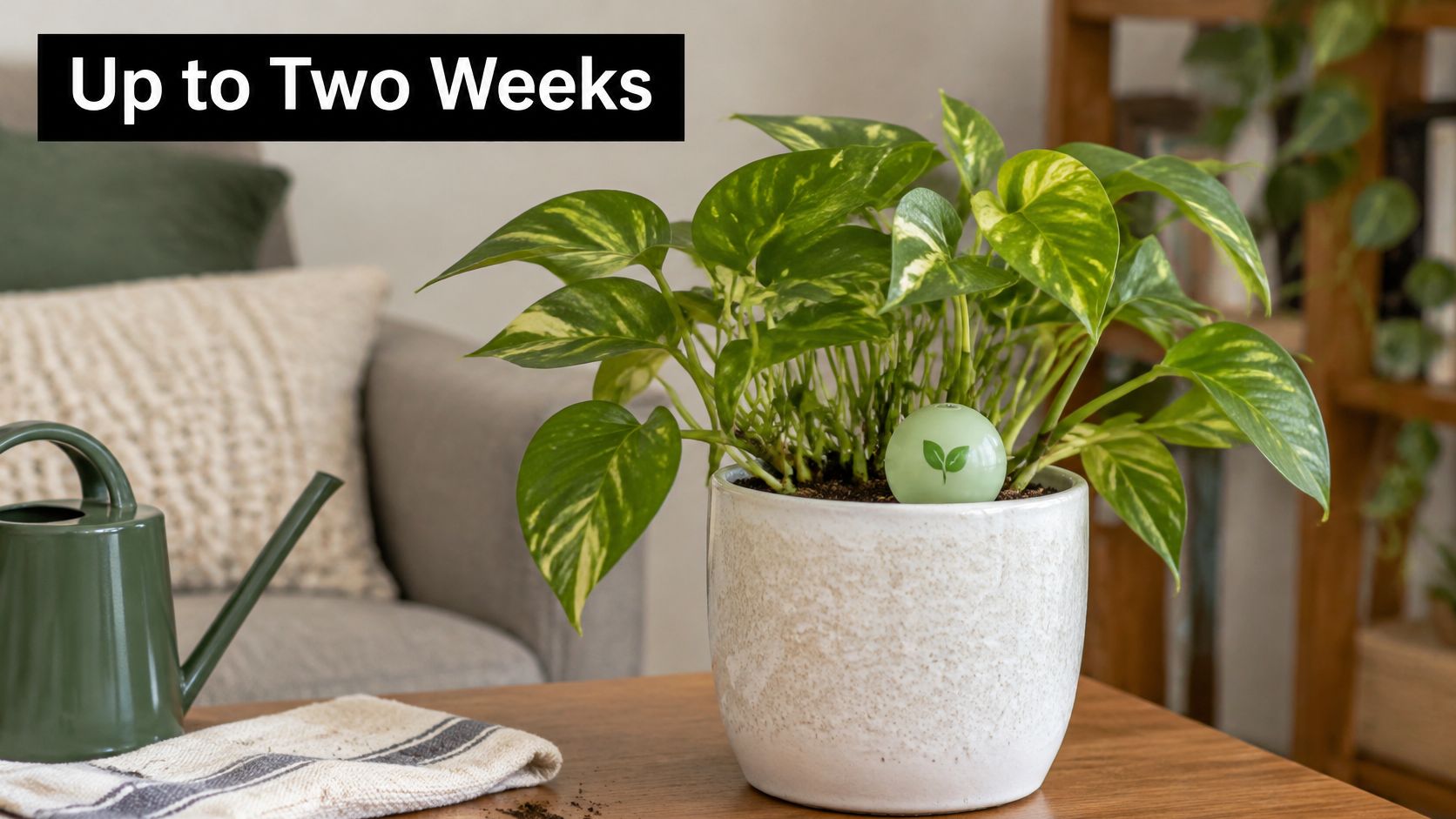
One fill of a Little Green Leaf watering globe lasts up to about two weeks, but thirsty plants, large pots, warm rooms, and smaller globes can use it sooner; the 350 ml globe generally lasts longest. How can a watering aid keep soil moist while someone is away without leaving roots waterlogged?
The answer is to choose a globe that suits the pot and plant, then check how it performs before relying on it for a trip. These glass globes are one option among several houseplant accessories for watering, but they work best for plants that benefit from steady moisture, not those that need their soil to dry out.
Table of Contents
- How Long One Fill Lasts and What Changes It
- Watering Accessories Compared Side by Side
- Which Plants Suit a Globe and Which to Skip
- How to Set Up and Clean a Little Green Leaf Globe
- Spotting Overwatering and Underwatering Signs
- Watering Plants While Away and Outdoors in Summer
- Questions to Settle Before You Buy a Globe
How Long One Fill Lasts and What Changes It
How soon will you need to refill a globe? Little Green Leaf's Plant Watering Globes hold water for up to two weeks, though the actual time depends on plant type, climate, pot size, and insertion angle. The 350 ml size holds the most water; 100 ml and 200 ml globes have less capacity, so check their levels sooner.
As soil dries, oxygen flows through the stem and gently displaces water into the root zone. The angle changes the flow: at 90 degrees, air escapes less easily and the globe releases water more slowly; at 45 degrees, water releases more readily.
The pot and plant matter, too. A large root zone may draw more water than a small globe can supply evenly, while warm, sunny conditions can dry soil faster. Soil that is already moist may also affect how quickly water leaves the globe. Use the globe's capacity as a starting point, then check the soil rather than assuming one fill will last a set number of days.
| Globe size or option | Capacity | Typical duration | Suitable use |
|---|---|---|---|
| 100 ml | 100 ml | Shortest of the three sizes; varies with plant and conditions | Smaller pots or plants that need less water |
| 200 ml | 200 ml | Between the 100 ml and 350 ml sizes; varies with plant and conditions | Medium pots |
| 350 ml | 350 ml | Longest of the three sizes; up to two weeks depending on conditions | Larger pots or plants with higher water needs |
| Mixed size | Multiple sizes | Depends on which globe is used and the conditions | A choice of sizes for different pots |
Houseplants still need checking, even with a globe in place. Washington State University Extension's houseplant guidance recommends monitoring plants and watering when needed, with soil feel as a practical check. Mark the date you fill a globe, then inspect the soil during the first week. That first check helps you judge how the plant, pot, room, and globe are working together.
Watering Accessories Compared Side by Side
The options differ most in how long they can supply water, how much setup they require, and how many pots they can serve.
| Option | How long one fill lasts | Setup | Refill effort | Clogging risk | Works outdoors | Cost per plant |
|---|---|---|---|---|---|---|
| Watering globe | Up to about two weeks; less for thirsty plants, big pots, and heat | Fill, then push stem into moist soil | Low; refill when empty | Low with tip cover; pilot hole in dense soil | Yes; shorter life in summer heat | Depends on price and pot count |
| Terracotta spike | Shorter than a globe; depends on pot and bottle level | Push spike into soil and attach a bottle | Frequent bottle refills | Moderate; mineral build-up | Yes, if bottle is refilled often | Depends on price and pot count |
| Drip kit | Continuous while reservoir has water | Tubing, emitters, and reservoir; most setup effort | Low with a large reservoir | Emitters can clog with debris and hard water | Yes; suited to containers and baskets | Depends on price and pot count |
| Self-watering pot | While its reservoir has water | Built into the pot; fill the reservoir | Check reservoir level | Low; no narrow globe stem | Yes, if the pot suits outdoor use | Depends on price and pot count |
The duration and setup comparisons are practical descriptions, not guaranteed timings. Cost per plant can't be compared as a fixed figure without knowing the purchase price and number of pots served; the table uses the same price-and-pot-count rule for each option.
A watering globe suits someone caring for one or a few forgiving plants during short trips or busy stretches. It's a poor fit for a plant that must dry substantially between waterings, or for a large collection that needs a shared watering system.
A terracotta spike may suit someone seeking a simple, bottle-fed option, but frequent refilling makes it less convenient for a long absence. A drip kit can serve several containers or hanging baskets from a reservoir, though its tubing and emitters take more setup. A self-watering pot suits an owner who wants the reservoir built into the pot, but it's not automatically compatible with every plant's watering needs.
No single option is right for everyone. A drip kit or self-watering pot may be more practical across a larger collection, while a globe can be simpler for a few individual pots. For another way to think about shared water delivery, Little Green Leaf's article on capillary matting for plants offers a related comparison.
Decision rule: Pick the option whose water supply covers the longest gap without leaving the soil wet.
Which Plants Suit a Globe and Which to Skip
Succulents and cacti should not receive a watering globe. They don't suit a setup designed to keep soil evenly moist, and they can suffer if their soil stays wet. The same caution applies to plants that need to dry substantially between waterings.
A globe is better suited to plants that benefit from steady moisture, such as peace lilies and ferns. Pothos and philodendrons can tolerate some drying, so a globe may help buffer moisture between checks, but owners should still inspect the soil rather than assuming a steady supply always fits.
Very large pots are another limit. One small globe may not supply water across a large root mass, so a larger globe, several globes, or a different watering option may be more suitable. More water from one point doesn't necessarily mean more even moisture throughout the pot.
Dense soil can make installation difficult. A stem forced into compacted soil may not seat properly, and pressure against the glass can cause damage. Making a pilot hole with a pencil first gives the stem a place to enter without forcing it.
Glass needs careful handling, too. A globe can break if dropped, so it shouldn't sit where it can fall from a floor edge or busy shelf. Choose a stable position where people are unlikely to knock it over during ordinary movement around the pot.
Before buying, an owner can run three checks:
- Plant: Does it benefit from soil that stays evenly moist?
- Pot: Is the globe's volume a reasonable match for the pot?
- Soil: Can the stem enter without being forced?
If all three answers are yes, a globe may fit. If the plant needs a dry period, the pot is too large for the available globe, or the soil is too compact to insert the stem safely, another option is a better choice.
How to Set Up and Clean a Little Green Leaf Globe
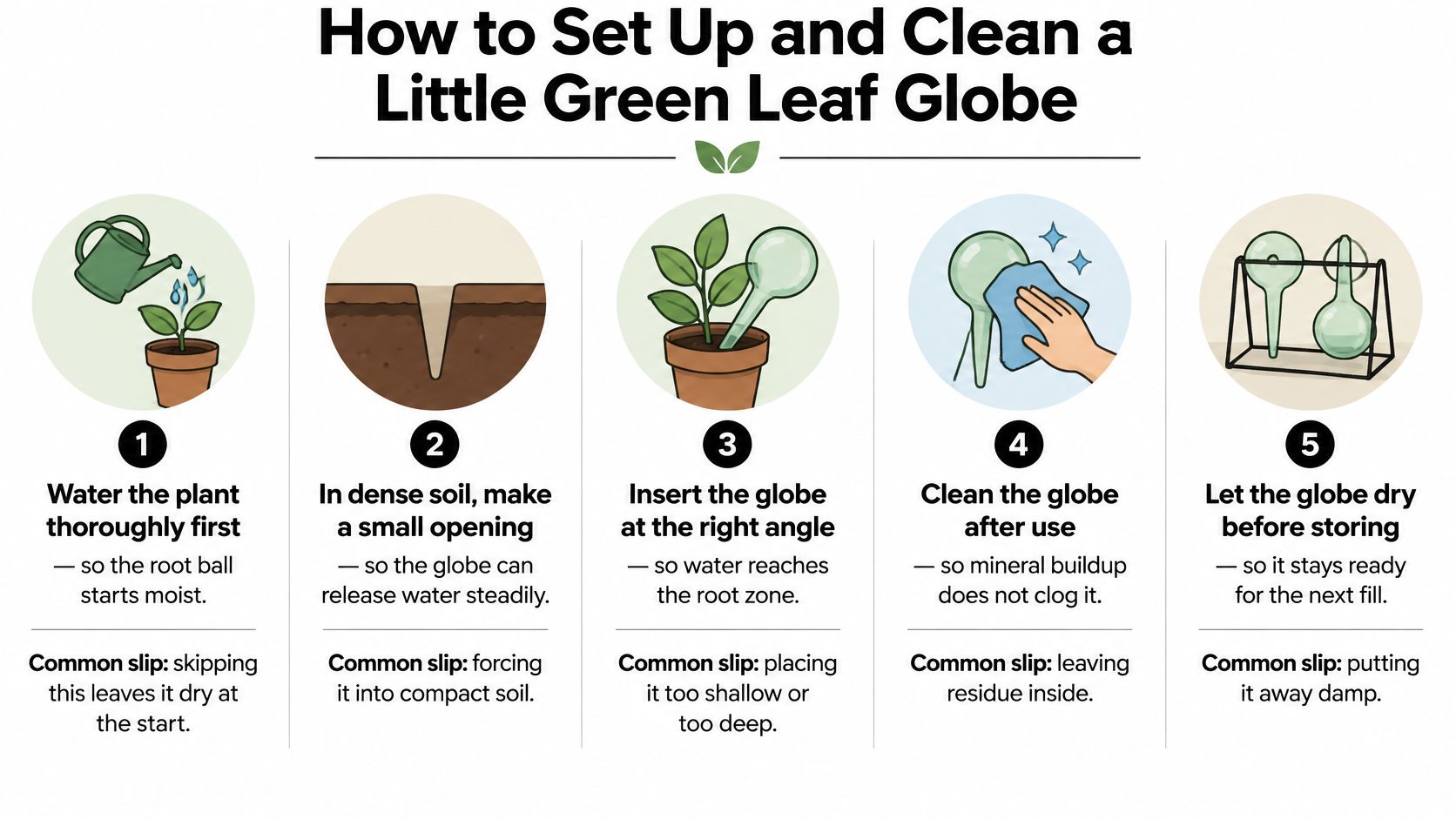
A successful setup starts with moist soil, a clear opening, and a check after insertion. The Royal Horticultural Society recommends checking moisture to knuckle depth, because a dry surface doesn't reliably show whether water has reached the roots. Its advice to water thoroughly, but less frequently, also supports placing the globe's stem into the soil rather than wetting only the surface. See the RHS guidance on watering houseplants.
Five setup steps
- Water the plant thoroughly first. This gives the root ball a moist starting point. If the globe goes into already dry soil, the plant may remain dry while the setup settles in.
- Make a pilot hole in dense soil. Use a pencil to create an opening about as deep as the stem. Forcing glass into compact soil can crack it or leave the stem poorly seated.
- Fill the globe with water. Keep the stem clear so water can pass through it. Avoid cold water if possible, since it can slow the initial release.
- Insert the stem at a slight angle. Aim for the root zone without pressing the outlet against the pot wall. Too shallow an insertion may keep water near the surface; placing it against the pot can interfere with flow.
- Check the setup after two days. Look for a lower water level and feel the soil below the surface. It should be damp, not soaked, and the leaves should remain firm.
Cleaning and storage
Keep the plastic anti-clog tip cover fitted from first use. If water release slows, empty the globe, rinse the bulb with warm water, flush the stem, and brush away any mineral film. Let it dry upside down before storing.
Handle the globe by its bulb, keep it upright when storing, and stop using it if the glass cracks. A damaged glass globe can break further during handling. A regular check of the tip cover, mineral residue, and glass condition can help catch problems before the next fill.
Little Green Leaf's glass globes are filled with water and inserted into soil. See Little Green Leaf's watering globes for the product details.
Spotting Overwatering and Underwatering Signs
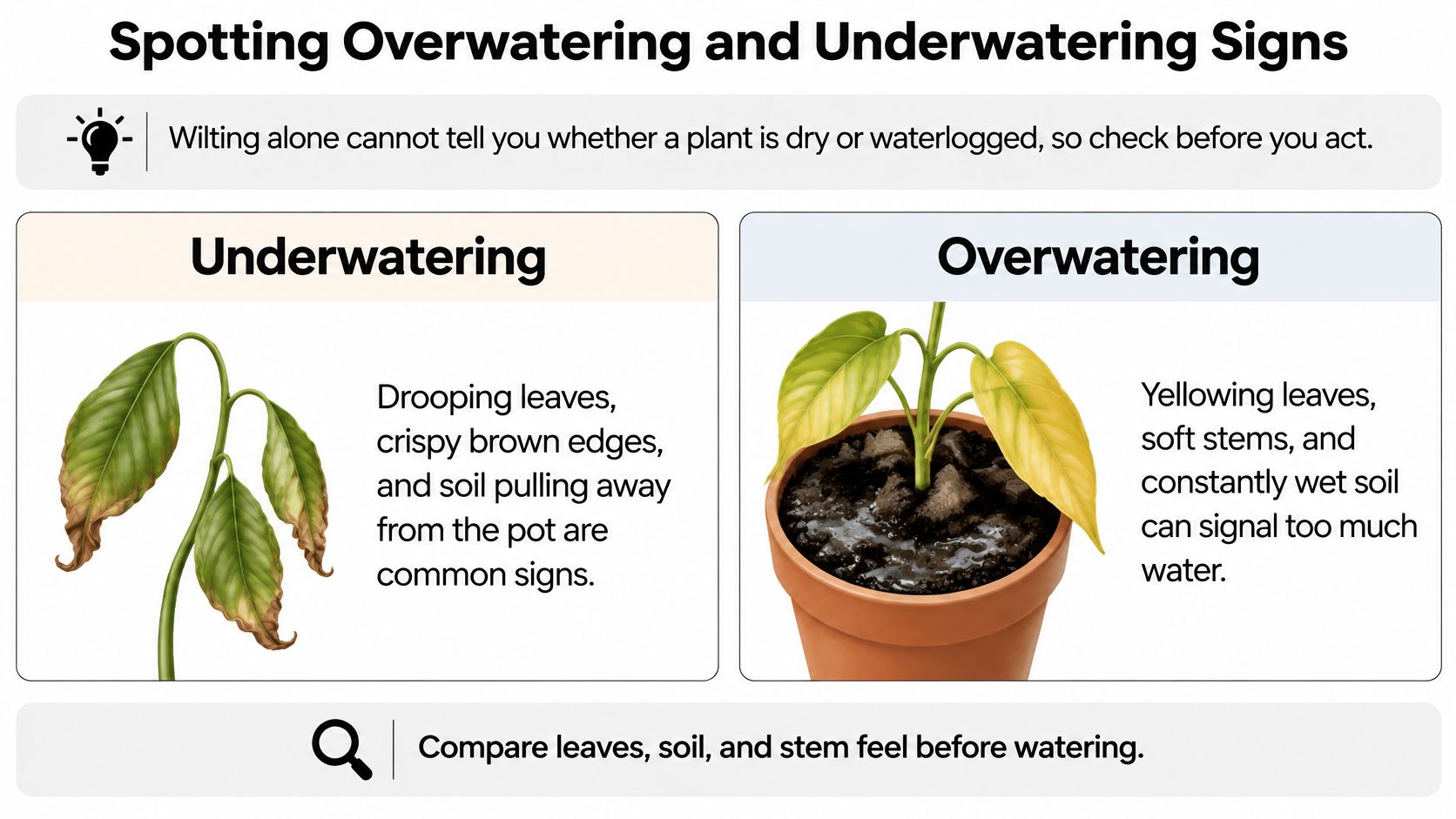
Wilting can signal either too little or too much water. Check the soil before watering: underwatered plants may have drooping leaves, crispy brown edges, or soil pulling away from the pot. Overwatered plants may have yellowing leaves, persistently wet soil, water pooled under the pot, or wilting despite damp soil.
The symptoms overlap because excess water pushes air out of the growing medium. Roots need air to function; if the medium stays saturated, fine roots can be damaged and struggle to take up water. The plant may then look thirsty even while its soil is wet.
Use this three-part check before acting:
- Feel the soil: Press a finger down to knuckle depth, rather than judging only the surface.
- Look at the base: Check whether water has collected under the pot.
- Check drainage: Confirm that excess water can leave the container.
For leaf and soil cues on houseplants, read Little Green Leaf's signs of overwatering plants. The Royal Horticultural Society's advice on helping a poorly houseplant also explains why wilting can happen with either too little or too much water. For a related overview of excess watering in managed plantings, see commercial landscape overwatering signs.
A watering globe can help reduce swings between dry soil and a sudden heavy watering by releasing water as the soil dries. It is a supplemental reservoir, not a fix for saturated soil. If the soil stays soggy, remove the globe, let the upper layer dry, and check that water drains freely before refilling it.
Start with soil moisture when symptoms appear together. Wet soil means pause watering; dry soil points toward watering. That check is more useful than reacting to wilting alone.
Watering Plants While Away and Outdoors in Summer
A globe can help during a short absence, but the right plan changes with the trip length. Before leaving, owners should consider which pots need water and whether the globe has been tested in that particular setup.
For a one-week trip
Water plants that need it, move them out of direct sun, and group them near each other. Place a globe in each pot that needs a gradual supply, check the soil before departure, and inspect the globes after returning.
For two weeks
Two weeks sits at the upper end of the globe's stated duration, so a trial matters. Use a larger globe for a thirsty plant, consider two globes for a large pot, and test the setup for 48 hours before leaving. If the soil becomes saturated or water doesn't reach the root zone as expected, adjust or choose another arrangement.
For longer absences
Globes alone aren't a reliable plan for a longer trip. A plant sitter should inspect the plants and water only those that need it. More water isn't automatically safer: roots that sit in water can be damaged, so avoid leaving a pot standing in runoff.
For outdoor containers and hanging baskets
Summer conditions can dry containers quickly. The Royal Horticultural Society's container maintenance guidance recommends checking moisture daily in warm or windy weather and twice daily in hot weather. It also notes that containers may need water every day or every other day during summer dry spells.
A globe can buffer moisture between checks, but it shouldn't be treated as a timer or a substitute for checking the soil. Fill and position it conservatively, especially when a container's drying rate changes with the weather. Avoid globes for plants that need their soil to dry substantially.
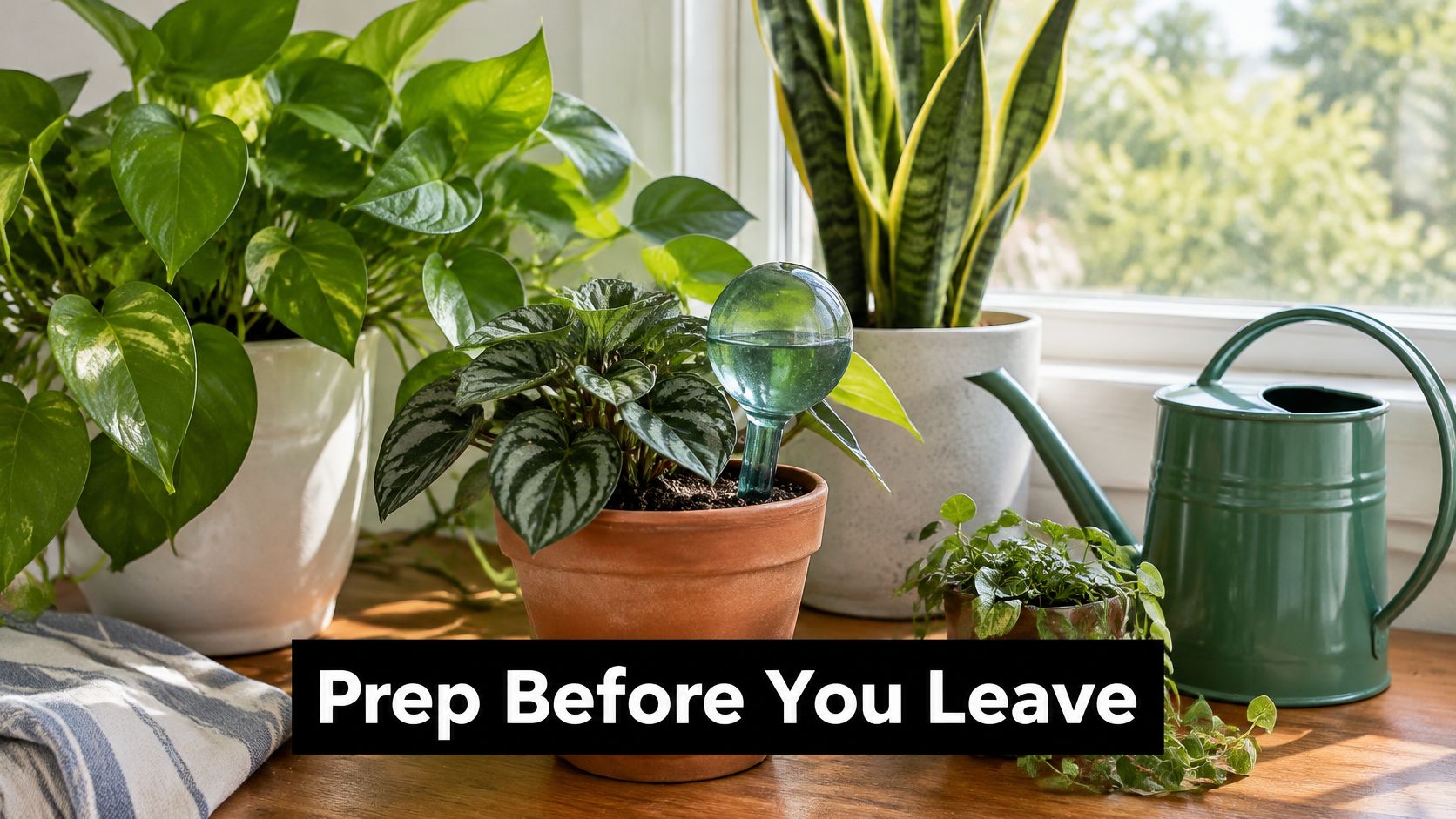
For a practical pre-trip checklist, see Little Green Leaf's guide to keeping plants watered while on vacation. Outdoor users can also check containers morning and evening, adjust the number of globes when the soil dries too quickly, and move hanging baskets to partial shade if they keep drying out.
Questions to Settle Before You Buy a Globe
Can I use a watering globe with a self-watering pot?
Choose one reservoir per plant. A globe and a self-watering pot can supply water at the same time, making it harder to tell how much moisture reaches the roots.
Do I need a saucer under a watering globe?
A saucer can catch runoff. Empty any standing water rather than leaving the pot in it, since roots need air as well as moisture.
Why is my watering globe still full after two weeks?
Cool air, low light, or a small plant can mean slower water use. Check the soil to knuckle depth before refilling; a full globe alone doesn't show whether the plant needs water.
Is a watering globe a good gift for a plant lover?
A globe may suit someone with plants that prefer consistent moisture. Little Green Leaf's hand-blown glass globes come in 100 ml, 200 ml, and 350 ml sizes, with a mixed-size option also offered. Ask what plants the recipient keeps first, since globes may not suit a collection of succulents or cacti.
Little Green Leaf lists the globes at a sale price of $12.45 USD and has a 30-day return policy, with customers able to request a return within 30 days after receiving their item.
Little Green Leaf's hand-blown glass watering globes release water gradually as soil dries. To choose a size for plants that need steadier moisture, visit Little Green Leaf.