

Signs of Overwatering Plants and How to Fix Them
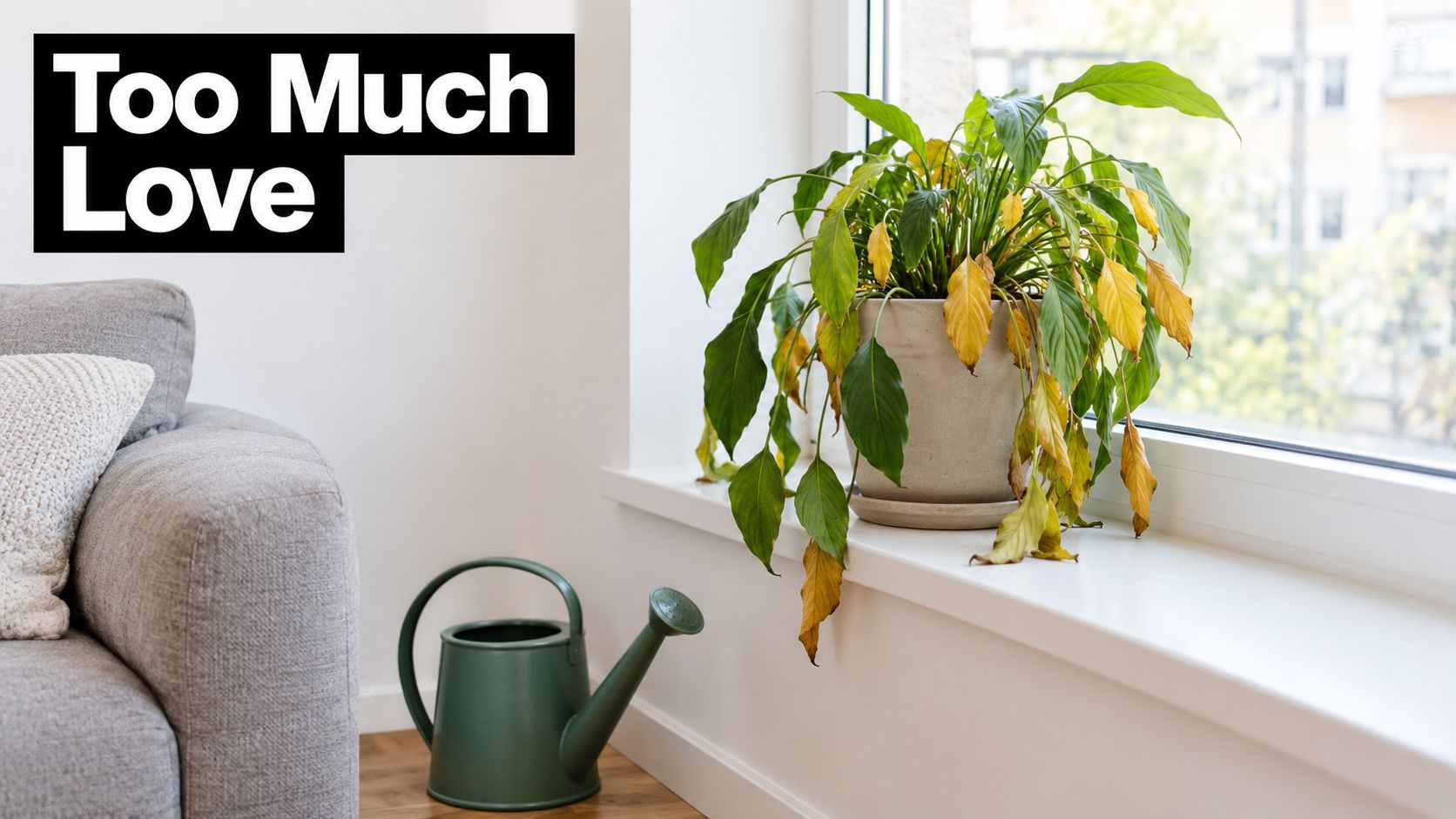
You water your peace lily, step away feeling helpful, then notice that the leaves are still drooping a few days later. One lower leaf has turned yellow, the soil looks dark, and you're left wondering whether the plant needs another drink or whether you've already given it too much. This is a very common houseplant puzzle, especially in apartments where light, airflow, pot size, and indoor temperature can change how quickly soil dries.
Overwatering doesn't mean you've failed as a plant owner. It usually means the roots have stayed wet longer than the plant can comfortably handle. With a few calm checks, you can learn to read the difference between genuine thirst and a root system that's struggling to function.
Introduction Why More Water Is Not Always More Love
A drooping plant can make watering feel like the obvious answer. You may reach for the can because the leaves look tired, even though the potting mix is still damp beneath the surface. That instinct makes sense. Plants need water, and giving care often feels like giving more.
The trouble is that roots need both water and air. When soil remains saturated, water fills the spaces that normally hold air. The roots then struggle to take up water and nutrients, so the plant can wilt while sitting in wet soil. University of Maryland Extension identifies wilting or yellowing lower and inner leaves as a primary symptom of excess moisture, while continued overwatering can lead to leaf scorch, leaf drop, and plant death. Its indoor plant guidance also connects these symptoms with root rot and crown rot.
Start with observation, not panic
Look at the whole pattern rather than reacting to one leaf. A single yellow leaf can be part of normal aging, but yellowing lower leaves paired with a limp plant and persistently wet soil deserve closer attention. That combination is far more useful than leaf color alone.
This guide will help you understand what happens below the soil, recognize visible and subtle signs, compare overwatering with underwatering, and run simple checks at home. You'll also find gentle rescue steps and a practical routine for busy owners, travelers, and anyone who doesn't want plant care to become a daily guessing game.
Understanding What Overwatering Really Does to Plants
A plant can sit in wet soil and still look thirsty. The reason starts below the surface: roots need both water and air. They absorb moisture and nutrients through tiny spaces in the soil, while also relying on oxygen for normal function.
Potting mix works like a sponge with small air pockets. A damp sponge holds water and air. Once it is fully soaked, air has little room to move. Missouri Botanical Garden explains that saturated soil reduces oxygen around roots, which can cause them to die.
The wet-soil decline
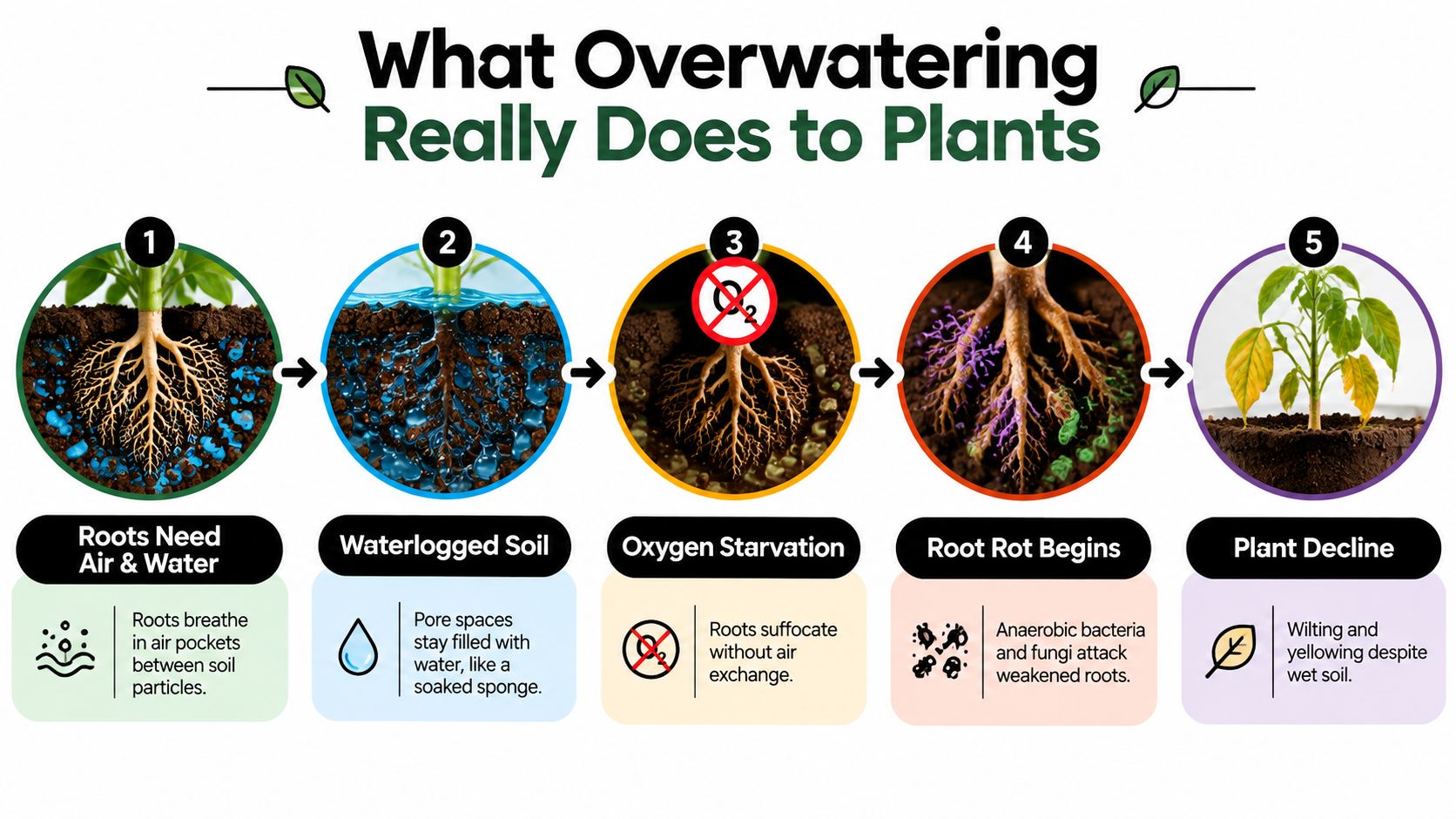
The pattern usually develops in stages:
- Water fills the soil spaces. Some moisture is helpful after watering. If drainage is poor or a pot sits in standing water, the mix stays saturated.
- Air exchange drops. Roots receive less oxygen for normal activity.
- Roots become damaged. They cannot absorb water and nutrients as efficiently.
- The plant shows stress. Leaves may wilt, yellow, grow slowly, or drop even while the soil remains wet.
- Decay can develop. Continued wetness creates conditions linked with root rot and crown rot.
This creates a false-thirst pattern. The leaves appear thirsty, but adding water keeps the root zone wet and gives damaged roots no chance to recover. University of Georgia Extension reports that root rot appeared in more than 40% of diseased plants in one diagnostic sample set submitted by homeowners, nurseries, gardeners, and greenhouses. UGA's guidance on avoiding overwatering also describes wilted plants with wet soil and brown roots that can no longer absorb water and nutrients.
The same root-oxygen problem can affect outdoor beds, containers, and larger planted areas. Good drainage and a consistent watering plan help the soil dry slightly between thorough waterings. For larger spaces, tailored irrigation by Premier Gardens offers context on setting up controlled watering that avoids leaving roots saturated.
Common and Subtle Signs of Overwatering to Watch For
A plant can droop beside a damp pot and still look thirsty. Read the leaves, stems, soil, and pot together instead of treating one symptom as a final diagnosis. The central clue is simple: wet soil that stays wet can limit the oxygen roots need.
Read the leaves from the bottom up
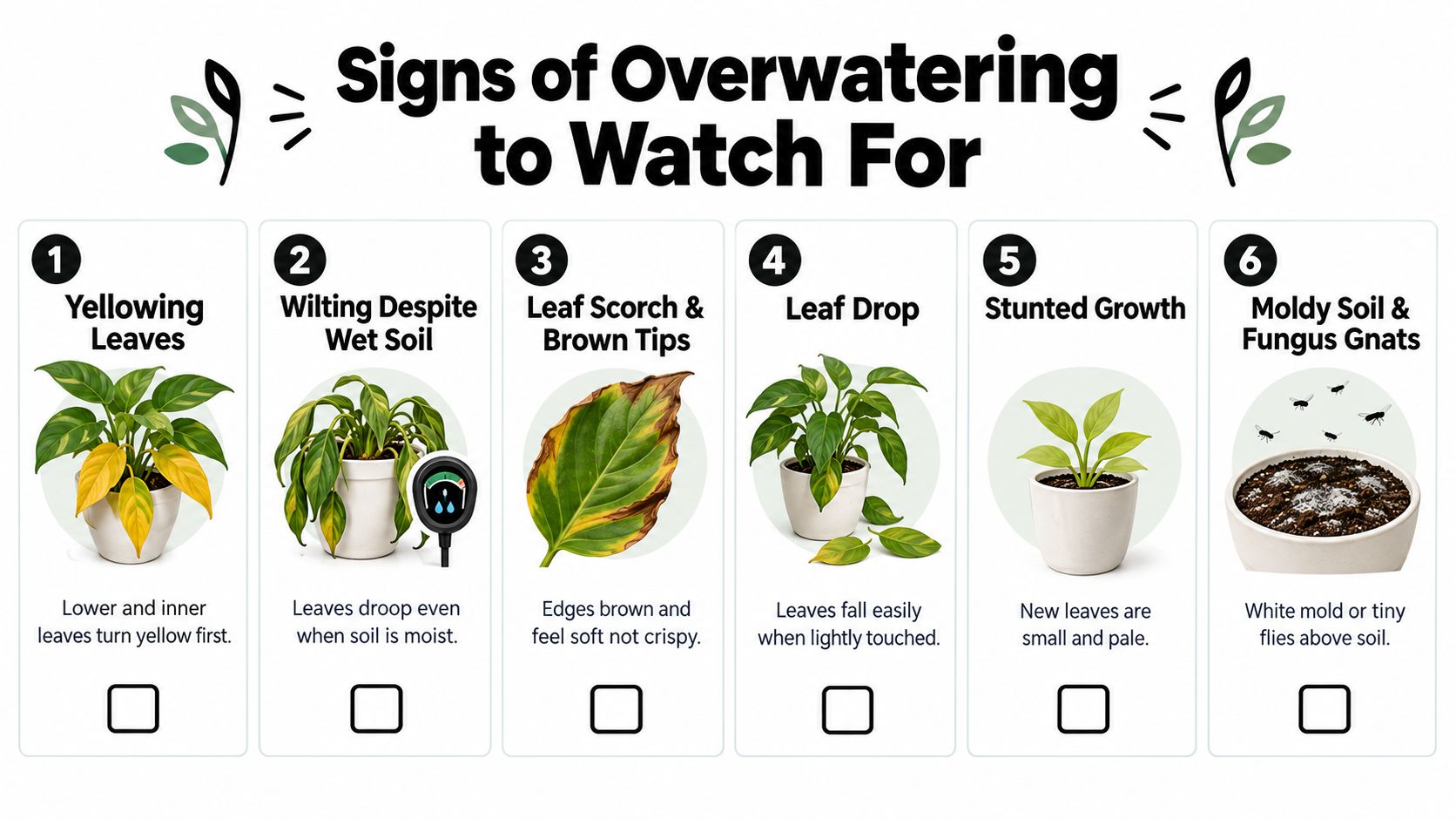
Yellowing lower and inner leaves are often an early clue. Older leaves may lose function first when the root zone remains saturated. University of Maryland Extension lists yellowing or wilting of lower and inner leaves as a primary symptom. Utah State University Extension also includes canopy dieback, yellowing, necrosis, marginal scorch, wilting, and leaf loss among signs linked with overwatering.
Wilting can look exactly like thirst. With excess moisture, leaves may feel soft, limp, or heavy, rather than thin and crisp. The plant droops while the mix remains damp because stressed roots cannot move water normally.
Brown edges and leaf scorch may follow. Tips or margins can turn brown, while the leaf still feels soft instead of dry and papery. If the stress continues, leaves may drop with a light touch.
High-confidence pattern: Yellowing lower leaves plus wilting while the soil is still wet points toward overwatering. It is a reason to check the root zone, not to add more water.
Notice what the soil is saying
Soil that stays dark and damp for too long needs attention. A sour, musty, or rotten smell can signal prolonged low-oxygen conditions and root decay. White growth on the surface or small flies hovering around damp soil may appear too, but these clues mean more when they occur with leaf and moisture changes.
Other signs can be quieter:
- Stunted growth: New leaves may appear slowly, stay small, or look pale because stressed roots cannot support steady development.
- Soft stems: A weak stem near the soil line can suggest advanced moisture stress or decay.
- Leaf loss: Falling leaves show that the plant is shedding tissue under stress, especially while the soil remains wet.
- Persistent heaviness: A pot that stays unusually heavy after watering may still hold saturated mix.
One yellow leaf is not a verdict. Look for a pattern across leaf position, texture, soil moisture, and smell. A quick check of those four clues can keep a single tired leaf from sending you back to the watering can.
This short video offers another visual way to recognize common moisture problems:
How to Tell Overwatering Apart From Underwatering
A drooping plant doesn't automatically need a drink. The soil and the feel of the leaves provide better clues than posture alone. Virginia Cooperative Extension emphasizes this important nuance because excess moisture can produce wilting, yellowing, leaf drop, scorch, and even plant death, symptoms many people associate with dryness. Its explanation of overwatering symptoms is a useful reminder to check the root zone before reaching for the watering can.
| Clue | Overwatering | Underwatering |
|---|---|---|
| Soil | Damp or wet below the surface, sometimes staying wet for days | Dry below the surface and possibly pulling away from the pot |
| Leaves | Limp, soft, yellowing, or drooping | Crisp, dry, curled, or papery |
| Color | Lower or inner leaves may yellow; scorch can develop | Leaves may fade, dry out, or become brittle |
| Pot weight | Often remains heavy | Usually feels noticeably lighter |
| Smell | Soil may smell sour, musty, or rotten | Soil usually lacks a wet-decay smell |
| Root condition | Damaged roots may be brown, black, soft, or slimy | Roots may be dry and stressed but aren't defined by soggy decay |
The false-thirst pattern
Underwatered roots lack available moisture. Overwatered roots face a different problem: they're surrounded by moisture but may be too damaged to absorb it. That's why a plant can look thirsty while the soil is clearly wet.
If the leaves feel soft and the soil is damp, pause before watering. If the leaves feel crisp and the mix is dry, thirst becomes more likely. For a focused comparison of dry-soil symptoms, see this guide to signs of underwatering plants.
Simple Diagnostic Tests You Can Do at Home
You don't need a complicated setup to investigate moisture problems. A few quiet checks can tell you much more than a calendar reminder.
Check the soil, pot, and drainage
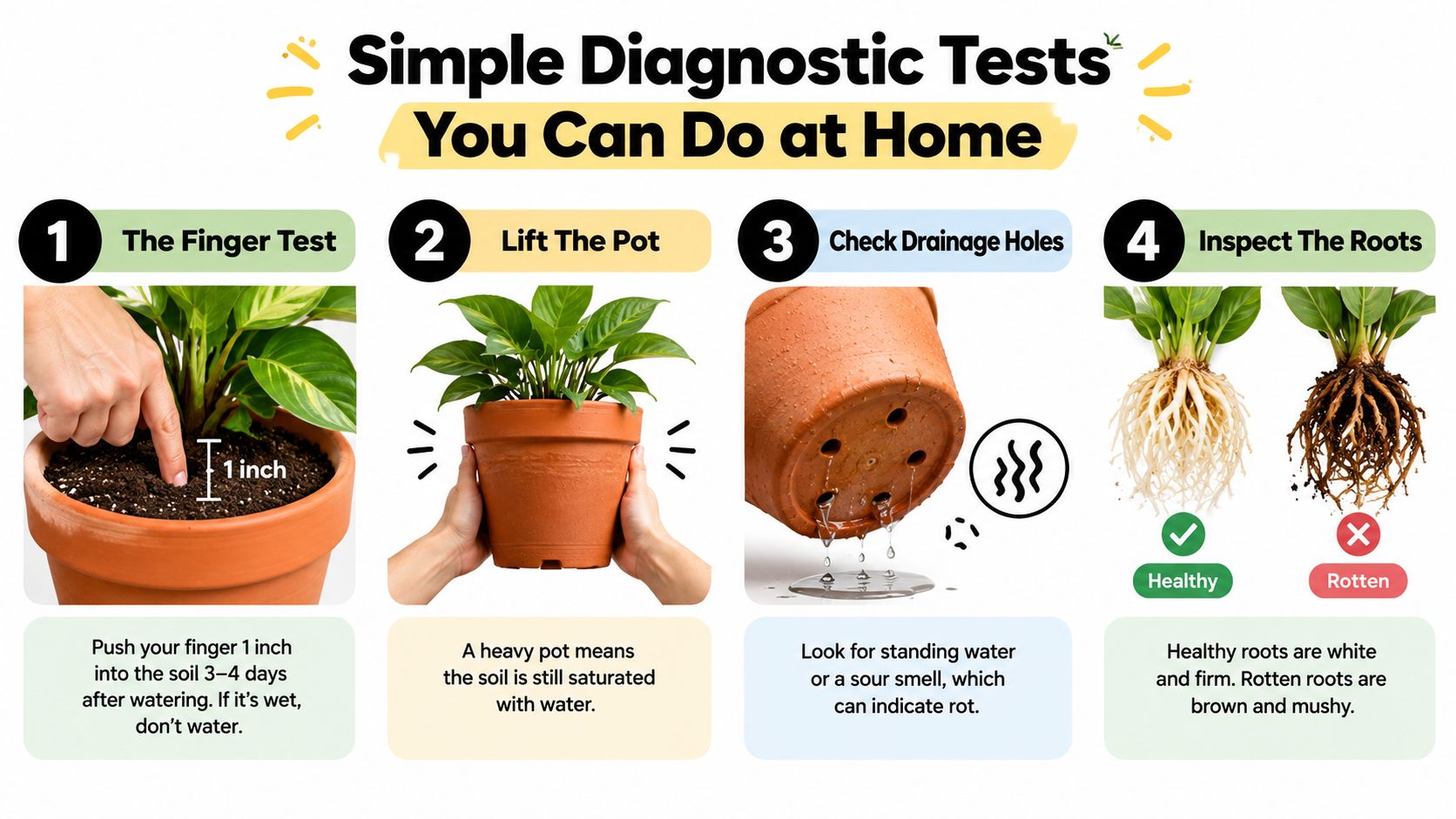
Start with the finger test. Push your finger about one inch into the soil three to four days after watering. If that area still feels wet, don't water yet. Kultivy's practical overwatering guide describes persistent moisture at this depth after that interval as a sign that the plant may be receiving water too often or sitting in a mix that holds too much.
Then lift the pot, if it's manageable. A container that still feels unusually heavy suggests that water remains in the mix. Check the drainage holes as well. Make sure they're open, and empty any saucer or decorative cachepot that's holding runoff.
A smell check can be surprisingly helpful. Sour, musty, or rotten notes point toward prolonged wetness and possible root decay. Don't press your nose into the soil. A gentle check near the surface is enough.
Look at the roots only when needed
If the plant continues to decline or the soil smells wrong, slide it gently from the pot. Healthy roots should feel firm and white, while rotted roots can appear black, soft, and slimy, as described in The Spruce's guide to overwatered houseplants.
You can use a moisture meter if you prefer a reading rather than a finger check. A meter is most useful when you learn how its reading compares with the actual feel of your plant's soil. This explanation of moisture meter readings can help you interpret the tool without treating it as a substitute for observing the plant.
These tests work well for travelers and busy owners because they turn care into an occasional check-in. You don't have to monitor every hour. You only need to confirm what the soil is doing before adding more water.
How to Fix an Overwatered Plant and Prevent It Next Time
Start with the simplest action: pause watering. Move the plant somewhere with good airflow and bright, suitable light, but avoid sudden harsh sunlight while it's stressed. If water is sitting in a saucer or outer pot, pour it away so the container can drain freely.
Let the mix dry to an appropriate level before watering again. If the soil stays saturated, smells sour, or the plant continues to decline, repotting may be necessary. Use fresh, airy potting mix and a container with open drainage. Remove only roots that are clearly rotten, using clean scissors, and handle the remaining roots gently.
Build a more forgiving setup
Prevention starts with the container and soil:
- Choose drainage: A pot needs working drainage holes so excess water has somewhere to go.
- Use an airy mix: A loose potting mix gives roots access to both moisture and air.
- Match pot size: An oversized pot can hold more wet soil than a small root system can use.
- Water thoroughly, then pause: Apply water evenly, allow excess to drain, and check the soil before watering again.
- Adjust for the room: A bright, warm windowsill may dry differently from a dim office corner or a cool apartment.
A fixed watering day can be convenient, but it doesn't account for changing conditions. A plant that needs water after a bright, warm spell may still be sitting in damp soil during a cooler, darker period.
Consider gradual hydration for busy schedules
For owners who travel or forget watering, a passive tool can help reduce sharp swings between soaked and dry soil. Little Green Leaf self-watering globes release water gradually as soil dries, then slow as moisture returns. Their hand-blown glass designs come in 100 ml, 200 ml, and 350 ml sizes, with options such as multicolor, clear rainbow, and mushroom styles. They're one option to consider alongside good drainage and regular soil checks, not a replacement for understanding your plant's needs.
For more guidance on avoiding the conditions that damage roots, this guide to preventing root rot in houseplants provides a helpful companion reference.
A Calmer Watering Routine for Healthier Plants
Healthy plant care is less about frequent attention and more about steady attention. Before watering, check the soil. Make sure the pot drains and the mix stays airy. Keep a simple note of when you watered, then let the plant's condition guide the next decision instead of following the calendar blindly.
The three habits that matter most are simple:
- Check before watering: Feel the soil instead of guessing from drooping leaves.
- Protect the root zone: Use drainage and a mix that doesn't stay soggy.
- Create a rhythm that fits real life: A short weekly plant check can be more useful than daily watering.
An occasional yellow leaf isn't a failure. It's information. Once you understand that roots need air as well as water, the signs of overwatering plants become easier to read, and small changes can bring care back into balance.
If you want a gentler way to support consistent hydration, explore the decorative self-watering globes and practical plant-care tools from Little Green Leaf. Choose a size that suits your pot, pair it with well-draining soil and an open drainage hole, and give your plants a calmer routine while you're home or away.