

Vacation Plant Waterer: How Long It Lasts and What to Buy
A filled vacation plant waterer usually lasts up to about two weeks, but the actual answer depends on pot size, soil, heat, and how thirsty the plant is. A 100 ml, 200 ml, or 350 ml globe can all be right, but only if the reservoir matches the container and the room.
A traveler doesn't need a gimmick. They need a device that releases water as the soil dries, then stops when the root zone stays evenly moist.
Table of Contents
- How Long a Vacation Plant Waterer Really Lasts
- What a Watering Globe Does in the Soil
- Globe Versus Spike Versus Drip and Other Options
- Setting Up a Little Green Leaf Globe Before You Leave
- Matching the Globe to Pot Size, Light, and Trip Length
- Troubleshooting Clogs, Fast Emptying, and Other Common Problems
- Answers to the Questions Travelers Ask Before Packing
How Long a Vacation Plant Waterer Really Lasts
The first question is simple, how many days will one fill cover? The honest answer is up to about two weeks, with shorter coverage for thirsty plants, big pots, warm rooms, and smaller globes, and longer coverage from the 350 ml size when conditions are calmer.
Start with the trip length, not the gadget
A vacation plant waterer should be chosen from the trip backward. Small pots dry faster than large ones, and fast-drying rooms pull water out of the soil more quickly, so a device that looks generous on the shelf can empty fast in real use. University extension guidance also shows that watering intervals vary by container size, with small pots needing water much more often than large ones. Oklahoma State University Extension
That is why the first purchase for many buyers is not the biggest globe, it's the middle size. A 200 ml globe is the safest starting point for a typical houseplant, while 100 ml fits smaller pots and 350 ml is the better bet for a medium planter or a grouped planting.
Practical rule: buy for the plant's drying speed, not for the number of days you hope to be gone.
Vacation advice that relies on one fixed duration misses the point. Indoor pots, especially, can swing from needing frequent checks to coasting for days based on the container and the room. That's why this guide keeps circling back to sizing and calibration instead of promising a magic number.
What a Watering Globe Does in the Soil
A watering globe works because soil moves water in more than one direction. Gravity pulls excess moisture down, while capillary action draws it through smaller pores and across the root zone as the plant uses it. Colorado State University Extension
Why the globe slows down as the soil dries
That pull changes as the mix dries. Water moves from the reservoir into the root zone through a capillary interface, and the soil keeps drawing as long as the surrounding medium can accept more. You can see the same basic principle in what a capillary soil setup does: the wetter the soil around the globe, the slower the release; the drier the soil, the faster the draw.
In practical terms, the globe does not empty all at once. It feeds moisture in response to the soil's drying rate, so it behaves like a reservoir, not a timer. Fine-textured mixes usually hold and spread water more evenly than coarse, sandy ones, so they often keep a fill going longer than a loose, fast-draining medium.
Dry soil at the stem is a problem. It can cause uneven release and leave dry pockets untouched. Soil that is already saturated creates the opposite problem, because the globe has little reason to move water and roots can sit too wet for too long. Pre-moisten the potting mix first, then insert the globe.
Where it fits among other watering methods
A glass globe belongs in the same general group as wick reservoirs, localized drip delivery, and self-watering pots. It is compact and passive, which suits apartment plants, office pots, and short absences. It is a poor fit for plants that need a dry-down between waterings, because it keeps feeding moisture as long as the soil keeps pulling it in.
Globe Versus Spike Versus Drip and Other Options
Pick the method that matches the trip, the pot, and the room the plant lives in. A watering globe is a clean choice for quick setup, but it is not the right answer for every container. Large pots, long absences, and plants that need a steadier margin often call for a different setup.
Vacation watering methods side by side
| Method | Typical coverage | Setup effort | Refill effort | Outdoor friendly | Cost per plant |
|---|---|---|---|---|---|
| Glass globe | Short trips, often up to about two weeks depending on conditions | Low | Low | Sometimes, but watch heat and drying | Low to moderate |
| Terracotta spike | Similar short-trip use, depends heavily on pot and soil | Low to moderate | Low | Sometimes | Low |
| Drip kit | Longer coverage when set up properly | Higher | Moderate | Yes, especially for grouped containers | Moderate |
| Cotton wick | Short to medium absences | Low | Low | Limited by reservoir placement | Low |
| Self-watering pot | Longer coverage for a planted container | Moderate | Low | Yes, if the container is suited to it | Higher |
The globe is the simple buy. It works best when you want a compact reservoir, a fast setup, and a hands-off option for ordinary houseplants. A drip kit or self-watering pot makes more sense when the plant needs a larger buffer and you are willing to spend more time setting it up.
Control is the difference. A globe feeds water based on the soil's pull, so it is easy to live with but harder to fine-tune. A drip system or self-watering pot gives you more control over delivery, which matters in larger containers and for plants that drain unevenly.
That trade-off is why the globe is a good fit for many indoor plants and a weaker fit for very thirsty pots or very long trips. For a broader rundown of devices, see the best plant watering devices.
Choose the method that gives the plant the most stable margin, not the prettiest container.
Setting Up a Little Green Leaf Globe Before You Leave
Set the globe up before you walk out the door. A filled globe works best when the potting mix is already evenly moist, because dry pockets make the release uneven and leave part of the root zone too dry while another part stays soaked.
A pre-trip routine that works
- Water the plant thoroughly first. Let the excess drain so the soil is moist, not waterlogged.
- Make a pilot hole. Dense soil can resist the stem, so a small opening helps the globe slide in cleanly.
- Fill the globe and insert it at a slight angle. Aim the stem into the root zone, not straight into the crown.
- Check it after about 48 hours. If the soil is staying too wet, the globe is too large or too close to the center. If it is drying too quickly, the pot likely needs a bigger reservoir or a second globe.
- Match the size to the container. Use 100 ml for a small herb pot, 200 ml for a typical houseplant, and 350 ml for a medium planter or grouped plants.
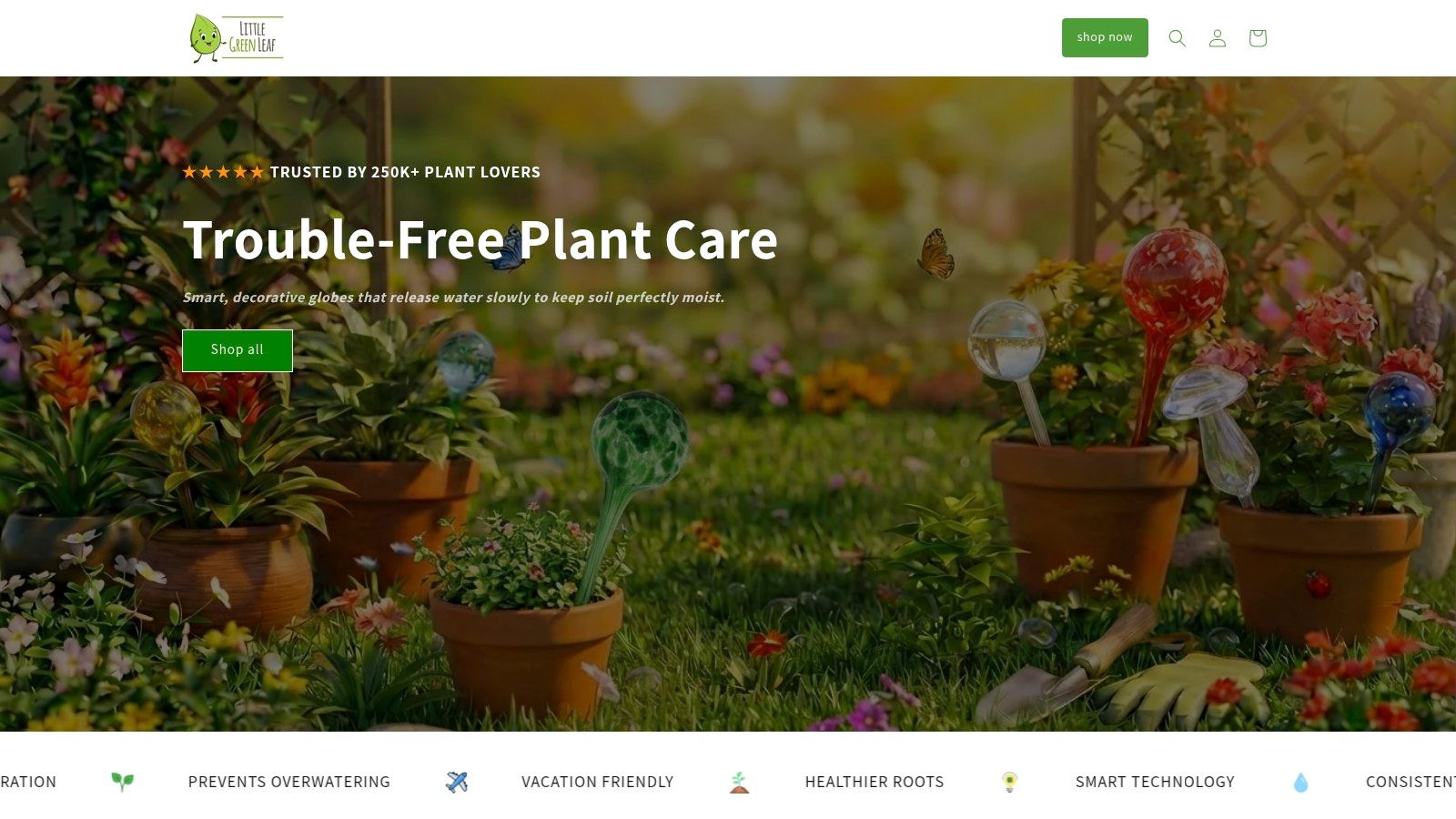
That is the point where the setup becomes useful instead of decorative. Little Green Leaf glass watering globes come in 100 ml, 200 ml, and 350 ml sizes, with clear and multicolor options, and the optional anti-clog sleeve can help in tighter soil.
Run the test while the plant stays in the same light and temperature it normally gets. Then check whether the root zone stays steady without turning muddy. If it does, you have a setup worth trusting for the trip.
Matching the Globe to Pot Size, Light, and Trip Length
More water is not automatically safer. Overwatering and underwatering can both produce stress, and the visible symptom can look similar enough to fool a hurried traveler. University guidance warns that excess moisture can cause leaf drop or yellowing, while dry soil at about 2 inches below the surface probably means watering is needed. University of Maryland Extension
Use the soil test before you leave
If the top layer still feels damp at that depth, don't add extra water just because the trip feels long. If it feels dry, water thoroughly, then insert the globe into soil that's already ready to receive moisture. Washington State University Extension also recommends checking the soil rather than following a fixed calendar, because plant size, pot size, temperature, humidity, and growth rate all change demand. Washington State University Extension
A sunny window or a warm outdoor basket will burn through water faster than a cool indoor corner. That's why the same globe can be generous in one room and inadequate in another. The answer is not to keep buying larger bulbs blindly, it's to match the reservoir to the drying conditions.
Clear rule: bigger fill is not always safer. In a cool, low-light room, it can keep the soil too wet.
Apartment dwellers should think in terms of environment first, then size. A small pot in bright light may need frequent checking, while a larger container in a cooler spot can tolerate a slower release. The smart move is to size the globe to the pot, then verify the result after the first day or two.
Troubleshooting Clogs, Fast Emptying, and Other Common Problems
When a globe behaves badly, the cause is usually mechanical, not mysterious. The fix is often a simple adjustment in angle, soil prep, or cleaning.
Fast fixes for common failures
- The globe empties too fast. The stem may be sitting at the wrong angle or admitting air too easily. Reinsert it slightly deeper and make sure the soil around the stem is firm enough to hold it steady.
- The globe barely drips. Dense soil may be blocking contact with the stem. Make a better pilot hole and avoid forcing the stem into hard, compacted mix.
- The glass looks cloudy or greenish. Algae can build up in clear glass if the globe sits in bright light. Empty it, rinse it, and keep it cleaner between uses.
- There's mineral residue inside. A simple wash and a gentler refill routine usually helps. Don't let buildup become the reason the stem clogs.
- The globe got dropped. Glass breaks if dropped, so treat refills and repositioning as a two-hand job.
These are practical ownership issues, not dealbreakers. A glass watering globe is still a low-tech tool, but low-tech still needs attention when soil is dense, water has residue, or the container gets moved around.
Answers to the Questions Travelers Ask Before Packing
The last-hour questions are usually the right ones. If the plant is already drought-prone, the setup needs to be chosen practically, not optimistically.
Can a globe cover two weeks?
Sometimes, yes, but only when the plant, pot, and room are a good match. Coverage shortens fast in thirsty plants, small pots, warm rooms, and fast-drying mixes, so the only honest answer is to test it at home first. How to keep plants watered while on vacation
Can you use more than one globe in one pot?
Yes, if the pot is large enough and the moisture is uneven across the container. One globe placed near one side of a broad planter may not reach the whole root zone, so a second reservoir can make the release more balanced.
What about succulents and cacti?
Skip globes for them. Those plants want the soil to dry out, and a device built to keep moisture coming will fight their basic watering needs.
Are outdoor containers and hanging baskets okay?
They can be, but summer heat and airflow speed up drying fast. For those containers, a globe is a useful short-trip tool, not a promise of set-and-forget watering.
Which globe size should most buyers start with?
Most buyers should start with 200 ml. That size is the most flexible middle ground for a typical houseplant, while 100 ml suits smaller pots and 350 ml suits medium planters or grouped containers.
The simplest next step is to check the match at home, then choose the pack size that fits how many pots need help. Little Green Leaf sells single globes and bundles for people who want to water more than one container, and the product page is the place to start if the plant already passed the calibration test.
Little Green Leaf makes hand-blown glass watering globes that release moisture gradually as the soil dries, which is exactly the kind of hands-off setup busy plant owners need before a trip. If the right fit is a 100 ml, 200 ml, or 350 ml globe, visit Little Green Leaf and choose the size that matches the pot, the plant, and the time away.