

Outdoor Plant Waterer Options That Keep Pots Happy
A Little Green Leaf globe releases water slowly as the soil dries, and one fill lasts up to about two weeks depending on pot size, soil, and heat. In a windy patio pot or a hanging basket, it usually lasts less time, while a larger 350 ml globe can stretch the refill window more than a small one.
Table of Contents
- What an Outdoor Plant Waterer Does for Patio Pots
- How Self Watering Globes Release Water Outdoors
- Comparing Popular Outdoor Watering Options
- How Long One Fill Lasts in Sun Wind and Small Pots
- How to Set Up a Little Green Leaf Globe Outside
- Plants to Skip and Fixes for Clogs and Fast Emptying
- Outdoor Plant Waterer Questions Answered
What an Outdoor Plant Waterer Does for Patio Pots
A patio pot can look fine in the morning and be bone dry by late afternoon. That's the problem an outdoor plant waterer is meant to solve: it keeps moisture near the root zone between hand waterings, so the pot is not relying on rain or a perfect schedule. For a busy owner, that can mean fewer wilted stems and fewer after-work rescue waterings.
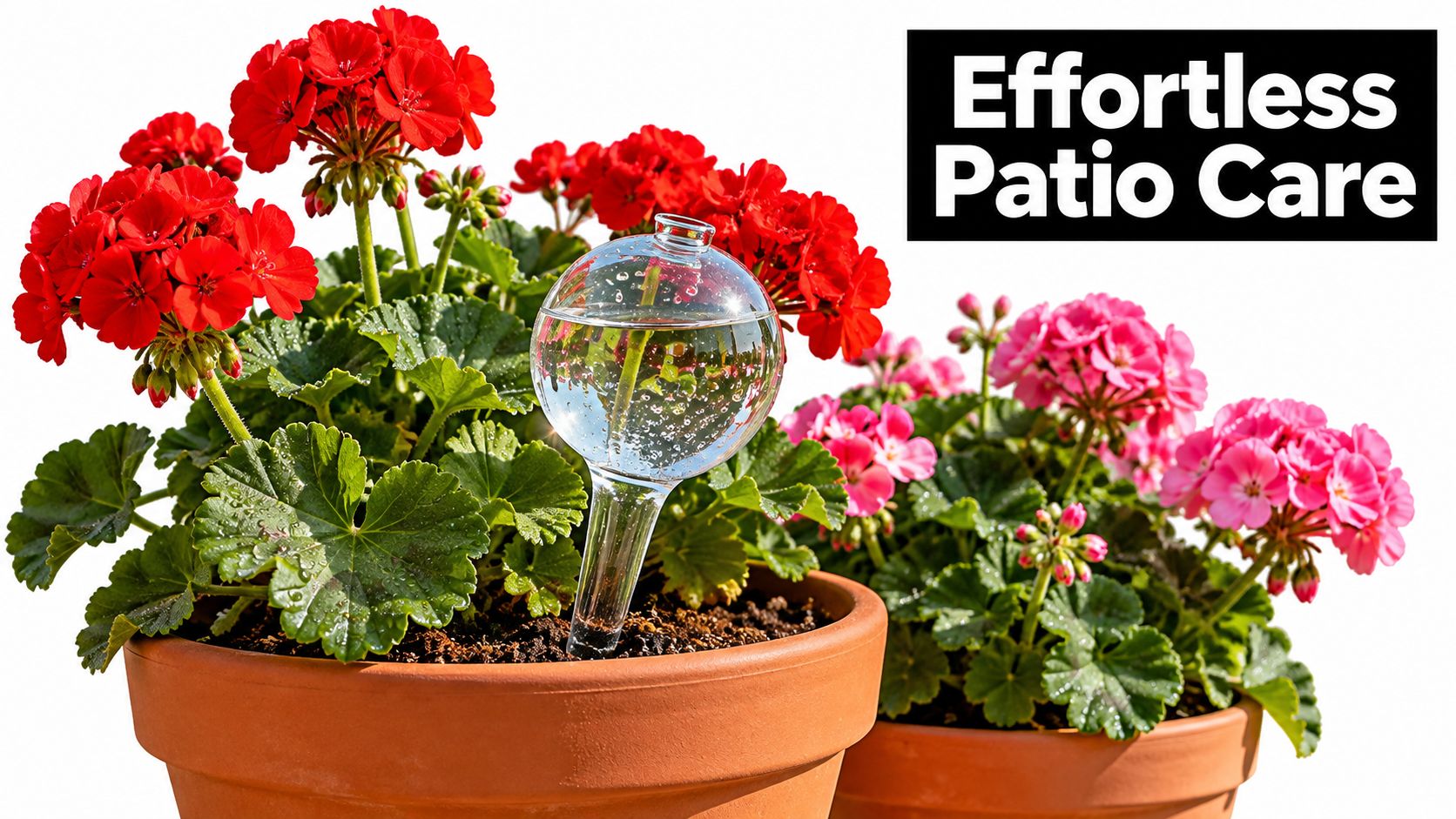
A glass globe is a simple small-scale irrigation aid. Fill the bulb, push the stem into moist soil, and it releases water slowly as the soil dries, so the root zone gets a steadier drink between manual checks. In patio containers, balconies, and hanging baskets, that steadier supply matters because container soil dries from the top down and the smallest pots lose moisture fastest.
That is why patio gardeners often need more than a fixed schedule. The FAO notes that irrigation matters because water has to reach the right place at the right time, and its overview of agricultural water management explains the value of controlled water delivery in dry or variable conditions (FAO irrigation overview). For general container planning, Dublin patio gardening tips can also help when pots sit in sun and wind.
Practical rule: if a container dries quickly but still has a healthy drainage hole, a globe can work alongside regular soil checks.
The useful question is not whether one bulb can water every plant. It is whether a pot needs a small reservoir between checks. For a traveler, a forgetful beginner, or someone with a sun-baked balcony, the answer is often yes.
How Self Watering Globes Release Water Outdoors
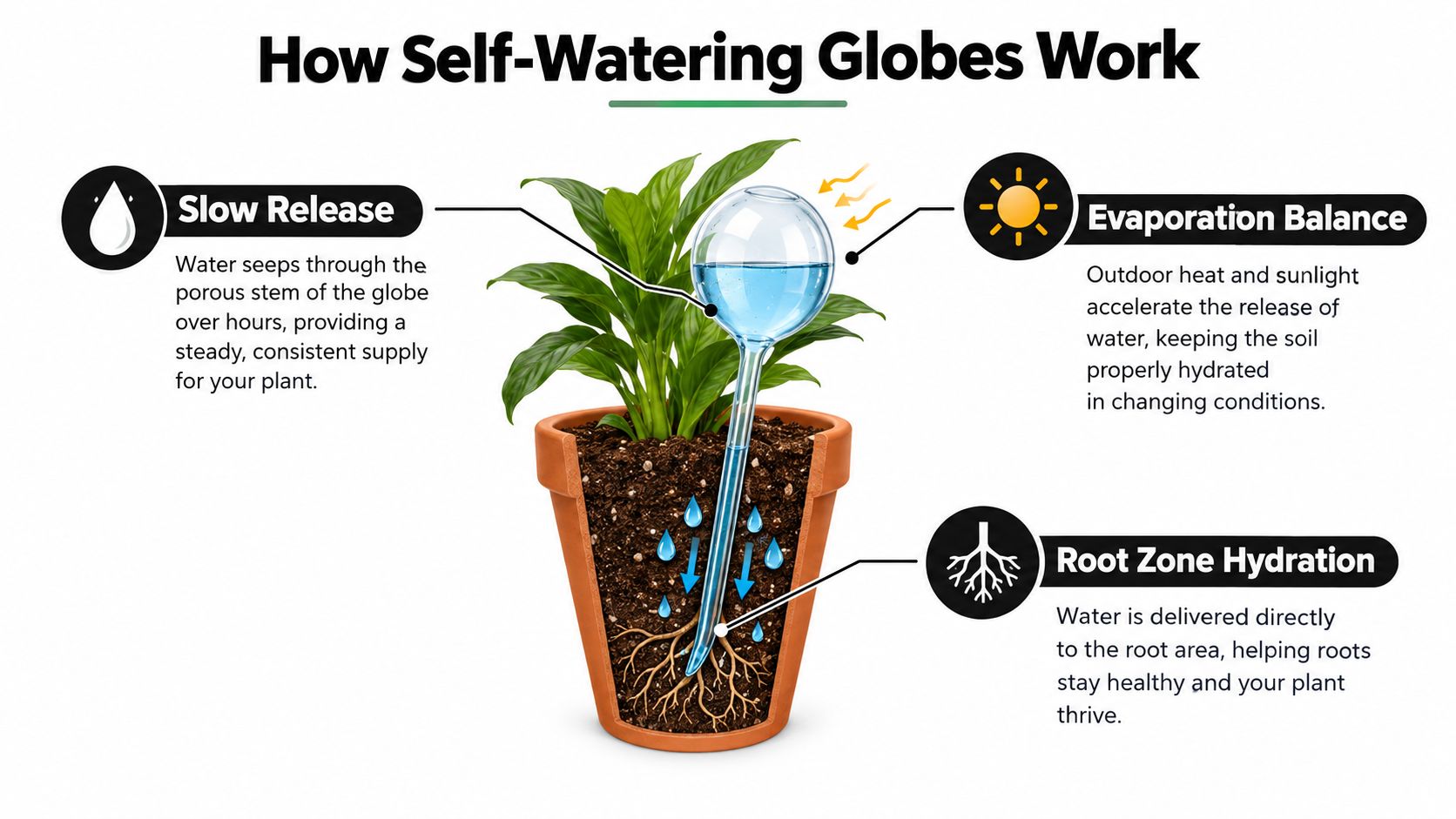
A globe releases water the way a small reservoir does. Fill the bulb, set the stem into moist soil, and water moves out slowly as the pot dries and the soil draws moisture from the stem area. In a patio pot, that steady trickle matters because container soil dries from the top down, while wind and sun pull moisture out faster than many people expect.
The FAO describes localized watering as slow delivery through emitters, with drip emitters typically around 2 to 20 liters per hour, and notes that water spreads through the root zone by gravity and capillary action (FAO localized watering guidance). A globe follows the same basic principle at container scale, but it uses a glass reservoir instead of tubing. For a fuller walkthrough of the mechanism, see how self-watering globes work. The soil takes in water gradually instead of getting flooded all at once.
A concrete example helps. In a 30 cm terracotta pot in July sun, a 200 ml bulb may empty in about two to three days. The same bulb in a shaded 40 cm planter can stretch past a week. That difference comes from pot size, heat, airflow, and how fast the mix dries.
What makes the flow speed up or slow down
Hot air, strong wind, and a dry potting mix pull water out faster. Dense soil that already holds moisture slows the flow, and a larger container usually gives the water more room to move before the bulb empties.
A globe should go into moist soil, not dry crusty mix. Dry mix can block the first release pattern, while very wet mix can slow it so much that the pot barely drinks.
Placement matters too. The stem should sit near the root zone, not pressed against the main stem, and the container still needs an open drainage hole. If water runs straight through the pot or pools at the surface, the pot is moving water too fast or the soil is not taking it in evenly.
That is why outdoor globes are not timers. They are pressure-sensitive reservoirs that respond to the pot's condition, which is useful on a sheltered balcony one week and less useful during a heat spell the next.
Comparing Popular Outdoor Watering Options
A patio pot rarely needs the same watering setup as a long row of containers. A globe helps when you want a simple reservoir for one pot or a small cluster, while a larger irrigation setup makes more sense once the number of containers starts to outgrow your refill patience. If you are sorting through choices, a guide to choosing between watering devices can help you match the method to the job.
| Option | How long it lasts | Setup | Refill effort | Clogging | Works outdoors | Cost per plant |
|---|---|---|---|---|---|---|
| Globe | Up to about two weeks, depending on pot size, soil, heat, and plant thirst | Simple, but the stem may need a pilot hole in denser soil | Moderate, because the bulb must be refilled | Can clog if soil debris gets into the stem | Yes, especially for pots and hanging baskets | Low to moderate, depending on pack size |
| Spike | Usually shorter and more variable for a small container | Usually simple | Moderate to frequent | Can clog in finer mix | Sometimes, but performance varies | Low |
| Drip | Can run longer because it connects to a larger water source | More involved | Lower once installed | Can clog if parts aren't kept clear | Yes, especially for grouped containers | Higher upfront |
| Self-watering pot | Depends on reservoir size and plant demand | Requires buying the pot itself | Moderate | Lower risk inside the reservoir, but not zero | Yes, if the pot suits the space | Higher upfront |
The trade-off is control. A globe is easy to place, easy to move, and easy to understand. A larger reservoir system can carry more water, but it asks for more setup and usually stays where it was installed. For one patio pot, the globe fits neatly into daily care. For thirsty containers spread across a deck, a plumbed reservoir often saves more trips with the watering can.
Little Green Leaf's hand-blown glass globes sit in that middle ground. They come in 100 ml, 200 ml, and 350 ml sizes, sold in 1, 2, 4, and 6 packs, with multicolor and clear rainbow options, and optional plastic anti-clog sleeves for the stem. That makes them a practical choice for people who want a movable reservoir without committing to fixed tubing or a full pot swap.
For setup choices, the details matter. A globe works best when the soil can take in water gradually, and the stem stays clear enough for a steady release. A crowded container group may still need a larger system, but a single pot, or a few pots that you move around by hand, can usually be managed with a globe and a little observation.
How Long One Fill Lasts in Sun Wind and Small Pots
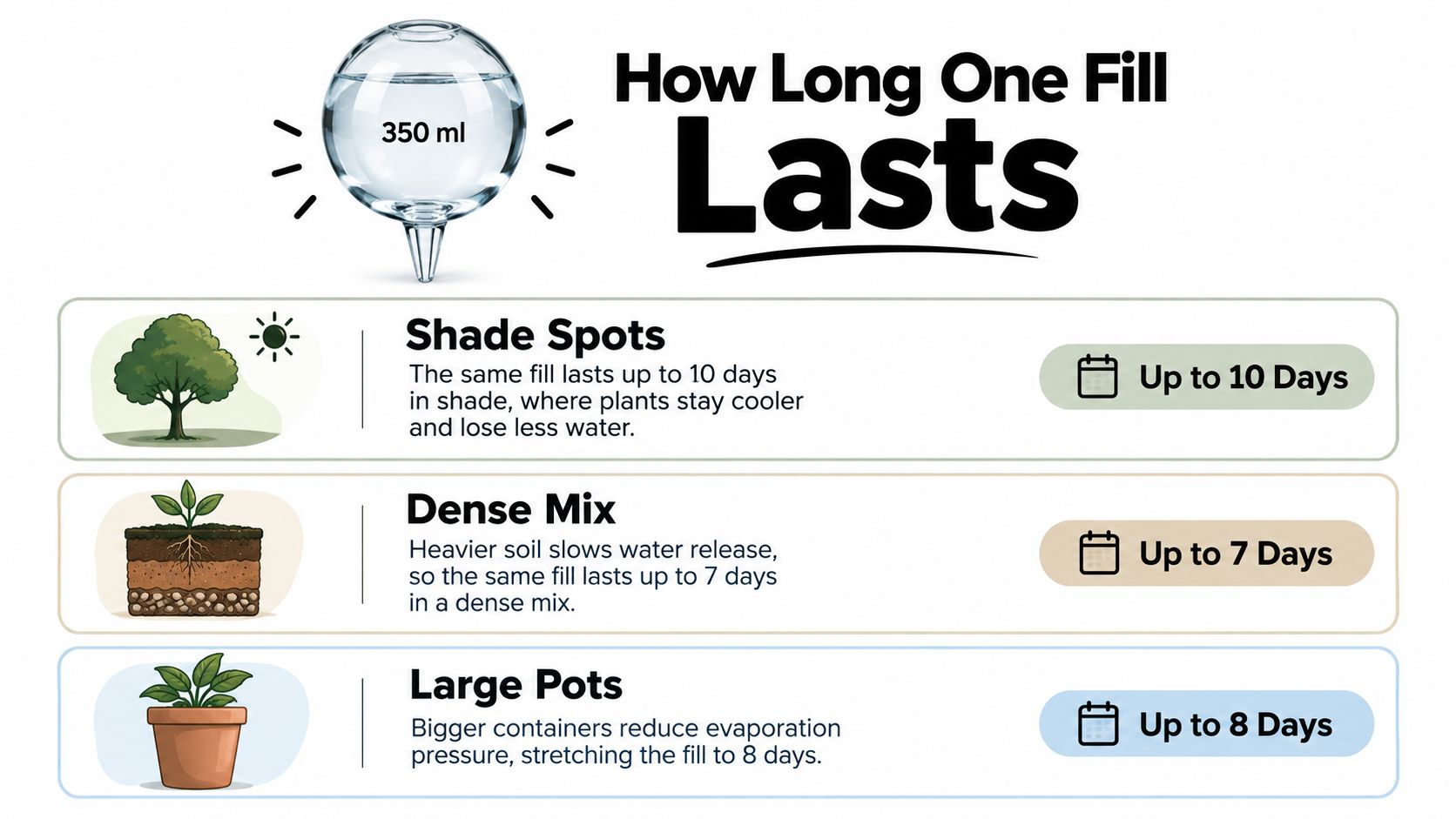
A globe lasts longer in a pot that drinks slowly and much less time in one that dries fast. Outdoors, that difference can be stark. A shaded container in still air may sip water for a while, while the same pot in full sun and wind can empty quickly.
Runtime is best treated as a range, not a promise. Pot size, soil density, temperature, exposure, and the plant's thirst all shape how fast water moves through the stem. A globe that feels generous in a sheltered corner can feel brief on a hot balcony.
Which globe size to start with
A 100 ml globe is a sensible starting point for small pots that only need light support between checks. A 200 ml globe fits many medium containers that dry at a moderate pace. A 350 ml globe gives the widest refill window for larger planters, stronger sun, or a short time away from home.
Hotter, drier weather also increases plant demand, because more moisture is pulled from the soil and leaf surfaces. That matters outdoors, where sun and wind can speed drying far more than indoor air ever would. A globe helps, but it still works within those limits.
For a closer look at refill behavior, our glass watering globe guide covers the practical differences in stem flow and runtime.
How to judge the first test
The first test should be simple. Fill the globe, place it in a thoroughly watered pot, then check the soil and refill timing over the next few days in the outdoor conditions the plant lives in. A small pot in strong sun and wind will almost always give a shorter runtime than the same globe in shade.
Good sign: the soil near the stem feels evenly moist without pooling.
Bad sign: the globe empties fast and water runs out of the drainage hole, which usually means the release rate is too high for that pot or the mix is not taking water evenly.
A 350 ml globe earns attention outdoors because it leaves more margin for heat, wind, and thirsty containers than the smaller sizes. It still is not a fixed-day guarantee, and that is normal for a reservoir sitting in living soil.
How to Set Up a Little Green Leaf Globe Outside
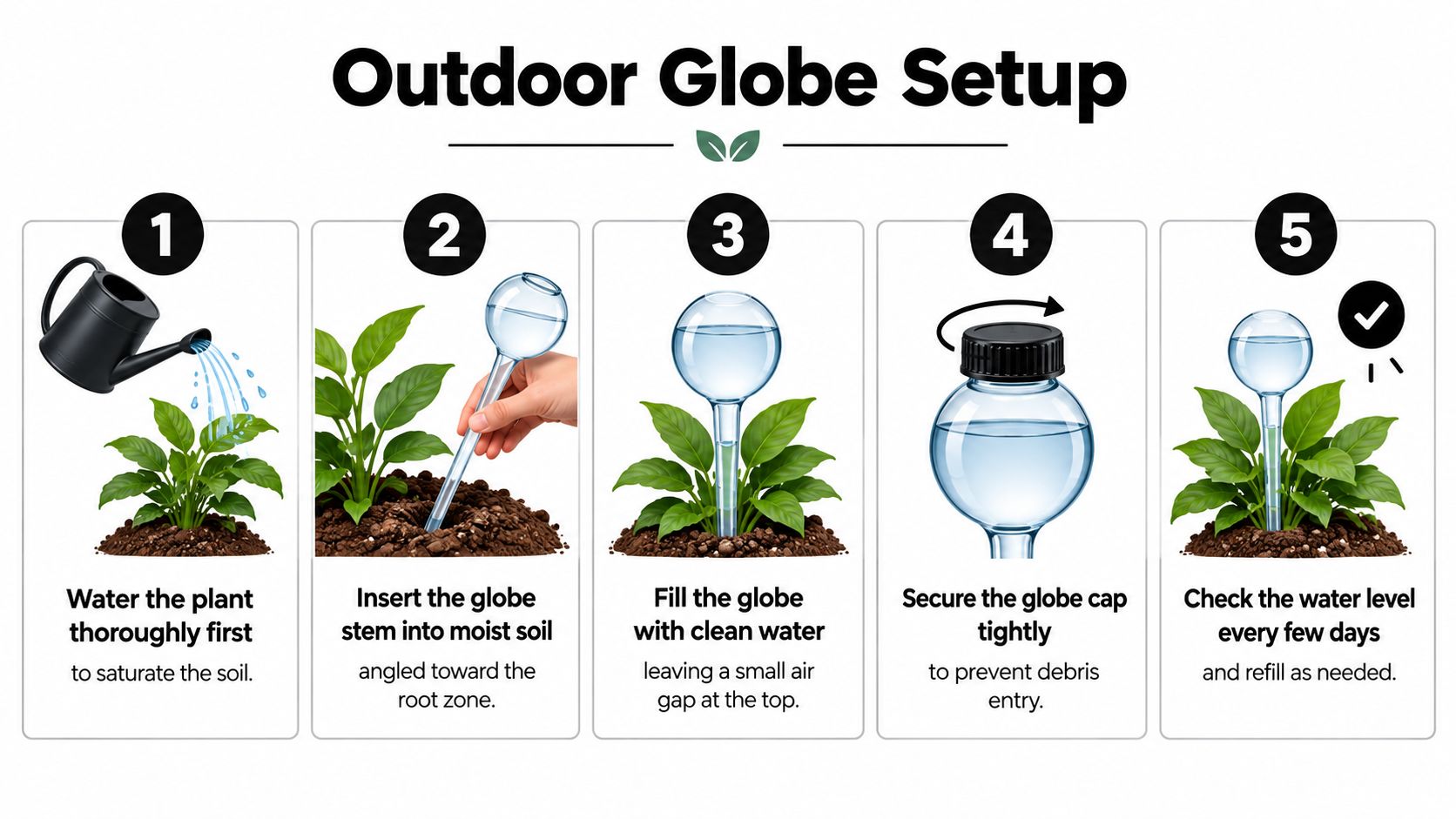
Start with soil that is already evenly moist. If the potting mix is dry and water-repellent, the globe can look faulty when the real issue is that the container never took the first watering evenly.
Dense mix needs a little help before the stem goes in. Use a pencil or similar tool to make a pilot hole, so the glass stem does not have to force its way through compact soil. That lowers the risk of strain on the bulb and helps the reservoir reach the root zone.
Fill the globe fully, then tilt it slightly as you insert it. A small angle places the stem where roots can use the water, rather than pressing it straight against the plant's main stem. In patio pots, that setup matters because container soil behaves like a small tank, weather pulls moisture out faster than people expect, and the globe only acts as a supplement, not a full irrigation system.
Keep debris out of the opening and watch the first refill closely. If the soil tends to clog stems, use the optional anti-clog sleeve. Then check the pot after about two days in its real outdoor spot. That first test shows whether the pot is draining water too quickly, too slowly, or at a pace that fits the plant.
If you want the product details for the globe itself, the homepage is Little Green Leaf globes.
Plants to Skip and Fixes for Clogs and Fast Emptying
Succulents and cacti usually aren't a match for a globe. They need a wet-dry cycle, where the root ball gets soaked, drained, and then allowed to dry fully before the next watering, so a device that keeps soil steadily moist works against that rhythm (Iowa State succulent guidance). Very large pots can also outrun a single small globe, especially in heat, because one reservoir can't always keep enough of the container evenly supplied.
Glass needs respect too. If dropped, it can break, so outdoor handling should be careful, especially on a patio or balcony where hard surfaces are common. Dense soil also needs a pilot hole, which reduces stem strain and helps avoid a cracked bulb during insertion.
When a globe empties too fast
If water disappears quickly, the soil may be hydrophobic or the site may be hotter and windier than expected. In that case, re-wet the soil more slowly, then retest under the same conditions. A globe can't fix a pot that's baking in full sun and exposed to strong wind without more frequent refills.
When water barely moves
If the stem clogs or the globe barely drains, check for soil debris at the stem opening and make sure the insertion point isn't packed too tightly. An anti-clog sleeve can help keep debris out of the stem area, and a second test after reinstalling tells more than guessing.
Troubleshooting rule: if the drainage hole is blocked, the globe is not the problem. The container has to be able to breathe and drain, or the root zone stays too wet.
Avoid the temptation to treat the globe as a cure-all. It's a steady helper for moisture-needing containers, not a substitute for drainage, container size matching, or the right plant choice.
Outdoor Plant Waterer Questions Answered
Can an outdoor plant waterer work on a rainy balcony?
Yes, but only as a supplement. Rain-exposed containers can still dry unevenly if wind and sun hit one side harder than the other, so the globe helps stabilize moisture between checks. Sheltered balconies usually give the most predictable results because the globe isn't fighting constant washout.
How long can a globe water plants while away?
It can last up to about two weeks, but that's a ceiling, not a promise. Smaller pots, hotter weather, thirsty plants, and more porous mixes shorten the run time, while a 350 ml bulb gives more room than the smaller sizes.
What size globe should go with a patio pot?
The answer depends on the container's volume and exposure, not just the plant's name. A 100 ml globe suits smaller pots, 200 ml fits many medium containers, and 350 ml is the practical choice when a pot sits in more sun, wind, or heat.
Is a globe a good gift for a plant lover?
Yes, especially for someone who forgets to water, travels, or keeps containers on a patio. It's a useful gift because it solves a real watering problem without requiring batteries, apps, or a complicated setup.
Should a globe replace hand watering entirely?
No. It works best as a reservoir between manual waterings, especially outdoors where weather changes fast. The plant still needs regular checking, because the same globe can behave differently in shade, wind, or heat.
Little Green Leaf makes hand-blown glass globes that give outdoor pots a steadier drink without timers or batteries. If a patio planter, hanging basket, or travel week keeps throwing off the watering routine, visit Little Green Leaf to see the 100 ml, 200 ml, and 350 ml options and choose the globe that fits the container.