

Mushroom Plant Waterer: How Long One Fill Really Lasts
A mushroom plant waterer lasts up to about two weeks per fill, with less time for small pots, thirsty plants, warm rooms and small globes, and more time for the 350 ml size in a large pot. The counterintuitive part is that the smallest pots, which look easiest to keep going, usually empty first. They hold less soil, so they dry and pull water faster than a large planter with a bigger, slower-changing root zone.
Table of Contents
- How long does one fill last, and which globe size fits my pot?
- How a Mushroom Plant Waterer Releases Water
- Mushroom Waterers vs Spikes, Drip and Self-Watering Pots
- Which Plants and Pots a Mushroom Waterer Suits
- How to Spot Each
- How do I set up a globe and stop the stem clogging?
- How long can plants stay on a globe during a trip?
- Mushroom plant waterer questions answered
How long does one fill last, and which globe size fits my pot?
One fill lasts up to about two weeks, and that figure depends on pot size, soil, room temperature and the plant itself. A fixed promise in days doesn't survive contact with a sunny window, a fast-draining mix or a thirsty plant, so the first fill works best as a calibration test.
Container size explains much of the spread. Oklahoma State University Extension's houseplant care guide reports that small pots may require watering every 2-3 days, while large pots may need water only every 7-14 days, and that smaller pots dry faster and distribute water less uniformly. That's the starting point for choosing a size, not the reservoir label alone.
Expected fill by pot situation
| Pot situation | Unaided watering interval | Globe size to try | What one fill does |
|---|---|---|---|
| Small pot or hanging basket, fast-drying soil | every 2-3 days | 100 ml | Shortest fills; check and refill often |
| Medium pot, standard houseplant mix | between the small and large intervals | 200 ml | Falls between the other two; confirm on the first fill |
| Large pot or planter | every 7-14 days | 350 ml | Longest fills, up to about two weeks |
Little Green Leaf globes come in 100 ml, 200 ml and 350 ml sizes, and in a mixed size option, which makes the matching exercise practical for mixed shelves. The Mushroom, 200 ml, 4 pack costs $24.95 USD, a common middle setup for standard houseplant pots.
What shortens or lengthens a fill
- Shorter fills: A 100 ml globe on a thirsty plant, a warm room or sunny window, and a fast-draining mix all pull water quickly.
- Longer fills: The 350 ml size, a large pot with denser soil, a cooler room and a slow-growing plant stretch the interval.
- Insertion angle: Placement changes release speed, so the same globe behaves differently in the same pot at a different angle.
The plant pot size guide helps readers place an unfamiliar container in the right row before guessing. Pot diameter alone still isn't enough. Soil depth, root density and how much leaf area the plant carries all change demand.
First-fill check: Note the day the globe empties and whether soil at the insertion point is still damp.
If the globe empties well before the expected interval, the response is to move up a size or add a second globe. If soil stays wet while water remains, the response is to move down a size or pause. The refill rule is simple: refill when the globe is empty and the soil is dry near the surface.
How a Mushroom Plant Waterer Releases Water
A mushroom plant waterer works more like a slow sponge that gives up water when surrounding material pulls on it than like a tap on a timer. There's no clock and no daily dose. Release speeds up when soil dries and slows when moisture returns.
The sequence is straightforward. Water fills the bulb and travels down the long stem into soil. As soil dries, air rises through the stem, displaces water, and water flows into the root zone. As soil moisture returns, airflow slows and release drops without any input.
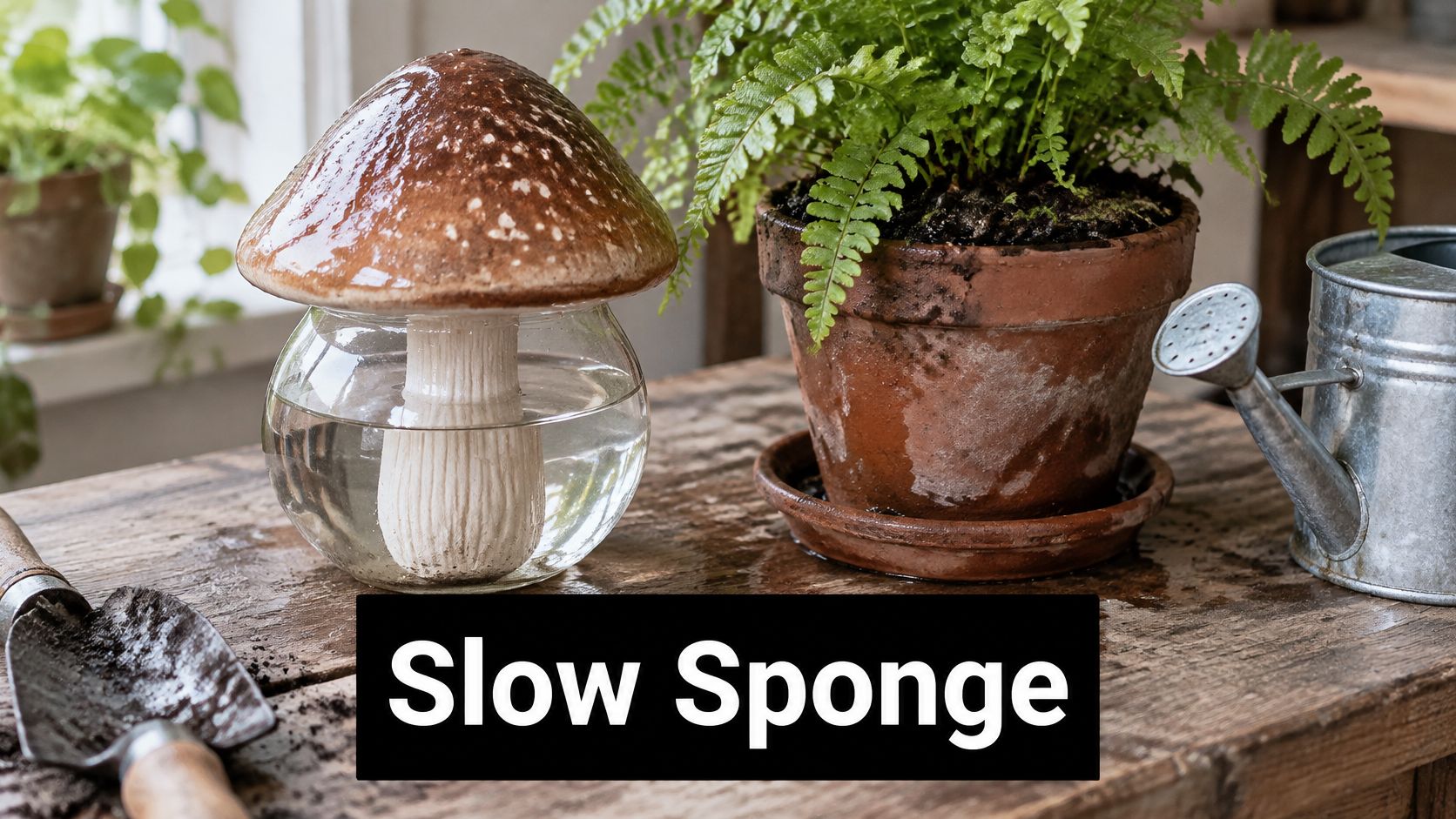
Underneath the decorative shape sits capillary movement, where water travels through narrow spaces in soil or a porous pathway and moves gradually toward the root zone instead of arriving all at once. Self-watering containers use the same general concept through a reservoir and wick, with water drawn by capillary action, as described in Oklahoma State University Extension's houseplant care fact sheet. The mushroom form is therefore a small, decorative form of controlled irrigation rather than a separate technology.
Why steady does not mean saturated
Roots need both moisture and oxygen. Continuously saturated soil restricts air exchange, and excess water reduces oxygen in the soil, injures fine roots, and can make plants wilt or yellow even when the soil is wet. A globe aims for moisture moderation, reducing sharp swings between dry soil and sudden heavy watering while preserving drainage and oxygen around roots.
Insertion angle and depth change contact with soil and the speed of release. A steeper insertion makes air exchange harder and slows the drip, while a shallower angle lets water move more easily. Potting medium, container material, humidity, temperature and growth stage also change watering needs.
The limits matter. A globe can't check drainage, notice a blocked outlet below the soil line, or judge whether roots need a dry interval. It doesn't replace a finger test several centimetres down. Treat it as a supplemental reservoir between normal waterings, especially for routine care or short absences, and the mechanism makes sense.
Mushroom Waterers vs Spikes, Drip and Self-Watering Pots
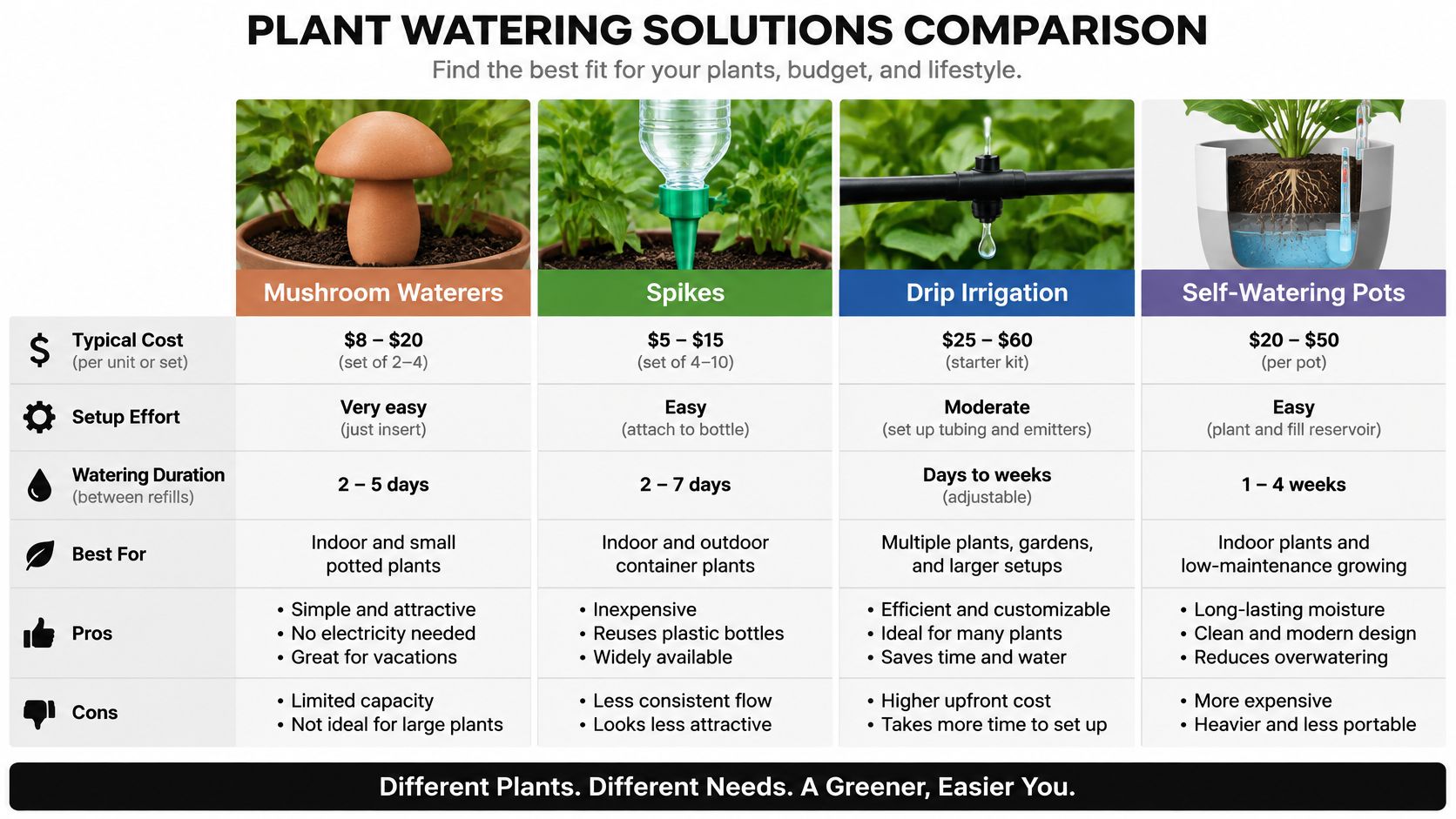
| Option | Runtime per fill | Setup | Clogging risk | Outdoor use |
|---|---|---|---|---|
| Mushroom globe | up to about two weeks; less in small pots or heat | fill, make a pilot hole if soil is dense, insert stem | possible in dense soil; stem sleeves help | good in containers and baskets; watch heat |
| Terracotta spike | set by reservoir size and soil pull | fill and push into soil | low, porous clay | good in pots; set by pot size |
| Drip irrigation | continuous while connected | tubing, emitters and often a timer | emitters can clog | suits beds and yards more than single pots |
| Self-watering pot | until the built-in reservoir is empty | plant directly in the pot | low | good for permanent containers |
Mushroom globes
A globe is cheap per plant, decorative and suited to one plant at a time, with no tubing, batteries or timer. The trade-off is a narrow stem that needs a pilot hole in dense soil and glass that needs gentle handling. It wins with one houseplant, a short trip, or a hanging basket that dries quickly.
Terracotta spikes
Spikes are porous clay that wick water through their walls and rarely clog, since there's no small open outlet to pack with soil. Each one serves a single point in the pot, so wide planters can stay uneven. Readers weighing that option directly can start with the guide to terracotta watering spikes before committing a shelf of plants to either method.
Drip irrigation
Drip suits many plants or garden beds because one line feeds multiple emitters on a schedule. That strength becomes overhead for a single pot, since tubing and a timer add setup, cost and places to leak. Emitters can clog too, especially with hard water or debris in the line.
Self-watering pots
A self-watering pot suits a plant that stays in one place for months because the reservoir is built in and refills happen in one spot. The catch is commitment. Every plant needs its own special pot, and repotting into a larger size means buying the system again.
One plant and a short trip points to a globe. Many plants on one schedule points to drip. A permanent feature plant points to a self-watering pot.
A globe loses where many plants need watering at once, very large pots exceed one reservoir, or plants must dry out between waterings. Naming those losses makes the wins credible. Match the tool to the number of plants and the length of absence first, then compare purchase price.
Which Plants and Pots a Mushroom Waterer Suits
The plants that should not use a globe come first, because that's where damage happens. Succulents and cacti need a wet-dry cycle, not continuously moist soil. Iowa State University Extension's guide to growing succulents indoors says succulents should be watered thoroughly, allowed to drain, and then left to dry completely, with a typical starting interval of once every 2-3 weeks, depending on conditions.
A globe releases water gradually as soil dries, which can keep those plants wet too long and conflict with their basic requirement. The same caution covers any plant that must dry out fully between waterings. Discovery mode doesn't suit them either, since root decline often shows above ground only after weeks.
Good fits
- Tropical houseplants: Species that like even moisture benefit most from small, regular top-ups.
- Small pots and hanging baskets: Fast-drying setups gain the most from a reserve sitting in the soil.
- Outdoor containers in summer: Baskets and pots in full sun dry fastest, though heat shortens each fill and soil needs checking every few days.
- Plants left during travel: A filled globe covers ordinary gaps between waterings without a house sitter.
Owners planning tougher outdoor planting alongside containers can also browse hardy plants for damp winters from Premier Gardens as a seasonal reference. Indoor globes and outdoor beds solve different problems, and keeping that boundary clear prevents misuse.
Poor fits and the pre-buy checklist
Large pots fed by a single small globe rarely stay evenly moist, and dense, peat-heavy or compacted mixes may not maintain good contact around the stem. A globe also can't fix a pot without drainage, because standing water still rots roots underneath a tidy-looking surface.
Before buying, four questions settle most cases. Does the plant like moist soil? Does the pot drain freely? Is the mix loose enough for the stem to enter without force? Is the pot size within the globe's range? Four yes answers make a sensible trial.
How to Spot Each
Overwatering is at least as serious as underwatering, and the two can look deceptively similar above the soil. Both produce wilting and yellowing, so leaf appearance alone misleads. The soil, checked directly, separates one problem from the other.
Watering symptoms, causes and first fixes
| Symptom | Likely cause | First fix |
|---|---|---|
| Yellow leaves over soggy soil | overwatering, roots short of oxygen | remove the globe and let soil dry near the surface |
| Wilting while soil is wet | overwatering, root damage | pause the globe and check drainage |
| Crispy leaf edges and soil pulling from the pot | underwatering | water thoroughly, then fit a globe |
| Drooping leaves in dry soil | underwatering | refill the globe or use a larger size |
The University of Maryland Extension guide to watering indoor plants reports that a large percentage of houseplants are lost because of overwatering and underwatering, and that excess moisture can produce wilting, yellowing, leaf drop and scorching. The standard practice that follows is simple: water most houseplants thoroughly, let the potting medium become nearly dry before irrigating again, and never leave a plant standing in water, since saturated soil invites root rot.
Why the same leaf tells two stories
A wilted plant in wet soil is a plant whose roots have stopped drinking. Damaged roots can't take up what's already there, so leaves droop while the mix stays soggy and may smell sour. The effect works like a kinked straw: the glass stays full, yet nothing reaches the top. Adding water then deepens the cause. Drooping over dry, shrunken soil, by contrast, points to genuine thirst.
- Wet soil plus decline: Stop adding water, empty the saucer, and let air back into the mix.
- Dry soil plus decline: Water thoroughly until excess drains, then use a globe to slow the next dry-down.
- Unclear case: Check moisture at root depth before deciding anything.
Soil moisture at root depth outranks leaf appearance every time, because leaves report both drought and root failure in similar ways.
A globe evens moisture out by releasing water only as soil dries, which avoids big swings between soggy and bone dry. That steadiness suits beginners, travellers and busy owners who tend to alternate between forgetting and flooding. It removes the forgetting problem while softening the recovery watering that often follows.
The limit is firm. Controlled delivery still depends on drainage and observation, and a 100 ml reservoir will not last the same number of days in every pot or room. Treat the first fill as a calibration run: note the days it covers in your own pot, soil and room, then let that result set your rhythm rather than any fixed schedule. If the lower root zone stays wet between fills, pause the globe. Pot size, soil composition, humidity, temperature, species and season all shift the timing, so the device supplies a measured reserve while you supply the diagnosis.
How do I set up a globe and stop the stem clogging?
A mushroom plant waterer fails in one of two ways: it drains too fast, or the stem plugs and nothing moves at all. Both problems start at setup, so the work begins with the pot rather than the bulb. Water travels through potting media by gravity and capillarity, with gravity pulling it downward and capillary forces drawing it sideways and upward through smaller pores, as the Iowa State Extension watering guide explains. The globe itself is a localized reservoir, one that works alongside drainage and regular soil inspection.
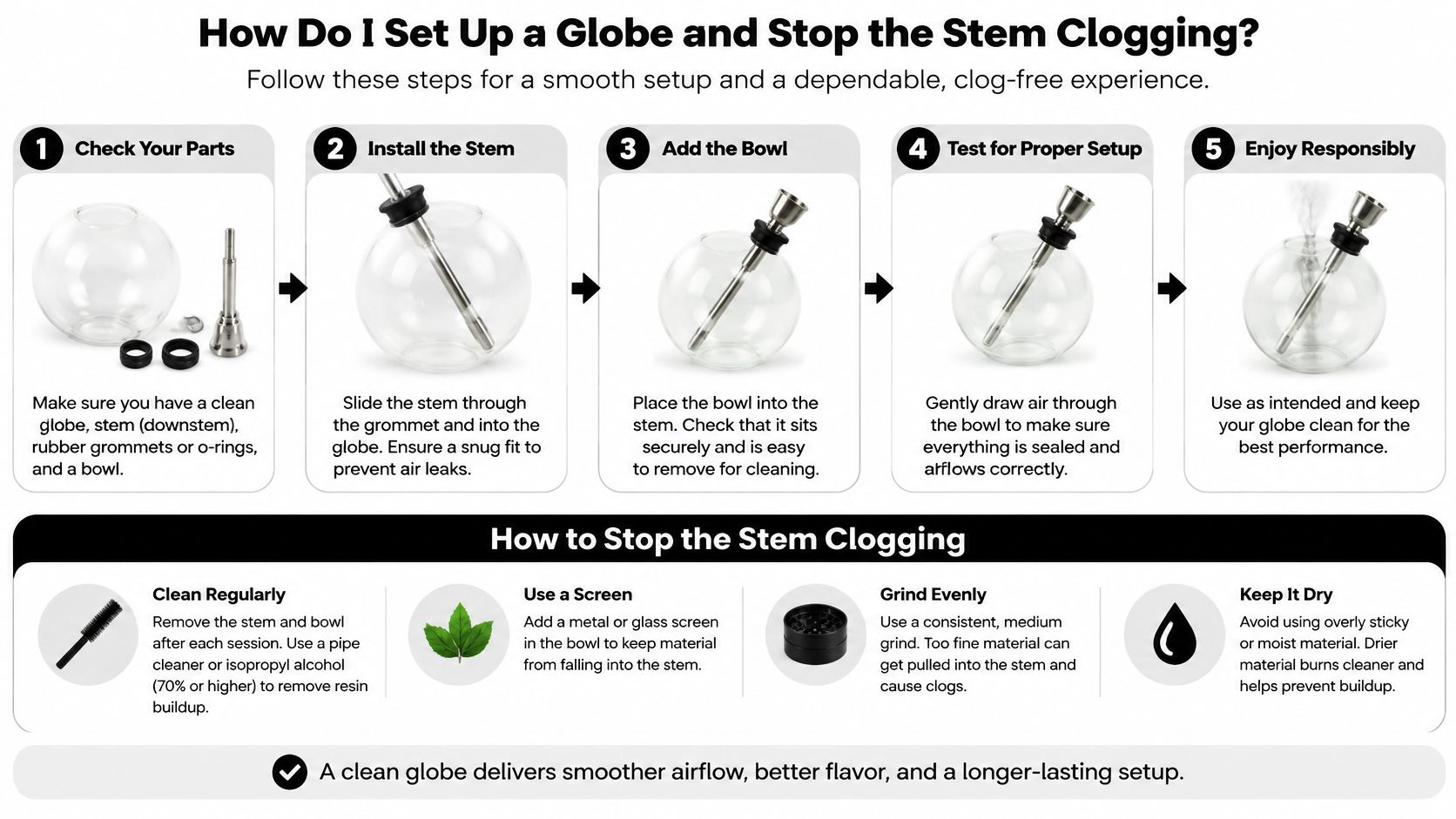
How to set up a Little Green Leaf globe for a standard houseplant
The basic routine is three moves: fill the globe with water, push the stem into the soil, and let the pot take over. Five extra minutes at the start make that first fill far more accurate.
- Water the plant thoroughly first. Moist soil stops a dry mix from draining the bulb in the first hours and gives released water somewhere to spread.
- Make a pilot hole in dense soil. A pencil opens a path so the stem enters without bending or forcing. Loose mixes usually need no hole.
- Fill the bulb with clean water. Clean water slows residue build-up inside the narrow stem.
- Choose the insertion angle. A stem set near vertical, around 90 degrees, slows the drip because air escapes less easily. Tilting toward 45 degrees lets water release faster, so the angle works like a built-in tap.
- Check after 24 to 48 hours. Note the water remaining and compare moisture at the insertion point with the far side of the pot. A large difference means water isn't spreading, so depth, angle or globe size needs adjusting.
Porous, lightweight mixes redistribute water quickly. Dense media hold more but compact easily and squeeze out air-filled pores. Excess water should always drain freely, and no plant should stand in a full saucer for long. Give the mix a quick moisture check before each refill, and pause the globe or reduce insertion depth if the lower root zone stays wet.
Preventing and clearing clogs
An optional tip cover fits over the stem and keeps soil out of the outlet, which matters most in dense mixes. Adapters do a similar job, improving flow control and easing insertion across different soil types. When flow does slow, rinsing the bulb and stem with warm water and a thin brush clears most build-up. Glass breaks if dropped, so gentle insertion and padded storage for spares count as basic care rather than fine print.
A working setup empties gradually and leaves soil damp without standing water. If yours behaves differently after the first-fill check, the fix is almost always depth, angle or globe size.
How long can plants stay on a globe during a trip?
One fill is the planning unit, and one fill lasts up to about two weeks at most, so one week is the realistic case for most setups. Trip planning starts from what the first-fill check showed at home, not from the maximum printed anywhere.
One week away
Filling the globe on departure day works for most standard pots. A 200 ml or 350 ml globe in a standard or large pot usually covers seven days, provided the bulb isn't already low before departure. Watering thoroughly first and emptying the saucer matters, since no plant should leave home standing in water.
Two weeks away
Two weeks sits at the top of the range, so the 350 ml size in a large pot is the credible option. Soil should be evenly damp before leaving, with no dry pockets around the stem. The vacation plant watering guide covers the wider pre-trip routine for households timing several plants at once.
Longer than two weeks
One globe can't be assumed to cover a longer absence. A mid-trip refill from a neighbour or a second globe in the same pot closes the gap. Small pots deserve extra caution, since a pot that normally needs water every few days will not stretch to a fortnight on a small reservoir alone.
On return, testing soil several centimetres down comes before touching the globe. Wet soil means the globe comes out until the mix dries near the surface. Succulents and cacti should not be left on a globe at all, however long the trip, since their dry interval is the whole point of their care.
Mushroom plant waterer questions answered
Will a mushroom plant waterer overwater my houseplant?
It can, if the pot doesn't drain. Standing water rots roots regardless of how slowly the water arrived. The globe itself regulates fairly well: as the soil dries, oxygen flows through the stem and displaces water into the root zone, and once moisture levels return, airflow slows and release reduces on its own. Checking the soil several centimetres down before each refill, and pausing the globe when the lower root zone stays wet, keeps the risk low.
Does the mushroom shape change how the globe works?
No. The mushroom cap is decorative, and release depends on the reservoir, the stem, the soil and the room. A round globe and a mushroom globe of equal volume behave the same way in the same pot. Insertion angle affects the drip far more than shape does. A globe at a 90 degree angle holds air in and releases water slowly, while a 45 degree angle lets water out more easily, so angle is one more dial to adjust during the first-fill check.
Can a plant watering globe break?
Yes. Glass breaks if dropped, and forcing a stem into compacted soil stresses the narrowest point. A pilot hole, gentle insertion and padded storage for spare globes prevent most breakages.
Are plant watering globes good gifts for plant lovers?
They suit people with houseplants who travel or forget to water, and the globes come in multicolor, clear rainbow and mushroom designs across 100 ml, 200 ml and 350 ml sizes, including a mixed size option. Hand-blown glass makes the gift decorative as well as useful, which suits apartment and office plant owners especially well. One honest limit: a globe is a watering aid rather than a full care substitute, so it fits recipients whose plants like steady moisture.
Little Green Leaf offers hand-blown glass watering globes in 100 ml, 200 ml and 350 ml, including the mushroom design, for houseplants, hanging baskets and outdoor containers that dry out between waterings. Readers who have matched a globe size to a pot and run the first-fill check in mind can choose a size with realistic expectations instead of a fixed promise. Visit Little Green Leaf to pick the size that fits the plant, the pot and the next trip away.