

Low Maintenance Houseplants: 5 Globe-Friendly Picks
Pothos, philodendron, ZZ plants, and peperomia are the strongest pairings for a Little Green Leaf globe, while snake plants need caution because they need extended drying. One fill can last up to about two weeks, depending on the plant, pot, soil, temperature, and globe size.
That may sound surprising, but the easiest houseplants aren't necessarily the plants that need the least water. They're the plants that can stay healthy when watering is imperfect. A 2022 study from the University of Reading and the Royal Horticultural Society found that healthy, attractive houseplants produced the biggest wellbeing boost, while neglected plants could be worse than no plants at all. The same research found that houseplants generally have only a small effect on air quality, so a plant's real value depends more on staying green, healthy, and pleasant to live with.
For busy owners, that makes watering control central to the choice. A Little Green Leaf globe releases water gradually as soil dries, which can help reduce the dry-soak cycle and the temptation to water too often. The comparison marker below covers globe sizes and alternative watering aids, followed by five plant profiles, practical setup guidance, and the limits that matter before glass goes into soil.
Table of Contents
- 1. Pothos and Devil's Ivy
- 2. Snake Plant and Sansevieria
- 3. ZZ Plant
- 4. Philodendron
- 5. Peperomia
- 5 Low-Maintenance Houseplants Comparison
-
Choose the Plant Before You Choose the Globe
- How to set up a Little Green Leaf globe for a vacation
- How do watering globes work?
- How long does a plant watering globe last?
- Are watering globes good for low maintenance houseplants?
- What size watering globe do I need?
- Can you use a watering globe for a snake plant?
- How do you stop a watering globe from clogging?
1. Pothos and Devil's Ivy
Pothos is one of the easiest houseplants to pair with a watering globe, provided the pot can drain freely. Also called devil's ivy, Epipremnum aureum can grow in full shade, needs little water, and tolerates neglect well, according to University of Reading research. That tolerance makes it a practical choice for apartments, offices, and homes where a watering day may occasionally be missed.
Pothos also gives you a visible warning. Its leaves can droop when the root zone becomes too dry and recover after suitable watering. A globe smooths that change by releasing small amounts of water as nearby soil dries. It acts more like a slow tap than a replacement for checking the pot.
Practical rule: A globe should support a sensible watering rhythm, not turn a pot into permanently wet soil.
Choose the globe size to match the plant's pot, not just the length of the vines. Little Green Leaf offers 100 ml, 200 ml, and 350 ml glass bulbs. A 200 ml globe is a reasonable starting point for a modest pothos pot. A 350 ml globe may suit a larger planter or hanging basket that loses moisture more quickly. A 100 ml bulb can fit a smaller pot, but its supply will run out sooner.
One fill may last up to about two weeks, although room warmth, soil, pot size, plant growth, and globe capacity all change the result. Treat that period as a guide, not a promise.
How pothos responds to steady moisture
Pothos handles moderate moisture better than plants that require a long dry period. Completely dry soil can stress it, while saturated soil limits the air available to roots. Virginia Cooperative Extension explains that constantly wet container soil fills air spaces, lowers oxygen availability, and can contribute to root damage.
Insert the globe only after the soil is already lightly moist, and make sure excess water can leave through the drainage holes. Place the stem at a slight angle, then inspect the soil after the first couple of days. That first test shows whether the bulb is releasing water too quickly for the pot or too slowly for the plant.
For planning between checks, see this guide to how long plants can go without water.
2. Snake Plant and Sansevieria
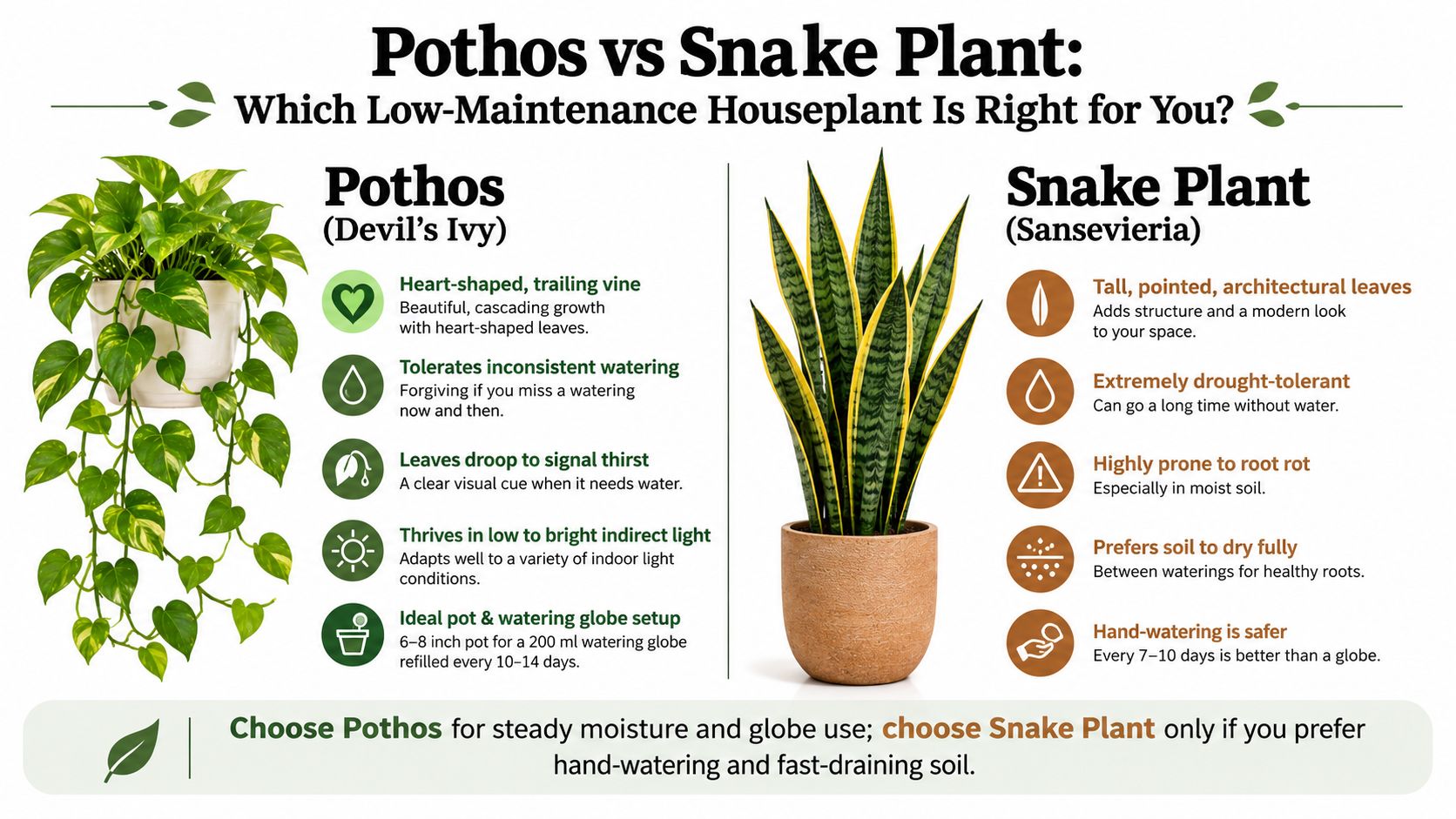
Snake plants survive missed waterings because they tolerate dry soil. That same strength makes them poor candidates for constant moisture. A watering globe releases water gradually, rather than waiting for the pot to dry, so even a small reservoir can keep the root zone damp longer than a snake plant prefers.
Roots need both water and air. In soil that stays wet, water fills the spaces that would normally hold air. Root growth can slow, and rot may follow. The Farmers' Almanac houseplant guidance recommends thorough watering followed by a drying period, not repeated watering while the root zone is still damp.
When a globe is the wrong answer
Snake plants, cacti, succulents, and other plants that need dry intervals should usually be hand-watered according to soil dryness. A plant being unattended does not, by itself, make a globe suitable. For these plants, a reservoir can remove the drying pause that protects the roots.
A common guide is to wait until the top 2 inches, or 5 cm, of soil are dry before watering again, as described by Gardening Know How. Use that measurement as a starting point, not a fixed schedule. Drainage, pot size, room temperature, and plant condition all affect how quickly soil dries.
If a snake plant owner still tests a globe, choose the smallest 100 ml size. Insert it shallowly into already moist soil, then check the pot soon afterward. The bulb should not turn the whole root zone into a continually damp reservoir. If the soil remains moist instead of drying gradually, remove the globe and return to hand-watering.
3. ZZ Plant
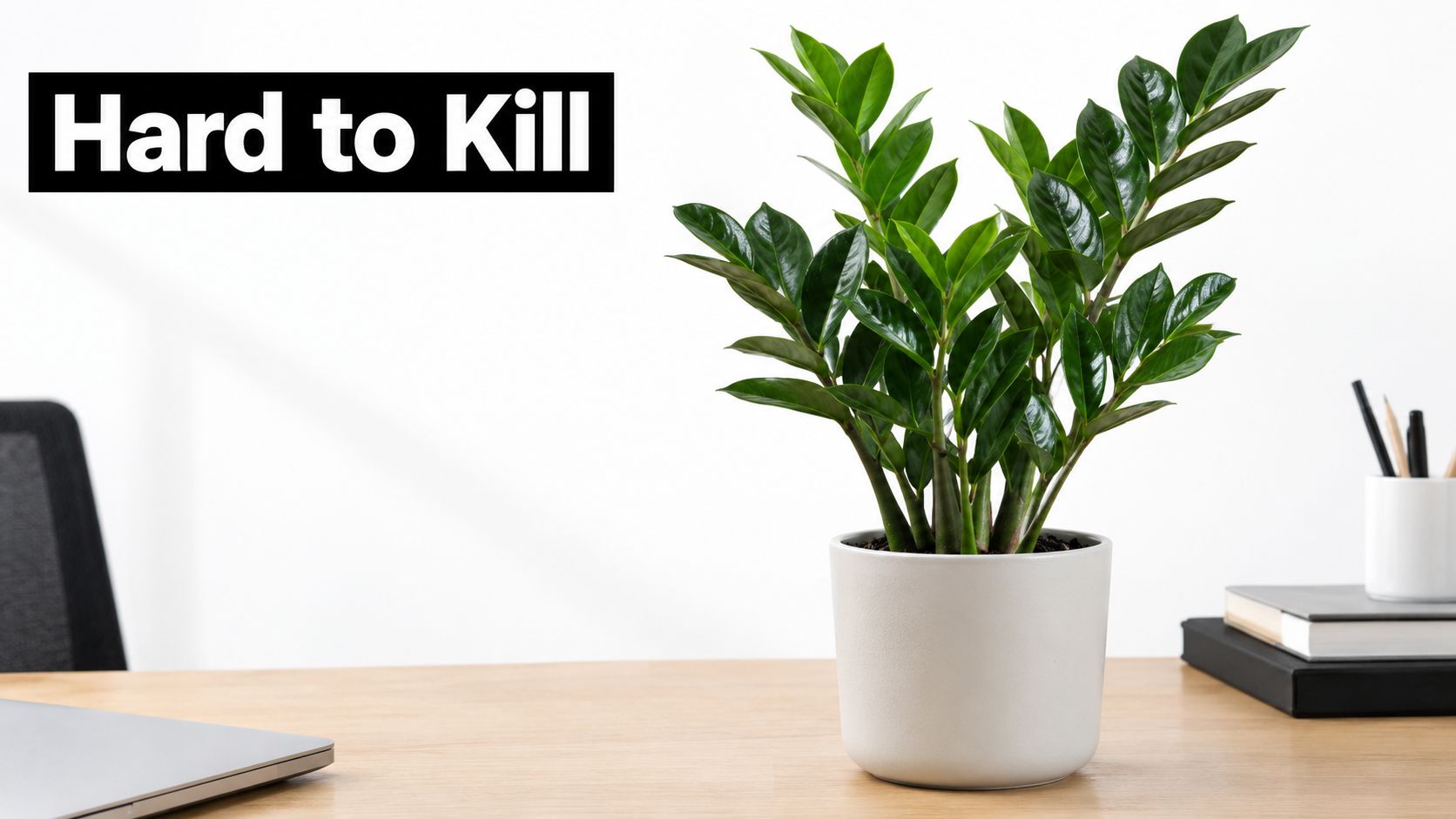
When a ZZ plant is the priority, globe pairing requires attention to soil drainage before capacity. Its thick underground storage structures hold water, so the plant tolerates dry periods better than many leafy houseplants. A globe may help during an absence, but steady moisture can create the very problem this resilient plant is designed to withstand.
For a small or medium ZZ plant pot, a 200 ml Little Green Leaf globe is a practical starting point. A larger planter may suit the 350 ml option, though extra capacity is not automatically safer. In a slow-draining pot, a larger reservoir can keep the root zone wet longer than the ZZ plant can use it. Match the globe to the pot's scale and drainage, much as you would match a small watering can to a small container rather than pour from a bucket.
The general houseplant benchmark is to water many low-maintenance varieties about every 7 to 14 days, but a calendar cannot account for room conditions or pot material. Check the soil instead. The Plant Index recommends checking whether the top 2 to 3 cm of soil is dry, then watering slowly until about 10 to 20% drains from the bottom. Those figures describe thorough hand-watering, not a promise that a globe will refill on the same interval.
A controlled way to test a ZZ plant
Start with a moist, well-drained pot and one filled globe. Insert it carefully, then watch the soil rather than judging the setup by how quickly the bulb empties. The globe should act like a small reserve, not a tap left running. If it empties while the root zone remains wet, water is leaving faster than this plant and pot can handle.
Yellowing leaves combined with persistently wet soil are a warning to reduce watering and remove the globe until the pot dries appropriately. ZZ plants can recover from missed watering, but that tolerance does not cover continuously saturated roots.
A globe releases water as surrounding soil dries. Air enters around the globe and stem, allowing some water to move outward. As the soil becomes wetter, the vacuum effect slows that release, as explained in this guide to watering-globe mechanics. For ZZ plants, this mechanism supports cautious testing, not continuous moisture.
4. Philodendron
Heartleaf and Brasil philodendrons need steadier moisture than drought-tolerant plants, which is precisely where a globe adds value. Their trailing stems suit shelves, offices, and hanging baskets, but those locations can make inconsistent watering easy to miss. A globe can soften the change from drying soil to a large hand-watering session.
A 200 ml globe is a practical starting point for many smaller philodendron pots. A 350 ml globe may suit a larger pot or a hanging basket that dries quickly. These capacities are guides, not fixed prescriptions. A philodendron in a warm office may use water faster than one in a cooler apartment, while an outdoor container can dry even sooner.
Keeping moisture even without waterlogging
Begin with moist, well-drained soil. Inserting the stem into dry soil can prevent a good seal around the opening, while dense compost may resist the glass stem. A narrow pilot hole makes insertion safer and lets you angle the stem toward the root zone without forcing it through compacted material.
After setup, the soil should remain evenly moist, never soggy. Use soil dryness as the decision point, as noted in The Plant Index's watering guidance, rather than following a calendar. The globe slows drying; it does not remove the need to inspect the pot.
A globe is a small reserve, not a tap left running. If the pot stays wet while the bulb empties, the release rate is too high for that container or location.
Excess moisture can contribute to root problems, especially in a pot with limited drainage. Review how to prevent root rot before installing a globe, and make sure excess water can leave the container freely.
Check hanging baskets more often than protected tabletop pots. A larger bulb may help an outdoor container during warm, dry conditions, but it cannot guarantee adequate care during a long absence. Remove or pause the globe if the soil remains wet, and let the pot return to a suitable moisture level before using it again.
5. Peperomia
Peperomia works well on desks, shelves, and in small apartments because its compact size makes moisture easy to monitor. Its fleshy leaves store some water, so the plant prefers a measured watering rhythm. Let the soil dry between waterings, then rehydrate it thoroughly. A small Little Green Leaf globe fits this pattern better than a large reservoir that releases water for too long.
A 100 ml globe is the most cautious starting point for a small peperomia pot. A 200 ml bulb can suit a larger container, provided you watch the soil closely during the first release cycle. The goal is moderate moisture with visible drying between waterings. The root zone should not remain saturated.
A small-pot watering rhythm
Peperomia owners should check soil dryness before watering, as recommended in the general watering guidance above, rather than responding to wrinkled leaves by adding water immediately. Once the soil is dry enough, water slowly and let the excess drain away. Do not leave the pot standing in water inside a decorative outer container.
A small desk plant makes a practical first test. Its pot is easy to lift, inspect, and compare before and after watering. Check whether the surface is drying and whether the globe is emptying gradually. These observations show how quickly the bulb releases moisture in that particular pot and location. They also help beginners adjust the setup before using a globe with a larger planter.
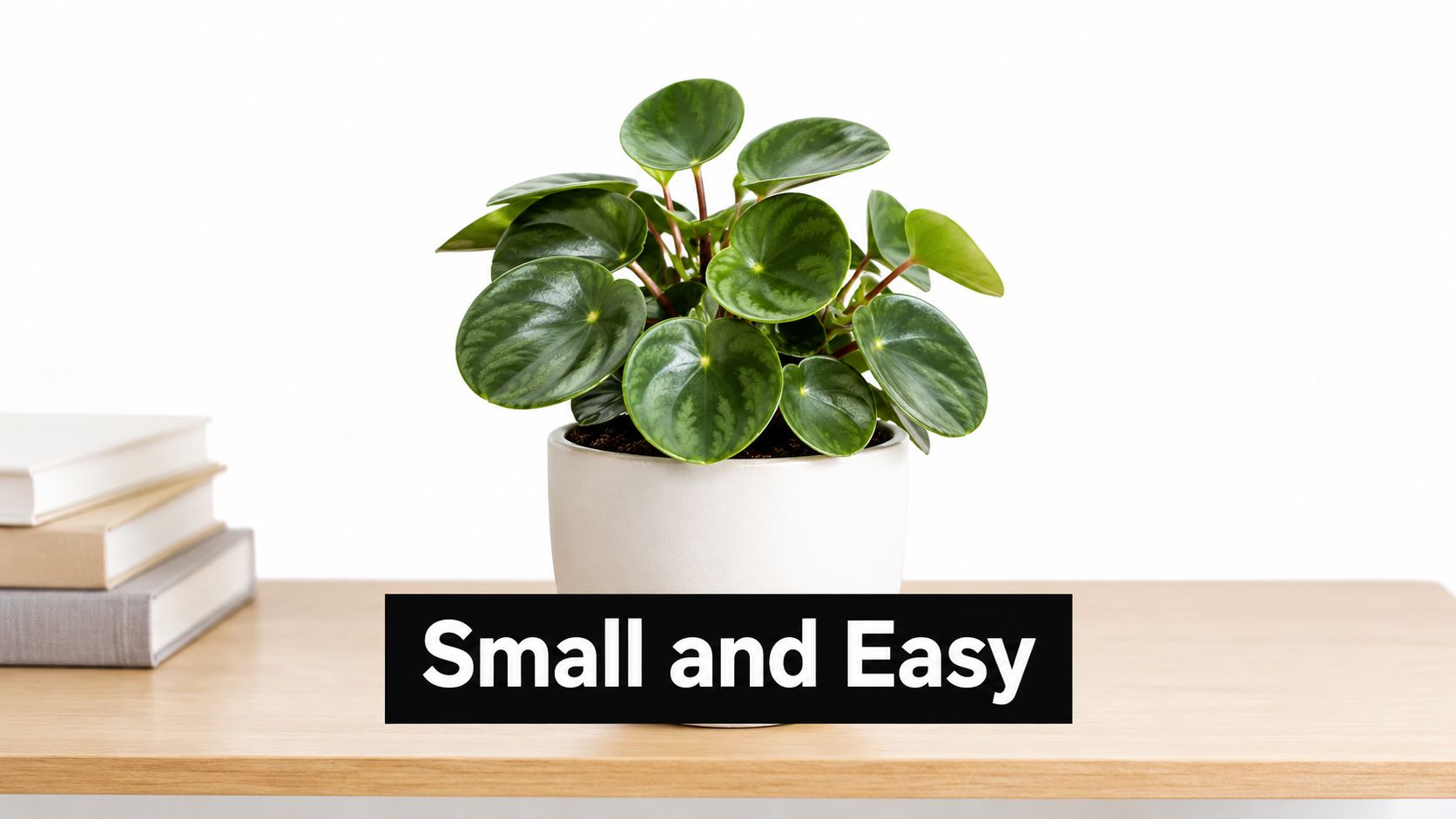
A large globe is a poor match for a small peperomia pot because the available soil may stay wet for too long. Cacti and succulents need even longer dry periods, so they should not receive steady moisture from a globe. Choose the smallest suitable capacity, monitor the soil, and pause the globe if drying slows too much.
5 Low-Maintenance Houseplants Comparison
| Plant | 🔄 Implementation complexity | ⚡ Resource requirements | 📊 Expected outcomes (⭐) | 💡 Ideal use cases | Key advantages |
|---|---|---|---|---|---|
| Pothos (Devil's Ivy) | Low 🔄, easy globe use; insert at ~45°; watch for overwatering | 200 ml for 6–8" pots (350 ml for 8–10"); standard potting soil; drainage | Lush trailing growth; clear thirst cues; ⭐⭐⭐⭐ | Busy owners, hanging baskets, short trips (1–2 weeks) | Forgiving, fast growth, reliable with globe |
| Snake Plant (Sansevieria) | High 🔄, globe risky; requires soil to dry fully; close monitoring | Best hand-watered; if globe used → 100 ml only in ≥10" pots + fast-draining cactus mix | Survives neglect but prone to rot with globe; ⭐⭐⭐ (better with hand-watering) | Low-light offices, frequent travelers who hand-water, large pots | Extremely drought-tolerant, low pest issues |
| ZZ Plant (Zamioculcas) | Low–Medium 🔄, globe compatible but monitor first cycles; pilot hole recommended | 200 ml for 6–8"; make pilot hole for dense soil; prefers drying 10–14 days | Stable, slow growth; very tolerant; ⭐⭐⭐⭐ | Offices, forgetful owners, low-light apartments | Nearly indestructible, stores water, low maintenance |
| Philodendron (Heartleaf/Brasil) | Low 🔄, globe well-suited; insert at 45° toward root zone | 200 ml for 6–8"; 350 ml for hanging/10" pots; prefers humidity >50% | Vigorous, rapid growth with consistent moisture; ⭐⭐⭐⭐ | Owners wanting visible growth, hanging baskets, indoor climbers | Prefers even moisture, responds quickly to globes |
| Peperomia | Low 🔄, simple globe use; shallow insertion (no pilot hole) | 100 ml for 4–5"; small pots with drainage; moderate humidity | Compact, predictable 7–10 day rhythm; ⭐⭐⭐ | Desks, small spaces, beginner gifts | Ideal first-globe plant, compact, clear overwatering signals |
Choose the Plant Before You Choose the Globe
The best choice starts with the plant's watering tolerance, then moves to pot scale. A compact peperomia in a 4 to 5 inch pot is a logical match for a 100 ml globe. Pothos or ZZ plants in a 6 to 8 inch pot are better starting points for a 200 ml globe. A philodendron in a larger pot, or a fast-drying hanging basket, may benefit from the extra capacity of a 350 ml globe.
Those capacities describe the Little Green Leaf range, not guaranteed refill schedules. A globe may last up to about two weeks per fill, but the result changes with the plant, pot, soil, temperature, globe size, and surrounding conditions. Independent guidance notes that watering globes can provide moisture for up to about two weeks when correctly installed, while also stressing that duration depends on environmental conditions and soil dryness. See the explanation of watering-globe duration.
A globe is also not a solution for every watering problem. It isn't suitable for succulents, cacti, or plants that need to dry out. It shouldn't be used as the only water source for a very large pot, and it doesn't remove the need to check whether the soil is staying wet.
How to set up a Little Green Leaf globe for a vacation
- Water the plant first: Moisten the soil thoroughly and allow excess water to drain.
- Make a pilot hole: Use a narrow tool in dense soil so the glass stem won't be forced or cracked.
- Fill the globe: Add water to the chosen 100 ml, 200 ml, or 350 ml bulb.
- Insert the stem: Place it at an angle in moist soil, avoiding force and fragile roots.
- Check after two days: Confirm that the soil is moist but not soggy and that the globe is releasing water gradually.
The hand-blown glass bulbs are available in multicolor and clear rainbow designs, with optional plastic anti-clog sleeves for the stem. The globes are sold in 1, 2, 4, and 6 packs, which suits individual pots, office collections, outdoor containers, hanging baskets, or gifts for plant lovers. The product range is available at Little Green Leaf.
The comparison table should distinguish a globe from a spike, drip system, or self-watering pot across duration, setup, refill effort, clogging, outdoor use, and cost per plant. Since duration and cost vary by product and conditions, those fields should be treated as comparisons of operating method rather than fixed promises. A globe needs a filled bulb and a stem inserted into soil. Its refill effort is periodic, clogging can be reduced with an optional sleeve and proper cleaning, and outdoor use remains dependent on weather and container conditions.
How do watering globes work?
A watering globe releases water as the surrounding soil dries. Air enters the stem area, water moves out gradually, and the release slows as moisture returns to the root zone. This explanation of globe mechanics describes the process in practical terms.
How long does a plant watering globe last?
One fill can last up to about two weeks, but it may empty sooner in warm conditions, with thirsty plants, larger pots, or smaller globes. A 350 ml globe holds more water than the 100 ml and 200 ml options, but capacity still doesn't create a fixed schedule.
Are watering globes good for low maintenance houseplants?
They can be useful for pothos, philodendron, ZZ plants, and peperomia when the globe size matches the pot and the soil drains well. They're a poor fit for plants that need to dry out, including cacti and succulents.
What size watering globe do I need?
The Little Green Leaf range includes 100 ml, 200 ml, and 350 ml bulbs. Smaller pots generally call for the smaller bulb, while larger pots and fast-drying hanging baskets may need more capacity, with soil moisture checks determining whether the match is working.
Can you use a watering globe for a snake plant?
A snake plant needs caution because it can suffer when soil stays wet. If a globe is tested, the smallest size should be used conservatively, with close checks of the soil, but hand-watering after the soil dries is often the safer approach.
How do you stop a watering globe from clogging?
Plant owners can make a pilot hole in dense soil, avoid forcing the stem, and use an optional Little Green Leaf plastic anti-clog sleeve. The globe and stem should also be rinsed and cleared between uses, with the opening kept free of compacted soil.
For more practical reading, plant owners can explore how long plants can go without water, how watering globes work, and snake plant watering needs. If the publishing platform supports it, the questions and answers above can be marked up with FAQ schema.
Little Green Leaf offers hand-blown glass watering globes in 100 ml, 200 ml, and 350 ml sizes, with multicolor and clear rainbow designs for everyday care, travel, outdoor containers, and thoughtful gifting. Plant owners can choose the globe that matches the pot and watering tolerance, then visit Little Green Leaf to make plant care more consistent with less effort.