

Indoor Watering Can: Pour Without Flooding Shelves
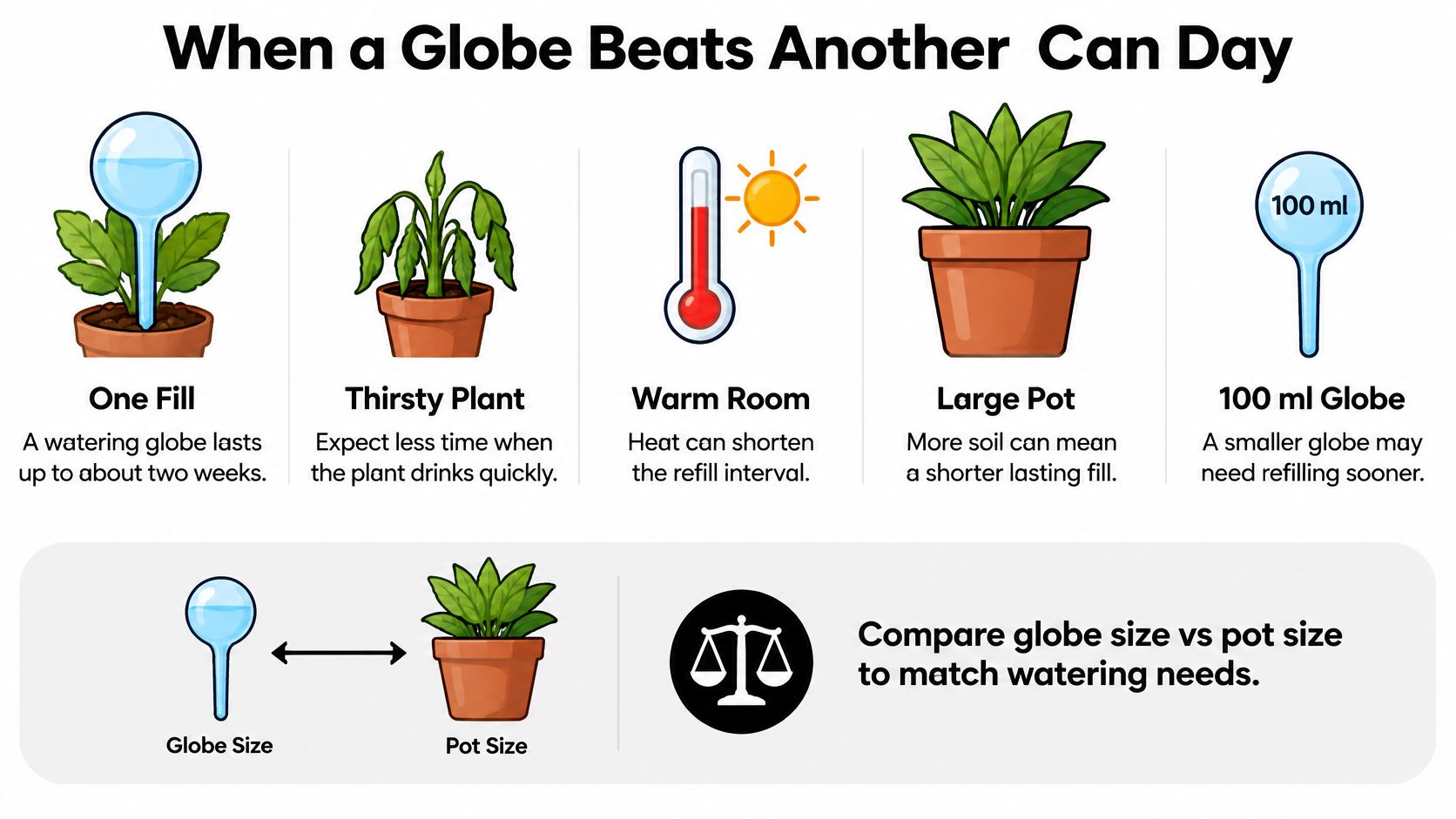
For a pot tucked behind leaves on a crowded shelf, a narrow-spout indoor watering can gives the best control over where water lands. A watering globe handles a different problem, keeping moisture available between checks for up to about two weeks per fill, with less time for thirsty plants, large pots, warm rooms, and smaller globes.
The practical choice isn't a can or a globe for every situation. It's a controlled pour when someone is home to judge the soil, and a tested water reserve when travel or a busy week interrupts that routine.
Table of Contents
- Match the Indoor Watering Can to the Spot
- How to Water a Plant That Stays Put
- When a Globe Beats Another Can Day
- How to Set Up a Little Green Leaf Globe Indoors
- Plants and Pots That Should Skip a Globe
- Choose a Can for Daily Pours and a Globe for Trips
Match the Indoor Watering Can to the Spot
A shelf plant needs a spout that reaches past foliage without tipping the whole can against neighboring pots. Spout reach and balance matter more than decoration. A can that feels manageable when empty may become awkward when filled, especially when held above shoulder height.
A narrow opening makes it easier to direct a slow stream onto soil. The handle should allow a steady grip without forcing the wrist into an uncomfortable position.
Match the pour to the drainage access
The University of Maryland Extension's indoor watering guidance supports thorough watering followed by drainage, rather than leaving roots standing in collected water. On a shelf, the challenge is making that drainage visible and removable before it reaches the furniture.
Indoor watering can features by where the plant sits
| Where the plant sits | Spout to choose | How to pour | What success looks like |
|---|---|---|---|
| Shelf pot with crowded leaves | Long narrow spout | Slow stream on the soil, not the stem | Leaves stay dry and nothing runs onto the shelf |
| Cachepot or no easy trip to the sink | Narrow spout | Short pours, then check the saucer | Furniture stays dry and roots aren't left standing in water |
| Plant that can be carried to a sink | Wider spout is fine | Soak until water exits the drainage holes, then empty the tray | The root zone is wet, not just the surface |
| Seedlings or loose top mix | Rose or spray head | Gentle dispersed flow | Soil stays in place |
| Away for days, or watering gets forgotten | A can is the wrong tool that week | Globe in already moist soil, using a 100 ml, 200 ml, or 350 ml bulb | Up to about two weeks; not for cacti or succulents |
A cachepot deserves particular attention. Water can collect out of sight beneath the nursery pot, so an attractive outer container doesn't remove the need to inspect and empty runoff. If the inner pot can't be lifted and the collected water can't be removed, the setup needs better drainage access before a full watering.
Practical rule: A towel catches an accidental splash. It doesn't replace a saucer or a way to remove runoff.
Leave room for the tool, not just the plant
A styled shelf still needs an open route to the soil and a clear view of the tray. For anyone coordinating greenery with Jessie's Home wall art collection from Jessie's Home, leaving that working space helps keep watering separate from nearby decorative surfaces.
A rose attachment suits delicate surface mix because it spreads the flow. A wider spout is less troublesome at a sink, where runoff can escape safely. Neither feature solves forgotten watering, which calls for a reserve rather than a larger can.
How to Water a Plant That Stays Put
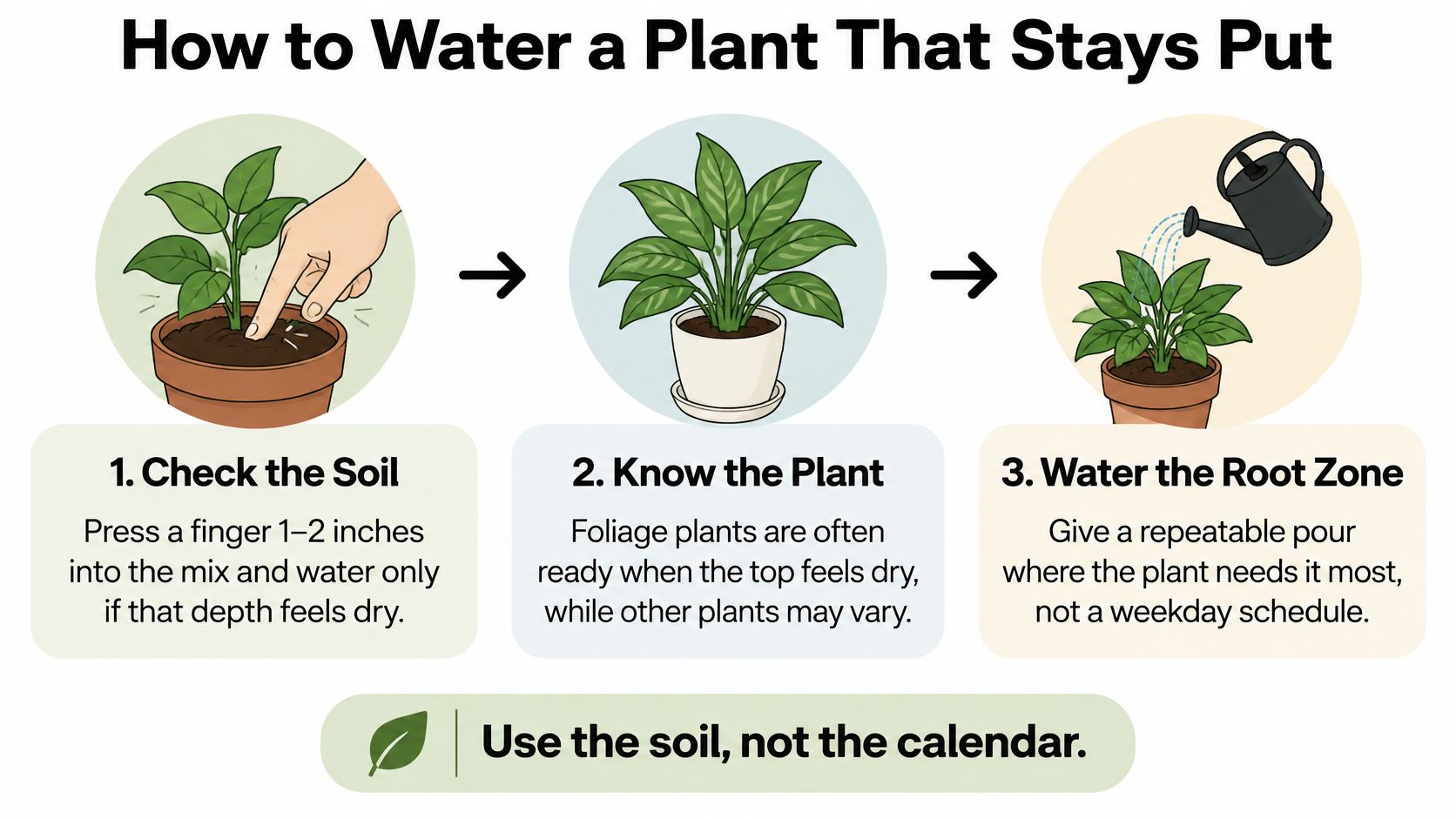
A plant on a crowded shelf needs a watering routine that keeps the soil moist and runoff under control. Start by checking the mix, then pour slowly and watch where the water goes.
Follow the moisture through the pot
- Check before filling the can. Press a finger about 1–2 inches into the mix and consider the plant's needs, as described in Utah State University Extension's houseplant guidance. If the soil at that depth still feels appropriately moist, wait before watering.
- Make room for drainage. Move the pot to a sink if you can. For a plant that stays put, place an accessible saucer beneath it and protect the surrounding area with a towel. Keep the spout low, directing water onto the soil around the root zone rather than onto the stem.
- Pour slowly across the soil. Move the stream around the pot so one spot doesn't take the full pour. If the pot has drainage holes and you can remove runoff, continue until excess water flows out.
- Give runoff time to collect. On a shelf, apply water in short pours and check beneath the pot between them. Stop if water gathers faster than you can remove it, then empty the saucer before continuing.
- Use pot weight as another clue. If it's safe to lift the pot, compare its weight after draining with its weight before the next watering. A lighter pot holds less water than the same pot just after watering, though weight alone doesn't explain every soil or plant problem.
A wet surface doesn't confirm the root zone is wet; check deeper before stopping. A quick pour can darken the top while leaving dry pockets below. Water appearing in the saucer right away also doesn't show that moisture has spread evenly through the mix.
Pouring slowly gives the soil more time to absorb water. If a deeper check still finds dry areas, add another controlled pour, as long as excess can drain away.
Small pours help control the flow. Check that the soil below the surface is getting water, too.
For a crowded shelf, work in manageable stages and keep the drainage route visible. The houseplant watering guide explains how soil feel, pot weight, and drainage can inform your routine.
When a Globe Beats Another Can Day
You're leaving for two weeks, and a pothos sits on a shelf where no one can water it. A globe may help keep the soil moist while you're away, but its water can last up to two weeks depending on the plant, climate, pot size, and insertion angle. Treat that as a possible upper limit, not a travel guarantee.
A globe releases water gradually as the soil dries. As moisture returns, airflow slows and the water release reduces on its own. The angle affects the drip: at 90 degrees, air escapes less easily and water releases more slowly; at 45 degrees, it releases more readily.
Plan the reserve around the setup
For a short summer absence, thorough watering before departure may be sufficient, according to the Royal Horticultural Society's holiday-care guidance. For longer absences, the guidance describes a reservoir-and-wick arrangement and cautions against leaving plants waterlogged.
A globe offers another way to provide a reserve. Its performance depends on the plant and its conditions, so a home trial gives you a better sense of how the setup behaves before you leave.
Globe, spike, drip, and self-watering pot compared
| Aid | How long a fill lasts | Setup | Refill effort | Clogging | Works outdoors | Cost per plant |
|---|---|---|---|---|---|---|
| Glass watering globe | Up to two weeks, depending on plant, climate, pot size, and insertion angle | Fill the 100 ml, 200 ml, or 350 ml globe, then insert it into the soil | Refill the globe when empty | Plastic tip covers help prevent clogging | Yes, for indoor and outdoor plants | A globe for each suitable pot |
| Terracotta spike | Bottle capacity and soil demand set the interval | Insert the spike and fit a compatible water bottle | Remove and refill the bottle | Soil can obstruct the outlet | Depends on the product | A spike and bottle for each pot |
| Drip kit | Reservoir capacity and delivery rate set the interval | Connect tubing to a gravity feed or timer | Refill the shared reservoir | Emitters need inspection | With outdoor-rated components | Shared setup cost across connected pots |
| Self-watering pot | Reservoir capacity and plant demand set the interval | Move the plant into the planter | Fill the built-in reservoir | Wicks or passages need inspection | With outdoor-rated models | A planter for each plant |
Test the arrangement before relying on it
Choose based on the space and the way water will be supplied. A globe can be inserted into a suitable pot without changing the planter. A shared drip arrangement connects several pots to one reservoir, while a self-watering pot requires a different planter.
Before departure: Try the setup while you're home so you can see how the soil responds.
Outdoor containers and hanging baskets can also use globes. Heat can shorten the time between refills, so a trial in a cool room may not show how the same setup will behave on a warm balcony.
How to Set Up a Little Green Leaf Globe Indoors
A globe belongs in already moist soil, not a bone-dry pot that needs rehydrating or a soggy pot that needs time to dry. The plant must also tolerate moisture between normal checks.
The basic setup is simple: fill the globe with water, insert it into the soil, then let it support healthier hydration. Careful preparation makes that simple process more reliable.
Prepare the soil and protect the glass
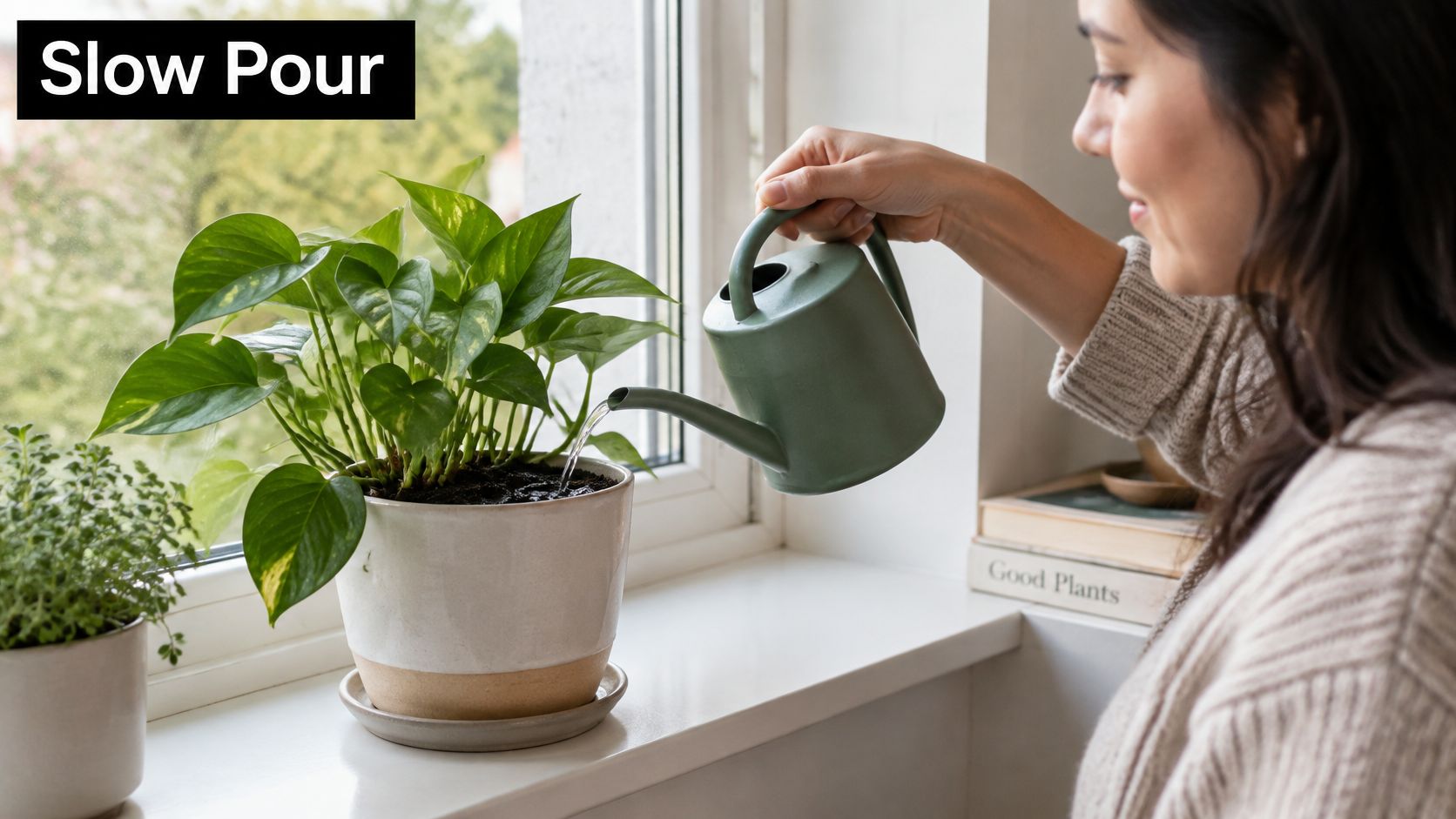
- Water the plant first. The indoor watering can handles the initial slow, even watering. After drainage, the saucer is emptied so the globe begins its trial in moist soil rather than standing water.
- Make a pilot hole. A pencil or similar slender stick creates an opening, especially in dense mix. The glass stem shouldn't be used as a digging tool or forced through resistance.
- Fill the bulb over a protected surface. A 100 ml globe is a starting option for a small pot, 200 ml for an ordinary houseplant container, and 350 ml for a larger or faster-drying setup. These are starting choices, not precise pot-size guarantees; glass breaks if dropped, so filling and carrying deserve care.
- Insert gently at a slight angle. The stem goes into the prepared hole until the globe sits securely without levering against the pot rim. An optional plastic anti-clog sleeve helps protect the opening from soil.
- Check after two days. An unexpectedly empty globe calls for a closer look at plant demand, warmth, pot size, and positioning. Soggy soil calls for removal of the globe and a pause, not an immediate refill.
Watch both the bulb and the soil
An empty bulb doesn't automatically mean the plant needs more water. The soil may still hold plenty, so a refill decision should include the moisture check.
Likewise, a full bulb beside drying soil may indicate a blocked stem. The globe can be removed, rinsed through the bulb and stem under running water, and gently cleared with a thin brush.
- Avoid force. A stubborn blockage isn't a reason to push a sharp object hard against the glass.
- Recheck placement. After cleaning, the stem returns to the pilot hole rather than being pressed into a fresh patch of dense soil.
The watering-globe setup guide provides a reference for insertion and follow-up checks. The important habit is observing the first fill while someone is still home, rather than treating installation as proof that the plant is ready for an unattended trip.
Plants and Pots That Should Skip a Globe
Succulents and cacti are the clearest no. Their normal dry cycle conflicts with a tool intended to keep supplying moisture as soil dries.
The University of Minnesota Extension's cactus and succulent guidance recommends thorough watering until drainage occurs, removal of excess water, and complete drying between waterings. A globe shouldn't interrupt that cycle unless the particular plant's care guidance explicitly permits continued moisture.
More water isn't always the answer
A very large planter is another poor match for a single small bulb. A lone 100 ml reserve can empty quickly without supplying the whole root zone, so a proper watering remains necessary.
For a moisture-preferring plant, larger or multiple globes may provide a more useful reserve, but only a trial can establish whether the arrangement works. Adding bulbs without inspecting the soil can trade uneven dryness for excessive wetness.
- Drying-required plants. Any plant that needs its mix to dry substantially should keep that drying interval.
- Inaccessible standing water. A globe doesn't solve a cachepot that traps runoff beneath the roots.
- Unstable placement. A bulb that leans against the rim or sits where it can be knocked needs a safer position before use.
Drooping leaves need a soil check
Wilting can indicate insufficient water or overwatering, as Illinois Extension's watering guidance explains. Filling a globe because leaves droop can therefore make the wrong problem worse.
Crispy edges alongside a light pot and dry soil point toward insufficient water. Persistently wet mix, a heavy pot, and yellowing leaves suggest that adding more water deserves caution, although leaf symptoms alone aren't a diagnosis.
The first response to drooping is an inspection, not another pour.
A dry root zone may need a careful, thorough watering before any reserve is considered. A wet root zone needs attention to drainage and drying, not a second source of moisture.
Dense soil also requires gentle installation rather than pressure on the glass. Outdoors, a basket that dries rapidly in summer needs earlier observation than a similar plant in a cool room; the longest possible refill interval shouldn't become the default assumption.
Choose a Can for Daily Pours and a Globe for Trips
A can suits planned watering at home; a globe can provide a reserve when you are away. For a trip, choose the globe size to suit the pot, then try it before you leave. For more preparation tips, read this guide to keeping plants watered while on vacation.
Little Green Leaf Plant Watering Globes are hand-blown glass and come in 100 ml, 200 ml, 350 ml, and mixed-size options. The sale price is $12.45 USD. Clear Rainbow, 200 ml globes are also offered in a 4-pack for $24.95 USD and a 6-pack for $35.95 USD.
How big should an indoor watering can be?
Choose a can you can lift and pour steadily at the shelf where you keep your plants. Filling it partway can make a heavy can easier to control.
How often should indoor plants be watered?
Use each plant's care needs to guide your routine, rather than relying on a fixed weekday. A globe is a reserve, not a reason to water by schedule.
How long does a watering globe last?
The release rate depends on the plant, climate, pot size, and insertion angle. Try a fill while you are home so you can see how it works in your setup.
Can a watering globe replace a watering can for a succulent?
Choose a watering routine that allows the plant's soil to dry as its care requires. A globe may not suit plants that need a dry interval.
Do watering globes clog, and how do I clean one?
Little Green Leaf globes come with plastic tip covers that help prevent clogs. Sarah M. describes them as sturdy and says, “These don't get clogged with dirt!!”
Little Green Leaf's decorative globes offer a hands-off watering option for suitable plants. Visit Little Green Leaf to choose a size, then test the first fill at home before relying on it during a trip.