

Hand Blown Glass Globes: Plant Care That Looks Beautiful
When a plant owner returns from vacation to wilted leaves, a filled watering globe can provide gradual moisture for up to about two weeks per fill, depending on the plant, pot, soil, temperature, and globe capacity. Hand-blown glass globes work best for plants that prefer evenly moist soil, but they aren't suitable for succulents, cacti, or plants that need regular drying cycles.
Table of Contents
- What Makes Hand Blown Glass Globes Special
- How Self Watering Globes Actually Work
- Comparing Watering Methods for Your Home
- Which Plants Thrive with Globe Watering
- Choosing the Right Globe Size and Style
- Troubleshooting Common Globe Problems
- Getting Started with Your First Globe
What Makes Hand Blown Glass Globes Special
A houseplant can look perfectly healthy before a trip and completely different after it. A busy owner may also water too often out of caution, then find dry soil a few days later. Hand-blown glass globes address that daily uncertainty by holding water in a decorative reservoir and releasing it gradually as the growing medium dries.
The technique behind these globes has deep roots. Hand-blown glass emerged as a transformative manufacturing technology in the eastern Mediterranean during the middle of the 1st century BCE, with Syrian craftsmen associated with areas around Sidon, Aleppo, Hama, and Palmyra. The history of glass blowing describes how artisans used a blowpipe to inflate molten glass into hollow forms, making vessels faster than earlier casting and core-forming methods.
That ancient principle still shapes the modern plant globe. A maker inflates hot glass around air, then controls the bulb, stem, wall thickness, color, and final contour by hand. The result is practical, but it also has the slight variation expected from an individually formed object.
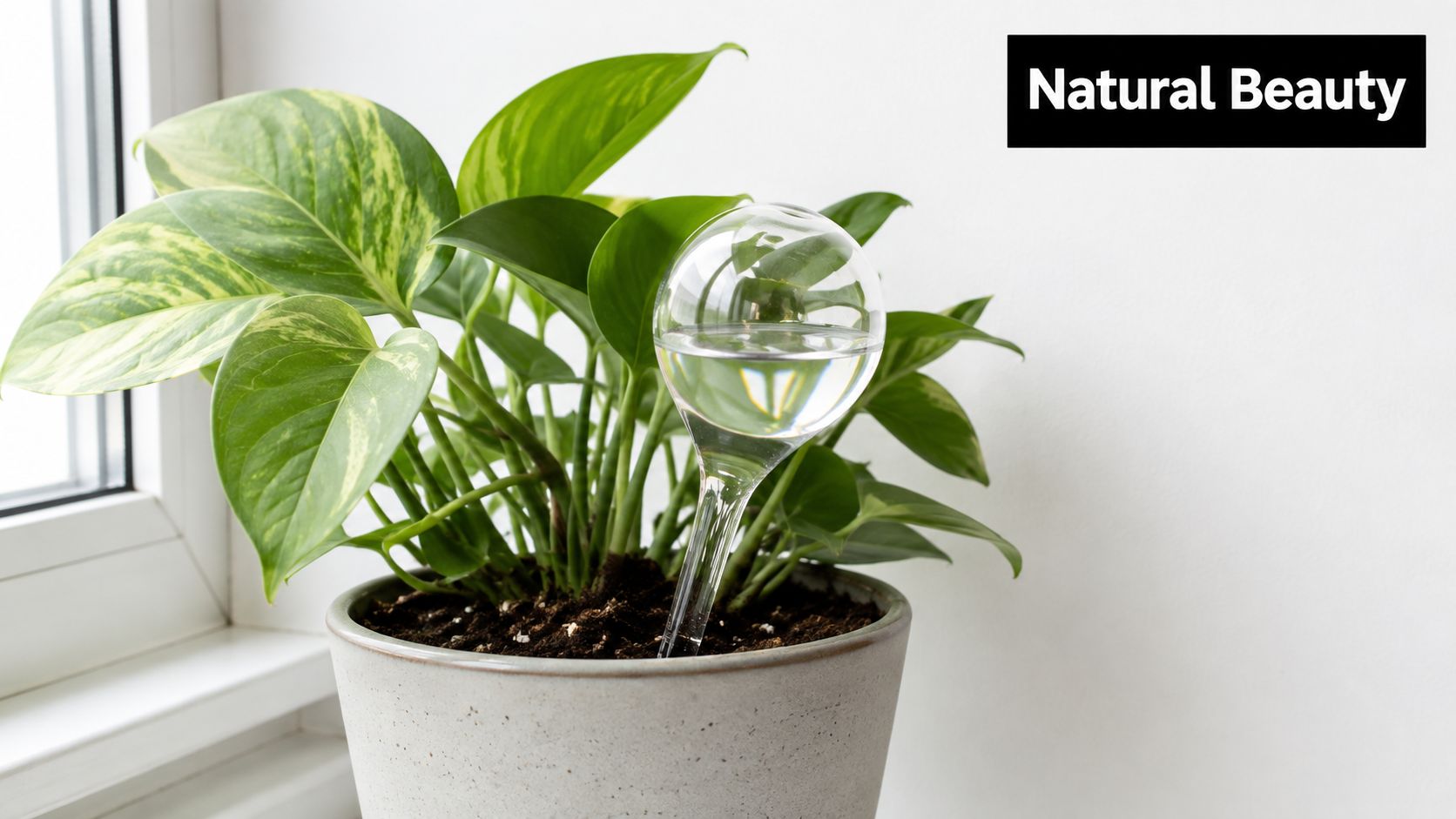
Beauty with a useful purpose
Little Green Leaf globes are available in 100 ml, 200 ml, and 350 ml capacities, with multicolor and clear rainbow designs. Some styles also use a mushroom-shaped form for a more playful look. They come in 1, 2, 4, and 6 packs, which suits a single favorite plant, a group of apartment plants, or a thoughtful gift.
The variations in hand-blown glass aren't flaws. Small differences in contour, color distribution, thickness, and surface character show that the globe wasn't stamped into identical shape by an industrial process. The Western Australian Museum's summary of glassblowing history notes that hand-blown bottles remained in specialized use into the 20th century, even after automatic production changed high-volume manufacturing.
Practical rule: Choose a globe for the plant's moisture needs first, then choose a color and shape that suit the room.
For owners who want watering support without hiding a functional object behind the foliage, a globe can become part of the display. More ideas for combining practical plant tools with a room's style appear in decorative plant accessories.
How Self Watering Globes Actually Work
A self-watering globe is a small reservoir connected to the soil by a narrow stem. As the soil dries, air can move into the reservoir and water can move down toward the root zone. As moisture increases around the stem, airflow slows, so the release becomes less aggressive than pouring the entire reservoir into the pot.
The system isn't a precision irrigation device. Soil porosity, stem contact, insertion angle, temperature, humidity, and plant demand all change the result. The same filled globe can empty quickly in a small porous pot and release more slowly in a larger container with lower water demand.
A reliable setup sequence
- Water the plant thoroughly first. Saturate the growing medium until excess water can drain from the bottom, following Nebraska Extension's guidance on watering houseplants correctly. A dry pot can pull water from the globe too aggressively, which may make the reservoir empty before the plant has settled into a steady cycle.
- Make a pilot hole. Use a pencil, chopstick, or similar blunt tool to open a path for the stem. This matters especially in dense soil, where forcing the glass directly into the pot can block the tip, compact the surrounding medium, or put stress on the stem.
- Fill the bulb. Add water to the globe's indicated fill point. A 100 ml globe suits a smaller setup, while a 200 ml or 350 ml reservoir gives more capacity for a thirstier plant, a larger container, or a longer absence.
- Insert the stem at a slight angle. Place it near, but not directly against, the main roots. An angled position can improve contact with the surrounding medium and reduce the chance that a root presses against the opening.
- Check the setup after 48 hours. Inspect the soil below the surface and observe how much water has left the bulb. The MGABC recommends judging moisture beneath the surface because many houseplants need some drying between waterings, while other species need more consistent moisture. Its indoor plant care guidance supports checking the root-zone condition rather than guessing from the surface.
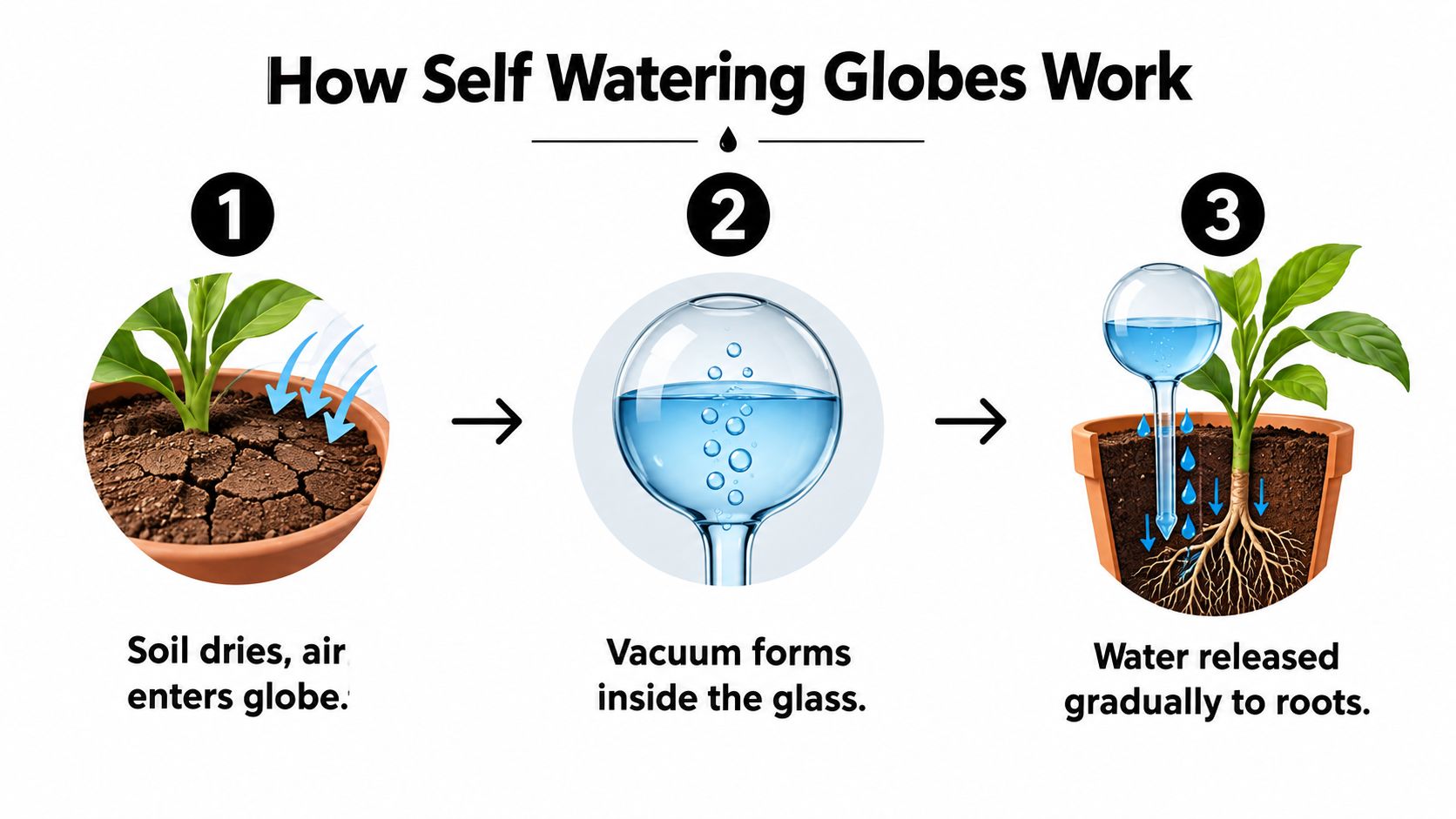
Why the pilot hole matters
A globe needs contact with moist soil, but the stem opening must remain clear. If dense material seals the tip completely, water may barely move. If the hole is too loose, air may enter around the stem and cause unusually rapid drainage.
The process resembles the broader movement of water through soil, but it shouldn't be treated as a fixed formula. A short explanation of capillary action in soil can help plant owners understand why a globe's performance changes from one pot to another.
Comparing Watering Methods for Your Home
Globes aren't always the right answer. They suit owners who want a portable, decorative reservoir for a medium-sized pot, especially during a short trip or between normal waterings. Other watering approaches may suit a larger collection, a long absence, or plants that need a different moisture pattern.
The table compares broad categories rather than promising a universal runtime. Duration depends on the plant, container, environment, and setup, so the globe entry should be treated as a testable range rather than a calendar guarantee.
Watering Method Comparison
| Method | Duration Per Fill | Setup Effort | Clogging Risk | Outdoor Use | Cost Per Plant |
|---|---|---|---|---|---|
| Glass watering globe | Up to about two weeks, but often less in warm or thirsty setups | Low | Moderate if the stem clogs | Suitable for containers and hanging baskets when secured | Varies by capacity and pack |
| Watering spike | Varies with reservoir and soil contact | Low to moderate | Moderate | Suitable when protected from knocks | Usually varies by spike and reservoir |
| Drip system | Can support longer absences when correctly configured | Moderate to high | Moderate to high across narrow outlets | Suitable with weather-resistant components | Varies by installation and number of plants |
| Self-watering pot | Reservoir-dependent and plant-dependent | Moderate at setup | Low at the delivery point, but components still need cleaning | Suitable for compatible containers | Higher initial cost per container |
A globe offers the simplest visual setup, but it has a narrow delivery point that needs protection from compacted soil and mineral buildup. A spike can be economical but may offer less decorative appeal. A drip arrangement can serve many plants, though it brings more connections and more points to inspect. A self-watering pot can reduce daily guesswork, but it isn't as portable and usually requires replacing the container rather than adding a small accessory.
A watering aid should support a plant's drying cycle, not override it.
For a single indoor pot, a globe can be the least disruptive option. For a very large planter, one small globe won't distribute moisture evenly through the entire container. For a cactus or succulent, steady moisture is usually the wrong goal, regardless of the method's convenience.
Which Plants Thrive with Globe Watering
The best match depends on plant physiology, not pot size alone. Plants from naturally damp environments generally tolerate a more consistent supply, while drought-tolerant plants need the root zone to dry before receiving more water. A globe can moderate supply, but it can't change what a plant's roots require.
Ferns, peace lilies, and many tropical houseplants often cope well with gradual hydration when the pot drains properly. A globe may also help a hanging basket or outdoor container that dries quickly, although wind, heat, and direct exposure can increase demand.
Succulents and cacti are different. Their roots commonly need drying periods, and a globe that keeps the surrounding soil moist can increase the risk of root stress. The same caution applies to any plant already showing soft roots, persistently wet soil, or a history of decline after frequent watering.
A moisture-tolerance check
Use the plant's natural watering pattern as the first filter:
- Consistently moisture-tolerant plants: A globe may help maintain a steadier supply, provided excess water drains and the root zone isn't left saturated.
- Plants needing moderate drying: Test a globe cautiously, using a smaller capacity or a shallower insertion if the soil stays wet.
- Drought-tolerant plants: Don't use a globe automatically. Succulents and cacti may be healthier with complete watering followed by a drying cycle.
- Plants showing root stress: Pause before adding a reservoir. Persistent wetness can damage roots just as persistent dryness can, as explained by University of Missouri Extension's houseplant guidance.
Soil condition changes the outcome too. Porous material may allow faster movement and drying, while compacted material can restrict the stem and keep water concentrated near the insertion point. A plant owner should check moisture at root depth instead of deciding that an empty globe means the plant needed all of that water.
For owners choosing plants based on the conditions of a home, Jackpot Candles home decor tips offers useful inspiration. The watering decision should come afterward, based on whether the selected plant prefers drying or steady moisture.
Choosing the Right Globe Size and Style
Capacity affects how long a globe can support a plant, but it doesn't determine an exact number of days. The stated product range is 100 ml, 200 ml, and 350 ml, and a filled globe can last up to about two weeks under suitable conditions. Small pots, warm rooms, porous growing material, and thirsty plants can use water much faster.
Match capacity to the whole setup
A 100 ml globe is a reasonable starting point for a smaller pot with a plant that doesn't consume water rapidly. In a warm room, that reservoir may empty in only a few days. A 200 ml globe provides a middle option for a medium houseplant or for owners who want more reserve without using the largest bulb.
The 350 ml globe offers the most capacity in the range. It may approach the two-week upper limit in a larger container or cooler environment, but a thirsty plant can still empty it earlier. Oklahoma State University Extension explains why container size changes watering demand, noting that small pots may need water every two to three days, while large pots may need it every seven to fourteen days. Its houseplant care guide reinforces the need to match capacity to the container rather than relying on a standard schedule.
| Situation | Starting point | What to monitor |
|---|---|---|
| Small pot and moderate-demand plant | 100 ml | Whether the soil becomes dry before the reservoir empties |
| Medium pot or moderate absence | 200 ml | Moisture below the surface after two days |
| Larger container or thirstier plant | 350 ml | Whether one globe reaches all of the active root zone |
| Very large pot | More than one appropriately placed globe may be needed | Uneven wetness and dry areas away from the stem |
Style still matters because the globe remains visible. Multicolor and clear rainbow designs add color without requiring another decorative object, while mushroom styles create a softer, whimsical accent. Pack choices of 1, 2, 4, or 6 make sense for one plant, a collection, or gifting, but capacity should be selected plant by plant. More detail on choosing between capacities appears in globe bulb sizes.
Troubleshooting Common Globe Problems
A globe that empties overnight usually has a setup problem or unusually high demand. Dry soil can act like a sponge, a loose stem opening can allow air into the reservoir too quickly, and heat can increase the plant's water use. A globe that barely releases water usually has the opposite issue, often a blocked stem, poor contact with the soil, or an air lock.
When the reservoir drains too fast
Remove the globe and water the plant thoroughly through the pot, allowing excess water to drain. Refill the bulb, make a fresh pilot hole, and insert the stem into moist soil with a firm but not forceful fit. Keep the stem near the roots without pushing it directly against them.
A small pot may be using water faster than expected. Oklahoma State University Extension's range for small and large containers helps explain why one reservoir can't have the same runtime in every planter. Test the setup for 24 to 48 hours before a trip, then inspect the soil below the surface.
When the globe stops releasing water
Check the stem first. Mineral deposits or compacted material can narrow the opening, especially in areas with hard water. Remove the globe, rinse it, and clean mineral buildup with diluted white vinegar before rinsing thoroughly again. An optional plastic anti-clog sleeve can help protect the stem in dense soil and make insertion easier.
A glass globe also needs careful handling. It can break if dropped, so it should be filled and inserted over a stable surface rather than carried loosely across a room. If the soil remains soggy, reduce the reservoir size, adjust the insertion depth, or remove the globe until the plant's normal drying pattern returns.
Getting Started with Your First Globe
A good first setup starts with the plant, not the decoration. The owner should identify whether the plant prefers steady moisture, select a capacity that fits the pot and expected absence, and test the globe before relying on it for travel. Washington State University Extension recommends watering houseplants when needed rather than following a fixed calendar, using the upper soil layer as a practical moisture check in its houseplant watering guidance.
How to set up a Little Green Leaf globe for a vacation
- Water the plant thoroughly and let excess water drain.
- Make a pilot hole in the moist soil with a pencil or chopstick.
- Fill the globe, then insert the stem at a slight angle near the roots.
- Check the soil and water level after two days, adjusting the capacity or position if needed.
For a first trial, a 200 ml globe in a favorite medium-sized houseplant gives the owner a practical way to observe release speed without committing an entire collection. Little Green Leaf offers hand-blown glass globes in 100 ml, 200 ml, and 350 ml sizes, with multicolor and clear rainbow designs and pack options for individual plants, groups, and gifts.
FAQ
How long do watering globes last?
A filled globe can provide water for up to about two weeks, but the actual duration varies with pot size, plant demand, soil condition, temperature, and capacity. A 100 ml globe may empty quickly in a warm room, while a 350 ml globe can last longer in a suitable larger container.
Do watering globes prevent overwatering?
They can provide a slower supply than pouring a large amount of water into the pot, but they don't guarantee safe moisture for every plant. Root-zone checks still matter, especially for plants that need drying periods or containers with poor drainage.
Can watering globes be used for succulents?
Succulents generally aren't a good match because they often need the soil to dry between waterings. A globe that keeps the root zone moist may contribute to root stress, so traditional need-based watering is usually safer.
Why is my watering globe empty overnight?
Dry soil, a loose seal around the stem, excessive plant demand, or a warm environment can cause rapid drainage. Water the plant first, create a pilot hole, reinsert the stem into moist soil, and observe the setup for 24 to 48 hours before travel.
How do you stop a watering globe from clogging?
Make a pilot hole instead of forcing the stem into dense soil, keep the stem opening clear, and use an optional anti-clog sleeve when appropriate. Mineral deposits can be cleaned with white vinegar followed by a thorough rinse.
What size watering globe should be used?
The available capacities are 100 ml, 200 ml, and 350 ml. Match the size to the plant's moisture tolerance, pot size, expected absence, and environment, then confirm the choice with a short trial rather than assuming a fixed runtime.
Little Green Leaf offers hand-blown glass watering globes in 100 ml, 200 ml, and 350 ml capacities, with decorative multicolor and clear rainbow styles for everyday plant care and travel. Plant owners can compare the options and choose a suitable globe through Little Green Leaf.