

Decorative Plant Accessories That Actually Water for You
Hand-blown glass watering globes release water gradually over several days, up to about two weeks per fill depending on the plant and conditions. They're a decorative watering tool for people who need steadier moisture while away or during busy weeks, but they aren't suitable for succulents, cacti, or plants that need to dry out.
Table of Contents
- When Pretty Meets Practical
- How Watering Globes Actually Work
- The Five Decorative Accessories Worth Knowing
- Setting Up a Globe Without the Guesswork
- Globe vs Spike vs Drip vs Self-Watering Pot
- Matching Accessories to Your Space
- Maintenance and Honest Limitations
- Gifting Decorative Plant Accessories
When Pretty Meets Practical
A suitcase is half packed, and the plant owner is mentally rehearsing which neighbour has the spare key. Across the room, a fiddle leaf fig has brown-edged leaves after a hectic Monday, making it clear that “water it later” became “forgot it again.”
Many decorative plant accessories look lovely on a shelf but contribute little to the actual work of keeping a plant hydrated. Function deserves the first test. Beauty can be the bonus.
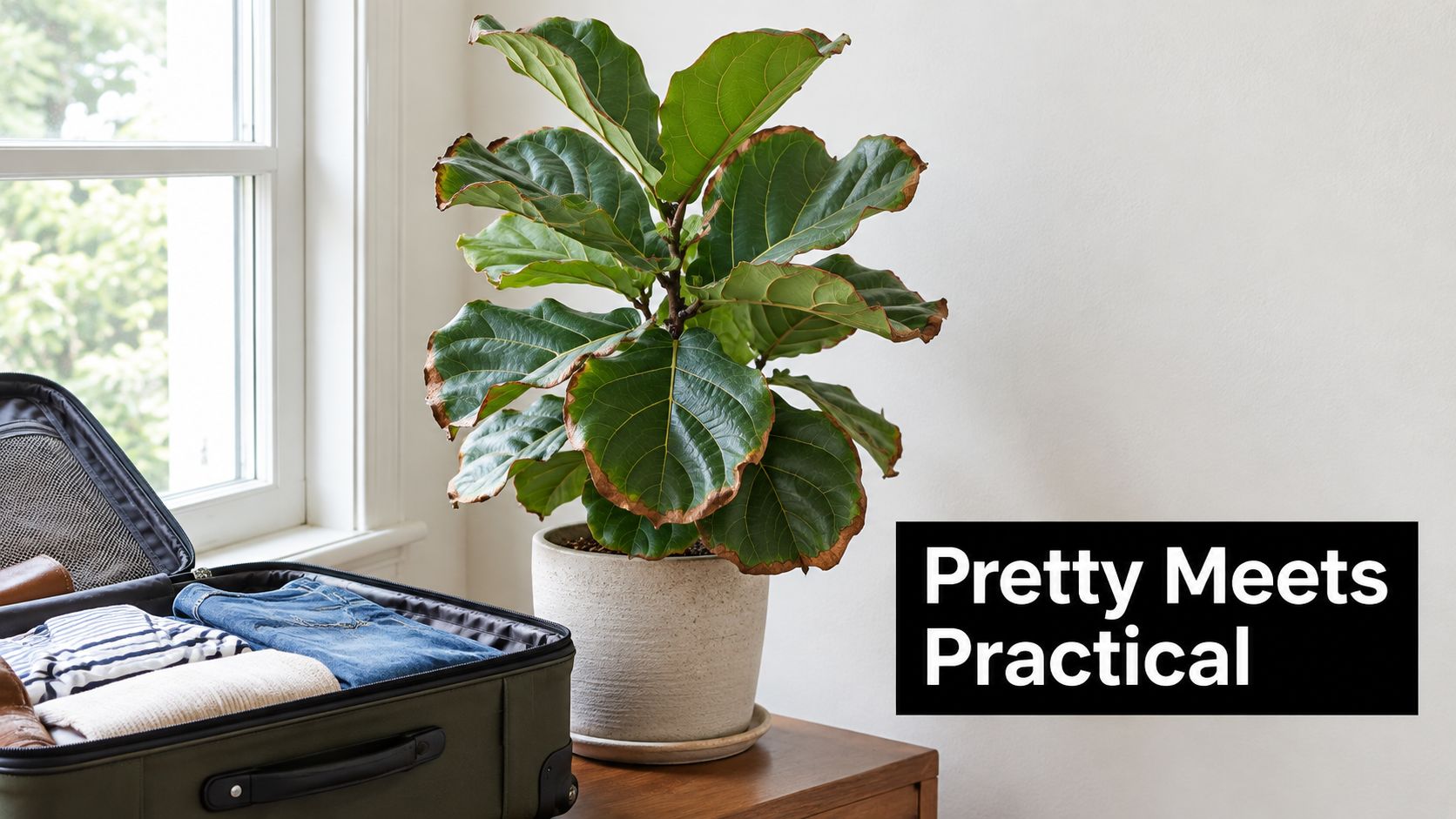
Hand-blown glass watering globes are unusual because they do both jobs. They add colour and shape to a pot while releasing water gradually as the surrounding soil dries. That makes them useful for a short trip, a busy workweek, an office plant that gets forgotten, or a household where watering tends to swing between too much and too little.
The category has room for this combination of appearance and utility. The global plant decor accessories market was valued at $1.21 billion in 2025 and is projected to reach $2.15 billion by 2032, with a projected 8.6% CAGR, according to market research on plant decor accessories. Self-watering products are part of that broader shift toward plant-care items that fit everyday interiors.
Practical rule: A decorative accessory earns its space when it makes watering more reliable, not merely when it makes a pot look finished.
A globe won't rescue a plant that already sits in waterlogged soil, and one small globe won't hydrate a very large pot evenly. Used within its limits, though, it turns a fragile memory task into a visible, simple routine.
How Watering Globes Actually Work
A glass globe is a small reservoir with a narrow stem. The bulb is filled with water, the stem is placed into pre-watered soil, and the surrounding root zone controls how quickly water leaves.
The useful comparison is a paper towel drawing up a spill. As the soil dries, it pulls moisture through the narrow neck. Air enters slowly while water moves down, creating a gentle balance between the water inside the globe and the moisture around the roots. When the soil is already moist, that movement slows.
There are no batteries, pumps, or timers. Gravity helps, but soil moisture does most of the regulating. That's why a globe isn't meant to empty at a fixed rate in every pot.
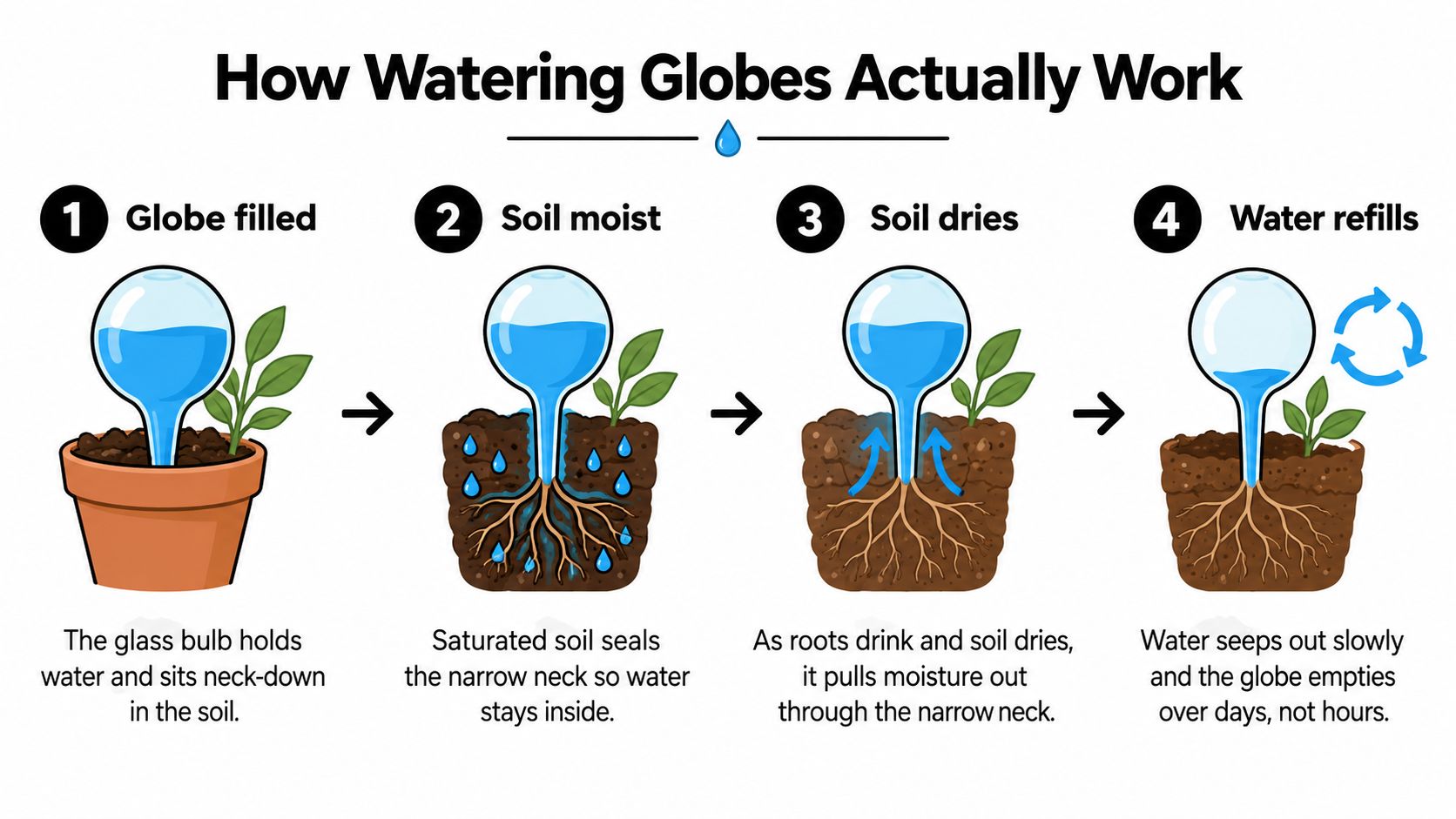
What controls the release
A globe may provide water for several days and up to about two weeks per fill, depending on capacity, pot size, plant thirst, soil density, and temperature. A thirsty leafy plant in a warm room can empty a small globe quickly. A cooler room and a larger globe can slow the schedule.
The watering benchmark remains the root zone, not the surface. Missouri Botanical Garden recommends checking roughly one-quarter of the way down into the pot and waiting if that layer remains wet, while Clemson Extension recommends watering when the mix feels dry at the touch or around the first knuckle depth, as described in this indoor plant watering guidance.
A globe supports that rhythm, but it doesn't replace observation. The plant still needs a check before the globe is inserted and another check after it begins working.
The Five Decorative Accessories Worth Knowing
Decorative plant accessories do different jobs, and judging them only by appearance can create false expectations.
| Accessory | Primary Function | Style Contribution | Best For |
|---|---|---|---|
| Decorative pots | Hold and frame the plant | Colour, texture, and visual weight | Coordinating a plant with a room |
| Plant stands | Raise plants and create height | Sculptural levels and display structure | Shelves, corners, and grouped plants |
| Glass watering globes | Release water gradually | Colourful, hand-blown focal detail | Trips, busy schedules, and forgotten watering |
| Moss covers and top dressings | Finish the soil surface | Softer, more layered presentation | Tidying visible pot surfaces |
| Decorative stakes and trellises | Support climbing growth | Vertical form and room structure | Plants such as pothos, philodendron, and monstera |
A ceramic, terracotta, or stoneware pot improves the display, but it only helps watering when it has suitable drainage or works with a compatible reservoir insert. A stand lifts foliage to eye level and can make a collection feel intentional, yet it doesn't hydrate anything.
Moss covers and decorative top dressings give the pot a finished appearance and can help the surface hold humidity, but they shouldn't be treated as a watering system. Stakes and trellises guide climbing plants and add vertical structure, though the plant owner still has to manage moisture separately.
The accessory that works between visits
Watering globes are the standout hybrid because their visual purpose and care purpose overlap. A clear rainbow or multicolor globe can sit inside the pot as part of the arrangement while its reservoir releases water gradually.
Little Green Leaf's decorative plant watering globes are hand-blown glass bulbs offered in 100 ml, 200 ml, and 350 ml capacities, with 1, 2, 4, and 6 pack options. They're available in multicolor and clear rainbow designs, with optional plastic anti-clog sleeves for the stem.
The honest verdict is simple: pots, stands, covers, and stakes improve the display. Only a watering globe actively cares for the plant between visits.
Setting Up a Globe Without the Guesswork
The setup matters more than the decorative finish. A globe works best when the soil starts evenly moist, the stem enters cleanly, and the owner checks the flow rather than assuming it will behave perfectly.
- Water the plant first. Give the plant a thorough drink the day before, allowing the soil to become evenly moist rather than bone-dry. The globe is a maintenance aid, not a substitute for preparing a dehydrated root zone.
- Make a pilot hole. Use a pencil or skewer to create a hole at a slight angle. Dense soil can clog the stem, and forcing glass into hard soil can crack the stem or bulb.
- Fill the globe. Add room-temperature water to the base of the neck. Keep the opening covered while turning the globe so the water doesn't spill before insertion.
- Insert it at an angle. Push the stem into the prepared hole quickly and gently. A tilted position helps the globe sit securely and makes the coloured glass part of the arrangement.
- Check after two days. Look for steady emptying and soil that feels damp rather than flooded. If the globe drains unusually fast or hardly moves, adjust its angle and inspect the stem.
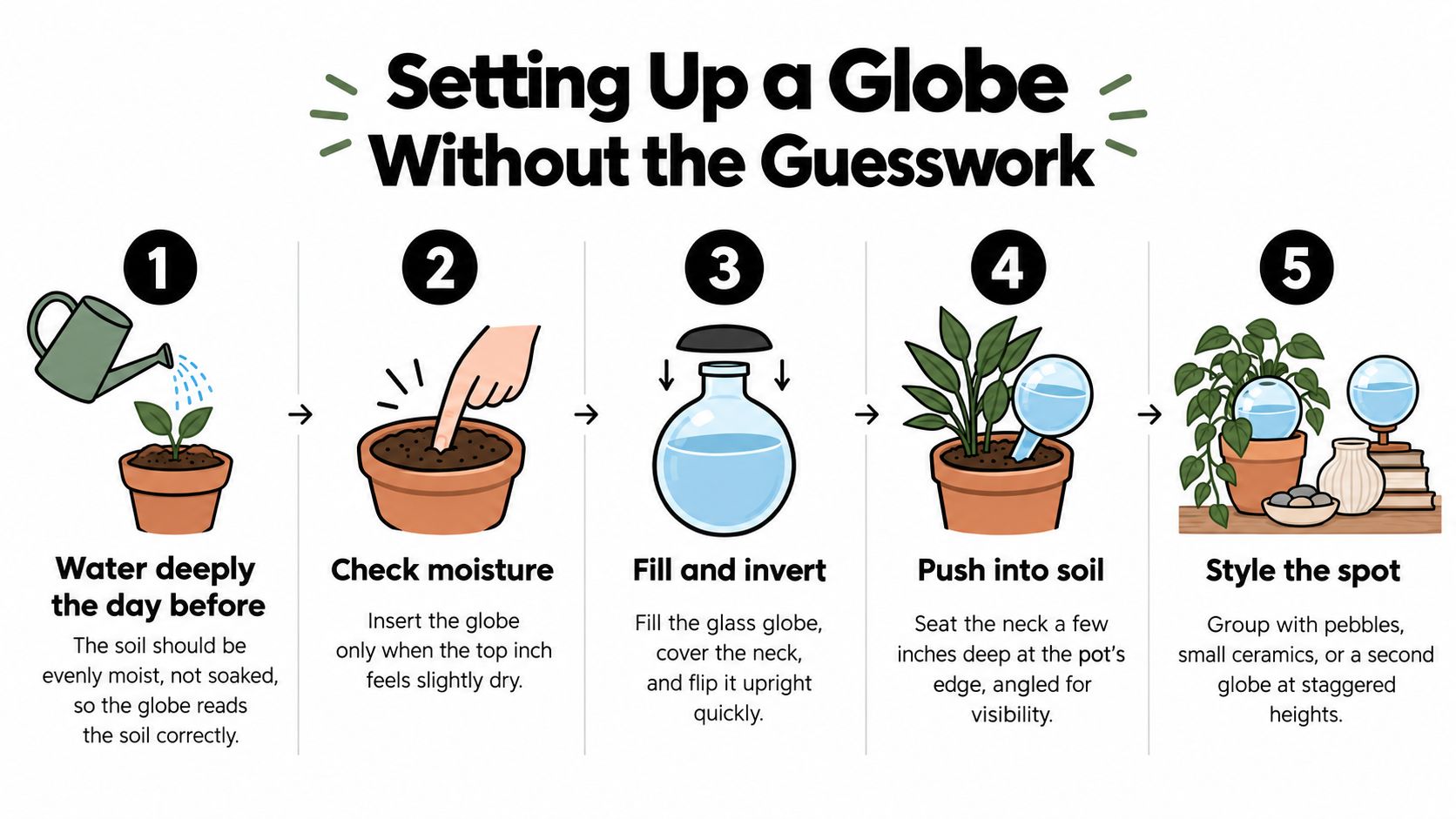
The first check is especially useful before a holiday. It shows whether the pot, plant, and globe are working together before the owner leaves.
Globe vs Spike vs Drip vs Self-Watering Pot
No watering aid is right for every collection. A globe suits someone who wants a visible, attractive reservoir for a pot or a small group of plants. Other methods make more sense when the collection is larger, the owner wants a built-in reservoir, or appearance matters less than automation.
| Method | Duration | Setup | Refill | Clogging Risk | Approx. Monthly Cost |
|---|---|---|---|---|---|
| Glass watering globe | Several days up to about two weeks, depending on conditions | Fill and insert into a prepared hole | Manual, when low | Stem can clog in dense soil | Depends on purchase price and refill frequency |
| Reservoir spike | Several days up to about two weeks, depending on reservoir and conditions | Connect reservoir and place spike in soil | Manual | Porous or narrow tip can clog | Depends on purchase price and refill frequency |
| Drip system | Can run continuously while the reservoir and power source remain available | More involved setup with tubing, reservoir, or power | Reservoir maintenance | Tubing and emitters can clog | Depends on equipment and ongoing supplies |
| Self-watering pot | Reservoir-based, with checks still required | Plant into a compatible pot | Refill built-in reservoir | Wicking path can need cleaning | Depends on pot price and replacement needs |
The globe has a clear advantage for a single decorative plant. It needs no electricity, makes the water level visible, and doesn't force the owner to replace the planter. Its limitations are equally clear: the owner refills it by hand, the stem can clog, and one small globe isn't enough for a very large pot.
A drip arrangement is better suited to a larger collection where several plants need a coordinated schedule. A self-watering pot keeps the reservoir hidden but commits the plant to a particular vessel. A reservoir spike can be practical, though it usually reads more like equipment than decor.
For a broader look at choosing by collection size and watering needs, see the guide to the best irrigation system.
Matching Accessories to Your Space
A small apartment shelf benefits from accessories that solve problems without adding visual bulk. A compact globe can sit near the pot edge, while a slim stand raises foliage without requiring another large piece of furniture. A trailing pothos can use a covered support, but the globe remains the item that addresses the owner's watering routine.
Different rooms, different demands
An office plant often needs a straightforward arrangement rather than a collection of accessories. One medium globe beside a stable stand can keep the care task visible and manageable between meetings. The owner should still check the soil before leaving for a long weekend, especially if the room temperature changes outside working hours.
Outdoor containers and hanging baskets dry faster in warm weather. A globe can help in a terracotta pot or a basket that repeatedly loses moisture, but exposure to knocks, wind, and temperature changes makes secure placement essential. A hanging basket also needs a setup that won't make the globe fall when the basket moves.
Decorative surfaces can complete the arrangement. For renters or apartment owners refreshing a sideboard, a neutral self-adhesive vinyl sideboard can provide a calm background for colourful glass without requiring permanent changes.
Choosing plants and globe capacity
Leafy tropical plants such as philodendron, pothos, and ferns generally suit gradual moisture better than plants adapted to dry intervals. Succulents and cacti don't belong with watering globes because steady moisture can leave their soil wetter than their roots prefer. Plants that specifically need the mix to dry between drinks also require a different approach.
Little Green Leaf globes come in 100 ml, 200 ml, and 350 ml sizes. The smallest size fits a small pot, the middle size suits a more substantial container, and the 350 ml option gives a larger reservoir. The exact match depends on the plant's thirst and the pot's drying behaviour, so the first two-day check matters more than choosing by appearance alone.
Maintenance and Honest Limitations
A watering globe needs only a few habits to remain dependable. After the first setup, lift it carefully and check that the soil is damp rather than saturated. Watch the water level too. Fast emptying can indicate a loose fit or a problem around the stem, while no movement can mean an air pocket or a blocked opening.
A narrow bottle brush and warm water can clean the glass and neck. Rinse thoroughly and avoid vinegar soaks, which can damage the glass. An optional plastic anti-clog sleeve can help protect the stem from soil entering the opening.
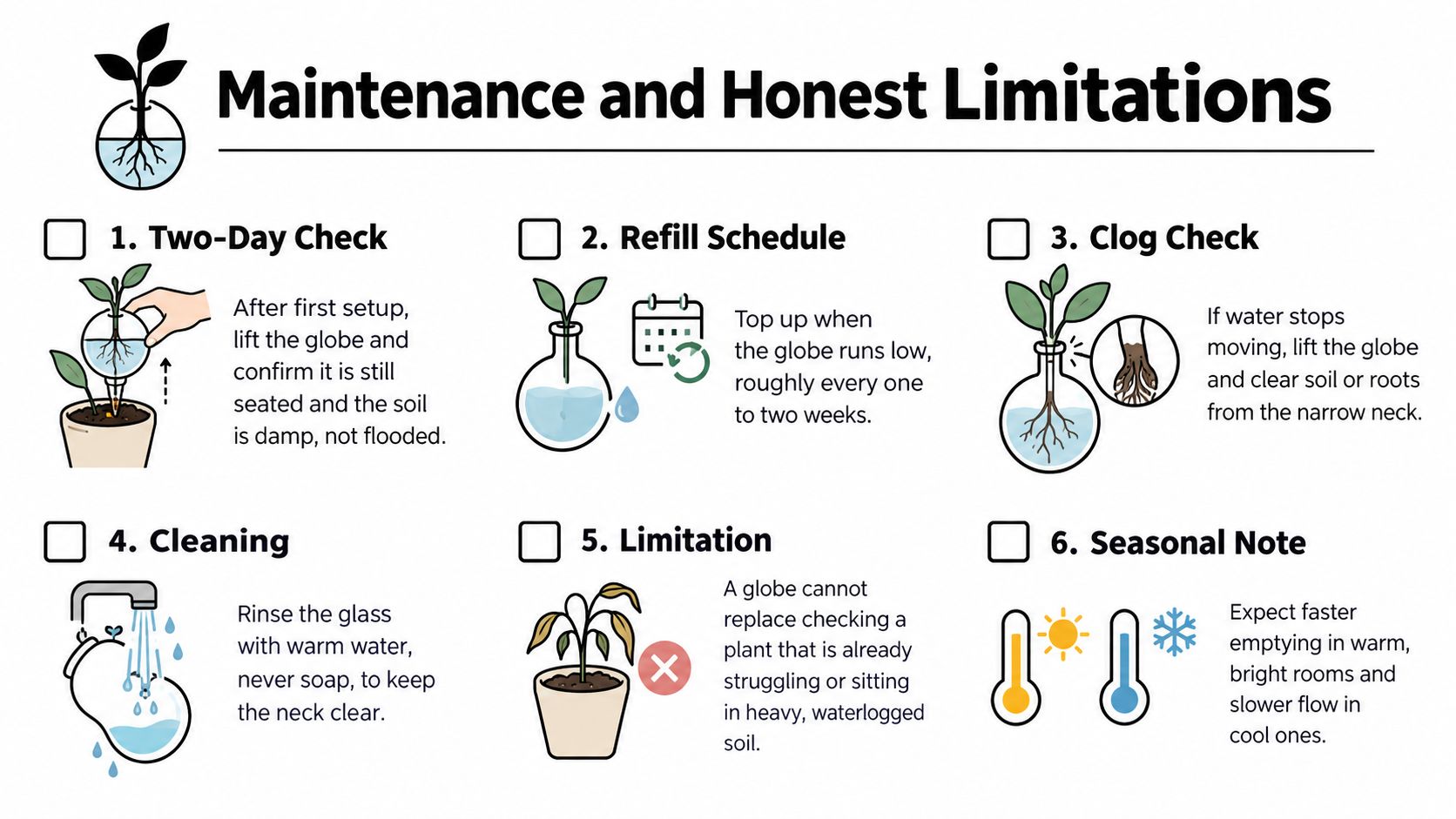
What can go wrong
Dense soil may need another pilot hole before insertion. Roots or compacted material can also obstruct the narrow neck, so the globe should be removed, rinsed, and reinserted rather than pushed harder.
Hand-blown glass can chip or break if it falls onto tile or stone. Felt pads under pots can reduce knocks, and spare globes should be stored in a cloth bag. Other accessories have different needs. Porous watering spikes may collect mineral buildup, while ceramic and metal stands generally need a damp cloth. Cast iron should be wiped dry to avoid rust marks.
Globes aren't appropriate for succulents, cacti, plants that need dry periods, or plants sitting in dense, slow-draining soil. These limits matter because constant moisture can contribute to unhealthy roots. The guidance in how to prevent root rot is a useful reminder that a watering aid cannot correct a waterlogged pot.
A calendar note can help prevent surprises. In warmer conditions, owners may check the globe around every fourteen days, while cooler winter conditions may allow a longer interval, but the plant and soil should decide the refill rather than the calendar alone.
Gifting Decorative Plant Accessories
The strongest gift is the one that solves a problem the recipient already has. A plant lover who travels, a beginner who forgets watering, and an office worker with a neglected desk plant may all appreciate an accessory that looks intentional and does something useful.
Hand-blown glass watering globes make a natural choice because they feel more considered than an ordinary care tool. A pair can be presented with boxed packaging, ribbon ties, and a care card. For a complete starter present, a gift buyer could add a well-draining mix and a small pothos or philodendron, provided the recipient's plant-care needs suit gradual moisture.
Other decorative plant accessories suit different personalities. A mid-century plant stand in walnut or brass fits a new apartment. A decorative moss cover in a sealed tin works for a desk plant owner, while a macramé hanger helps a renter use vertical space without occupying the floor.
Gift shoppers comparing options through a registry can also use EasyRegistry to organise preferences and avoid duplicate presents.
| Budget | Accessory | Best For |
|---|---|---|
| Under fifteen dollars | A single small globe or moss tin | Small gifts and desk plants |
| Twenty-five to forty-five | A globe-and-stand set | New apartment owners and practical plant lovers |
| Sixty-plus | A matched trio of stands or a premium hand-blown set | Major housewarming gifts and established collections |
The exact value depends on the design, packaging, and seller, so shoppers should check what the set includes before buying. A globe gift also deserves a brief warning: it isn't a suitable present for someone whose plants are mostly cacti, succulents, or other dry-loving varieties.
For the most common gifting problem, a watering globe helps prevent a forgotten plant from going completely unattended. Choose the capacity and pack size around the recipient's pots, then include the setup guidance so the present is useful immediately.
Little Green Leaf offers hand-blown glass watering globes in 100 ml, 200 ml, and 350 ml sizes, with multicolor and clear rainbow designs and pack options for different plant collections. Visit Little Green Leaf to choose a decorative watering aid for an upcoming trip, a busy routine, or a thoughtful plant-lover gift.