

Automatic Plant Watering Bulb: How It Works and Lasts
One fill of an automatic plant watering bulb typically lasts up to about two weeks, but smaller bulbs, thirsty plants, large pots, warm rooms, and dry conditions can shorten that time. The right setup matters as much as the reservoir size, especially when someone is leaving plants alone for a holiday.
A wilted pothos after a long day, or a suitcase packed beside a plant collection, makes the watering problem familiar. An automatic plant watering bulb can extend the time between hand-waterings without a pump, battery, or timer, but it isn't a universal watering solution. Its performance depends on how the soil seals around the stem and how quickly the plant uses moisture.
Table of Contents
- What an Automatic Plant Watering Bulb Is and Why It Matters
- How an Automatic Plant Watering Bulb Actually Works
- Choosing the Right Globe Size for Your Pot
- How to Set Up a Watering Bulb the Right Way
- Troubleshooting Common Watering Bulb Problems
- Watering Bulbs vs Spikes, Wicking, and Drip Systems
- Which Plants Love a Watering Bulb and Which Hate It
- Putting It All Together and Getting the Most From Your Globe
What an Automatic Plant Watering Bulb Is and Why It Matters
An automatic plant watering bulb, also called a watering globe or self-watering globe, is a glass reservoir with a long, narrow stem. The bulb is filled with water, inverted, and placed into moist potting soil. Little Green Leaf glass globes are hand-blown and available in 100 ml, 200 ml, and 350 ml sizes, with multicolor and clear rainbow designs.
The device works passively. It doesn't measure moisture electronically or release water according to a programmed schedule. Instead, the stem and surrounding soil create conditions that let water leave gradually as the soil dries. The arrangement is convenient, decorative, and simple, but it trades precise control for an easier daily routine.
A watering globe can help someone who forgets occasional watering, travels for a week or two, manages office plants, or owns outdoor containers that dry quickly. It can also reduce the swing between very dry soil and a large sudden watering. Still, a globe won't compensate for choosing the wrong plant, using a reservoir that's too small, or placing the stem into unsuitable soil.
What controls the watering time
The practical duration varies with four main factors:
- Globe volume: A larger reservoir contains more water.
- Pot size: A large container and a large root system can draw moisture faster than a small pot.
- Plant thirst: Moisture-loving plants generally use more water than plants adapted to dry conditions.
- Temperature: Warm rooms and hot outdoor conditions increase water demand.
Historical evidence shows that the basic idea has been around for decades. A U.S. patent filed on November 12, 1954 described a bulb attached to a hollow ceramic stem and a preferred delivery of about one tablespoon in a 24-hour period. The patent also described one device keeping planter soil moist for a week, with stacked devices extending the period, as documented in the original plant-watering device patent.
The honest expectation is therefore up to about two weeks per fill, not a guaranteed schedule. A globe is a useful buffer between waterings, while the plant owner still needs to check soil and refill when the reservoir is empty.
How an Automatic Plant Watering Bulb Actually Works
The mechanism is easier to understand as a slow straw than as a miniature irrigation machine. Water can move through the narrow stem, but air must enter the globe to replace the water leaving it. Moist soil around the stem restricts that air exchange, while drying soil allows the cycle to continue.
The pressure cycle at the pot
- The globe is filled and inverted.
- A small amount of water wets the soil around the stem.
- Moist soil forms a seal at the soil and stem interface.
- As the surrounding soil dries, it can accept more water.
- Air enters the globe as water moves out, allowing a slow release.
This is a passive soil-moisture feedback loop. The globe doesn't know the plant's name or follow a calendar. The changing condition of the soil affects the pressure balance, so water tends to move when the surrounding area can absorb it.
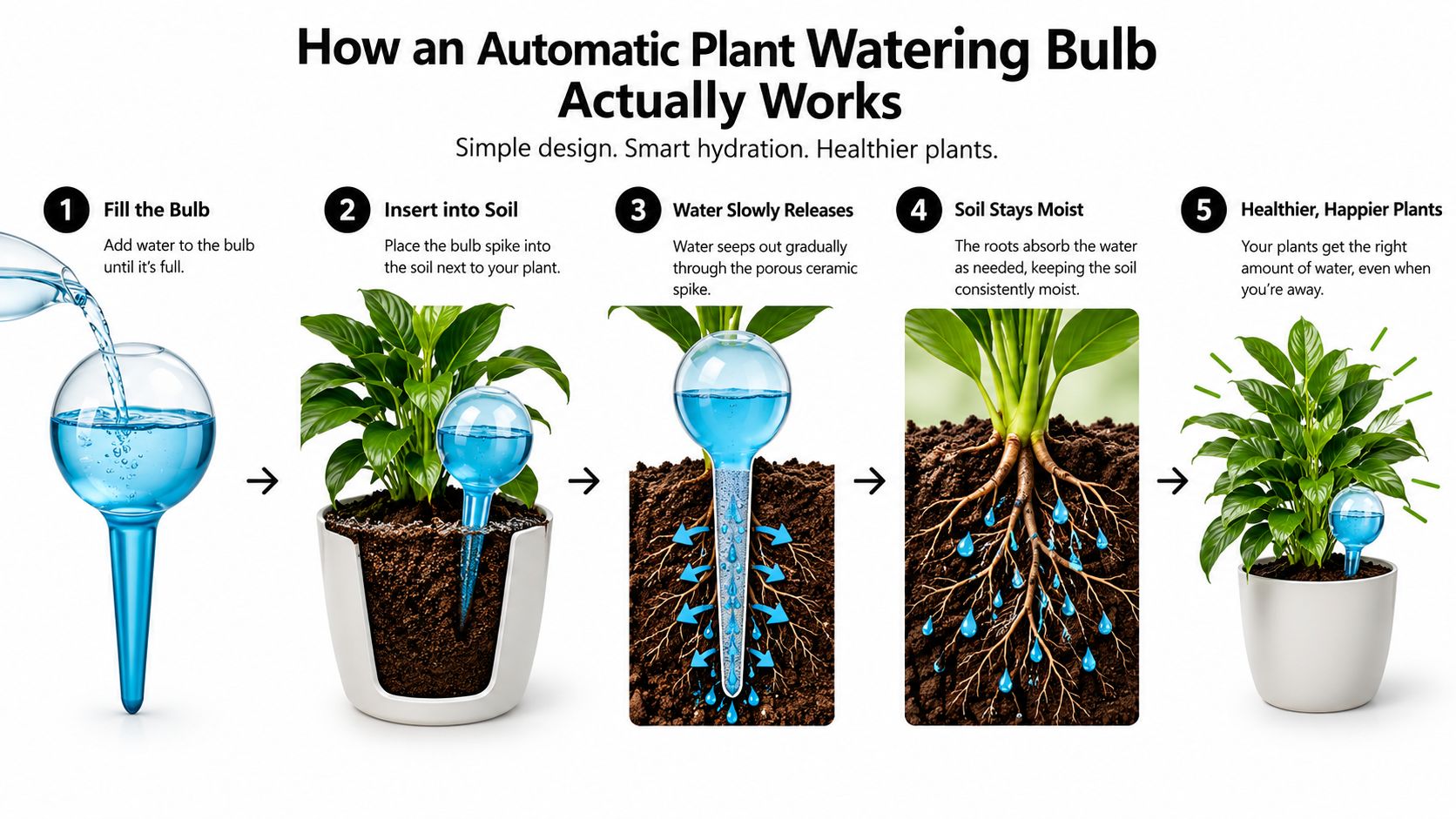
The science behind self-watering globes becomes visible during ordinary use. The glass reservoir feels heavier when full and gradually lighter as water leaves. Soil near the stem should remain slightly damp, but the entire pot shouldn't become permanently saturated.
The narrow neck controls the opening, while the tapered stem creates the contact point with the soil. That contact is critical. If soil is loose, water can escape too quickly. If soil is compacted tightly against the opening, the stem can clog or prevent air exchange. A globe inserted into bone-dry soil may also release too rapidly at first because the dry soil absorbs water before a stable seal forms.
Practical rule: The globe can't regulate well if the stem has no reliable soil seal.
A clogged stem creates the opposite problem. The bulb stays full, but no water reaches the pot. The same simple physics that makes the globe useful also explains its limits, so setup quality matters as much as the glass reservoir.
Choosing the Right Globe Size for Your Pot
Size should be chosen by water demand, not only by appearance. Little Green Leaf offers 100 ml, 200 ml, and 350 ml globes, giving plant owners a way to match the reservoir to the container and the length of the planned absence.
A 100 ml globe suits a smaller pot or a plant with modest demand. A 200 ml globe provides more useful capacity for a medium houseplant. The 350 ml option is better suited to a larger medium planter or a thirstier plant, provided the container can absorb the gradual supply without staying saturated.
No globe size guarantees a fixed number of days. Independent product guidance reports that common 200 ml globes can last roughly 3 to 4 days for a medium houseplant under some conditions, while larger globes around 23 oz, or about 650 ml, have been reported to deliver about 200 ml per 24 hours in particular setups, as described in this watering globe capacity guide. These figures show why volume, plant demand, angle, soil condition, and temperature must be considered together.
Globe size versus container demand
| Globe Volume | Pot Diameter | Expected Days per Fill |
|---|---|---|
| 100 ml | Small pot | Several days, depending on plant demand and temperature |
| 200 ml | Medium pot | Roughly 3 to 4 days for some medium houseplants, with conditions varying |
| 350 ml | Medium to larger pot | Several days up to about two weeks, depending on demand and environment |
These are decision ranges, not promises. A small globe can empty quickly in a large pot, while a large globe can keep a small pot too wet. Overfilling a small container creates an overwatering risk rather than solving the watering schedule.
For a more detailed look at matching reservoir volume to the container, see the guide to globe bulb sizes. Shape is secondary. A rounded, multicolor, or clear rainbow globe may change the look of the display, but volume controls the available water.
How to Set Up a Watering Bulb the Right Way
Good installation prevents most problems. The routine below is useful before a normal watering day and especially before a trip.
- Water the plant first. Moisten the soil thoroughly, but don't leave the pot standing in water. Pre-moist soil helps the globe begin with a stable seal instead of dumping its reservoir into dry soil.
- Make a pilot hole. Use a pencil, finger, or similarly narrow tool to open a path for the stem. Dense soil can crack the glass if the stem is forced directly into it.
- Fill the globe. Fill the bulb under a running tap until water reaches the neck. Handle the glass carefully, avoid sudden temperature changes, and invert it promptly.
- Insert it at an angle. Place the stem near the root zone at roughly a 45-degree angle, rather than pushing straight down through compacted soil. The angle helps seat the stem while reducing pressure on the glass.
- Check after two days. Look at the soil moisture around the insertion point and compare the water level in the globe. If the bulb empties within hours, adjust the soil seal or angle. If no water leaves, lift the globe slightly and check for a blocked opening or soil that is still saturated.
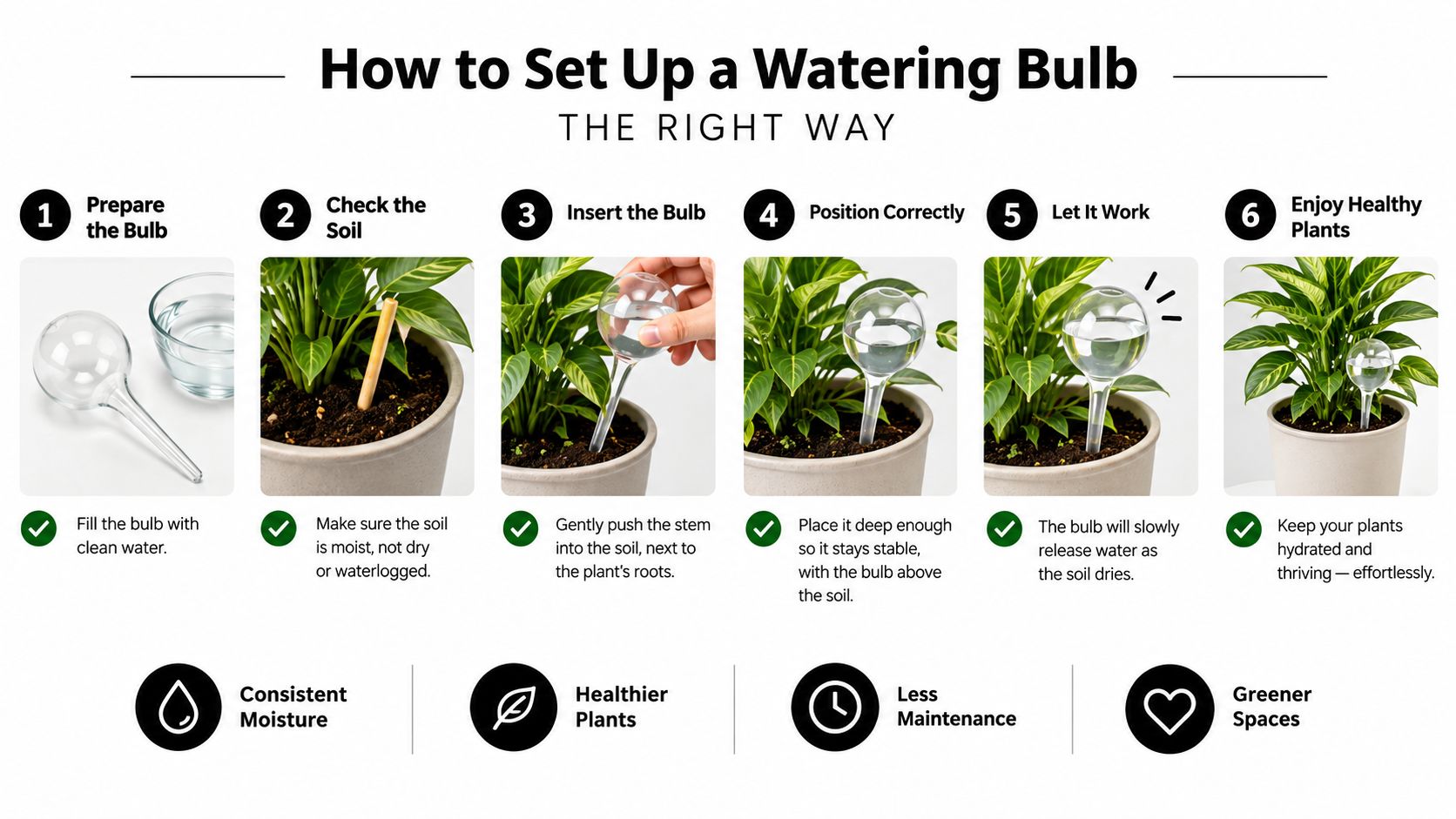
The guide to using plant watering globes can support the first installation. A small pilot hole is especially important in dense soil, and an optional anti-clog sleeve can help keep fine material away from the stem opening.
A two-day observation window is more useful than trusting a printed duration. Once the flow is understood, a phone reminder or calendar note can record the refill date. That turns a forgotten task into a visible routine without pretending that every plant drinks at the same rate.
Troubleshooting Common Watering Bulb Problems
A globe that fails usually gives a clue. The most common clues are an empty reservoir, a blocked stem, cracked glass, or no visible release.
When the globe empties too fast
Very dry soil can absorb the first release rapidly, while loose soil may fail to form a seal around the stem. In that situation, gravity dominates and the reservoir can empty in hours rather than days. Remove the globe, water the plant first, loosen the insertion area gently, and reinstall it through a pilot hole.
A pot that's too large for the globe can create the same mismatch. A small reservoir can't supply a large root zone for long, even when the installation is correct.
When the stem clogs
Fine soil can enter the stem opening during insertion, particularly when the material is damp and compacted. Pull the globe out carefully, rinse the stem with clean water, and clear the opening without pushing a sharp object into the glass.
Little Green Leaf offers optional plastic anti-clog sleeves for the stem. These sleeves can add a physical barrier where loose particles repeatedly interfere with flow.
When the glass cracks
Glass can crack when the stem is forced into hard soil or when the bulb experiences a sudden temperature change. A pilot hole reduces insertion pressure, and water close to room temperature is safer than an abrupt hot or cold fill.
A dropped glass bulb should be replaced rather than reused after an impact. Even a small unseen crack can cause leakage when the globe is inverted.
When no water comes out
No release may mean the soil is already saturated, the stem is blocked, or the soil has formed an overly tight seal. Lift the globe slightly, inspect the stem, and allow the plant's soil to dry to its normal level before trying again.
The core principle is simple: the surrounding soil must be damp enough to seal the stem, but dry enough to accept another slow release. Independent guidance on watering globe flow also highlights the importance of the soil seal, because loose contact can empty the bulb quickly while excessive tightness can stop the flow.
Watering Bulbs vs Spikes, Wicking, and Drip Systems
A watering globe suits a small collection and a short absence, but it is only one way to deliver water. The right method depends on pot size, how long the plant will be unattended, how much setup you can manage, and whether the plant prefers steady moisture or a dry interval.
| Method | Duration | Setup Effort | Clogging Risk | Outdoor Suitability | Cost per Plant | Best-Fit Plants |
|---|---|---|---|---|---|---|
| Glass watering globe | Several days up to about two weeks, depending on volume and conditions | Low | Stem can clog | Suitable for containers and hanging baskets when protected from damage | One globe per plant or pot | Moisture-loving indoor plants and modest containers |
| Porous watering spike | Varies with reservoir and conditions | Low to moderate | Porous tip can clog | Useful where the reservoir can be secured | One spike and reservoir per plant | Containers needing passive delivery |
| Wicking cord | Depends on the water source and plant demand | Moderate | Wick can dry or block | Useful when the water source is protected | Cord plus shared or individual reservoir | Thirsty plants and larger containers |
| Timer-based drip system | Depends on reservoir, schedule, and system design | High | Tubing and emitters can clog | Suitable for planned outdoor setups | Multiple parts per plant or zone | Many plants or extended unattended care |
A globe needs no electricity, app, or programmed schedule. It occupies little space and remains visible in a plant display. Its capacity is fixed, the glass can break, the stem may clog, and a single globe may not supply enough water to a very large pot.
Its release rate also depends on air pressure. As water leaves the globe, the air pressure inside changes and helps limit the flow. Soil that is already damp forms a tighter seal around the stem, so the bulb may last longer. Very dry, loose soil can accept water quickly. A larger pot, a steeper or shallower angle, and a globe with more volume can each change how long the supply lasts. These variables make typical use range from about 5 to 14 days, rather than guaranteeing one fixed duration.
A wicking arrangement provides a continuing connection to a water source, which can suit thirsty plants and larger containers. It needs more installation and a protected reservoir. A timed drip system offers greater control across many plants or during extended unattended care, but tubing, emitters, a timer, and power add parts that a small apartment collection may not need.
Porous spikes and globes both water passively, yet the spike draws from a separate reservoir while the globe releases water from its own chamber. A spike can therefore be useful when you want a larger or replaceable water source. A globe is simpler for one modest pot.
For decorative, low-effort watering, a globe works well when its volume and angle match the pot. Choose a wick or drip arrangement when the container is large, the collection is extensive, or delivery needs closer control.
Which Plants Love a Watering Bulb and Which Hate It
A watering bulb suits plants that prefer consistent moisture and struggle through long dry intervals. For a leafy houseplant during a busy week or short trip, the slow release can act like a small reserve, keeping moisture available without relying on one heavy watering.
Good candidates include:
- Peace lilies and ferns: These commonly prefer soil that stays evenly moist.
- Pothos and philodendrons: A gradual supply can reduce the swing from very dry soil to heavy hand-watering.
- Spider plants: They may respond well when the pot size, soil condition, and globe volume match.
- Calatheas and African violets: These require closer observation, but a slow supply can work if the soil is not kept saturated.
The plant's normal watering rhythm comes first. If a plant likes to dry out between waterings, a globe is usually the wrong choice. Succulents and cacti need dry periods rather than a constant reserve. ZZ plants and other species prone to root problems also require caution, since wet soil around the roots can last too long.
| Plant Category | Examples | Watering Globe Fit | Key Reason |
|---|---|---|---|
| Moisture-loving foliage | Peace lilies, ferns, pothos | Good potential fit | Benefits from steadier moisture |
| Moderate-moisture foliage | Spider plants, philodendrons | Conditional fit | Requires size and flow observation |
| Moisture-sensitive plants | Succulents, cacti, ZZ plants | Poor fit | Prefers drying between waterings |
| Plants prone to root problems | Varies by species | Usually poor fit | Persistent wetness can worsen stress |
The bulb's air-pressure mechanism does not decide suitability by itself. Soil that is already damp may slow release because it seals more closely around the stem. Very dry, loose soil can accept water quickly. A small pot may become saturated sooner than a larger one, while changing the insertion angle can alter contact and flow. Globe volume matters too. These are practical adjustments, but they cannot turn a dry-soil plant into a moisture-loving one.
Overwatering may be harder to notice than underwatering. Mushy stems, yellow lower leaves, and fungus gnats can indicate that the soil is staying too wet. If these signs appear, remove the globe, do not refill it, and reassess the plant's watering pattern. Watering bulbs are generally intended for plants needing regular moisture, not dry-soil plants. A plant's usual preference should guide the choice before convenience.
Putting It All Together and Getting the Most From Your Globe
A reliable setup comes down to five decisions. Each one changes the result more than decorative shape or a broad claim about how long a globe lasts.
- Choose the reservoir for the pot. Use 100 ml for smaller, lower-demand arrangements, 200 ml for many medium houseplants, and 350 ml when the container and plant can handle the larger supply. A very large pot shouldn't depend on one small globe.
- Match the device to the plant. Moisture-loving plants are the natural audience. Succulents, cacti, and plants that need dry intervals need a different watering rhythm.
- Prepare the soil before insertion. Water the plant first, make a pilot hole, and ensure the stem has clean contact with the surrounding soil. This prevents the most common early rush of water and reduces insertion stress on the glass.
- Use a sensible angle. An insertion angle around 30 to 45 degrees can help the stem reach the root zone without forcing it straight through compacted soil. Small changes in position can affect the seal and the release rate.
- Refill according to observation. The first two days reveal more than a fixed calendar estimate. Watch the water level, inspect the soil, and adjust the angle or position if the bulb empties too fast or releases nothing.

A globe extends the gap between manual waterings, but it doesn't replace checking the plant. The first two weeks should be treated as a learning period, with adjustments based on soil moisture, temperature, pot size, and how quickly the reservoir changes. That approach turns a passive device into a more predictable part of plant care.
For plant owners who want a decorative glass option, Little Green Leaf offers hand-blown watering globes in 100 ml, 200 ml, and 350 ml sizes, sold in 1, 2, 4, and 6 packs, with multicolor and clear rainbow designs. The globes are designed to release water gradually as soil dries, and optional plastic anti-clog sleeves are available for the stem.
Little Green Leaf offers hand-blown glass watering globes for indoor plants, office containers, outdoor pots, and thoughtful gifts for plant lovers. Choose a globe size that matches the plant and pot, then visit Little Green Leaf to find a suitable pack and begin testing the flow before the next busy week or holiday.