

Plant Pots Self Watering vs Globes and Which Lasts Longer
A watering aid only helps if it lasts long enough for the problem. For most busy plant owners, self-watering pots usually hold more water than a single globe, but a glass watering globe is often the simpler choice for one plant, short trips, and people who forget to water, while the exact duration always depends on the plant, the pot, the room, and the watering method.
Table of Contents
- Which Watering Help Actually Fits Your Life
- How Self Watering Pots Globes and Other Systems Work
- Head to Head Comparison of Pots Globes Spikes and Drip
- Which Plants and Homes Each Option Suits Best
- How to Set Up a Little Green Leaf Globe for Best Results
- How Long One Fill Lasts and What Changes It
- Choosing Your Watering Solution With Confidence
Which Watering Help Actually Fits Your Life
What kind of watering help do you need. A backup for a few busy days, or a system that can carry a plant much longer with less hands-on attention?
That question matters more than the product category. Readers searching for plant pots self watering are usually trying to solve one of three everyday problems: missed watering, overwatering from guesswork, or leaving plants alone for stretches of time.
A self-watering pot and a watering globe can both help, but they help in different ways. A self-watering pot stores water below the soil and gives the roots access over time. A globe adds a smaller reserve directly into the pot and releases water more passively. One is closer to a built-in pantry. The other is closer to a refillable bottle.
The better question isn't just what works
A better question is this: which system fits your plant, your schedule, and the amount of upkeep you will realistically tolerate?
If you only need support for one small office plant, a simple globe or spike may be enough. If you want steadier moisture for a plant that dries out fast, a self-watering pot often makes more sense. If you care for several plants at once or leave home often, drip systems start to earn their extra setup time.
A useful rule is simple. Larger water reserves often last longer. They also usually ask for more setup, more cleaning, or less flexibility.
So the choice is not only about features. It is about how long the help needs to last, and how much effort you want before and after that fill.
- Self-watering pots: built-in reservoir, better for steady support over time
- Watering globes: simple add-on for one pot and short absences
- Spikes: similar role to globes, with different release styles
- Drip systems: broader coverage for several plants, with more setup
Honest limits matter more than promises
No system runs on a fixed schedule in every home. A fern in a bright warm room drinks differently from a snake plant in a cooler corner. Pot size, soil texture, airflow, and season all change the pace.
Plant type matters just as much. Many moisture-loving plants do well with a steady supply, while drought-tolerant plants often prefer a clear dry period between waterings. Guidance on self-watering planters commonly notes that they suit plants that like more even moisture, while cacti, succulents, and similar plants can struggle if the mix stays wet for too long.
Busy plant owners rarely need a perfect system. They need one that matches real life, covers the right length of time, and does not create a second chore.
How Self Watering Pots Globes and Other Systems Work
Why can two watering aids both claim to “water slowly,” yet one keeps soil evenly moist while another only drips now and then?
The answer is simple physics. Each system moves water in a different way, so each one lasts differently and suits a different kind of plant owner.
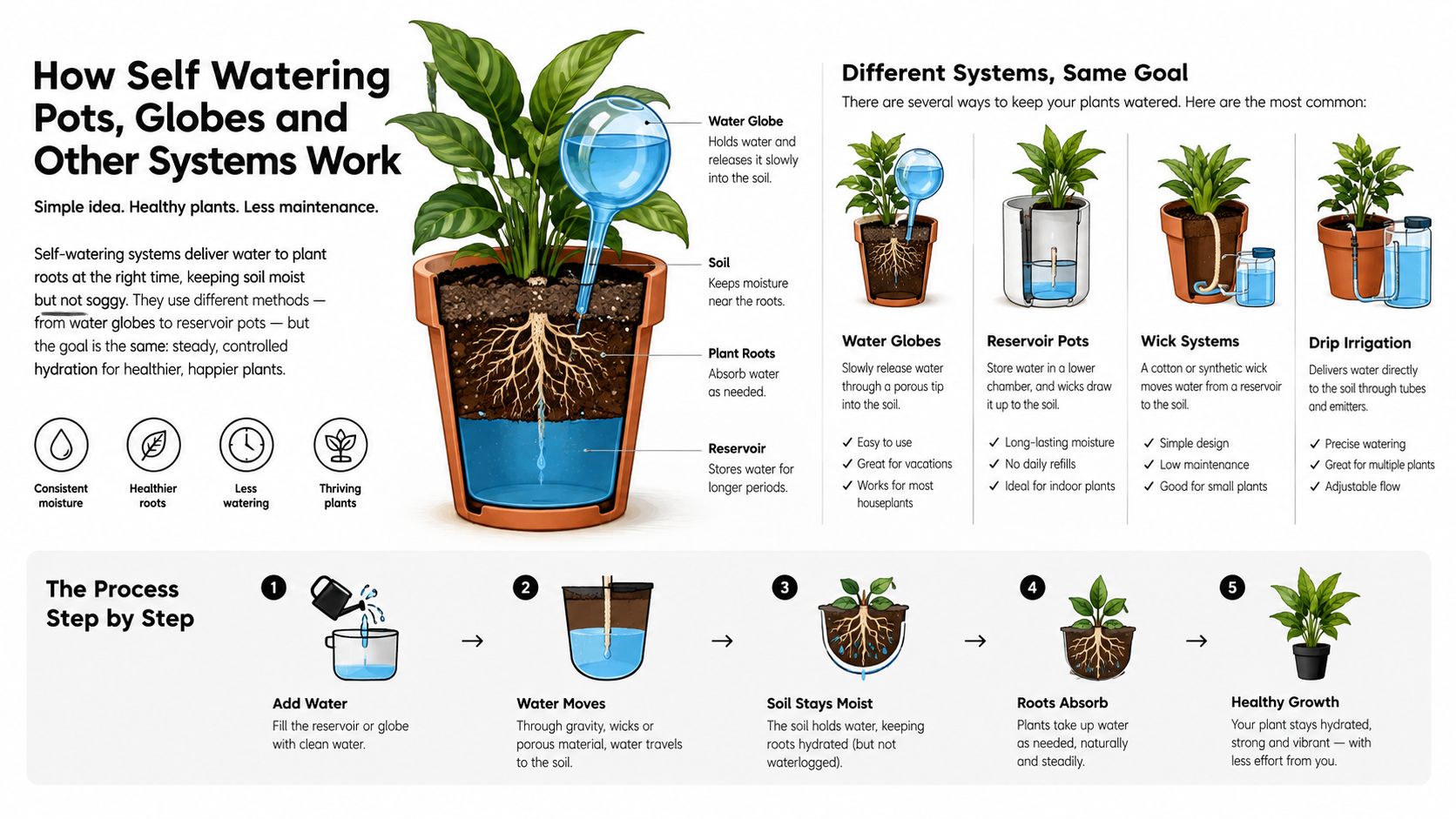
How self-watering pots pull water upward
Most self-watering pots have two zones. Soil sits above. A water reservoir sits below. A wick, foot, or column of potting mix connects them.
Water then rises through that connection by capillary action. A paper towel touching a spill works the same way. The material pulls moisture upward a little at a time instead of dumping it all at once. That is why these pots can support steadier moisture over a longer stretch than a small add-on device.
The tradeoff is easy to miss. A self-watering pot does its best work only when the potting mix and plant are a good match for that steady supply. If the mix is too dense, roots can stay too wet. If the plant likes drying out hard between waterings, the system can work against the plant instead of helping it.
If you want a closer look at the reservoir-and-wick setup, this explanation of how self-watering pots work shows the parts in plain terms.
How a watering globe releases water
A watering globe works by air exchange, not by pulling water up from below.
Once the globe is inserted into the soil, water does not stream out freely. Moist soil around the narrow neck slows the entry of air. As the soil dries and that seal loosens, small amounts of air enter and water can leave. Then the balance shifts again. It behaves more like a pause-and-release cycle than a constant feed.
That explains both the appeal and the limit. Globes are simple for one plant and short gaps in care, but they are less precise than a built-in reservoir system. Soil texture matters a lot. In chunky mix, water may release faster. In compacted or dirty soil, the stem can clog and slow too much.
How spikes and drip systems differ
Spikes usually rely on gravity and airflow through a bottle or reservoir. Drip systems use gravity, pressure, or simple controls to send water through tubing.
Those systems are less tied to the pot's own moisture balance. That can help when you need to water several containers at once or cover a longer absence. It also means setup matters more. Bottle height, tubing position, flow settings, and clogs can all change how much water reaches the soil.
A useful way to picture the difference is this. Self-watering pots are built to create a steady supply inside one container. Globes and spikes are add-ons that release water into the soil. Drip systems distribute water across multiple plants. Each method can work well, but they solve different problems and they do not all last the same amount of time from one fill.
Head to Head Comparison of Pots Globes Spikes and Drip
If your real question is "which one buys me the most time with the least fuss," the comparison gets clearer fast. These systems do not just water plants differently. They also run out on different timelines, ask for different setup effort, and fail in different ways.
Watering Aid Comparison by Real World Criteria
| System | How Long One Fill Lasts | Setup and Refill Effort | Clogging and Maintenance | Works Outdoors |
|---|---|---|---|---|
| Self-watering pot | Often longer than a small single-plant aid because the reservoir is built into the pot. Duration still depends on reservoir size, plant thirst, light, and season. | Moderate at the start because the potting mix and wick zone need to be set up properly. After that, refilling is usually simple. | Reservoirs, wicks, and fill ports need occasional cleaning. If upkeep slips, salts can build up and soil can stay too wet. | Yes, especially for container plants, but heat, wind, and rain can change water use quickly. |
| Watering globe | Usually shorter-lasting than a full self-watering pot, but often long enough for a short trip or a busy week, as noted earlier. | Low effort for one plant. Fill it and insert it. | The narrow stem can clog in dense or messy soil. Cleaning is easy, but it may need to be repeated often. | Yes, though hot sun and moving air can shorten how long one fill lasts. |
| Spike | Variable. Bottle size, insertion depth, and soil contact all change the result. | Moderate. It often takes more adjustment than a globe to get a steady release. | Openings can clog and flow may turn uneven over time. | Often usable outdoors, but weather makes output less predictable. |
| Drip system | Can last much longer if it draws from a larger tank or supply. Actual runtime depends on how the flow is set and how many pots share it. | Highest setup effort. The work makes more sense for several plants than for one. | Tubing, emitters, and connectors need regular checks for clogs, leaks, and shifting flow. | Yes, often a good fit for larger groups of pots if the setup time is acceptable. |
A simple way to read the table is by matching each system to the problem you are trying to solve.
A self-watering pot usually wins when you want steady moisture in one container for the long term. The reservoir sits below the root zone, so the pot acts more like a water pantry than a bottle tipped into the soil. That tends to give a calmer moisture pattern than a globe or spike. In a Royal Horticultural Society watering basket trial, a wick-and-reservoir design used water efficiently and lost little to runoff compared with poorly timed top watering.
A separate capillary wick test points to the same practical lesson. Analysts at Vegetronix found that the reservoir emptied before the soil became critically dry, which suggests that reservoir size can limit runtime more than the wick itself in some setups (capillary wick moisture test).
Globes usually win on speed and simplicity. If you have one plant on a desk, one fern near a window, or a short gap in your routine, a globe can be the least disruptive option because you do not need to repot or build a tubing layout. The tradeoff is control. A globe is easier to add, but it is less precise and usually shorter-lasting than a pot with a true reservoir.
Little Green Leaf offers hand-blown glass watering globes in 100 ml, 200 ml, and 350 ml sizes, with optional anti-clog sleeves. That size range matters because globe choice is really a runtime choice. A small globe may suit a modest houseplant and a short absence. A larger globe can buy more time, but it still does not turn a thirsty plant in bright light into a low-maintenance one.
Spikes sit in the middle. They can help with a single pot, especially if you already like the bottle-style approach, but they often need more trial and error than people expect. Drip systems fit a different life pattern altogether. They make more sense when several containers need shared watering and you are willing to spend more time setting things up once to save time later.
Which Plants and Homes Each Option Suits Best
A watering aid should match the plant's moisture preference and the owner's routine. That's where many buying decisions go wrong. People shop by product type first, then discover the plant itself wanted the opposite watering pattern.
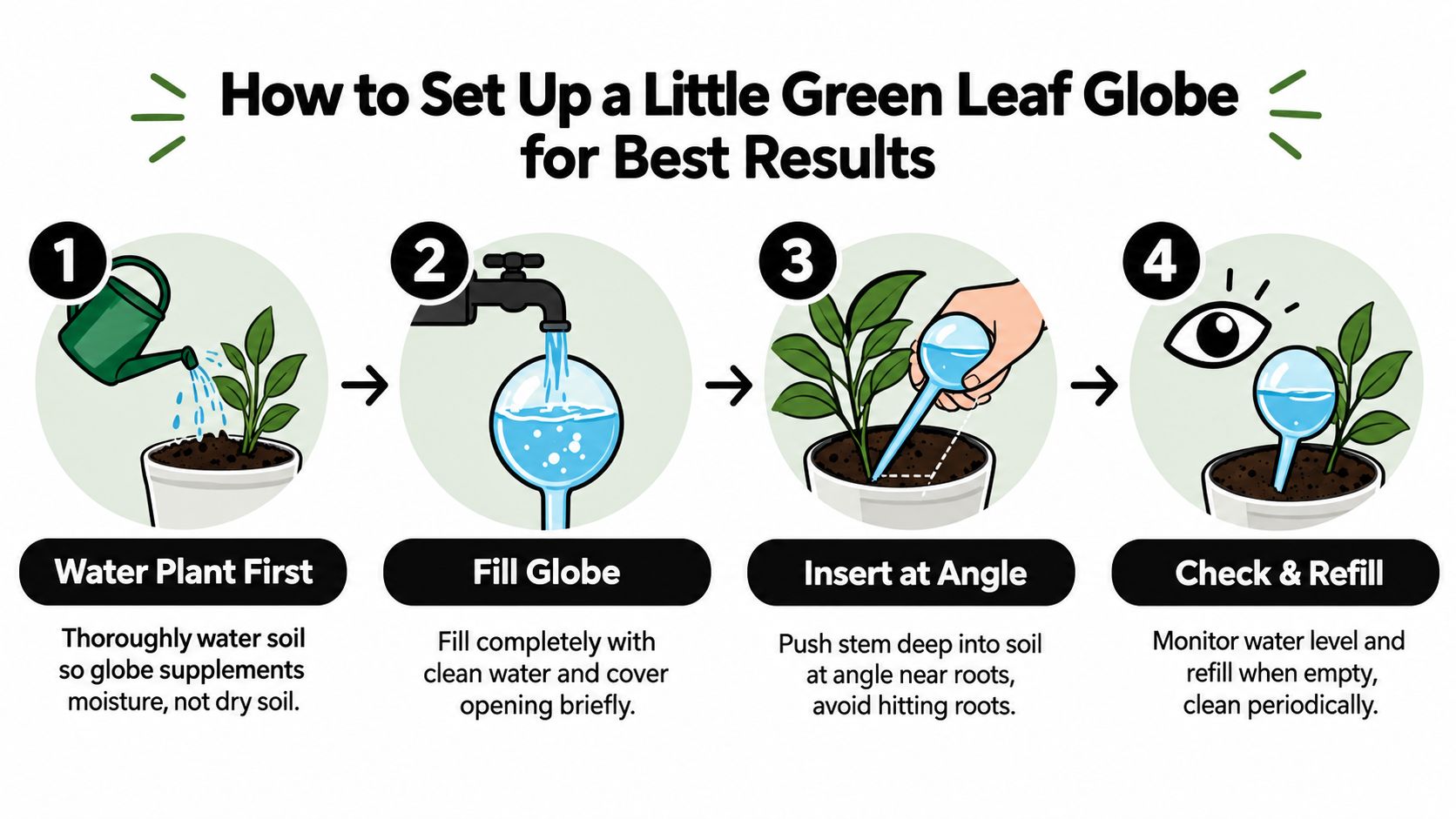
Plants that usually like these systems
Plants that prefer steady, moderate moisture are the clearest fit for both self-watering pots and watering globes. In many homes, that includes common foliage plants such as pothos, peace lilies, and ferns.
These plants often struggle more from inconsistent watering than from the idea of stored water itself. If the owner tends to let the soil go dry, then overcorrect with a heavy soak, a passive watering aid can smooth out that cycle.
A globe is often the simpler fit when the goal is support rather than a full container change. A self-watering pot may suit the same kind of plant when it needs a larger ongoing reservoir and the owner is willing to maintain it.
Plants that usually don't suit them
Some plants need the soil to dry between waterings. That's where caution matters most.
Guidance for both self-watering planters and watering bulbs consistently warns that succulents and cacti don't suit moisture-holding systems well, because keeping their soil consistently moist can damage them.
If a plant survives on dry intervals, a globe or a filled reservoir can solve the wrong problem.
Homes, routines, and travel patterns
The best system often depends less on plant knowledge and more on the owner's week.
- Busy apartment routine: A globe is often enough for one or two houseplants that get missed during the workweek.
- Office plant: A passive aid helps during weekends and inconsistent desk watering. Lower-light offices may also slow water use, so refill timing tends to stretch.
- Short trip or vacation: Travel guidance commonly suggests checking moisture before leaving and watering only if the top inch is dry. It also notes that many drought-tolerant plants can go several weeks without water, while typical houseplants are often watered about once a week or as needed (houseplant travel watering guidance). That makes a globe a reasonable support tool for many common houseplants during a short absence.
- Outdoor containers and hanging baskets: These dry faster, so larger reservoirs or more frequent refill checks matter more.
When outdoor pots change the answer
Outdoor containers get hit by warmth, moving air, and faster drying. A watering aid that feels generous indoors may feel small outside.
That doesn't mean globes fail outdoors. It means expectations need adjusting. A globe can help buffer dry spells in a container or basket, but a larger plant in summer may need a larger water source, more than one globe, or a different system altogether.
For offices and travel, another practical issue comes up: unattended watering isn't only about convenience. Reservoir shape, overflow protection, and cleaning affect how safely a planter performs over time. Consumer guidance on self-watering systems often points to algae, mineral crust, and refill timing as concerns, especially when people want a “hands-off” solution for indoor spaces (consumer FAQ on self-watering planter maintenance and unattended use).
How to Set Up a Little Green Leaf Globe for Best Results
Why do some watering globes seem to last nicely for days while others empty too fast or barely release at all? The setup usually explains the difference.
A globe works by responding to what the soil is doing around its stem. If that small contact point is wrong, the globe cannot release water in a steady, useful way. The goal is simple: place stored water where the root zone can draw on it gradually, without flooding one spot or sealing the opening shut.
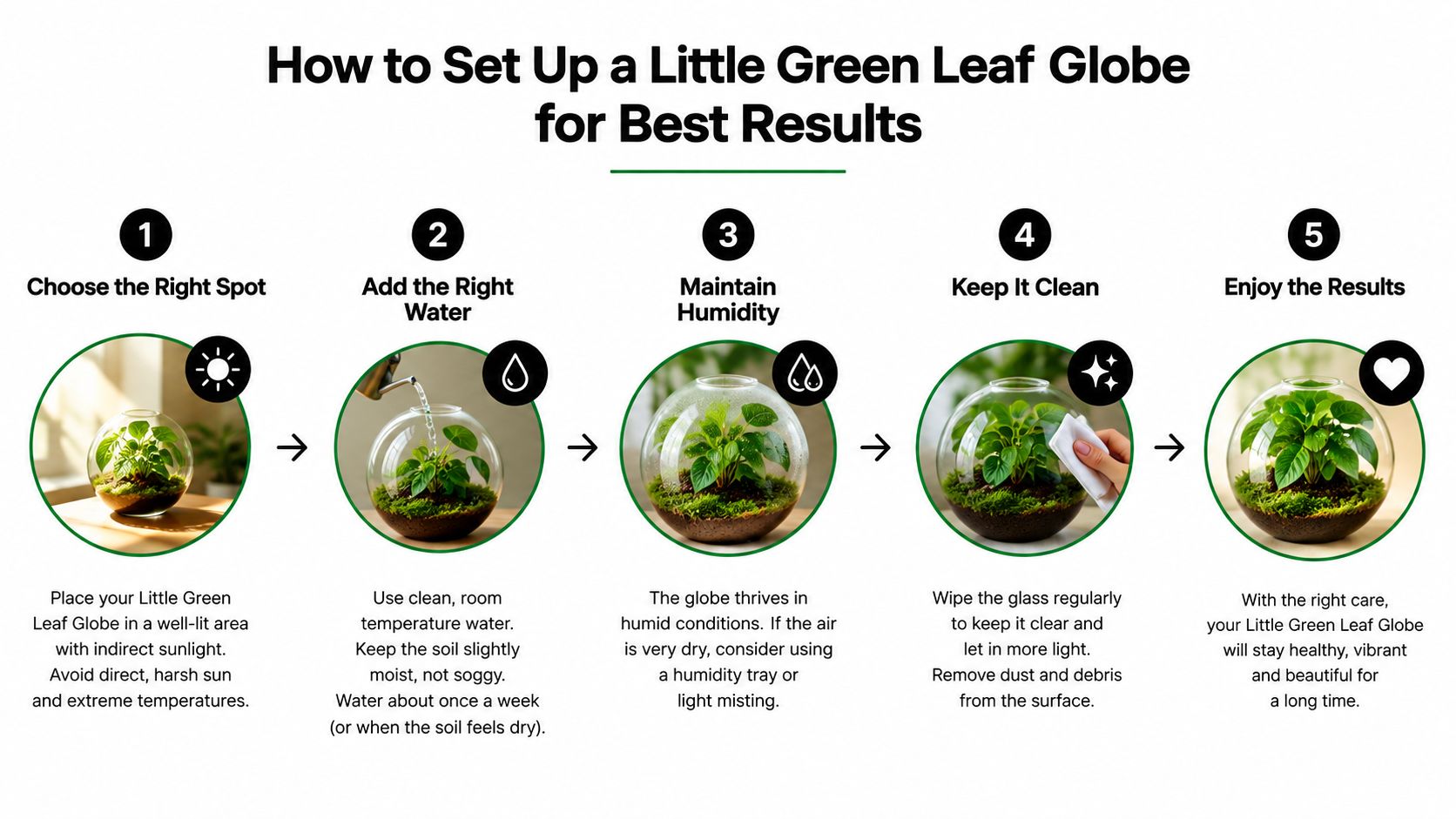
The setup that prevents most problems
- Water the plant first. Start with evenly moist soil. A globe helps maintain moisture. It does not re-wet a bone-dry pot very evenly, and dry mix can make the release pattern less predictable.
- Make a pilot hole if the mix is compact. Dense soil can plug the opening or make insertion feel like pushing a straw into clay. A chopstick, pencil, or similar tool creates a clean channel so the stem goes in without force.
- Fill the globe fully and match the size to the job. Little Green Leaf globes come in 100 ml, 200 ml, and 350 ml sizes. A small globe suits a smaller pot or a plant that dries slowly. A larger globe gives a longer buffer, which is more helpful for fuller plants, warmer rooms, or short trips.
- Insert it at a slight angle near the root zone. A slight angle helps with stability and keeps the tip from pressing straight into packed soil at the bottom. Place it where roots can access the moisture, but not so close to the stem that one area stays too wet.
- Check the pot after about two days. This first check is your calibration step. If the soil still feels balanced and the globe level is dropping gradually, the setup is working.
Quick diagnosis: If the globe empties fast, the hole around the stem may be too loose. If the water level barely changes and the soil is getting drier, the opening may be blocked.
Small adjustments matter
A globe is a bit like a slow feeder. It works best when the opening has good contact with the potting mix, but still has enough air exchange to release water bit by bit. That is why two similar plants can get different results from the same globe.
Loose, chunky mix often releases faster. Heavy or compacted mix can slow things down. If the first placement is not working, adjust the angle or move the globe slightly rather than assuming the globe itself is the problem.
Optional anti-clog sleeves can help keep fine particles out of the stem. Glass also needs gentle handling. Insert it slowly and avoid forcing it into a tight pot.
If you want a product-specific walkthrough, this guide to using plant watering globes shows the steps in more detail.
How Long One Fill Lasts and What Changes It
Most buyers want one answer: how long will it last? The honest answer is up to about two weeks in favorable conditions, with many real-world setups falling somewhere in the 5 to 14 day range, and the duration changes with the plant, the pot, the room, and the globe size.
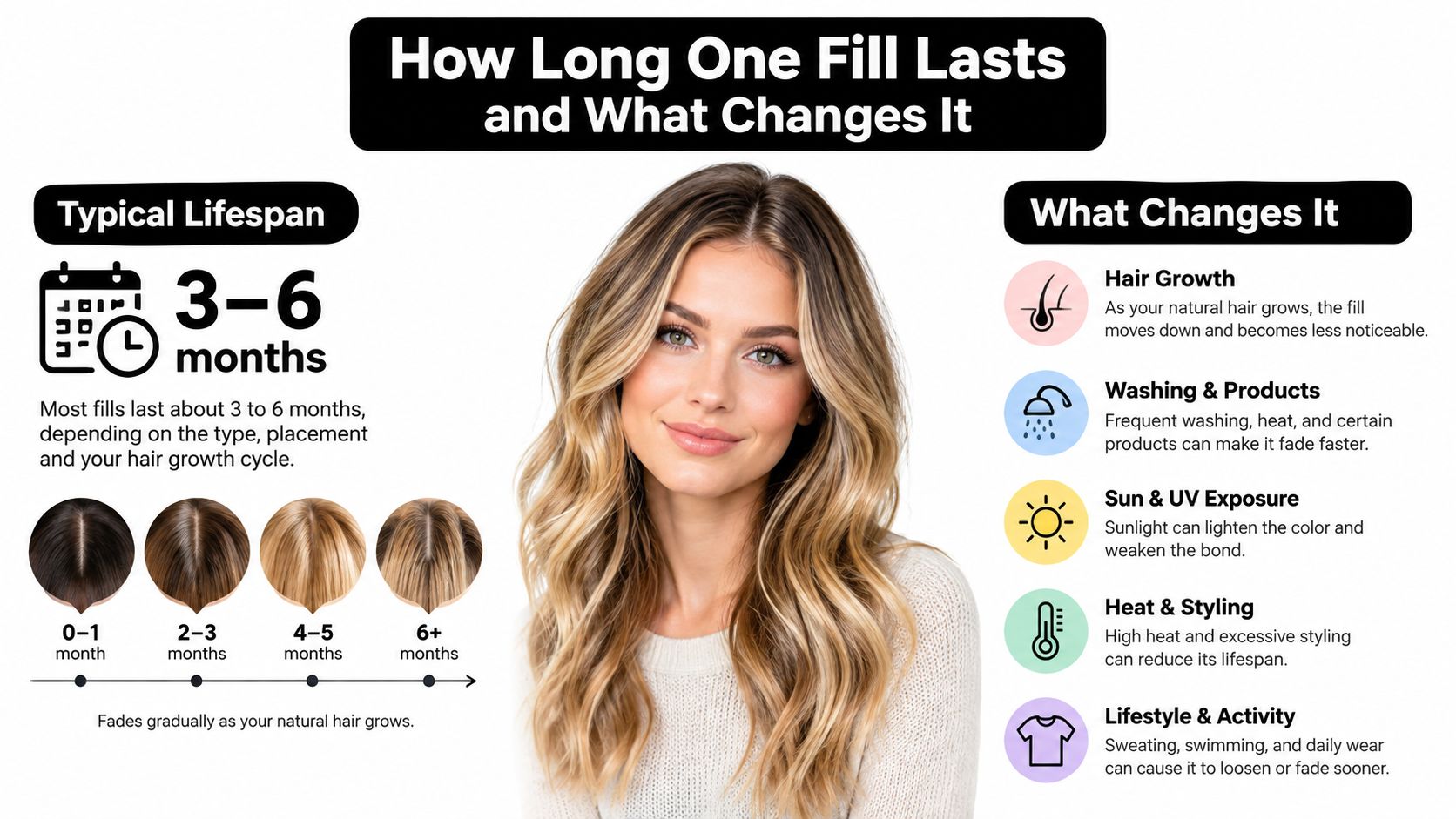
What shortens the duration
Several conditions make a globe empty faster:
- A larger pot with a thirsty plant: more roots can pull more moisture
- Warmer rooms: water demand usually rises
- A smaller globe: less stored water means less buffer
- Faster drying around the stem: airflow and heat can change the release pattern
The passive mechanism behind a globe depends on the soil around the stem drying and allowing air exchange. That's why no brand can promise one exact number of days for every home.
What helps it last longer
A 350 ml globe usually lasts longer than a 100 ml globe because it holds more water. A plant in a milder room may also use water more slowly than the same plant near stronger warmth.
Independent reviews consistently place self-watering bulb duration at roughly 5 to 14 days, which is why “up to about two weeks” is realistic as a range but not as a guarantee (watering globe review roundup).
How to test and adjust without guessing
The two-day check matters more than the day-one setup. If the globe is nearly empty too soon, the owner can try a larger size, better insertion, or more than one globe for a larger pot. If the stem clogs, a rinse and reinsertion usually solves the issue before the plant suffers.
Cleaning matters because any narrow opening can collect debris or mineral residue over time. A globe that worked well once can slow down later if that opening narrows.
The right goal isn't “longest possible.” The right goal is steady moisture for the specific plant without keeping the pot constantly soggy.
Choosing Your Watering Solution With Confidence
What will keep your plant healthier in your real home for the next week or two. A built-in reservoir, a globe, or no stored-water system at all?
The clearest way to choose is to start with duration, then match that to the plant and your routine. A self-watering pot usually gives a longer buffer because it stores more water below the soil. A globe usually gives a shorter buffer, but it is often easier to add to one plant without repotting or setting up tubing. For plants that want the soil to dry well between waterings, neither option is a good shortcut.
A simple way to picture it is to treat each system like a different size water tank. Bigger tanks tend to last longer. Smaller tanks are easier to place, but they run out sooner and need closer watching.
A simple decision checklist
- Choose a self-watering pot if the plant prefers steadier moisture, you want longer support between refills, and you do not mind checking and cleaning a reservoir.
- Choose a globe if one or two plants need help during busy weeks, weekends away, office hours, or a short trip, and you want something simple to insert and refill.
- Choose a multi-plant system if several pots need watering on one schedule and you are willing to spend more time setting it up and adjusting flow.
- Choose none of these if the plant needs pronounced dry periods, including many succulents and cacti.
The honest answer for readers searching plant pots self watering is that the best option depends less on features and more on how long the water source lasts in your conditions. A thirsty plant in a larger pot often benefits more from a true reservoir. A medium houseplant that dries out a bit too fast on a shelf may do well with a globe for light support.
Limits matter here. Self-watering pots can keep soil too damp for plants that dislike constant moisture. Watering globes can be too small for large, fast-growing plants or long absences. Neither tool removes the need to check the plant. They reduce how often watering needs your full attention.
Little Green Leaf offers hand-blown glass watering globes in 100 ml, 200 ml, and 350 ml sizes for plant owners who want a simple stored-water option without timers or a more involved setup. For single plants and shorter refill windows, that can be a practical fit. Explore the options at Little Green Leaf.