

Cactus Watering Frequency: A Calm, Practical Guide
You're standing beside a small cactus with a watering can in your hand, wondering whether today is the right day. The soil looks dry on top, but you remember hearing that cacti can go weeks without water. One care guide says every week. Another says once a month. You don't want to leave your plant thirsty, and you definitely don't want to cause root rot.
That uncertainty is normal. Cactus watering frequency isn't really a calendar question. It's a soil question. Once you learn how to check moisture below the surface, notice changes in light and temperature, and water when the root zone is dry, cactus care becomes much calmer.
Why Cactus Watering Can Feel Confusing at First
A new plant owner often begins with the same small dilemma. The cactus sits in a bright room, looking perfectly still, while the watering can waits nearby. The owner checks the calendar and finds conflicting advice, then checks the plant and sees no obvious sign of thirst.
The problem isn't a lack of care. Most beginners haven't been shown what healthy cactus soil feels like. The surface may look dusty while deeper soil remains damp. A pot near a warm window can dry much sooner than an identical pot in a dim corner. That's why a fixed routine can create more confusion than confidence.
The fear of overwatering makes the decision feel even heavier. Stories about soft stems and rotting roots can make every watering seem risky. Cacti do store water in specialized tissues, and their roots need air as well as moisture, so soil that stays wet for too long can cause trouble. Guidance for indoor desert cacti commonly emphasizes waiting for complete dryness, with intervals changing from roughly every 14–21 days in spring and summer to every 4–6 weeks in autumn and winter in ordinary indoor conditions, according to this cactus watering frequency guide.
A reassuring starting point: You don't need to identify the perfect schedule today. You only need to learn one reliable dryness check.
Over the next week, practice touching the soil at depth before you reach for water. Notice how quickly your pot dries in its current spot. That small habit will tell you more than a reminder set for the same day every week.
The Simple Rule Behind Cactus Watering Frequency
The most useful cactus watering habit has two parts: let the soil dry fully at root level, then water thoroughly until excess water drains from the bottom. This dry-to-soak rhythm gives the entire root zone a drink, followed by the dry air roots need.
Start with the simplest test.
- Use your finger for a small pot. Push a finger into the mix as far as feels safe, ideally about 2 inches. If the soil still feels cool or damp at that depth, wait. Patch Plants' cactus care guidance recommends using root-zone dryness rather than a fixed calendar, with indoor intervals often falling between 7–14 days in warm, bright growing conditions and once a month or less during winter dormancy.
- Use a wooden chopstick for a deeper container. Push it down into the mix, leave it briefly, and pull it out. Damp soil clinging to the wood means the lower root area still has moisture. A clean, dry chopstick suggests the pot is ready for a full watering.
- Use a moisture meter when depth is hard to judge. This can help with large or awkward containers where your finger or chopstick can't reach the middle. Some technical cactus guidance recommends watering near 15% substrate moisture in spring, summer, and autumn, while keeping winter moisture above 10% and below 40%, as explained in this technical cactus watering guide.
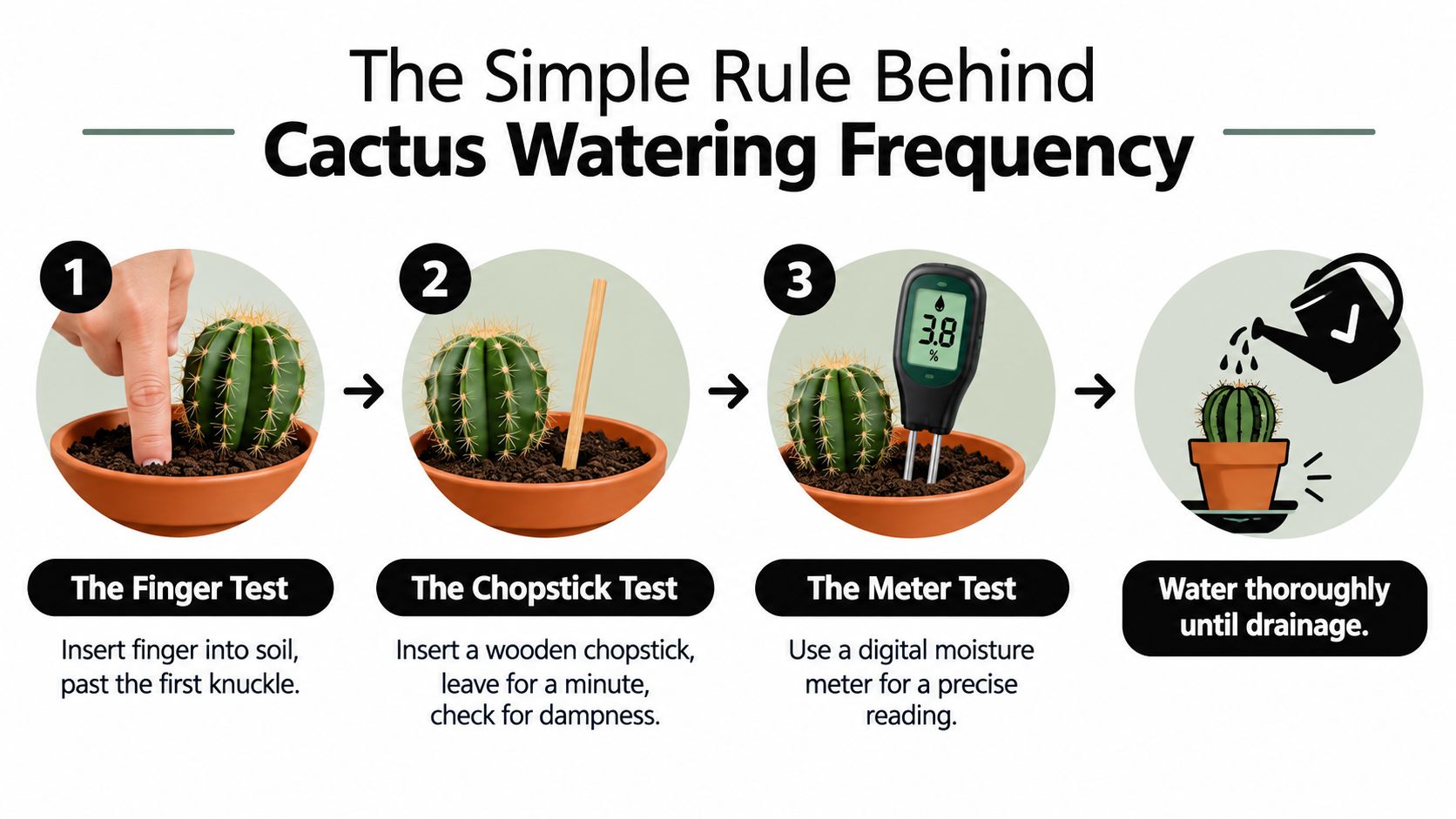
Example intervals can still help you get started. A small pot in bright spring light might dry in about 10–14 days, while a larger pot in autumn may take 3–4 weeks. Treat those as observation points, not promises. The answer is always the same: test first, then soak only when the mix is dry throughout.
For a gentle walkthrough of the same approach, see how to water succulents. Pour slowly around the soil, let water leave the drainage hole, and empty any saucer afterward.
How Light, Temperature, and Pot Choice Shift the Rhythm
Two matching cacti can need different care because their homes create different drying conditions. A plant on a bright south-facing windowsill may use water quickly, while the same pot in a dim apartment corner can stay damp for much longer.
Light matters first. Bright light supports active growth and increases evaporation from the mix. Low light slows the plant and often leaves the root zone wet for longer. Temperature and airflow add another layer. A warm, dry room pulls moisture away faster than a cool, humid room, while heating vents can dry the upper mix without necessarily drying the deeper roots.
The container also changes the pace. Unglazed terracotta is porous, so moisture can move through the pot walls and the mix often dries more quickly. Glazed ceramic and plastic hold moisture longer. A gritty cactus blend generally releases water faster than a heavy, peat-rich houseplant mix.
| Condition | Effect on Watering Frequency |
|---|---|
| Bright, warm windowsill | Soil usually dries sooner, so check more often |
| Dim apartment corner | Soil may stay damp longer, so extend the interval |
| Unglazed terracotta | Air and moisture move through the pot, often shortening the interval |
| Glazed ceramic or plastic | Water remains longer, so deep checks matter |
| Gritty cactus mix | Excess water drains readily and the mix dries faster |
| Heavy, peat-based mix | Moisture lingers around roots, so watering may need to wait |
A cactus in a three-inch terracotta pot and one in a six-inch glazed pot shouldn't automatically share a watering day. Pot size changes how much mix holds moisture, and pot material changes how quickly that moisture escapes.
Use the location as your guide: The calendar gives you a place to begin. The soil tells you when to act.
If the top looks dry but the chopstick shows dampness below, hold off. Your cactus isn't being neglected. You're protecting its roots by responding to the conditions it has.
A Calm Seasonal Rhythm for the Whole Year
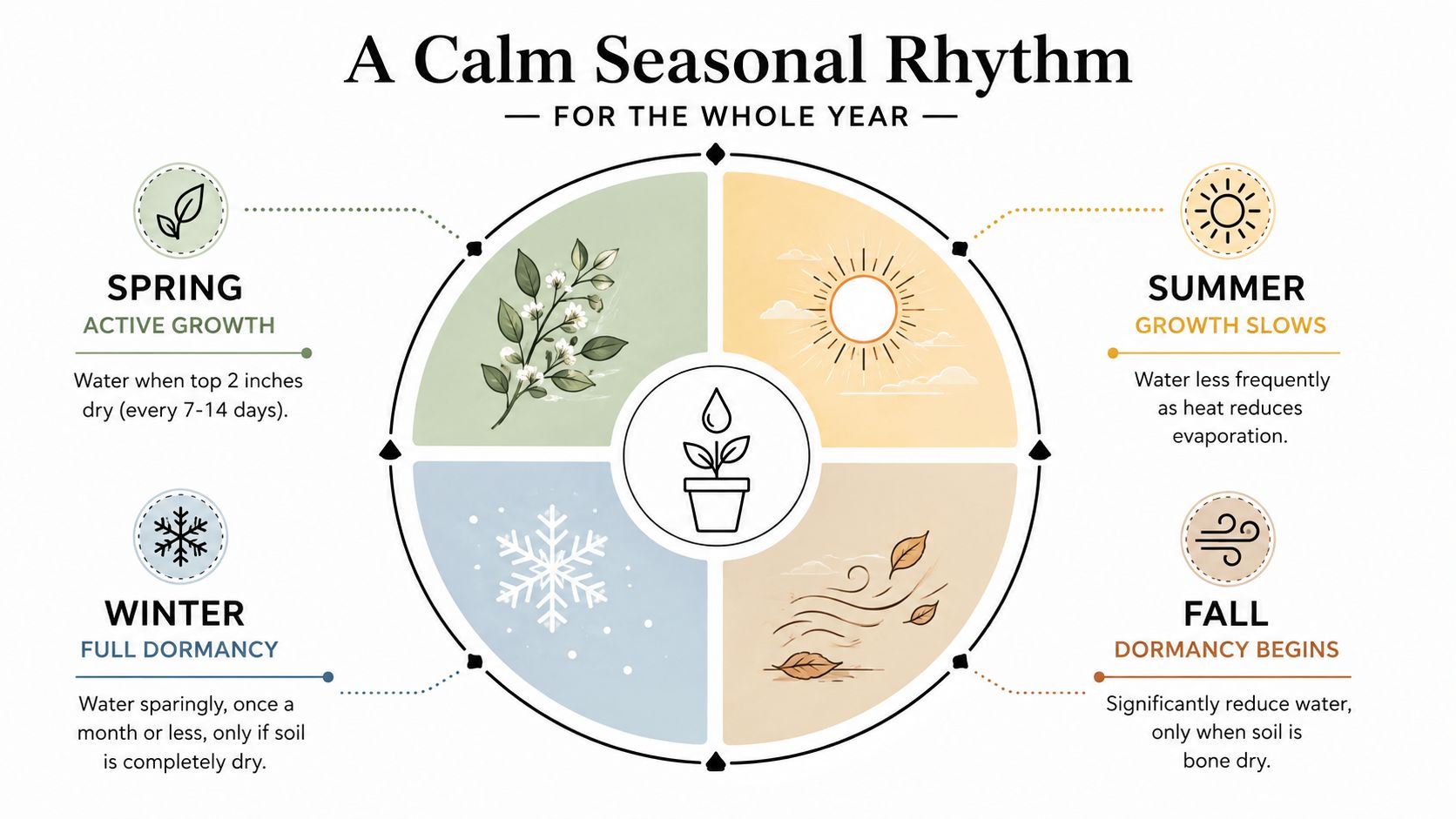
Cactus watering frequency naturally rises and falls with the year. Many desert cacti grow more actively in brighter, warmer periods, then slow down as light and temperature decline. Seasonal care works best as a gentle adjustment, not a sudden change in routine.
Spring brings renewed activity. Look for fresh growth, new pads, or a fuller appearance. Indoor cacti commonly dry in one to two weeks during active growth, though the root zone still needs to be dry before watering. Check the soil at depth, then give a complete soak.
Summer can dry pots quickly, especially in bright light, heat, or moving air. Check every 7–10 days, but don't water automatically. Some cacti may slow down during intense heat, so the soil remains the deciding signal.
Autumn usually asks you to slow down. Cooler nights and lower light often reduce growth. Intervals can stretch toward 2–3 weeks, or longer if the mix stays damp. Slight wrinkling can signal that the plant is using stored water, but always pair visual cues with a soil check.
Winter is the quietest period for many desert cacti. Indoor pots may go 4–6 weeks between soakings, and some guides recommend once a month or less, especially when the plant is cool and dry, as described in this seasonal cactus care guide. Outdoor patio plants in wet winter areas may need shelter from prolonged rain.
This short video also demonstrates the wider seasonal logic behind cactus care.
Reducing water in autumn and winter is healthy. Many spring problems begin when owners pour too eagerly after a quiet winter, before the plant has resumed active growth.
Common Watering Habits That Quietly Stress Cacti
Beginner mistakes usually come from kind intentions. You're trying to offer a little care often, but cacti generally respond better to a complete drink followed by a dry pause.
| Common Habit | Why It Stresses Cacti | Gentler Pattern |
|---|---|---|
| Shallow sips every few days | They wet only the surface and can keep upper roots damp | Soak the mix thoroughly, then let it dry fully |
| Watering every Saturday | A calendar ignores changes in light, heat, and indoor air | Check the root zone before each watering |
| Placing ice cubes on the soil | Cold water can stress roots and usually wets only a small area | Pour room-temperature water slowly across the soil |
| Misting the cactus body | It doesn't meaningfully hydrate the roots and can leave moisture around areoles | Direct water to the potting mix |
Small sips can also encourage roots to remain near the surface, where conditions change quickly. A deep soak reaches farther into the pot and gives the roots a reason to grow through the available mix.
Misting is another habit borrowed from plants with different needs. Desert cacti don't generally need humid foliage, and wet spots on the body can linger in still indoor air. The soil is the part that needs attention.
For a broader guide to warning signs, read how to tell if soil is dry. You don't need to diagnose every symptom perfectly. Start by checking whether the mix is staying wet too long.
You're not failing if you've used one of these methods. Replace the habit gradually, and let the soil guide the next watering.
Easy Schedules for Different Spots in Your Home
A useful starting schedule should reflect the plant's location, not just its label. These routines can help you begin, then you can adjust after watching the pot through changing conditions.
A small desk cactus
For a small cactus in a 3–4 inch terracotta pot under indirect light, check the soil once a week. You may find that it needs a full soak every 2–3 weeks, but confirm with a chopstick before watering. Terracotta can help the mix release moisture, while indirect light may keep growth moderate.
A medium windowsill cactus
A cactus in a 5–6 inch glazed pot near a bright window may dry more quickly in warm months. A starting point is every 10–14 days in warm conditions and about every 3 weeks in winter, provided the soil is dry at depth. Because glazed pots hold water longer than terracotta, don't trust a dry-looking surface alone.
A patio cactus
A large cactus in an unglazed pot exposed to strong sun and wind can dry in less than a week. During summer, you may need to check it frequently and find a soak interval around 5–7 days. In cooler months, the interval may move toward every 2 weeks, with rain exposure included in your decision.
For travel days, Little Green Leaf self-watering globes can release moisture gradually over several days. They can serve as a calm backup while you're away, but they shouldn't replace a dryness check or be placed into soil that's already wet.
Before leaving, check how to tell if soil is dry, water only if the root zone needs it, and make sure the pot drains freely. These schedules are starting points. Keep a simple note for the first month, including the room, pot type, and date the soil becomes dry.
Two Popular Cactus Tips Worth Questioning
“Water once a month” sounds reassuring because it's easy to remember. It can work as a rough winter reference for some indoor cacti, but it isn't a dependable year-round rule. Pot size, drainage, light, temperature, and humidity all affect how quickly the root zone dries.
A small cactus in a warm, bright place may need attention sooner. A larger plant in a cool, dim room may remain damp beyond the calendar date. A guide from Rare Cactus summarizes the variation in growing-season advice, from once a week or less in Colorado and South Dakota extension guidance to every two to three weeks in Iowa State guidance, with the Missouri Botanical Garden using a moisture-check cadence of two to three weeks. The range shows why dryness is more useful than a universal date.
Ice cubes are another popular shortcut. They melt slowly, chill a small patch of soil, and often fail to wet the deeper root zone evenly. Cacti are better served by room-temperature water poured across the mix until it drains from the pot.
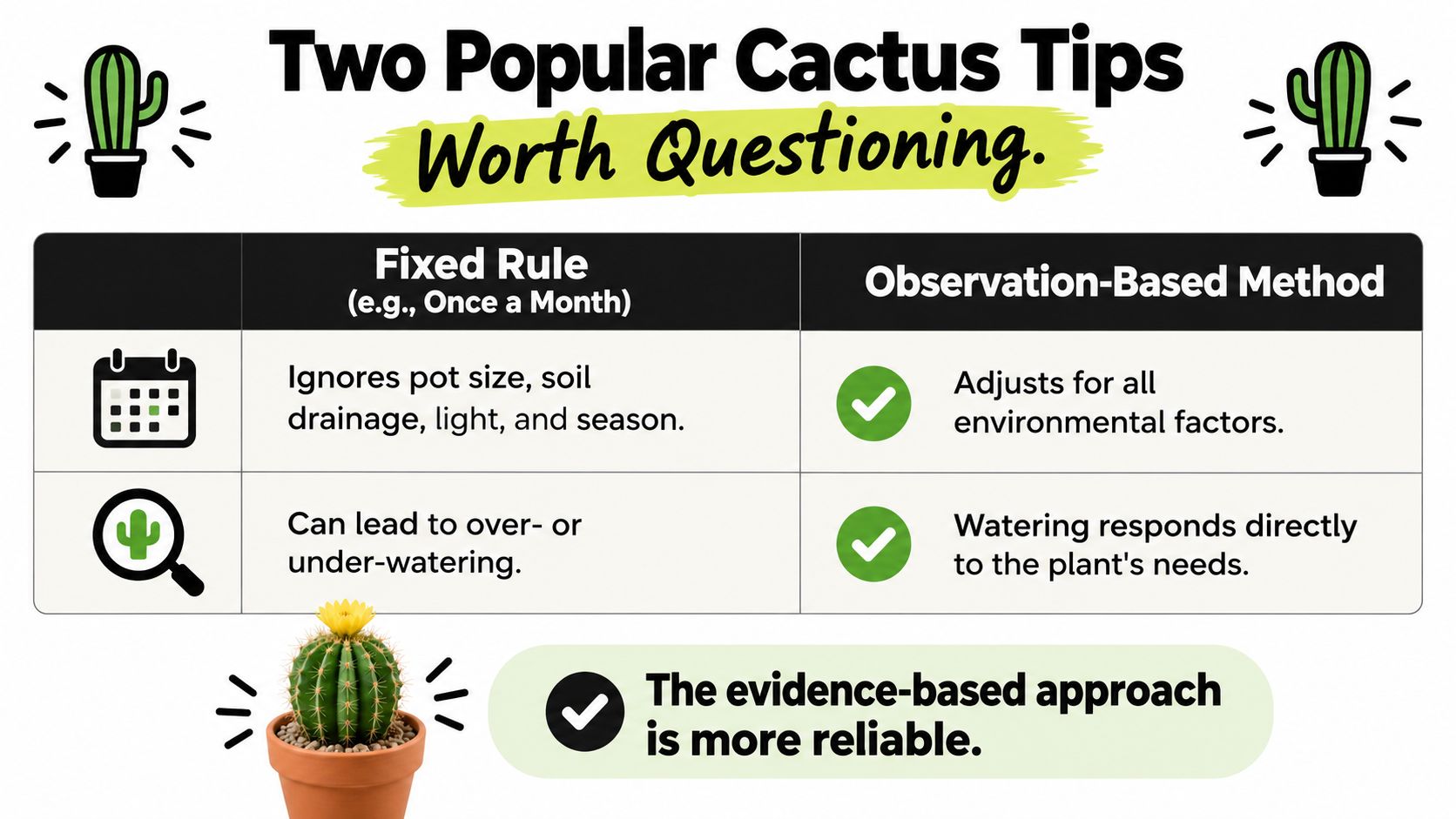
Questioning care advice is a useful skill. Test the soil about one to two inches down, then choose the watering method that reaches the full pot. You're building judgment, not breaking a rule.
A Gentle Routine You Can Return To
A weekly check can keep cactus care simple without forcing you to water weekly. Choose one quiet day to look at every plant, then decide what each pot needs based on its soil and surroundings.
- Look at the soil. Notice its color, texture, and whether the surface has pulled away from the pot.
- Test below the surface. Use a finger for a small container or a wooden chopstick for a deeper one.
- Check the setting. Ask whether the plant has recently moved into brighter light, a cooler room, or a warmer spot near indoor heating.
- Water only when dry. Pour slowly over the soil until water drains from the bottom.
- Let the pot finish draining. Empty standing water and wait until the mix dries completely before repeating.
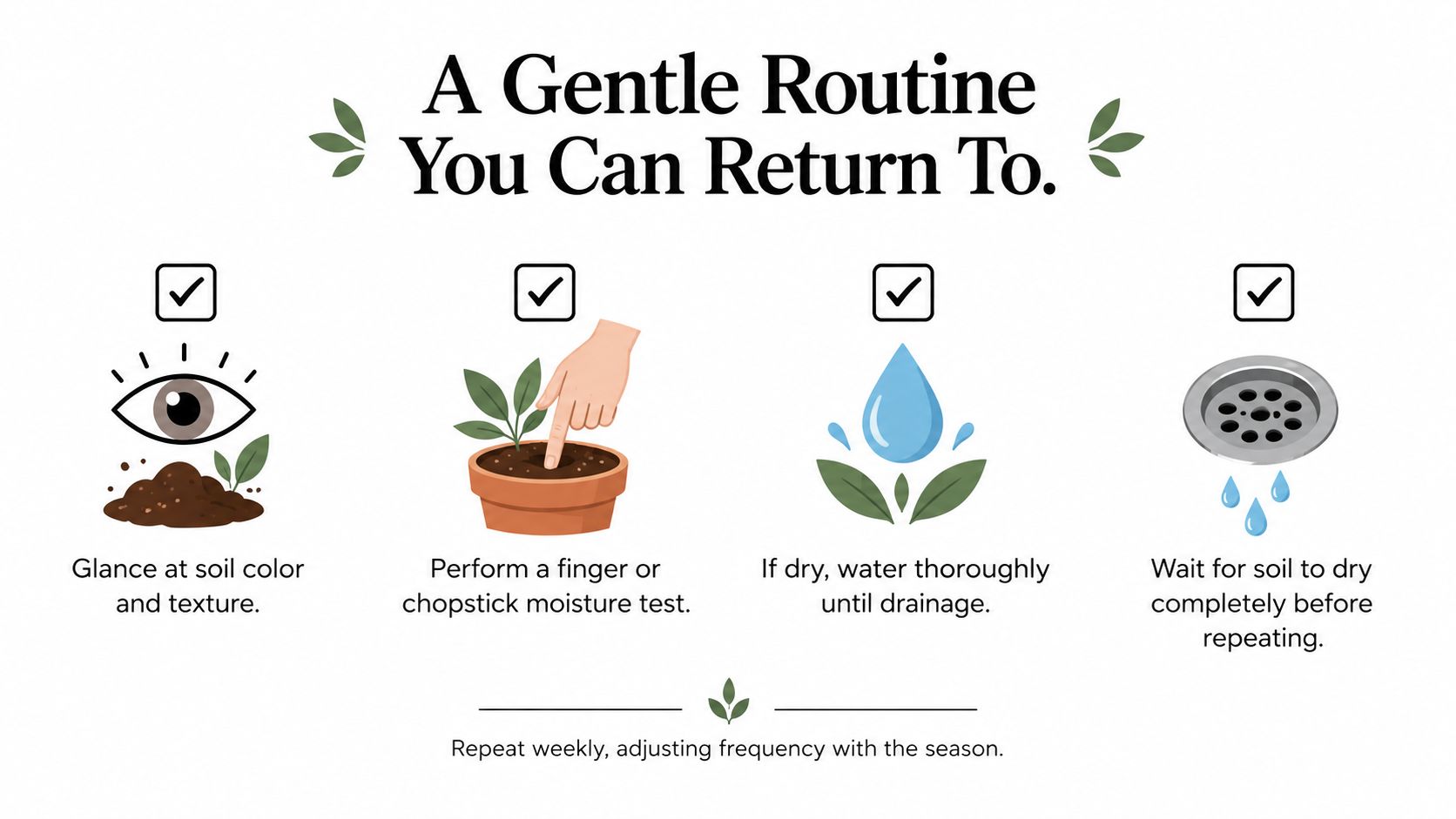
Three reminders can make the routine feel less intimidating:
- A little dryness is usually easier to correct than prolonged wetness. If an established cactus is slightly thirsty, a proper soak can help.
- Missing a week rarely harms an established cactus. Check the soil when you return instead of watering automatically.
- Observation gets easier with practice. Each month teaches you how your own pot, room, and soil behave.
For travel, a decorative self-watering globe can offer hands-off support for several days while you're away. Use it as a backup, not as a substitute for learning when the root zone is dry. You've got this. The plant doesn't need perfect timing, only thoughtful checks repeated with care.
Little Green Leaf offers decorative self-watering globes that release moisture gradually as soil dries, giving busy plant owners a hands-off option for travel days and everyday routines. Visit Little Green Leaf to explore glass globes designed to support steadier watering without timers, batteries, or apps.