

Mosaic Disease in Plants: A Calm Guide to Spotting It Early
You're watering your pothos when one leaf catches your eye. Pale green patches sit beside darker green areas, the surface looks slightly puckered, and you're fairly sure the pattern wasn't there last week. It's natural to feel concerned, but mottling isn't an automatic diagnosis. Treat it as a useful observation, not a crisis.
Mosaic disease in plants describes a group of viral infections that can affect houseplants, vegetables, and field crops. The most helpful response is calm and methodical: observe the pattern, check for look-alike problems, reduce possible spread, and decide whether professional testing is worthwhile.
Noticing Something Strange on Your Plant
Start with the plant exactly where you found it. Look at the affected leaf in natural light, then compare it with older leaves and newer growth. Notice whether the discoloration follows a repeated pattern, appears randomly, rubs away, or seems connected to a recent change in light, temperature, watering, or fertilizer.
A plant owner might see scattered light and dark green patches on a pothos, yellow-green areas on a tomato leaf, or gentle puckering along the veins of a pepper. Those details matter because symptoms can point toward a problem without proving its cause. Mosaic-like coloring can also appear after sun exposure, cold stress, feeding damage, or an imbalance in nutrition.
First response: Take a clear photograph, note the date, and avoid pruning until you've looked at the whole plant.
Resist the urge to repot, fertilize heavily, or move every nearby plant at once. Sudden changes can add stress and make the original pattern harder to interpret. If the plant is part of a larger collection, place it a little farther from others while you observe it, especially if insects are present.
Check the undersides of leaves for aphids, thrips, whiteflies, or fine webbing. Look at the newest leaves, stems, and growing tips rather than judging the plant from one unusual leaf. A single damaged leaf may be an isolated care issue, while repeating mottling combined with distorted new growth deserves closer attention.
The simple habit is pause, compare, and record. That gives you a stronger starting point than an immediate diagnosis, and it helps you make a practical decision without treating an ordinary plant-care problem as something frightening.
What Mosaic Disease Actually Is
A plant can look patchy and still have a healthy explanation. Mosaic disease describes a group of symptoms linked to many plant viruses, rather than one single illness. Like the word “cold,” it covers different causes that share familiar signs. The pattern often includes lighter and darker areas, while the precise appearance depends on the virus, plant variety, plant age, and growing conditions. Britannica's overview of mosaic plant disease likewise describes mosaic as a category, not one pathogen.
The word mosaic describes the uneven look of the plant tissue. After entering a plant, a virus uses living cells to multiply and may travel through the plant's internal systems. As a result, related symptoms can develop in new leaves, stems, flowers, or fruit rather than remaining on one damaged leaf.
Two names appear often in plant-care discussions:
- Tobacco Mosaic Virus, or TMV: A well-known virus associated with tobacco and several other hosts. Its history became scientifically important in 1898, when Beijerinck showed that tobacco mosaic disease came from a novel infectious agent rather than a bacterium. That finding helped establish virology, as described in this PubMed record on tobacco mosaic disease and plant virology.
- Cucumber Mosaic Virus, or CMV: A virus that can affect cucumbers, tomatoes, peppers, ornamentals, and other plants. It helps explain why similar mosaic-like patterns can occur across very different garden plants.
These names explain possible causes, not a diagnosis. A patterned leaf may still reflect stress, natural variegation, or another care problem, so visual suspicion should remain separate from confirmation.
Once a viral infection is established, fertilizer and ordinary pest sprays cannot remove it. The practical response is to observe carefully, reduce opportunities for spread, and avoid treating every unusual pattern as proof of infection. For general context about virus transmission and prevention, see these general guidance on virus transmission and prevention. Plant viruses are not human infections.
Hallmark Symptoms Across Common Plants
A leaf that suddenly looks patchy can be unsettling, but the pattern alone does not confirm mosaic disease. Symptoms usually appear as irregular areas of light green, yellow-green, and darker green. Uneven chlorophyll production creates this patchwork appearance, sometimes across new leaves, stems, flowers, or fruit.
On pothos and philodendrons, watch new growth closely. Leaves may emerge mottled, puckered, curled, or smaller than expected. Natural variegation can look similar, so compare several leaves. A naturally variegated cultivar usually repeats a stable pattern, while suspected viral mottling may appear unpredictably and occur alongside distorted growth.
Tomatoes, peppers, and cucumbers may show several signs together. Leaves can become mottled or narrow, growth may weaken, and fruit may ripen unevenly or develop an unusual shape. Reports from crop production describe serious losses in some tomato and pepper situations, but those examples do not predict what will happen to every symptomatic houseplant or garden plant.
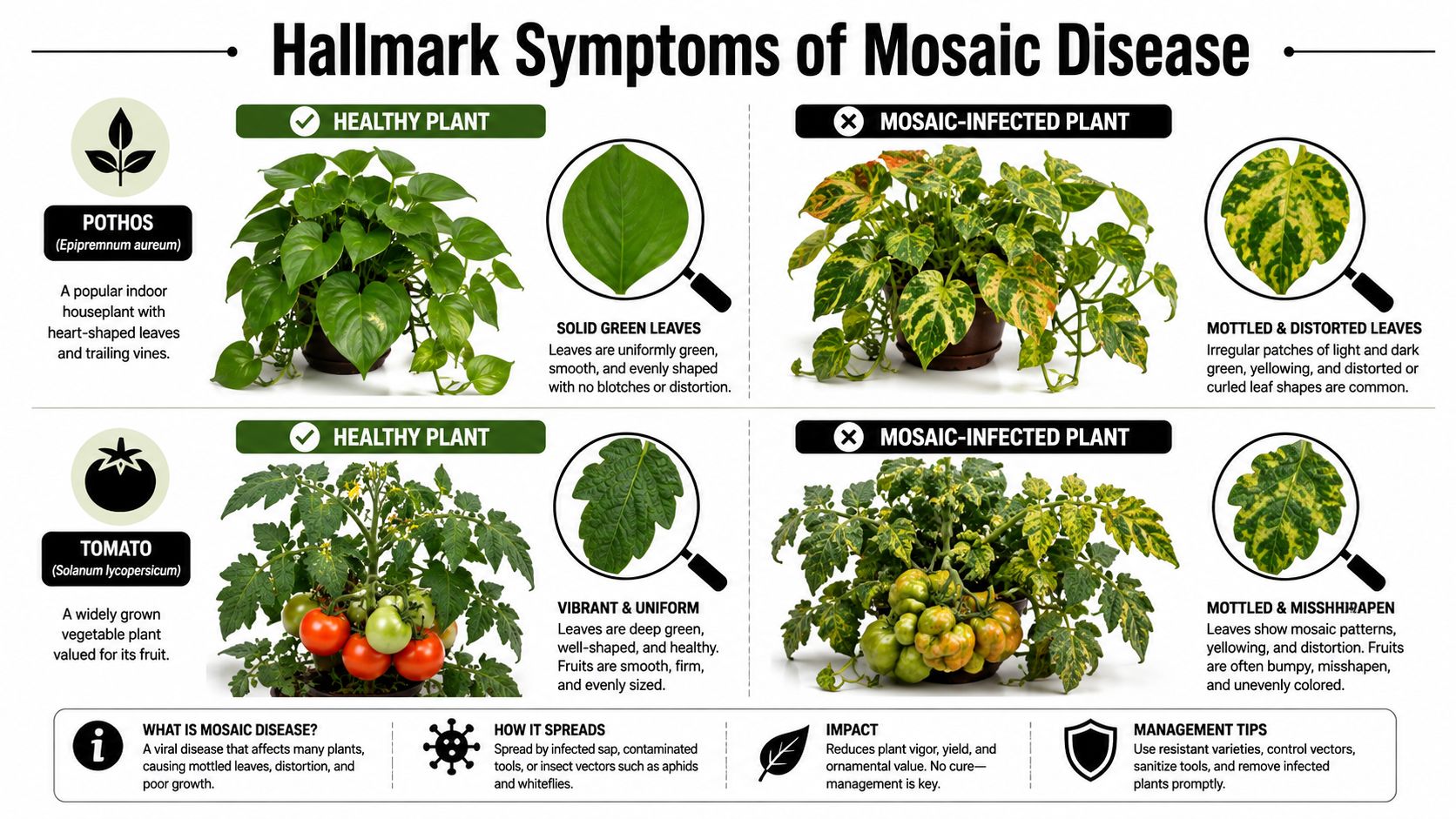
Patterns that deserve a closer look
- Patchy color: Uneven chlorophyll production can create the familiar light and dark pattern.
- Puckering or curling: Disrupted cell development may alter a leaf's texture and shape.
- Stunted new growth: Stress often becomes easiest to see at the growing tip.
- Reduced flowers or fruit: Ongoing stress can leave a plant with less energy for reproduction.
- Necrotic marks: Some tomato and pepper infections may include dead-looking spots or lesions.
These clues become more meaningful when they appear together or continue across new growth. A single unusual leaf deserves observation, not an immediate diagnosis.
Look-alikes to keep in mind
Nutrient deficiency often causes more consistent yellowing or affects older leaves, although the pattern depends on the nutrient and plant. Sunburn usually affects exposed tissue and may look bleached or scorched. Cold injury can leave limp, darkened, or damaged patches after a temperature drop. Spider mites commonly produce fine stippling, and close inspection may reveal insects or webbing.
For other explanations, compare your plant with this guide to what causes yellow leaves on plants. The useful rule is simple: mottling is a clue, not a verdict. Keep symptom recognition separate from diagnosis, then look for a pattern that persists as the plant produces fresh growth.
How Mosaic Disease Spreads From Plant to Plant
Mosaic viruses move through several routes, so one prevention habit rarely does the whole job. The most relevant pathways for home growers are mechanical contact, sap-feeding insects, and infected propagation material.
Mechanical spread happens when infected sap reaches a healthy plant. Unwashed hands, shared pruning shears, scissors, clothing, and plant clips can all matter if they carry sap from one plant to another. A quick cleaning step between plants is especially useful after removing a suspicious leaf or handling a plant with damaged tissue.
Insect spread involves vectors such as aphids, thrips, and whiteflies. An insect feeds on an infected plant, then moves to another plant and introduces the virus while feeding. The University of California Integrated Pest Management guidance describes aphids as major vectors for several mosaic-related virus groups and also explains why sanitation and vector control need to work together. Read the UC IPM guidance for potyvirus mosaic diseases for host-specific management details.
Seeds and vegetative material create a less visible route. Some viruses can be carried inside a seed, while others may remain on the seed coat. Cuttings, grafts, bulbs, slips, and other infected plant material can also carry a virus into a new pot or garden bed. That's why saving seed or taking cuttings from a plant with unexplained mosaic symptoms carries more uncertainty than starting with clean stock.
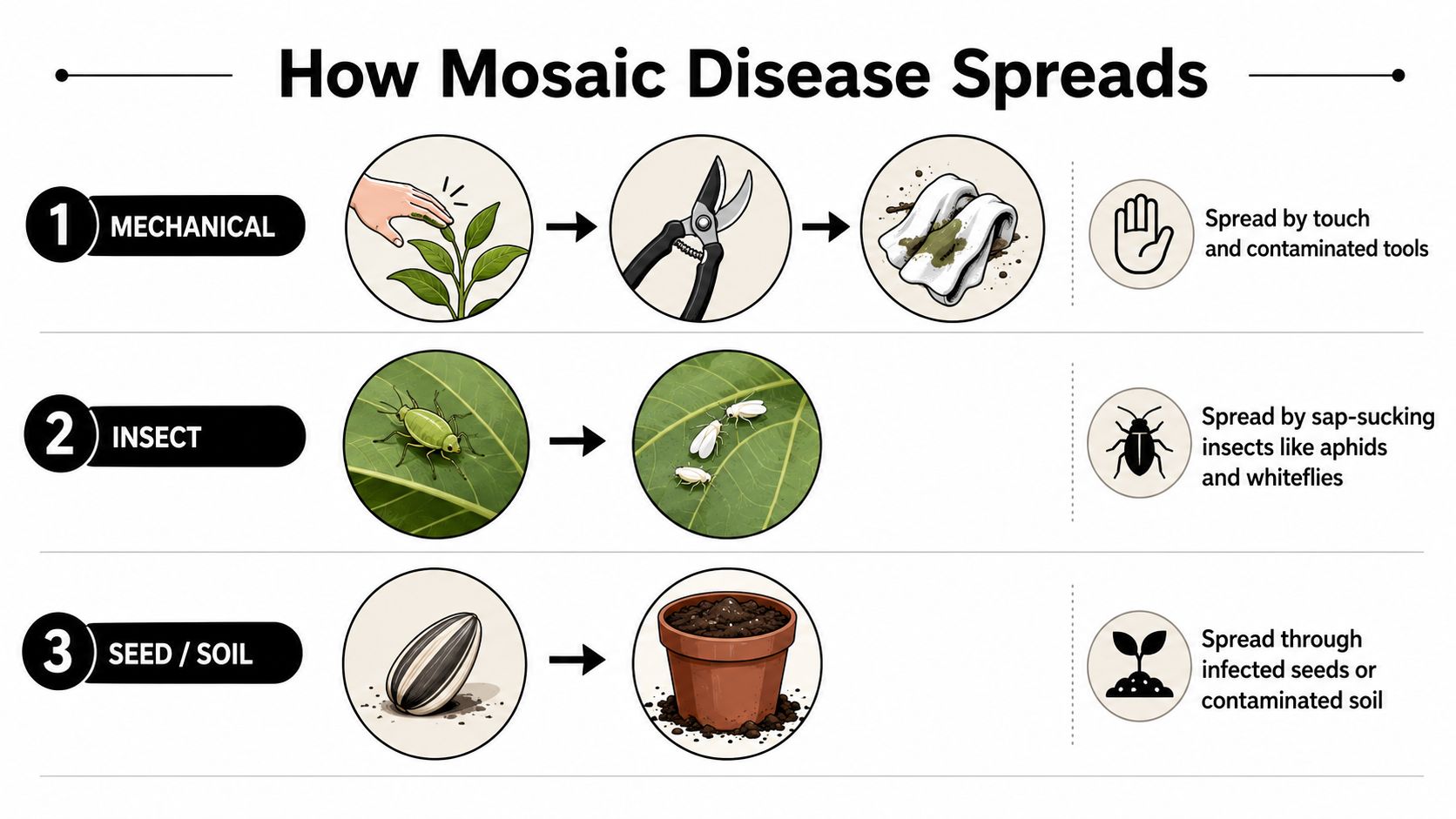
A realistic home chain might look like this: a newly purchased plant carries an infection that isn't obvious yet, an aphid feeds on it, then lands on a pothos near a window. The insect can transfer virus during feeding, while a person could also move sap with unclean hands or tools. Plant viruses don't drift through the air or travel through ordinary soil by themselves, which gives you a useful containment advantage.
Keep plants separated, control visible pests, and clean anything that touches more than one plant. For insect identification and routine monitoring, this guide to common pests in the garden can help you distinguish vectors from harmless visitors.
From Suspicion to Real Diagnosis
You can recognize a suspicious pattern at home, but visual inspection usually can't confirm which virus is involved, or whether a virus is involved at all. That distinction matters because nutrient problems, sunburn, cold injury, and spider mite feeding can produce damage that resembles mosaic.
Use a short checklist before making a final decision:
- Persistent pattern: The mottling remains after gentle care adjustments and doesn't rub off.
- Vein-related appearance: The color contrast may follow or cross the leaf's vein structure.
- Distorted growth: New leaves continue to emerge curled, puckered, unusually narrow, or stunted.
- Whole-plant involvement: Similar changes appear on more than one leaf or growing point.
- No obvious alternative: You can't connect the damage to a clear light, temperature, watering, nutrient, or pest event.
A practical comparison
| Sign | Mosaic Disease | Nutrient Deficiency | Sunburn / Cold Damage | Spider Mite Damage |
|---|---|---|---|---|
| Color pattern | Irregular mottling or vein-related contrast | Often more consistent yellowing or paling | Bleached, scorched, limp, or darkened areas | Fine speckling or stippling |
| New growth | May be distorted or stunted | Can be weak or pale, depending on the deficiency | Damage follows exposure or temperature stress | New growth may be affected if feeding continues |
| Surface clues | Pattern doesn't wipe away | Usually no sap or webbing | Tissue may feel dry, damaged, or collapsed | Fine webbing or tiny pests may appear |
| Spread pattern | Can appear across the plant | Often follows plant age or nutrient movement | Usually follows the environmental event | Often concentrated where mites feed |
PCR testing looks for virus-specific genetic material in a plant sample. ELISA uses antibodies to detect proteins associated with a target virus. Your local agricultural extension service, university plant clinic, or specialty diagnostic laboratory may offer one or both, but availability varies.
Testing makes the most sense before discarding a rare, expensive, or sentimental plant, or when you need to protect a valuable collection. For an ordinary replacement plant, the time and expense may not be worthwhile if the symptoms are spreading and containment is difficult. Good hygiene remains sensible either way, as explained in this disease prevention guide from WipesBlog.com. Also avoid confusing viral symptoms with unrelated problems such as scale plant disease, which requires a different response.
Prevention and Containment for Everyday Plant Owners
Prevention works best as a routine, not a special project. Wash your hands before moving from a suspicious plant to a healthy one, and clean pruners or snips between plants. A 70 percent alcohol wipe is a practical option, while a 10 percent bleach soak can be used for suitable tools when handled safely and followed by proper rinsing and drying. Don't reuse potting water, and avoid moving dirty tools between trays.
Make new arrivals easy to observe
A new plant doesn't need an elaborate setup. Keep it apart from your main collection for two to four weeks, then inspect leaves, stems, soil, and leaf undersides regularly. Look for aphids, thrips, whiteflies, sticky residue, fresh stippling, unusual mottling, or distorted new growth before bringing it close to established plants.
Watering technique also affects containment. Splashing can move sap and soil around crowded plants, while wet foliage can make insect activity and plant-to-plant contact easier. Bottom watering, sensible spacing, and watering the soil rather than spraying leaves give you a cleaner, calmer routine.
For insects, use monitoring before reaching for stronger products. Yellow sticky traps can reveal flying pests around indoor plants, and insecticidal soap may help manage soft-bodied insects when the label allows use on that plant. Check leaves regularly, because a small population is easier to manage than an unnoticed infestation.
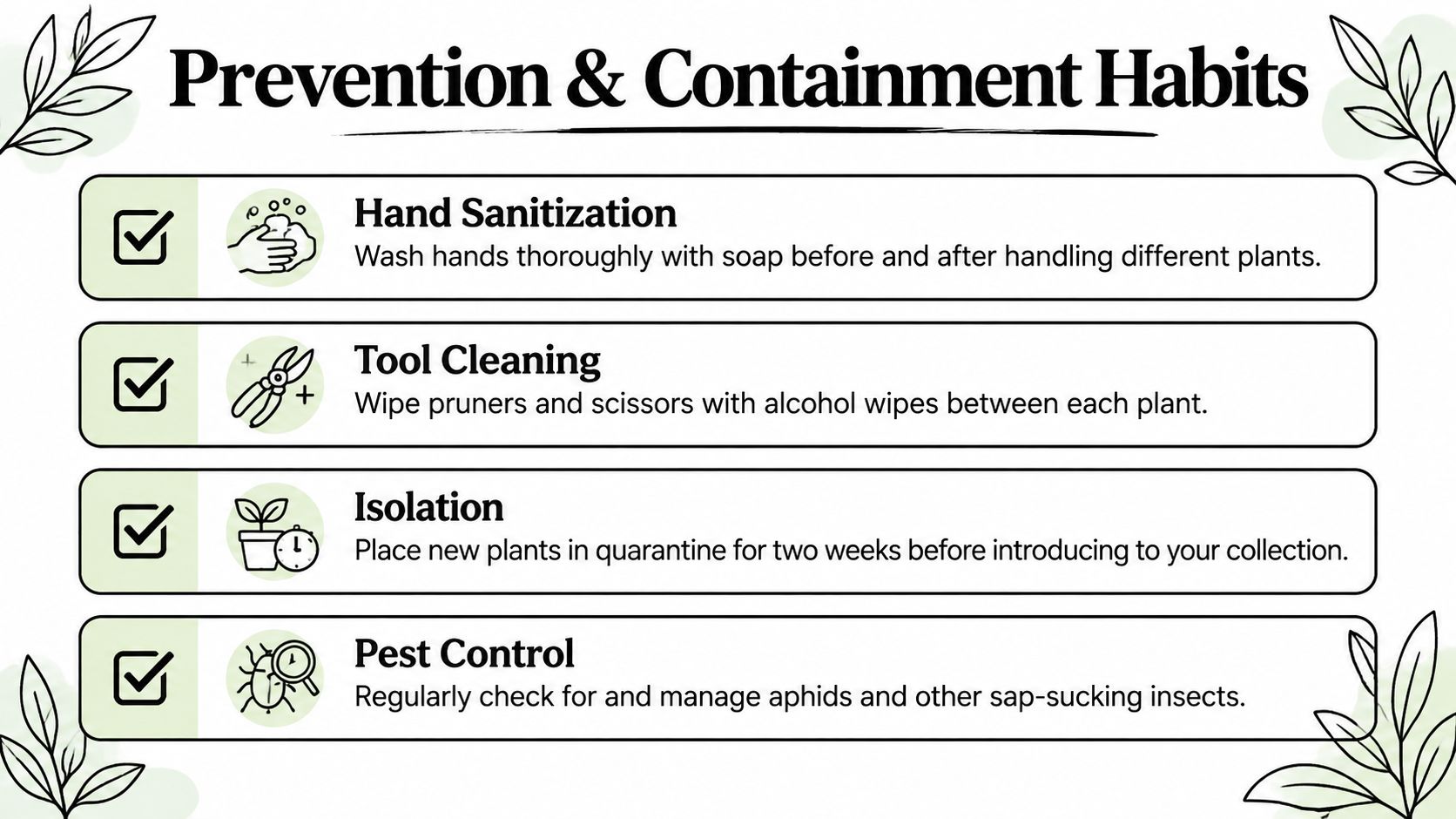
A simple containment checklist
- Clean containers: Wash pots and saucers before reusing them.
- Refresh growing media: Don't transfer old potting mix from a symptomatic plant to a healthy one.
- Isolate quickly: Move a plant with repeating suspicious symptoms away from nearby foliage.
- Handle last: Work on isolated or visibly infested plants after caring for healthy plants.
- Record changes: Photograph new growth so you can tell whether the pattern is stable or progressing.
The aim isn't perfect sterility. It's consistent interruption of the routes viruses and their insect vectors use most often.
Treatment Realities and When to Let Go
An established viral mosaic infection doesn't have a reliable home cure. Fungicides, fertilizer, household remedies, and ordinary pest products can't remove a virus from infected plant tissue. Management means reducing additional stress and lowering the chance that the plant becomes a source for spread.
A mildly affected plant may remain worth keeping if it's isolated and still growing acceptably. Remove severely damaged leaves with clean tools, provide appropriate light and water, and avoid aggressive pruning or repeated repotting. Supportive care can help the plant function, but it won't make infected tissue return to normal.
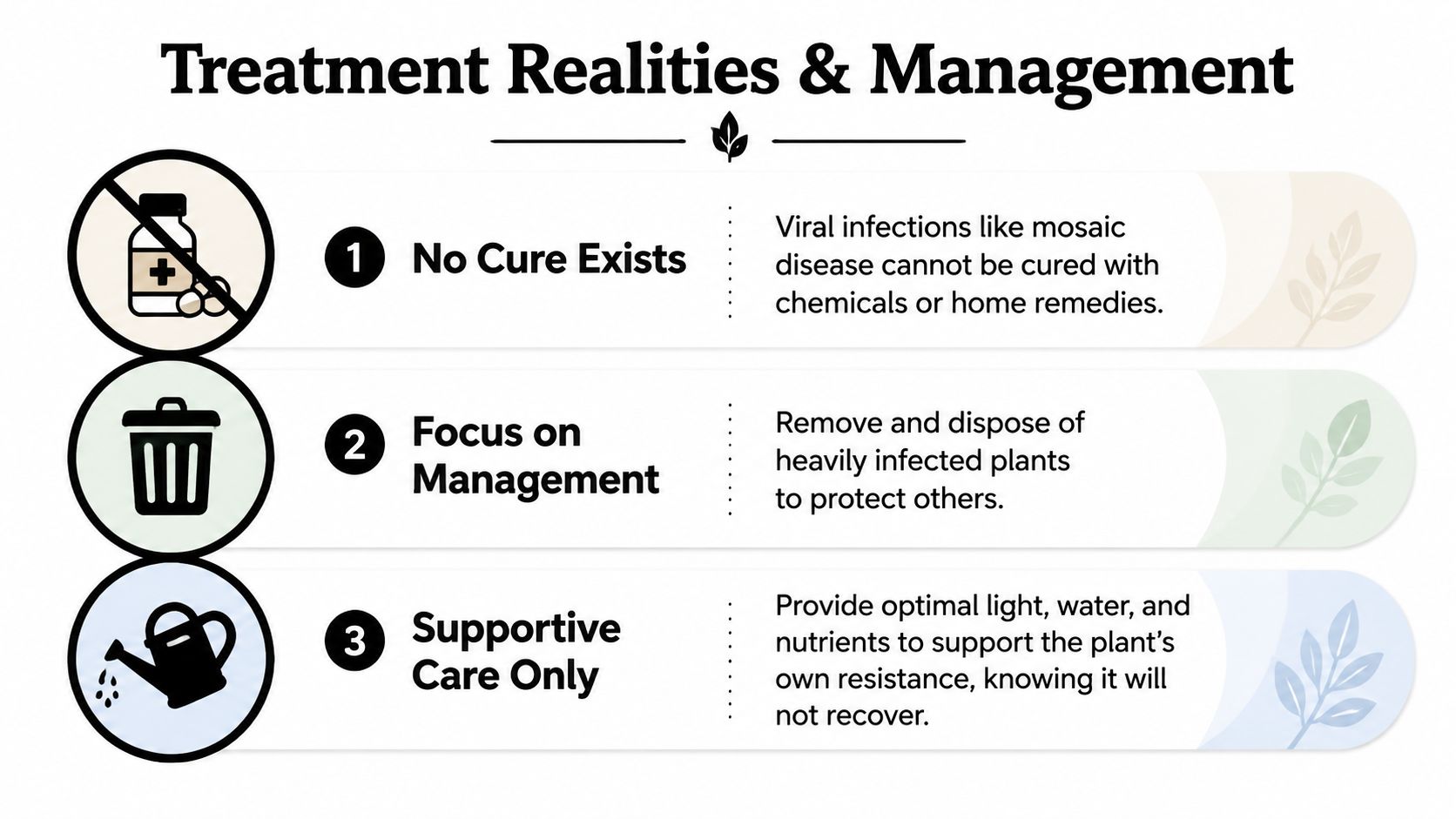
When removal is the kinder choice
Consider discarding the plant when most new growth is affected, symptoms are clearly systemic, or nearby plants are more valuable than the one in question. Removal is also the responsible option for a plant you plan to share, propagate, or use as a source of cuttings when its status is uncertain.
Bag the plant and its loose growing material before carrying it through your home. Don't add suspected infected plants to compost, clean the work surface and tools, wash your hands, and inspect remaining plants over time. If you're unsure, ask an extension service or diagnostic lab before disposing of a rare specimen.
Letting go isn't a failure in plant care. It's a practical way to protect the rest of your collection and make future care simpler.
Questions Plant Owners Still Ask
Can mosaic disease spread to people or pets?
Plant mosaic viruses infect plants, not people or pets. Still, wash your hands after handling a symptomatic plant, especially before touching other plants.
Does the virus stay in soil or pots?
The main concern is infected plant material, sap, contaminated tools, and propagation stock. Clean reusable pots and don't move old growing media from a symptomatic plant into a healthy pot.
How long does a virus linger on tools?
There isn't one universal time that applies to every virus, surface, and condition. Clean pruners, scissors, and hands between plants instead of relying on time to make them safe.
Is a plant that looks better safe to place beside others?
Not necessarily. Symptoms can become less obvious while the plant remains a concern, so keep it separate if the original pattern was persistent or new growth was distorted.
Do big-box stores increase the risk?
Any place that handles many plants can introduce pests or infections, but a store label alone doesn't tell you whether a plant is infected. Inspect before buying, isolate new arrivals, and watch fresh growth at home.
What should I do today?
Photograph the symptoms, check for pests, move the plant away from others, and clean your hands and tools. Those small actions give you useful information while reducing avoidable spread.
Little Green Leaf offers decorative self-watering globes that release water gradually as soil dries, helping busy owners maintain consistent hydration without timers or apps. If you're caring for plants while traveling or managing an indoor collection, visit Little Green Leaf to find a simple, attractive watering aid for your pots.