

8 Humidity Loving Plants for Happier Homes
You bring home a beautiful tropical plant, place it beside the window, and expect it to settle in. A week later, the leaves may look crisp at the edges, curl slightly, or droop even though you've watered carefully. The move from a humid garden center to a heated apartment, dry office, or air-conditioned bedroom can change the plant's experience quickly.
Humidity matters, but it isn't the only part of the care picture. Consistent light, well-draining soil, steady moisture, and a watering routine you can maintain all work together. Many tropical humidity loving plants perform best between 50% and 80% relative humidity, while most houseplants are comfortable closer to 40% to 60% according to Treezpedia's houseplant humidity guide. The right plant can still thrive in an ordinary home when you match it with a suitable room and avoid dramatic swings.
Below, you'll find eight approachable choices, from trailing pothos to compact peperomia. Each section pairs a practical humidity range with light, soil, moisture, troubleshooting, and routines that work for busy owners, apartment dwellers, office teams, and travelers.
1. Pothos, Also Called Devil's Ivy
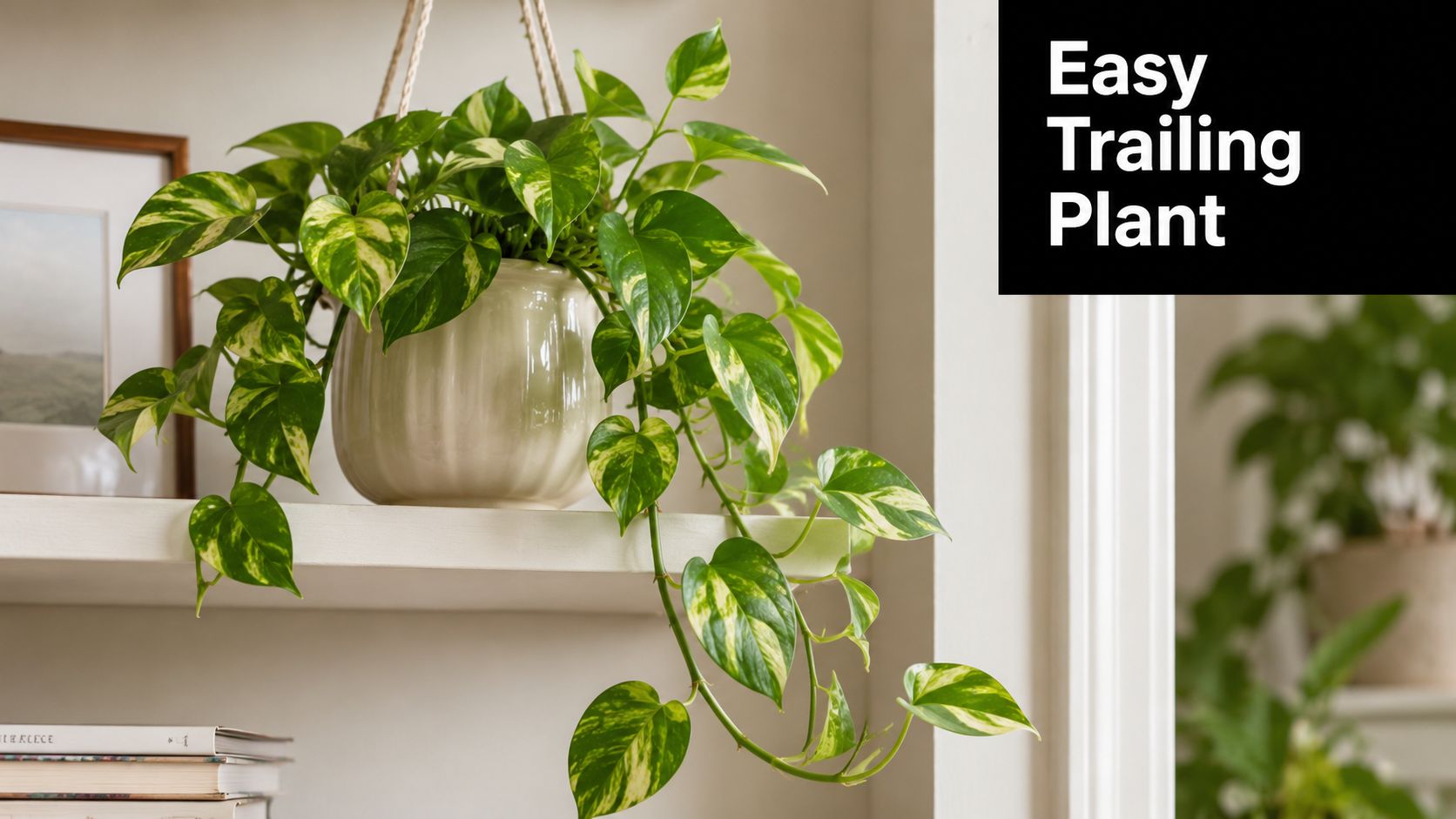
Curling leaf edges are an early clue that a pothos may be responding to dry air, especially when the soil is not completely dry. This adaptable tropical plant brings heart-shaped leaves and trailing vines to a shelf, hanging basket, office desk, or wall-mounted planter without demanding a complicated schedule.
Pothos grows most strongly in bright, indirect light. Set it near a bright window, but shield it from intense afternoon rays that can scorch the leaves. Choose a loose, well-draining potting mix. Water once the upper soil has started to dry, allowing excess water to leave through the drainage holes instead of collecting around the roots.
Practical rule: Humid air supports pothos, while saturated soil can still cause trouble. Let the pot drain fully.
A steady routine for trailing vines
Match the globe to the plant's root space and your time away from home. A 100 ml or 200 ml Little Green Leaf globe suits gradual hydration, with the smaller size fitting a compact desk plant and the larger size supporting a fuller container. Depending on the pot and room, it may need refilling every one to two weeks. Check both the soil and reservoir so the plant's condition, rather than a fixed calendar, guides you.
Let the vines spill over a shelf, or attach them gently to a moss pole for a climbing display. Wipe the leaves monthly with a damp cloth. That simple check removes dust and can reveal pests or dry edges before they spread. For container and hanging-plant guidance, see this resource on watering hanging plants.
An office pothos can continue growing during a busy workweek when it has enough window light and its soil avoids repeated swings from bone-dry to soaked. Before traveling, water according to the soil's condition, move the plant away from heating or cooling vents, and use a correctly sized globe as an optional buffer. This routine works like a small reserve tank, helping reduce sudden dryness without replacing regular checks.
2. Monstera Deliciosa, Also Called Swiss Cheese Plant
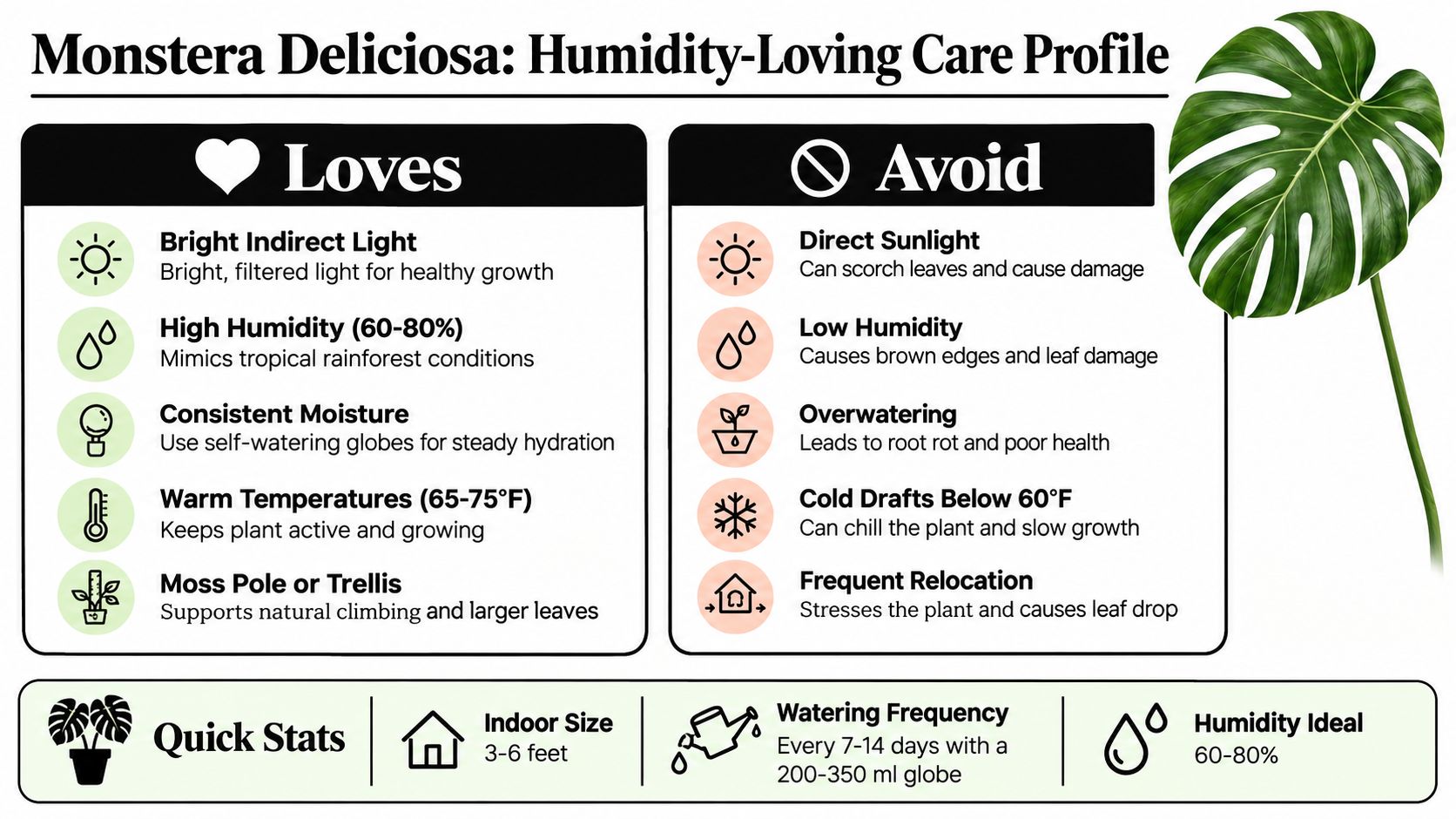
A young Monstera looks almost plain until its first splits appear. Those openings develop as the plant matures, so steady care matters more than quick changes. With enough humidity and suitable support, its leaves can gradually take on the tropical character associated with humidity loving plants.
Choose bright, indirect light, similar to the filtered brightness beside a curtained window. Strong indirect light supports growth, while harsh direct sun can leave marks on the broad leaves. Use an airy, well-draining aroid mix. It should hold some moisture like a lightly damp sponge, while excess water drains freely instead of collecting around the roots.
Support, moisture, and leaf care
For a larger plant, a 200 ml or 350 ml globe can provide gradual hydration during a short trip, as long as its size suits the pot and the container drains well. Insert it carefully, then check how quickly the soil dries before relying on it for future absences. The globe is a buffer, not a substitute for examining the root zone.
A moss pole or sturdy trellis gives the stems a surface to climb and may support larger leaves as the plant matures. Rotate the pot occasionally so one side does not receive all the window light. In an office, wipe the leaves monthly with a soft, damp cloth, much as you would clear dust from a large screen.
If the room feels dry, occasional misting or a pebble tray can create a small moist pocket around the plant. These steps work best alongside suitable light and careful watering. Check the soil before watering, especially after moving the plant between a bright office, a bathroom, or a warmer room.
For a calm introduction to tropical foliage care, see this guide to caring for tropical plants. Use the plant's leaves and soil as your guide, adjusting gradually rather than adding water whenever a leaf looks less than perfect.
3. Calathea, Also Called Prayer Plant
Calathea rewards attentive plant owners with patterned leaves and a visible daily rhythm. Its leaves can fold upward at night, resembling praying hands, then open again in brighter conditions. That movement makes it a pleasing choice for a bedroom nightstand, bathroom vanity, kitchen windowsill, or office desk near a window.
Calatheas are among the more humidity-sensitive choices here. They generally prefer about 60% to 70% relative humidity, while maidenhair ferns prefer roughly 65% to 80%, according to Epic Gardening's guide to high-humidity houseplants. If the air stays too dry, brown tips and curled edges can appear even when your watering technique is reasonable.
Keep the routine gentle
Use bright, indirect light, and protect the leaves from direct sun, cold drafts, heating vents, and sudden room changes. A loose, moisture-retentive but well-draining mix works better than dense soil. A 100 ml or 200 ml globe can help maintain gradual moisture, but don't use it to compensate for a pot without drainage.
Filtered or distilled water can reduce mineral residue on patterned leaves. Grouping calathea with other plants can create a more humid pocket, and a pebble tray or nearby humidifier may suit a bedroom setup. Mist leaves occasionally if it fits your routine, but clean leaves gently with a damp cloth monthly so dust doesn't obscure their patterns.
Keep the plant in a warm, stable spot. The care guidance commonly used for calathea places it between 65°F and 75°F, so avoid a windowsill that becomes cold overnight or a desk directly above a heating outlet. If you're troubleshooting curling leaves, check the room, leaf height, soil moisture, and water quality before changing everything at once. This guide to calathea leaves curling can help you narrow the possibilities.
4. Anthurium, Also Called Flamingo Flower
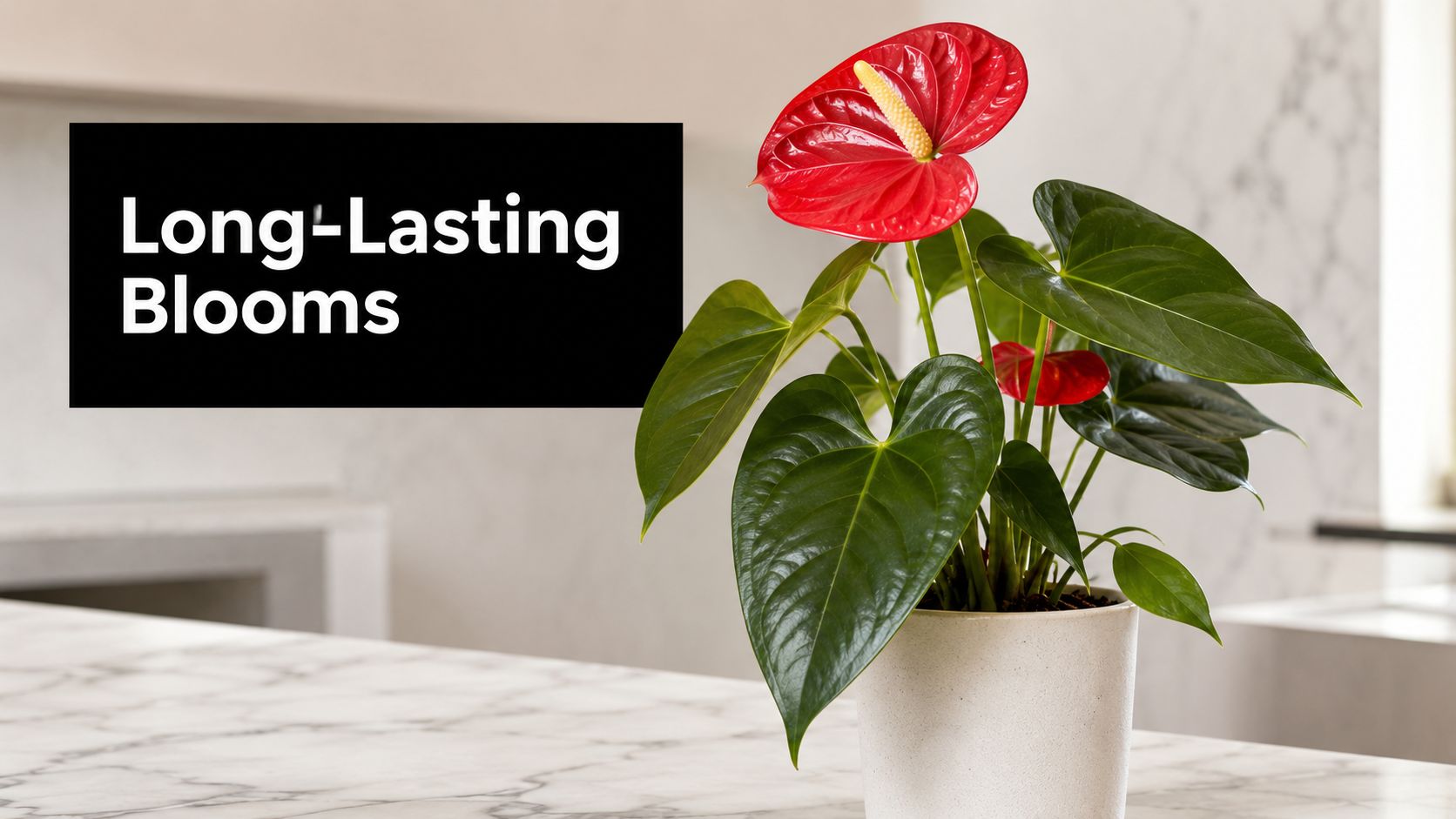
Anthuriums can bloom year-round indoors, but keeping those flowers coming requires stable warmth, not just more light. Their glossy leaves and waxy, heart-shaped flowers add color while taking up little floor space, making them suitable for a bright room where a flowering plant can be observed regularly.
Use bright, indirect light. Strong filtered light can support flowering, while direct sun through glass may scorch the leaves. Choose a loose, well-draining aroid mix and a container with drainage holes. Anthurium prefers evenly moist soil, much like a wrung-out sponge, rather than a root ball that stays soaked.
Support flowering with consistency
Check the upper layer of soil on a regular schedule and water when it begins to dry. A warmer or brighter position may increase how quickly the mix dries, so reassess after moving the plant. Occasional misting or a pebble tray can add moisture around the leaves, but gentle air movement helps prevent stagnant conditions.
Anthurium prefers temperatures between 65°F and 80°F. An entryway or vacation home that becomes chilly may therefore work poorly as a permanent spot. Keep the plant away from cold drafts and air-conditioning vents. Remove spent flowers with clean scissors, as you would clear old blooms from a vase, and wipe the leaves monthly so dust does not block their surface.
For travel, a self-watering globe can maintain moisture during a short absence, but test it before relying on it. Fill the globe, observe how quickly water enters the soil, and confirm that excess water drains freely. This trial is safer than inserting an unfamiliar tool just before leaving. A bright kitchen or office can suit the plant if the room remains warm and the pot is checked as part of a regular workday routine.
Repot in spring after roots fill the container, replacing compact garden soil with fresh, open mix. Healthy roots should have both moisture and air, so do not let a watering aid turn the pot into a saturated reservoir.
5. Philodendron Pink Princess
Philodendron Pink Princess suits a collector's shelf, bright living room, office desk, or thoughtful plant gift. Its pink and green variegation makes every leaf distinctive, while its manageable size keeps the plant practical for smaller homes. The color can become more noticeable with strong, filtered light, but direct sun can scorch the leaves and fade the pink tones.
Use bright, indirect light and an airy, well-draining mix. Like pothos, this philodendron appreciates consistent moisture, but sensitive roots still need air around them. Water when the soil begins to dry and allow excess water to leave the pot completely.
Protect color without overcomplicating care
A 100 ml globe can support gradual hydration in a small container. Insert it carefully and monitor the soil, particularly during the first few weeks. If the plant sits near a bedroom humidifier, keep the surrounding area comfortable for the plant without making the potting mix soggy.
A moss pole or stake gives Pink Princess something to climb. As the plant grows upward, newer leaves may become larger and more prominent. Rotate it monthly so one side doesn't lean toward the window. Wipe the leaves gently with a soft, damp cloth, and keep the plant away from hot glass and strong direct rays.
For a busy office owner, the main advantage is a routine that's easy to observe. Place it where the leaves receive filtered light, check the soil during a regular workday, and refill the globe only when needed. If you're giving one as a gift, include a simple note about light and drainage. Beginners usually need fewer variables, not a complicated humidity setup.
A colorful plant becomes easier to keep when its location does most of the work. Choose the window first, then build the watering routine around it.
6. Peperomia
Peperomia's thick, succulent-like leaves hide a useful care nuance: the plant may tolerate brief dryness, yet many varieties come from tropical environments and still benefit from humid air. Treat the leaves like small water reservoirs, while remembering that the roots need air. Aim for soil that dries slightly between waterings, rather than a pot that stays saturated.
Set it in bright, indirect light and shield it from harsh direct sun, which can fade leaf color. Use a light, well-draining mix in a pot with drainage. A 100 ml globe may provide gradual moisture in a small container, but test it while you are home and check the soil before refilling. Dense mix or an oversized globe can leave the roots too wet.
Small plant, simple decisions
Group peperomia with compatible plants to create a modest humid pocket. If humidity drops below 50%, occasional misting may help, although it cannot replace suitable light and drainage. Keep temperatures between 60°F and 75°F, and move the plant away from cold drafts, such as air from an open window.
A slightly snug container usually suits peperomia. Repot when roots have clearly outgrown the pot or the mix has broken down, rather than following a fixed calendar. Pinch back long stems occasionally to encourage a fuller shape.
An office peperomia can fit a weekly routine. Check the leaves, feel the soil, and empty standing water from the saucer. Before travel or a busy period, test the globe for several days while you are home, just as you would test a timed light before leaving. Gradual hydration can help, but a small pot becomes waterlogged quickly when the globe enters dense soil. Grouping plants, choosing the right window, and checking the pot's weight make humidity care easier to judge.
7. Parlor Palm, Also Called Chamaedorea Elegans
Brown tips on a Parlor Palm often point to its location rather than a simple watering mistake. Move it once, away from a heating vent, cold draft, or frequently opened door, then give the plant time to settle. Its soft, feathery fronds suit a modest apartment corner, office, or entryway where light remains steady and moderate.
Choose bright, indirect or medium light, keeping strong direct sun off the foliage. Use a moisture-retentive mix that still drains freely. The soil should stay moderately even, like a wrung-out sponge, while excess water must leave the pot so roots can receive oxygen. Empty the saucer after watering.
Give it a stable home
A 200 ml or 350 ml globe may maintain gradual moisture in a larger palm container, but test it before travel or a busy week. Check the soil afterward, since a dense mix or poorly placed globe can keep the roots wet for too long. Occasional misting or a pebble tray can help when nearby air is dry. Keep the pot base above the water rather than sitting in it.
Parlor palms prefer temperatures between 60°F and 75°F. Set the plant away from vents and winter drafts, and avoid shifting it repeatedly between rooms. Turn it occasionally for balanced growth, then leave it in the chosen spot.
Wipe the fronds gently each month. If tips turn brown, trim only the damaged edges with clean scissors, following the leaf's natural shape and leaving healthy green tissue untouched. In a home office, this small grooming task also makes pest or dust problems easier to notice.
Travel care works best when it stays predictable. Group the palm with plants that enjoy similar light, keep it away from airflow, and test gradual hydration while you are home. Feel the soil before filling the globe, just as you would check a travel bag before leaving. A steady location, suitable drainage, and simple checks matter more than chasing a perfect humidity reading.
8. Scindapsus Pictus, Also Called Satin Pothos
Scindapsus pictus grows more slowly than Pothos, which makes it easier to keep its trailing vines within a small display. Its silver markings also respond to light. In bright, indirect light, the contrast stays clearer, while dim conditions can make the pattern less distinct. Direct sun may scorch the leaves, so filter strong rays with a curtain.
Use a loose, well-draining potting mix. Let the surface begin to dry before watering again, like checking a sponge that is still slightly damp rather than soaking wet. Moisture supports the plant, but airy soil gives its roots access to oxygen.
Balance humidity and airflow
Satin pothos generally handles indoor humidity around 40% to 60%. A 100 ml or 200 ml globe can help maintain moisture during a busy week, but match its size to the pot and test it while you are home. A small container can stay wet too long if the globe releases more water than the roots use. When nearby air feels dry, occasional misting or a humidifier can raise moisture around the foliage.
Wipe the leaves monthly with a soft, damp cloth. This removes dust from the silver surface and helps you notice pests or damaged areas early.
Let the vines trail from a hanging planter, or guide them up a moss pole for a taller shape. Rotate the pot monthly so one side does not grow toward the light. Keep the plant between 65°F and 80°F, away from cold drafts and sudden temperature changes.
Humidity works best with airflow. Leave space between the pot and a damp bathroom wall, and avoid packing it tightly among other containers. After a hot shower or a spell of heavy indoor humidity, check the soil before watering.
For travel, choose a bright, protected position and inspect the soil before leaving. Test the correctly sized globe in advance, as you would check a timed tap before a trip. The goal is steady moisture, not a permanently wet pot.
8 Humidity-Loving Plants Comparison
| Plant | 🔄 Complexity | Resource requirements | ⭐ Outcomes & ⚡ Growth | 📊 Ideal use cases | 💡 Key tip |
|---|---|---|---|---|---|
| Pothos (Devil's Ivy) | Very low, extremely forgiving | Bright–low indirect light; moderate–high humidity; 100–200 ml globe | Fast grower, lush trailing vines; reliable visual impact ⭐⭐⭐ | Shelves, hanging baskets, offices, dorms | Use a 100–200 ml globe; bright indirect light; wipe leaves monthly |
| Monstera Deliciosa | Moderate, needs support & space | Bright indirect light; high humidity; 200–350 ml globe; moss pole | Dramatic fenestrated leaves; moderate–fast growth; high statement value ⭐⭐⭐⭐ | Living rooms, bathrooms, lobbies, large corners | Provide moss pole, rotate and check soil every 7–14 days |
| Calathea (Prayer Plant) | High, sensitive to water quality & humidity | Filtered/distilled water; very high humidity; 100–200 ml globe | Striking patterned foliage and nyctinasty; moderate growth ⭐⭐⭐ | Bathrooms, bedside tables, humidifier zones | Use distilled water, avoid direct sun, maintain steady humidity |
| Anthurium (Flamingo Flower) | Moderate, needs consistent warmth & moisture | Bright indirect light; high humidity; 100–200 ml globe; warm temps | Long-lasting colorful blooms; compact but showy; high ornamental value ⭐⭐⭐⭐ | Kitchens, bathrooms, desks, gift plants | Deadhead spent flowers, keep 65–80°F, maintain consistent moisture |
| Philodendron Pink Princess | Moderate, light-critical for variegation | Bright indirect light; high humidity; 100 ml globe; careful watering | Striking pink variegation; slower growth; collector appeal ⭐⭐⭐ | Shelves, bedrooms, premium desk displays, gifts | Keep bright indirect light to preserve pink, avoid overwatering |
| Peperomia | Low, compact and forgiving | Bright indirect light; moderate–high humidity; 100 ml globe; well-draining soil | Tidy, slow-growing foliage interest; pet-safe option ⭐⭐ | Desks, small shelves, bathrooms, gift boxes | Use a 100 ml globe, allow slightly moist (not soggy) soil; repot rarely |
Make Humidity Easier to Maintain
Humidity care becomes much less stressful when you treat it as one part of the room, not a number that must be chased all day. Start by checking the plant at leaf height and observing the soil. A room can contain sharply different microclimates. One guide describes humidity near a radiator at 22% and a spot beside an aquarium, only a few feet away, at 58% in its discussion of indoor plant humidity. Your plant may be responding to the air around its leaves, not the reading across the room.
Place humidity loving plants away from heating and cooling vents, then group plants with similar needs where the light is suitable. Calatheas, anthuriums, and ferns can share a more humid corner, while succulents and cacti generally prefer drier conditions around 20% to 40%, as noted by Treezpedia's humidity guide. Don't group plants so tightly that air cannot move between the leaves.
A pebble tray can suit a small plant on a bathroom vanity or bedroom dresser. Fill the tray with pebbles and water, but keep the pot raised above the waterline. The tray should create a local moisture pocket without leaving the roots standing in water. Clean the tray regularly so it stays pleasant and doesn't become another source of plant problems.
For a broader room, a humidifier may be more practical. Indoor comfort is often targeted around 30% to 60% relative humidity, while many tropical houseplants need at least 50% and sometimes up to 80%, creating a real balance between household comfort and plant preferences, as explained in the University of Reading's 2018 report. Use a hygrometer near the plants, not beside a vent or on a distant shelf, and make changes gradually.
Plants can contribute to room moisture, but they aren't a replacement for a room-wide humidifier. In a naturally ventilated 28 m³ office, researchers observed a small but significant moisture increase from 12 Ficus plants or 6 Epipremnum plants. Transpiration averaged 35 g per plant per day in winter and 68 g per plant per day in summer, with Epipremnum showing the highest evapotranspiration across the test conditions, according to the University of Reading study. That finding supports plants as part of an indoor environment, while also showing why light, plant density, and ventilation affect the result.
Travel care should stay simple:
- Check the soil first: Water appropriately before leaving, rather than soaking a dry plant without checking its drainage.
- Choose a stable location: Move plants away from heating vents, cooling vents, direct sun, and cold drafts.
- Group by light: Keep compatible plants together only when they receive the light they need.
- Test gradual hydration: A Little Green Leaf globe can provide an optional hands-off aid when it's correctly sized for the pot.
- Match the globe to the container: Little Green Leaf offers 100 ml, 200 ml, and 350 ml sizes, so choose according to the plant and pot rather than using one size for every container.
A globe isn't a substitute for drainage or a reason to ignore the plant. It's a practical option for busy weeks, offices, vacation homes, and short trips, especially when you've tested how the soil responds. You can learn more about managing home moisture with these humidity tips from Can Do Duct Cleaning.
The most useful routine is the one you can repeat. Check the room, inspect the soil, clean dusty leaves, and make one adjustment at a time. Stable conditions will serve your plants better than chasing a perfect humidity reading.
Little Green Leaf offers decorative self-watering globes in 100 ml, 200 ml, and 350 ml sizes for gradual plant hydration at home, in offices, or while you travel. Visit Little Green Leaf to choose a globe that fits your plant-care routine and make humidity loving plant care feel simpler.