

Growing Indoor Basil the Easy Way
A basil plant on the kitchen counter can look like the easiest way to bring fresh flavor into your home. Then a few days pass, the stems lean toward the window, the soil stays wet, and the leaves begin to look tired. Growing indoor basil becomes much simpler when you treat it as a small routine of light, root-zone moisture, warmth, and regular harvesting, rather than a long list of rules.
Setting Up Your Indoor Basil
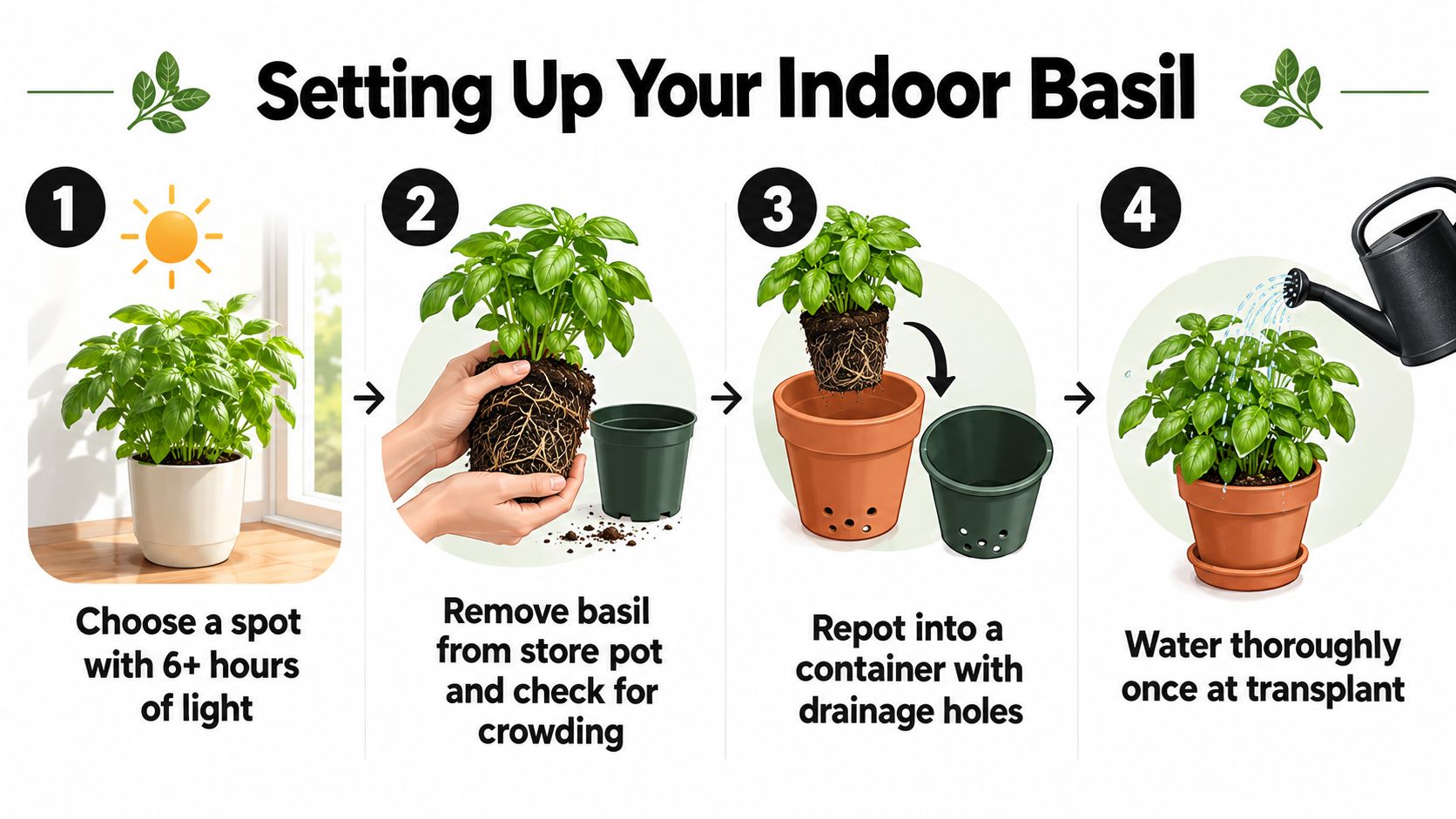
A new basil plant may arrive crowded in a small pot, with roots that have little room and stems already reaching toward a window. Give it a stable home first. The early routine is simple: choose a suitable spot, check drainage, and let the roots settle before adding more care.
Choose the spot first
Set basil near an east- or south-facing window with plenty of bright light. Keep the pot away from an oven, stovetop, radiator, and frequently opened exterior door. Warm air from an appliance or a cold draft can stress young basil, especially when the temperature changes repeatedly during the day.
Start with a bright window and a fast-draining potting mix. For apartments with limited natural light, a guide to growing herbs indoors can help you compare practical setups before you add supplemental lighting. Sunlight and a grow light serve the same basic purpose, but a dim corner cannot provide the same conditions as a bright window without help.
Give the roots room to breathe
A 6- to 8-inch container with drainage holes gives a young basil plant a practical home. A nursery pot can sit inside a decorative cachepot, but lift the inner pot after watering and empty any collected water. Hidden standing water leaves roots in a puddle and makes the container harder to manage.
Use a loose, well-draining potting mix rather than soil from the garden. Garden soil often becomes dense in a container, reducing the air spaces roots need. A handful of perlite can open the mix and help excess water move away.
If you repot, loosen the root ball gently with your fingers. Set the basil at its previous depth, fill around it without packing the mix firmly, and water until a little drains from the base. Then leave the plant alone for a few days before fertilizing. That pause gives the roots time to adjust, while you begin the small, steady habit of checking the pot instead of watering by guesswork.
Light, Sunlight, and Grow Lights
A basil plant on a bright windowsill can look sturdy and full. Move that same plant into a dim kitchen corner, and its stems may stretch toward the nearest window, leaving wide gaps between leaves. Light shapes both the plant's form and the harvest, so treat it as a daily habit rather than a one-time setup decision.
Sunlight versus supplemental light
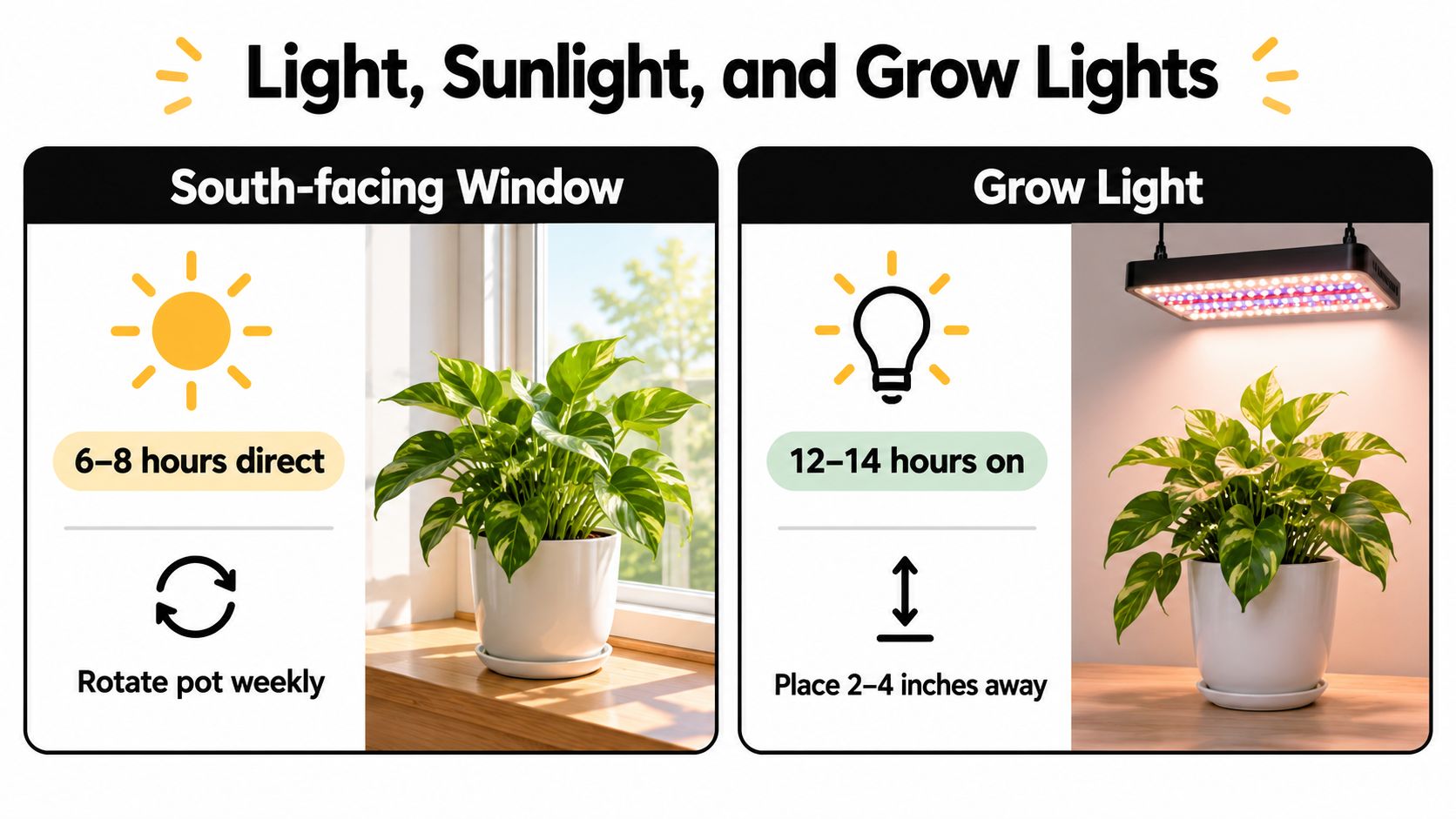
Basil needs at least 6 hours of direct sunlight, with indoor herb guidance commonly targeting 6 to 8 hours of bright light per day. A basil light calculator can help you estimate the light available at a particular window. A south-facing window is often the strongest natural choice. East- and west-facing windows may also work. Turn the pot regularly so one side does not stay shaded.
A quick hand-shadow check gives you a useful starting point. At midday, hold your hand between the window and the leaves. A sharp shadow indicates strong light, a soft shadow suggests medium light, and no visible shadow usually means the location is too dim for compact growth.
When a grow light makes sense
A north-facing window, shaded apartment, or dark kitchen may need supplemental lighting. Controlled-environment basil research used a 16-hour light and 8-hour dark photoperiod, with PPFD near 250 µmol·m^-2·s^-1 as one indoor target. Commercial systems in the same research used intensities from 180 to 545 µmol·m^-2·s^-1 (controlled-environment basil research).
For home growing, a full-spectrum LED on a timer for 12 to 16 hours daily offers a practical routine. Give the basil a dark period rather than leaving the lamp on continuously. Place the fixture close enough to light the leaves evenly, while following the manufacturer's placement guidance because fixtures vary.
Natural design ideas, including passive solar with Vivid Skylights, may improve daylight in some homes, but an apartment window still has limits. A grow light supplies consistency when the available sun changes from room to room or season to season. The guide to growing plants with lights explains practical home lighting arrangements.
This video offers a visual look at indoor plant lighting:
Leggy stems are basil's clearest request for more light. Research found that raising PPFD from 250 to 380 µmol·m^-2·s^-1 increased fresh biomass by 79.8% and dry biomass by 158.3%, showing that intensity matters as much as the number of hours the lamp runs (basil light-intensity study). Check the plant each week, then adjust its position or lighting schedule in small steps.
Watering the Root Zone
Basil likes soil that stays evenly moist, but wet soil and healthy moisture aren't the same thing. Indoor pots often dry more slowly than outdoor beds, particularly when the container has poor drainage or a self-watering setup keeps the lower roots saturated.
Check where the roots are
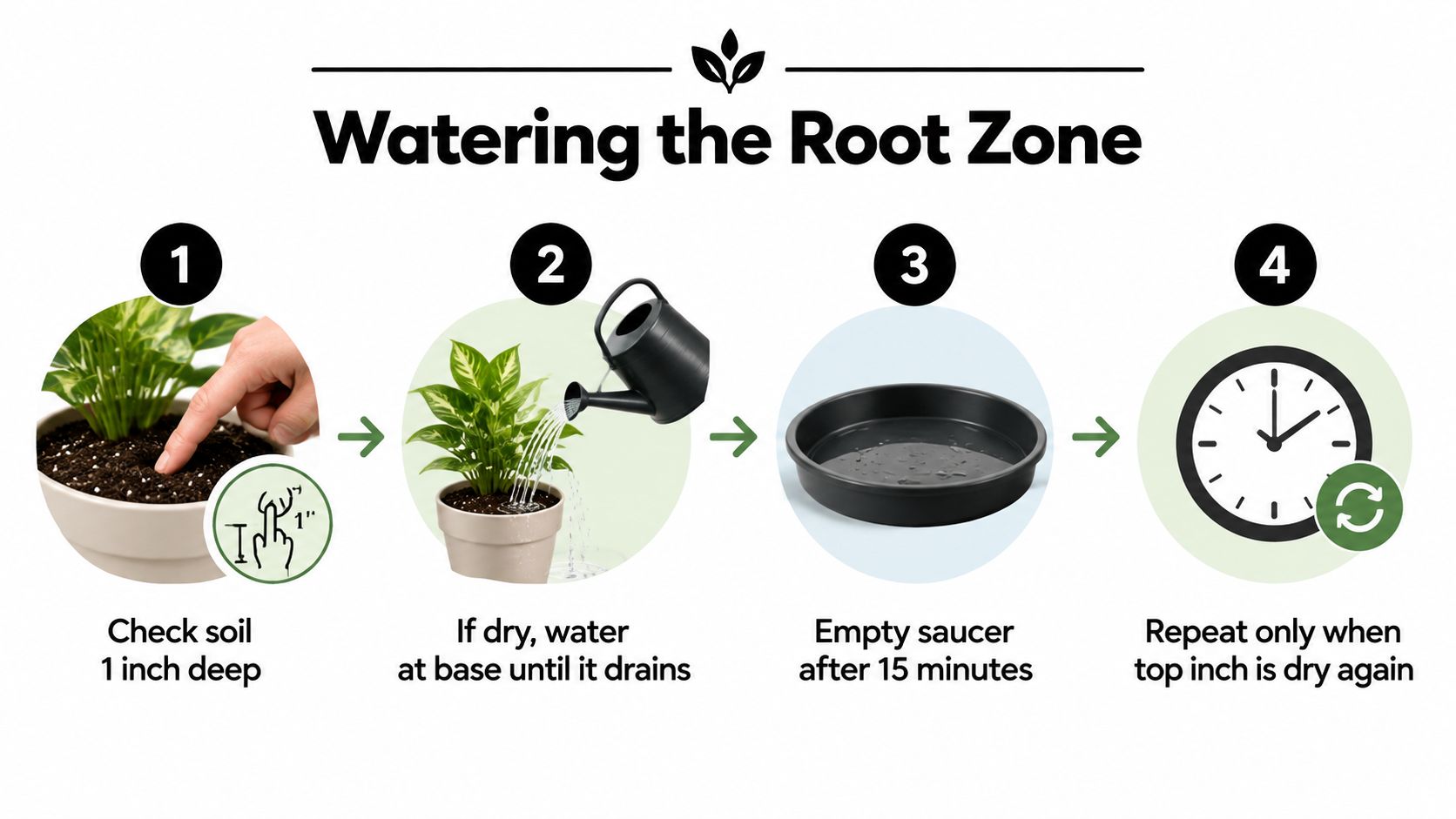
The surface can look dry while the soil below is still cool and damp. Push a clean finger into the potting mix to about the second knuckle. If the soil feels dry at that depth, water. If it still feels cool and moist, wait and check again later.
A simpler version of this approach is to check the top 1 inch of mix, then water when it feels dry, allowing a little water to drain from the bottom (indoor basil watering guidance). The deeper finger test is especially useful in larger containers, apartments with low evaporation, and pots with reservoirs.
Water slowly and clear the saucer
Pour at the soil level rather than over the leaves. Directing water onto foliage can leave damp surfaces that encourage problems, while watering the root zone sends moisture where the plant can use it.
Drainage holes are essential. Set the pot on a saucer, wait about 15 minutes, and then tip out any water that remains. This prevents the roots from standing in stagnant water. If you want help reading moisture more accurately, use this guide on how to tell if soil is dry.
Don't follow a calendar blindly. Basil may dry faster beneath a grow light or on a warm windowsill, while a cool, humid kitchen can keep the mix wet longer. Your finger, the weight of the pot, and the condition of the leaves will tell you more than a fixed watering schedule.
Pruning and Harvesting
Harvesting isn't only a way to collect leaves for dinner. Each thoughtful pinch also tells the plant where to branch, helping a young basil become fuller instead of growing as one tall, sparse stem.
Start at the right stage
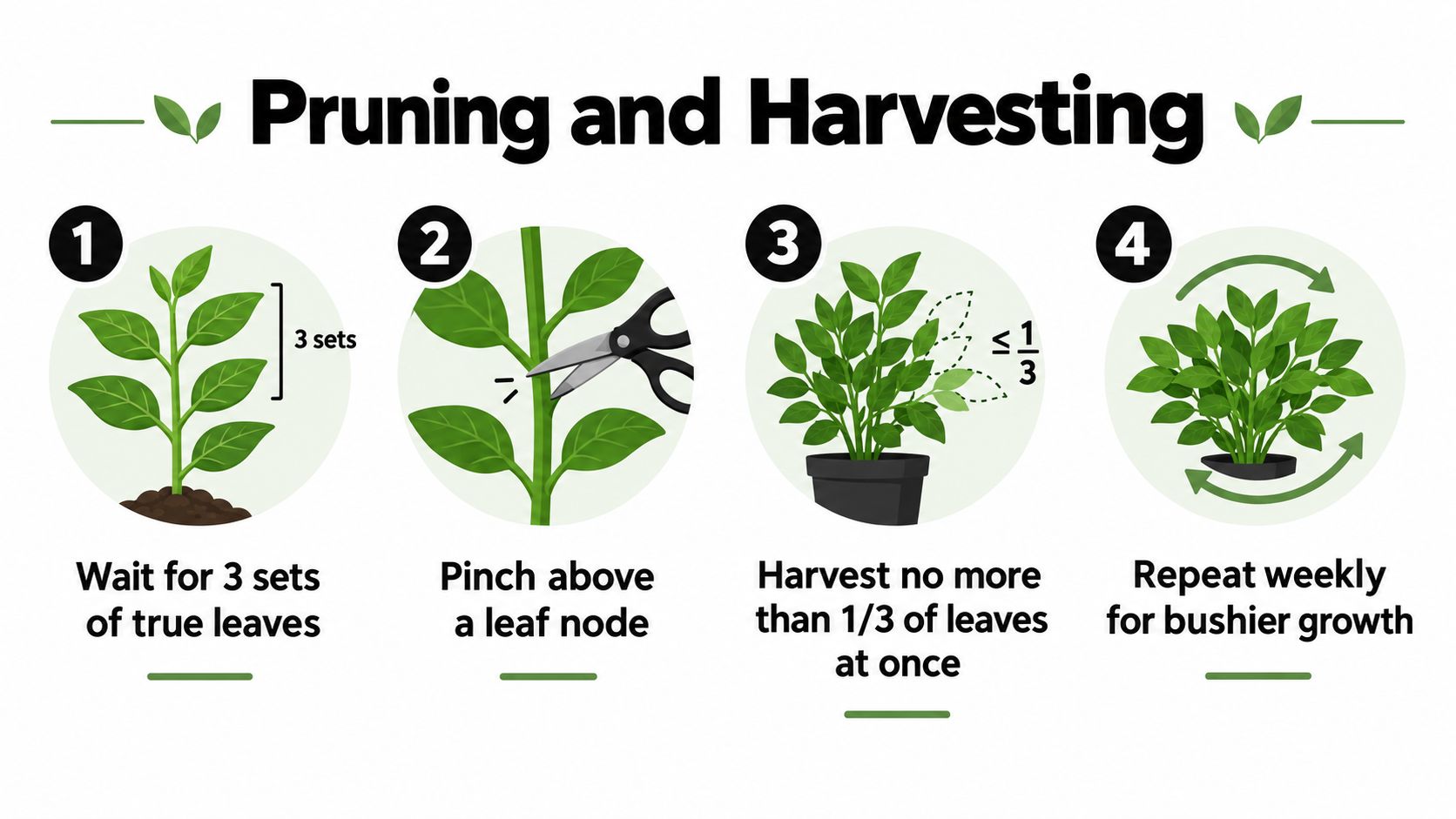
Wait until the plant has at least three sets of true leaves and is around 6 inches tall before making its first shaping cut. True leaves look like recognizable basil leaves, not the small, simple leaves that first appear after germination.
Find the top node, the point where a pair of side leaves meets the main stem. Pinch or snip just above that node. The two side shoots can then develop into new branches, creating a wider plant.
Pick for cooking, pinch for shape
There are two useful kinds of harvest. Pick a few outer leaves when you need a small amount for pasta or salad. For shaping, remove the tender top of a stem, including the new leaves above a node. That cut changes the plant's structure rather than thinning the foliage.
Keep any single harvest to no more than one-third of the plant, so enough leaves remain to support fresh growth. Bright color and firm stems are good signs that the plant is ready to pick. Morning harvesting is often preferred for strong flavor, before the plant has spent the day under heat and light.
Watch for flower buds at the stem tips. Pinching them off keeps the plant focused on leafy growth. If a flowering stem has already stretched, remove the tender upper portion and continue shaping the new shoots that appear below.
Propagation and Fixing Common Issues
A healthy basil stem can become a second plant with very little equipment. Choose a non-flowering cutting with several leaves, remove the lower leaves, and place the bare stem in a clean glass of water. Set it in bright light and refresh the water when it becomes cloudy.
White roots usually appear after a little patience. Once the cutting has a small root system, move it into a small pot of fresh, well-draining mix and keep the soil lightly moist while it settles. New leaf growth is the reassuring sign that the cutting has begun working as a plant rather than surviving as a stem.
The same close observation helps with problems. A plant with long spaces between leaves is asking for stronger light. Yellowing leaves often point to soil that stays wet too long or a container that drains poorly. Basil that droops after a cold draft may need a warmer position, while a recently transplanted plant can take time to regain its posture.
| Symptom | Likely Cause | Simple Fix |
|---|---|---|
| Long, thin stems | Insufficient light | Move the pot closer to a bright window or add a suitable grow light |
| Yellowing lower leaves | Overwatering or poor drainage | Check deeper soil moisture, improve drainage, and wait longer between waterings |
| Sudden drooping | Cold draft or temperature swing | Move basil away from exterior doors, ovens, and chilly glass |
| Slow recovery after repotting | Root disturbance | Keep light steady, maintain moderate moisture, and avoid immediate heavy feeding |
| Brown or spotted leaves | Moisture on foliage or a disease issue | Water at the base, remove damaged leaves, and review this explanation of the basil fungal disease cause |
Don't try to correct every symptom at once. Make the smallest likely adjustment, then give the plant time to respond. Basil often recovers once its basic needs, light, warmth, and steady moisture, return to a dependable pattern.
A Simple Weekly Care Rhythm
A weekly rhythm keeps basil care visible without turning it into another demanding household task. Choose one day for a fuller check, then let quick observations guide the small actions between those check-ins.
A routine you can repeat
- Check the light: Look at the plant's shape and rotate the pot so growth stays even. If new stems stretch toward the window, improve the light rather than pruning harder.
- Test the soil: Push a finger into the mix and check the root zone. Water only when the soil has dried enough to need it.
- Shape the plant: Take one or two small pinches from crowded or overly tall tips. Harvesting a little for cooking can serve the same purpose.
- Feed during active growth: A light feeding every other week can support a plant that is producing leaves regularly. Avoid feeding a plant that is stressed, freshly transplanted, or sitting in saturated soil.
- Inspect under the leaves: Look for pests, damaged foliage, and signs that moisture is lingering where it shouldn't. Remove a problem leaf early rather than waiting for it to affect the whole plant.
A missed day rarely ruins basil. A plant can handle an imperfect week better than it handles repeated extremes, such as dry soil followed by flooding or bright light followed by a dark corner. Your senses are useful tools here. Feel the mix, observe the leaves, notice the direction of growth, and adjust one thing at a time.
Fresh basil should become part of ordinary life. Pinch a few leaves into a sandwich, add the tender tops to a warm dish near the end of cooking, or keep a cutting growing beside the original plant. The more often you use it, the easier it becomes to notice what healthy growth looks like.
If you want indoor plant care to feel more effortless, Little Green Leaf offers decorative self-watering globes that release water gradually as the soil dries, making them useful for basil, apartment plants, and short trips away. Visit Little Green Leaf to explore stylish glass watering globes designed for steadier root-zone hydration.