

8 Chicken Wire Garden Fence Ideas for 2026
You want to grow lettuce, herbs, or patio tomatoes, but you don't want a complicated construction project taking over the weekend. Chicken wire can offer a flexible starting point. Shaped and secured correctly, it can become a raised-bed barrier, plant guard, trellis, cloche, bed liner, or compost framework.
The best choice depends on where your plants live, which animal or weather issue you're addressing, how much space you have, what style you like, and how often you're willing to inspect the structure. A balcony container needs a different solution from a rural vegetable plot, and a few vulnerable seedlings don't need a full perimeter fence.
These chicken wire garden fence ideas move from quick, targeted projects to more permanent builds. Each one includes realistic material choices, installation details, and simple plant-care habits for beginners, travelers, apartment dwellers, and busy gardeners. Start with the smallest structure that solves your immediate problem, then improve it as your garden grows.
1. Basic Chicken Wire Raised Bed Fence
A raised bed beside a patio or path can stay open and protected with a simple perimeter fence. Attach chicken wire to wooden posts, stakes, or the bed's frame, then secure it with staples or wire clips. The open mesh keeps vegetables visible and lets air and sunlight pass through, while marking a boundary around tomatoes, lettuce, beans, herbs, and seedlings.
For a light garden barrier, 1-inch mesh, 20-gauge wire, and heights from 18 to 36 inches are common specifications. Rolls may also reach 150 feet, or 46 meters. These measurements suit a lightweight garden fence rather than a heavy-duty perimeter. Choose finer mesh if rabbits or very small animals are the main concern, and select galvanized wire for a structure that will remain outdoors.
A fixed frame usually stays steadier than separate stakes. Reclaimed wood fits a casual suburban garden, while a clean timber frame can suit a shared or community bed. If the bed frame needs reinforcement, raised garden bed brackets can help hold the corners square.
A simple installation approach
- Secure the frame first: Set sturdy posts or attach the wire to the bed before pulling the mesh tight.
- Protect the base: Bend the lower edge outward, then bury or stake it to limit digging access. Michigan State University Extension recommends an outward-facing L shape for rabbit exclusion.
- Choose durable fasteners: Stainless steel staples or weather-resistant clips reduce rust and help prevent loose attachments.
- Inspect during routine care: Check staples, corners, and the bottom edge after storms and while watering.
For a small garden, this layout keeps daily care straightforward. You can reach plants from above, remove the fence when harvesting, and spot gaps without moving heavy panels.
Practical rule: A fence is only as reliable as its weakest gap, especially along the ground and at the corners.
2. Vertical Chicken Wire Trellis Fence
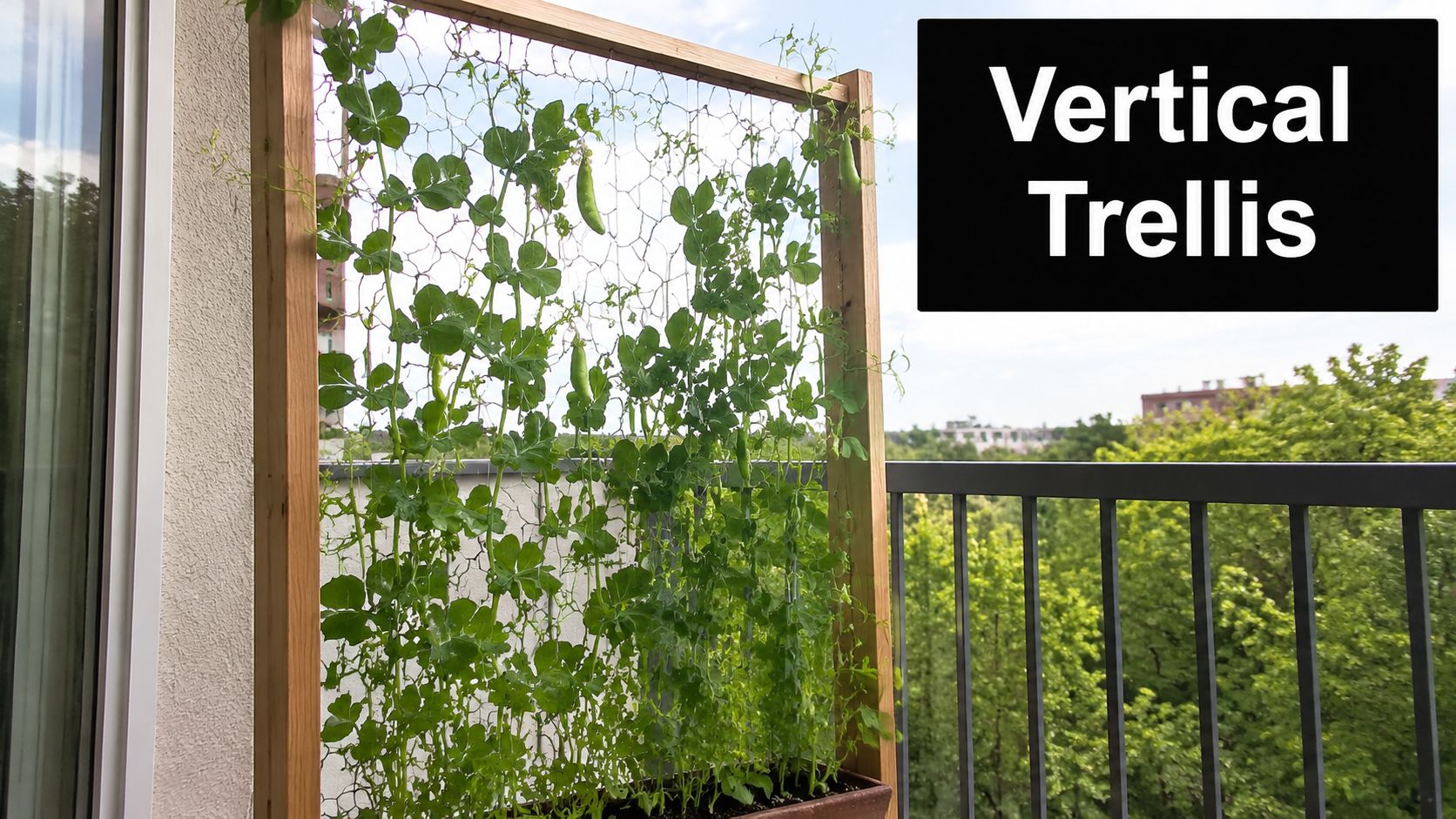
A vertical trellis makes limited space more useful by giving climbing plants somewhere to grow instead of spreading across the soil. Attach chicken wire to a sturdy wooden or metal frame, then position peas, beans, cucumbers, or climbing herbs at the base. As the plants mature, their tendrils can weave through the mesh, turning a practical boundary into a green wall.
This design works especially well on a balcony, beside a narrow path, or along the edge of a small urban garden. The wire creates a visual screen without making the area feel closed in, and the open structure allows light to reach plants below. A restaurant herb garden might use the same approach to keep climbing growth organized while preserving easy access for harvesting.
Build for the mature plant
The frame needs to support the combined weight of the wire, foliage, and wet plants. Use a solid timber frame or metal supports, and add horizontal lines across the structure so climbing stems have several places to grip. A garden obelisk trellis can provide a similar vertical form when a freestanding structure suits the space better.
Water at soil level and check the base consistently. Tall plants can dry out faster in exposed containers, particularly on balconies. If you're traveling, a self-watering globe can help provide gradual hydration, but it doesn't replace checking the soil before and after a trip.
Prune crowded growth so the wire doesn't become overloaded. Guide new stems gently rather than pulling established vines through the mesh. This keeps the trellis neat and makes it easier to notice dry soil, yellowing leaves, or damaged stems.
3. Chicken Wire and Pallet Hybrid Fence
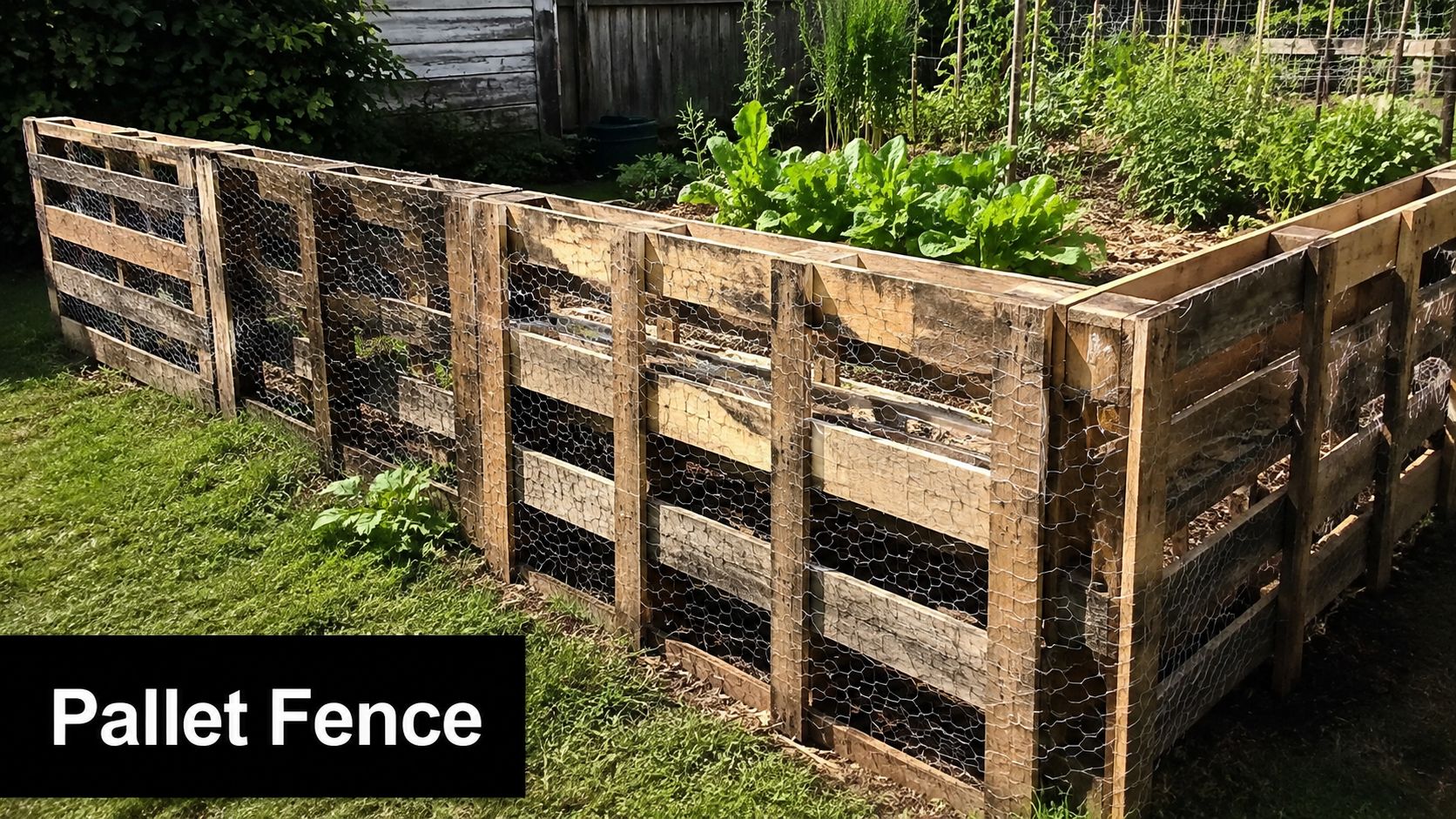
A pallet-and-wire fence gives a cottage garden a clear boundary without losing its relaxed, rustic character. Use reclaimed pallets as the wooden frame, then cover their open sections with chicken wire. The pallets create the visible structure and a solid lower barrier, while the mesh helps keep small animals away from planting areas.
This design fits a farmhouse-style backyard, a sustainable community garden, or a growing space built from salvaged materials. Weathered boards can blend with raised beds and planting borders, but inspect each pallet before it enters the garden. Choose pallets from reputable retailers, nurseries, or other known sources. Avoid industrial sites when the wood's treatment history is unclear.
Make reclaimed materials garden-ready
Sand rough surfaces and apply a non-toxic outdoor finish. Attach each pallet to ground stakes because chicken wire cannot stabilize the frame by itself. Fold over or cap sharp wire ends, and wear gloves while cutting and fastening the mesh. Paint or stain the pallets to coordinate with containers, window boxes, or a nearby shed.
Wood and wire weather at different speeds. Check the lower boards and ground-contact points after wet weather, especially where soil stays damp. Replace boards when they become soft, split, or unstable rather than waiting for the fence to fail. This simple inspection suits busy gardeners because the condition of the frame provides a clear maintenance signal.
Select mesh according to the animals and gaps you need to manage. Garden and poultry meshes are available with 1/2-inch, 3/4-inch, 1-inch, and 2-inch openings, and wire gauges commonly range from 19 to 27 BWG. Smaller openings help block smaller visitors, while larger openings may suit a decorative frame where pest pressure is low.
Use the pallet as the frame, not the entire pest-control plan. The mesh, base, fasteners, and regular inspection determine how well the fence performs.
4. Chicken Wire Plant Protection Cones
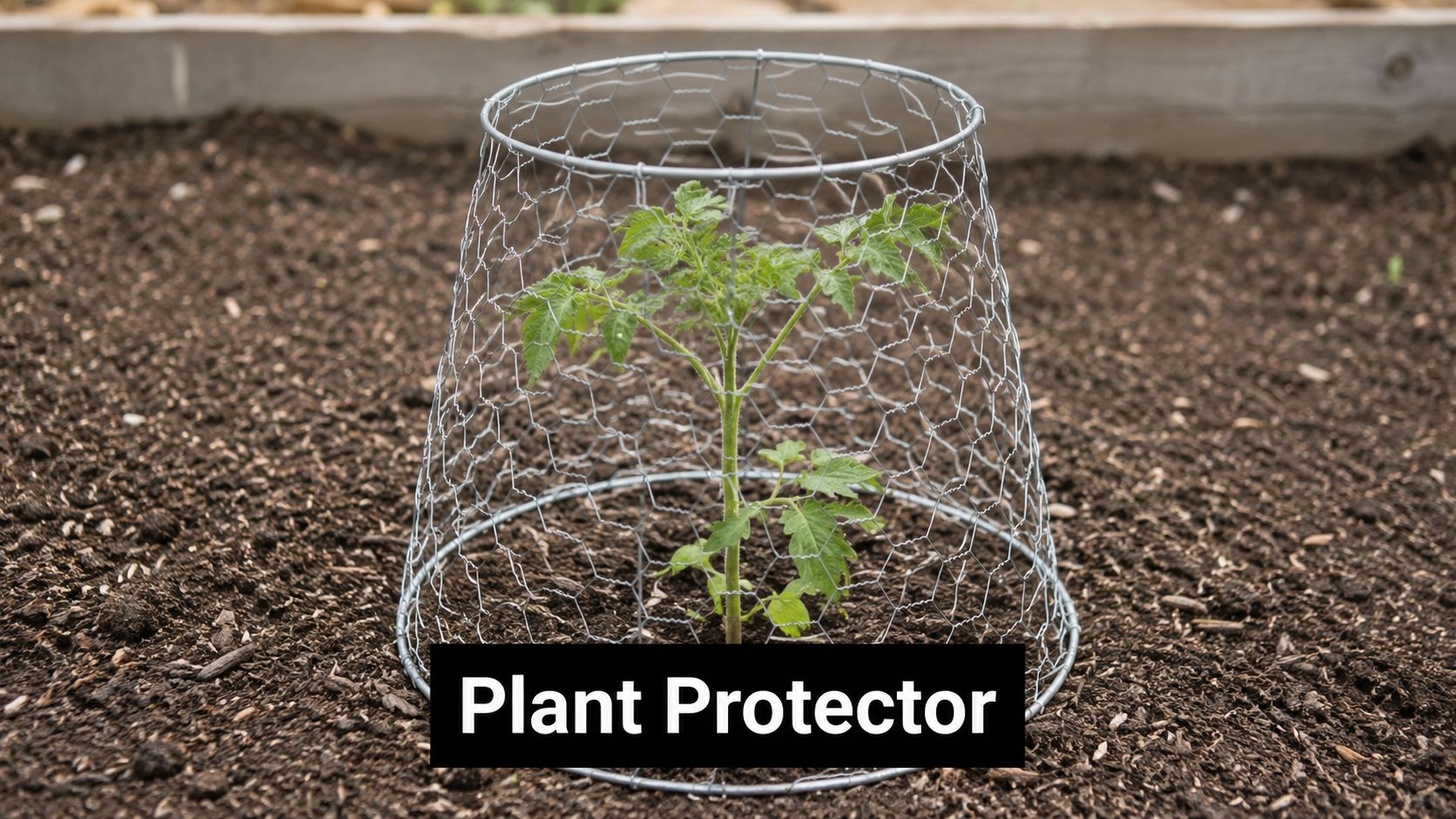
A plant cone protects one vulnerable plant without enclosing the entire garden. Roll chicken wire into a cylinder or tapered cone, overlap the edges, and fasten the shape with wire or outdoor zip ties. Place it around a newly transplanted herb, a young tomato, a pepper plant, or a tender perennial that needs time to establish.
This approach is useful when plants are scattered through a mixed border or when only a few containers attract attention from pets and curious animals. It also keeps the garden visually open. Instead of building a large fence around every bed, you can target protection where the risk is highest.
Keep the guard temporary
A cone should leave enough room for leaves to expand without pressing against the mesh. The supplied project plan recommends cones 12 to 18 inches tall for many vegetables and herbs, and keeping them in place for 3 to 4 weeks while plants become established. These measurements come from the project specifications for this idea.
Check the plant regularly rather than leaving the cone untouched. Look for stems pressing against the wire, dry soil, trapped leaves, or a damaged edge. When the plant is ready for more exposure, open one side gradually instead of removing the guard all at once.
- Finish the seam neatly: Overlap the cut edges and cover sharp points.
- Label the plant: A small marker helps you remember which seedlings still need attention.
- Store efficiently: Flatten the cones in winter and keep them dry.
- Watch containers closely: Wind can move a lightweight guard more easily than a ground-set structure.
This is one of the easiest projects for a beginner because it solves a narrow problem with little material. It also makes a useful first step before committing to a larger garden fence.
5. Chicken Wire Cloche Frames for Herb Gardens
A chicken wire cloche creates a small protective enclosure over herbs without requiring a full-size greenhouse. Form a lightweight frame from PVC or metal, wrap it with chicken wire, and add clear plastic sheeting when you need extra protection from cool air or exposed conditions. The mesh provides the shape, while the cover creates a more sheltered environment around the plants.
Herb gardeners on balconies can use a cloche to protect basil, mint, and parsley from wind and sudden temperature changes. A community garden in a cool climate might use several small frames to extend the useful growing period for tender herbs. Water can still reach the soil, and the openable design makes routine care manageable.
Ventilation matters
A covered cloche can become too warm if it stays sealed on a bright day. The project specifications advise propping open or removing the plastic cover when temperatures rise above 70°F, so use a small thermometer if you're unsure of the conditions. Water at soil level instead of over the foliage to reduce excess condensation.
Leave one side accessible for watering and harvesting. Clean the plastic monthly to maintain light penetration, as specified for this project. Inspect the wire at the same time for loose fasteners or sharp points.
A cloche should make care easier, not turn the herb garden into a sealed box. Give plants light, airflow, and a clear path for watering.
For travelers, a self-watering globe can complement the enclosure by providing gradual moisture while you're away. It still helps to test the setup before traveling, because water release depends on soil condition, plant size, angle, and the surrounding environment.
6. Chicken Wire Window Box and Container Guards
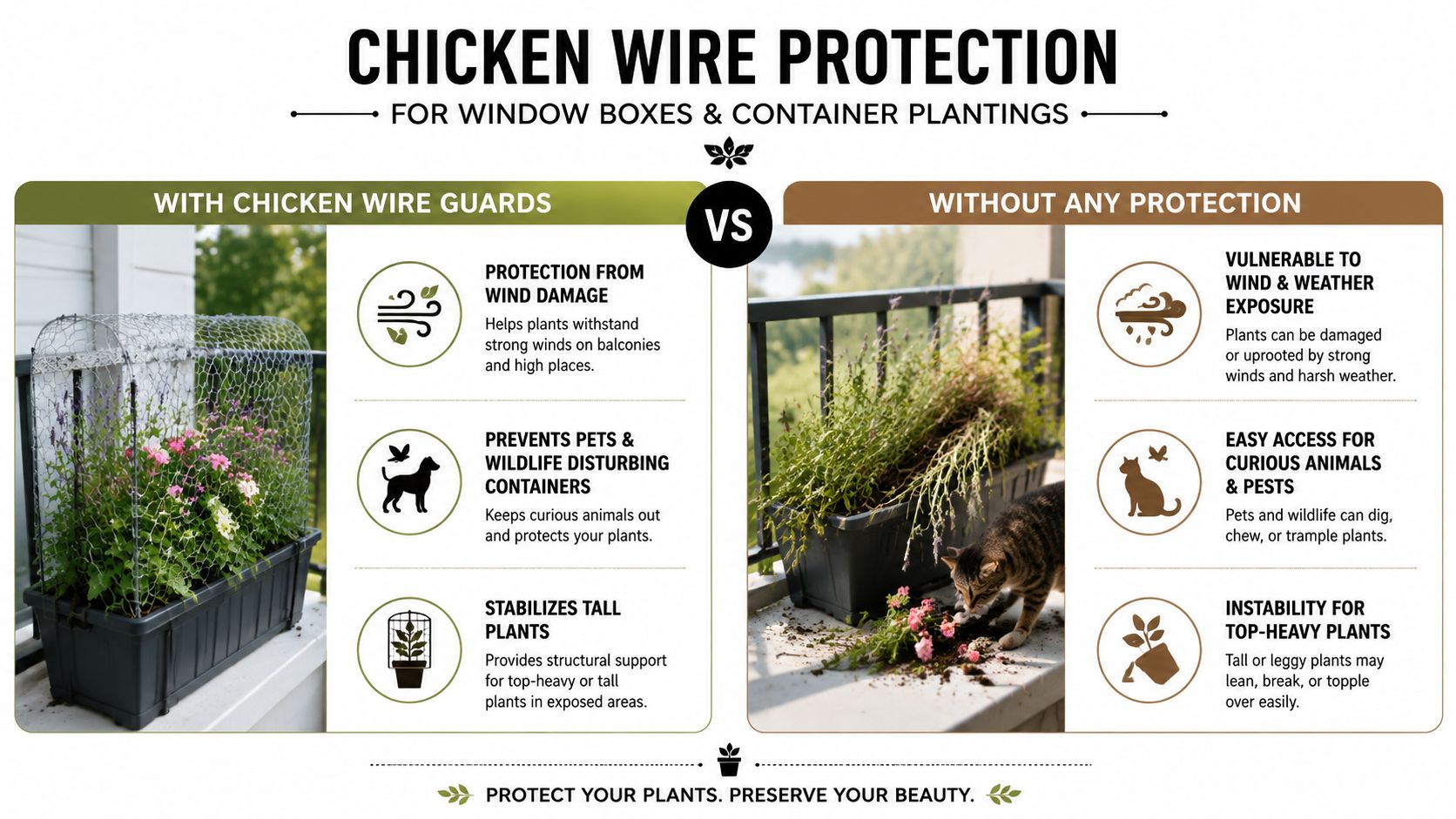
Container guards bring fence protection to places where a conventional garden fence won't fit. Wrap chicken wire around a window box, balcony planter, or patio container to create a light barrier against wind movement, pets, and curious animals. The guard can be shaped as a cylinder, a rectangular cage, or a simple front-and-side screen depending on the container.
This is particularly helpful for apartment dwellers who grow herbs and flowers on exposed ledges. A rooftop gardener might use a guard around a tall, top-heavy plant, while a traveler could combine the structure with a self-watering globe for a more predictable care routine during time away.
Fit the guard to the container
Measure the container's height and circumference before cutting. Leave the top partly open so you can water, prune, and harvest without removing the entire guard. Overlap seams by 2 to 3 inches and secure them with zip ties, following the project specifications for this design.
- Stabilize the base: Fasten the guard to the planter or use a heavier container so wind can't shift it.
- Protect the finish: Fold sharp wire ends inward or cover them.
- Blend the look: An outdoor-safe paint color can coordinate with the container.
- Inspect after storms: Check seams, fasteners, and the contact points around the pot.
The guard shouldn't press against leaves or block routine inspection. Open mesh makes it easy to see whether soil is dry, stems are bent, or flowers need deadheading. That visibility is one of the main reasons chicken wire works well for small-space plant care.
Keep the design removable. You may need to move a container for cleaning, seasonal changes, or access to a balcony drain.
7. Chicken Wire Garden Bed Lining for Pest Barriers
Some pests reach plants from below rather than through the sides. A wire liner installed before soil is added can protect roots and bulbs from digging animals such as gophers, voles, and moles. The mesh sits beneath the bed and may continue up the sides, creating an invisible barrier while leaving the growing surface open.
For stronger underground exclusion, the plan for this project specifies 1/4-inch hardware cloth. It also lists 1/2-inch chicken wire as a lower-cost alternative, though the suitable choice depends on the pest and the level of pressure in your area. A rural gardener dealing with persistent digging may prioritize finer, sturdier material, while a small raised bed with a limited problem may call for a simpler barrier.
Install it before filling the bed
Lay the wire across the base, extend it up every side, overlap seams by 3 to 4 inches, and fasten the joins securely. The project specifications also call for a side extension of 12 to 18 inches above ground and a buried section 6 to 12 inches deep. These details are specific to the planned bed-lining method, so adapt the layout to your bed design and local conditions.
For rabbit digging at the surface, the University of Arizona's garden fencing guidance describes a 2-foot-tall poultry wire fence buried at least 2 inches for cottontail rabbits. Jackrabbits require a 3-foot-tall fence buried at least 6 inches, according to the same guidance.
Inspect seams in spring, especially after the soil settles. A small gap can become an access point, and repairs are much easier before roots fill the bed.
8. Chicken Wire Compost Bin Fence Framework
A chicken wire compost framework gives kitchen scraps and garden waste a defined place to break down. Attach the mesh to wooden corner posts, add removable or hinged panels, and leave enough access to turn the materials. The open structure supports airflow while containing loose leaves, stems, and other compost ingredients.
This can work in a community garden, an apartment-building composting area, or a backyard where a simple bin is easier to maintain than a purchased system. Place it near a water source so you can moisten the pile without carrying a heavy watering can across the property.
Design for access and balance
The project specifications recommend 4x4 corner posts for stability and a bin measuring at least 3 by 3 feet for adequate decomposition heat. Add 1-inch hardware cloth inside the chicken wire when rodent protection is a priority. Create a hinged front or removable panel so you can turn the pile without dismantling the frame.
Compost needs a balanced mix. The supplied plan recommends alternating brown carbon materials and green nitrogen materials in a 3:1 ratio. Keep the pile moist but not waterlogged, and cover it in winter to support continued decomposition. These details make the fence more than a visual enclosure. They turn it into a working garden zone that can produce useful soil amendments.
- Choose a stable location: Keep the bin on level ground near water.
- Make access simple: A removable panel encourages regular turning.
- Protect the base: Check for gaps where animals could enter.
- Use clear labels: Mark brown and green materials if several people share the bin.
A mini compost bin guide may suit gardeners who don't have room for a larger framed system. For a small space, a compact setup is often easier to monitor and less likely to become neglected.
8-Item Chicken Wire Garden Fence Comparison
| Option | Implementation Complexity 🔄 | Resource Requirements ⚡ | Expected Outcomes & Impact 📊 | Key Advantages ⭐ | Ideal Use Cases / Tips 💡 |
|---|---|---|---|---|---|
| Basic Chicken Wire Raised Bed Fence | Low 🔄, simple stapling to posts | Low ⚡, inexpensive wire, staples, wooden stakes | Keeps chickens/rabbits out; high light/water transmission; moderate durability | ⭐⭐⭐, budget-friendly, easy repair, visible | Everyday raised beds; use galvanized wire, bury 6" edge, check staples monthly |
| Vertical Chicken Wire Trellis Fence | Medium 🔄, sturdy frame + plant training | Medium ⚡, taller frames (2x4/metal) + wire | Increases yield per sq ft; supports vining crops; improves air flow | ⭐⭐⭐⭐, saves space, easier harvest, attractive living wall | Small spaces/balconies; install horizontal supports every 12–18", prune regularly |
| Chicken Wire & Pallet Hybrid Fence | Low–Medium 🔄, assemble pallets, attach wire | Low ⚡, reclaimed pallets + chicken wire | Rustic barrier with decent pest protection; less long-term durability | ⭐⭐⭐, eco-friendly, low cost, rustic aesthetic | DIY cottage/sustainable gardens; source clean pallets, sand/seal, fasten to stakes |
| Chicken Wire Plant Protection Cones | Low 🔄, roll and secure individual cones | Very Low ⚡, small wire pieces, zip ties | Targeted protection for seedlings/transplants; portable; laborly at scale | ⭐⭐⭐⭐, ideal for singles, reusable, adjustable | Use for new transplants; make 12–18" cones, overlap seams, remove after 3–4 weeks |
| Chicken Wire Cloche Frames for Herb Gardens | Medium 🔄, build frames, drape plastic, vent | Low–Medium ⚡, wire, plastic sheeting, light frames | Creates microclimate: frost protection and humidity control; monitor heat | ⭐⭐⭐⭐, extends season, protects tender herbs, low cost | Herb balconies/containers; ventilate on warm days, staple plastic with one access side |
| Chicken Wire Window Box & Container Guards | Low 🔄, cut and wrap to fit containers | Low ⚡, small wire lengths, zip ties | Protects from wind/pets; stabilizes tall plants; quick seasonal use | ⭐⭐⭐⭐, fast install, travel-friendly, versatile | Measure before cutting, overlap seams 2–3", leave top access for watering |
| Chicken Wire Garden Bed Lining for Pest Barriers | High 🔄, lift/build beds and install before soil | Medium–High ⚡, hardware cloth/galvanized wire, labor-intensive | Long-term underground defense vs gophers/voles; invisible when buried | ⭐⭐⭐⭐⭐, highly effective for burrowing pests, long-lasting when galvanized | Serious pest regions; use 1/4" hardware cloth, bury 6–12", overlap seams 3–4" |
| Chicken Wire Compost Bin Fence Framework | Medium 🔄, construct posts and attach wire, add access | Low–Medium ⚡, posts, wire, optional hinges/lining | Organized, aerated composting that deters animals; may need cover in rain | ⭐⭐⭐⭐, promotes decomposition, pest-deterring, budget-friendly | Community/apartment composting; use 4x4 posts, add hardware cloth lining, include removable panels |
Choose a Fence That Fits Your Routine
The right chicken wire project is the one you'll inspect, water around, and repair when needed. A basic raised-bed fence suits a gardener who wants a clear boundary with minimal design work. A vertical trellis is better when floor space is limited and climbing plants can provide both harvests and visual height. If only a few seedlings need help, cones offer targeted protection without enclosing the entire bed.
Choose cloches for tender herbs that need shelter and airflow. Container guards fit balconies, patios, window boxes, and other exposed locations where standard posts aren't practical. Bed lining makes sense when underground pests are the main issue, but it needs to be installed before soil fills the structure. A pallet hybrid brings rustic character and reclaimed materials to the garden, while a compost framework creates a useful work area rather than a planting barrier.
Match the material to the pressure
Chicken wire isn't one single product. Common garden meshes include 1/2-inch, 3/4-inch, 1-inch, and 2-inch openings, while wire gauges can vary across a broad range, as documented in the garden-use chicken wire reference. Finer openings may suit smaller animals, but stronger pressure from pets, wildlife, or repeated handling calls for heavier woven wire or another more durable barrier.
Government and agricultural specifications use 12½-gauge or heavier top and bottom wires and 14½-gauge or heavier intermediate wires for perimeter woven-wire applications. High-tensile systems in those specifications commonly require breaking strengths around 1,078 to 1,400 pounds, which illustrates why lightweight chicken wire shouldn't be treated as a substitute for heavy-duty perimeter fencing. The California fence specification provides those technical benchmarks.
Wildlife safety deserves equal attention. Mesh fences can protect crops, but independent reporting from the Nilgiris also describes them as potential “death traps” for wildlife when animals become entangled. Check local wildlife guidance before installing a barrier in a semi-rural area, and choose a design that won't create unnecessary hazards for animals or pets.
Keep daily care simple
A good fence should be easy to see through, easy to open, and easy to secure. Check the bottom edge, corners, and fasteners during regular watering. If you're away often, pair a protective structure with a decorative self-watering globe from Little Green Leaf. The globe releases water gradually as soil dries, and available designs and sizes can be explored at Little Green Leaf.
Start with the area causing the most trouble. Identify the plant or pest, sketch the frame, gather the wire and fasteners, and build the smallest project that solves that problem. A simple, well-maintained guard can build more confidence than a large fence that becomes difficult to inspect.
For larger property projects, compare the planning considerations in this guide to comparing East Texas fencing estimates before choosing between a light garden barrier and a more permanent installation.
Little Green Leaf offers decorative, hand-blown self-watering globes that provide gradual hydration for plants in containers, raised beds, and protected garden spaces. They're a practical companion to chicken wire guards, cloches, and balcony planters when you're busy or traveling. Visit Little Green Leaf to explore the available designs and sizes for simpler, more confident plant care.